
Aaron Cometbus
Author of Despite Everything
About the Author
Image credit: cultmontreal.com
Series
Works by Aaron Cometbus
Cometbus #49 19 copies
Cometbus 50 Interviews 17 copies
Cometbus #46 9 copies
Cometbus #41 7 copies
Cometbus #59: Post-Mortem 7 copies
Cometbus #58: Zimmerwald 5 copies
Cometbus #29 4 copies
Cometbus #30 3 copies
Cometbus #55 3/4 - East Bay Mostly 3 copies
Cometbus #24 2 copies
Cometbus #31 2 copies
Clippings from the Cometbus Archives 2 copies
Cometbus #27 2 copies
Cometbus #26 2 copies
Instantanés 1 copy
Deviations 1 copy
Cometbus #55 & 3/4 1 copy
The Spirit of St. Louis 1 copy
Human Relations 1 copy
Ride the Wohl Whip 1 copy
Comebus #48 Back to the Land 1 copy
Post-Mortem 1 copy
Cometbus #59 Post-Mortem 1 copy
Cometbus 59: Post-Mortem 1 copy
Bound and Gagged #1 1 copy
Cometbus #25 1 copy
Cometbus #46 1/2 1 copy
Cometbus #22 1 copy
Rip It Up #1 1 copy
Red Tape #4 1 copy
Submission 1 copy
Barbed Wire 1 copy
Cometbus #1 - Decay #9 1 copy
Cometbus #2 - Anti-Social #6 1 copy
Cometbus #5 - Onslaught #8 1 copy
Cometbus #6 - Outlash #6 1 copy
Cometbus #8 - Bornage #12 1 copy
Cometbus #12 - Way Too Big 1 copy
Rats In The Street #4 1 copy
Associated Works
Tagged
Common Knowledge
- Legal name
- Elliot, Aaron
- Birthdate
- 1968-09-20
- Gender
- male
- Nationality
- USA
- Places of residence
- Berkeley, California, USA
St. Louis, Missouri, USA
Brooklyn, New York, USA - Associated Place (for map)
- USA
Members
Reviews

Aaron Cometbus (née Cohen) started his eponymous zine as a teenager in the early 1980s, reviewing punk shows and records in the Bay Area. The zine evolved along with his sensibilities and his formidable talents as a writer, such that we now have several decades worth of stories of life and love and pain and perseverance among people who willfully (or wantonly) occupy the outskirts of conventional society. The man is an inspiration, not only for his longevity, but for the expansive empathy show more of his big punk heart. In A Bestiary of Booksellers, Cometbus relates his experience among the eccentric sorts who make a living in the second-hand book trade in New York City. If you like books and/or people, it will make you feel good. show less

I've only read excerpts from the previous Cometbus anthology "Despite Everything" (there's a generous preview on Google Books), but from what I can tell "Add Toner" is rather a different beast. The earlier collection includes a bunch of different voices (though always collated and overseen by the industrious Aaron Cometbus) and employs sort of a shotgun strategy, experimenting with tons of different formats, graphic styles, and so on. This volume is dominated by a few longer pieces and is show more completely the work of Cometbus. The result is more staid, reflective, in a word: adult. It's a more focused but at times less energetic read. The longer page counts allow Cometbus to dive deeply into the undersung subjects of his engaging interview issues.
On the other hand, when the writing turns to a narrative mode in the novella-length memoir "Lanky," which takes up the middle stretch of the book, things start to sag. That's not for lack of interesting subject matter--Cometbus has truly led a colorful life, one which has provided him with tons of good material. On the other hand, this longer piece exposes some weaknesses of that familiar zine prose style that nibbles an elliptical path through the story, from the edge to the center, then starting at the edge again. The crisp hand-lettered pages and the neatly headed micro-chapters belie how much meandering the story does. In short bursts, this rambling eye gives the writing a poignancy, like listening to a shared secret, a quality that the best personal 'zine work shares with all great punk songs. But like punk, it's better at a sprint than a walk.
The double handful of short pieces that bookend "Add Toner" are, to me, proof of this principle. The sense summoned in these vignettes, of a writer in the stream of life, trying to make sense of things even as they pass him by, reminded me of Cindy Crabbe's great "Doris." But as with that collection, Cometbus's work suffers the more you read at once, because that searing impression begins to drown in the details and the writing loses its diary-like immediacy. There seems to be a resistance in these ad-hoc zine forms to lay down a superstructure, to try and build a sustained history out of collected incident and impression. The less satisfying parts of "Add Toner" might point to the wisdom of that comittment. show less
On the other hand, when the writing turns to a narrative mode in the novella-length memoir "Lanky," which takes up the middle stretch of the book, things start to sag. That's not for lack of interesting subject matter--Cometbus has truly led a colorful life, one which has provided him with tons of good material. On the other hand, this longer piece exposes some weaknesses of that familiar zine prose style that nibbles an elliptical path through the story, from the edge to the center, then starting at the edge again. The crisp hand-lettered pages and the neatly headed micro-chapters belie how much meandering the story does. In short bursts, this rambling eye gives the writing a poignancy, like listening to a shared secret, a quality that the best personal 'zine work shares with all great punk songs. But like punk, it's better at a sprint than a walk.
The double handful of short pieces that bookend "Add Toner" are, to me, proof of this principle. The sense summoned in these vignettes, of a writer in the stream of life, trying to make sense of things even as they pass him by, reminded me of Cindy Crabbe's great "Doris." But as with that collection, Cometbus's work suffers the more you read at once, because that searing impression begins to drown in the details and the writing loses its diary-like immediacy. There seems to be a resistance in these ad-hoc zine forms to lay down a superstructure, to try and build a sustained history out of collected incident and impression. The less satisfying parts of "Add Toner" might point to the wisdom of that comittment. show less

Punk rock drummer and raconteur Aaron Cometbus (née Elliott) began publishing his eponymous zine in the early 1980s. Add Toner compiles highlights from issues #44-48, written between 1998 and 2002. The text is hand-written in alternating black-on-white and white-on-black sections, illustrated by sharply-drawn comic graphics, found photos, and a few pages of show-poster type cut-ups. A reader would not expect, from the DIY presentation, that Cometbus writes so well, with laudable humanist show more instincts, humble self-awareness, and a wise wit. Decades past the salad days of American punk, the man and the zine remain true to the best parts of those mental zones and communal spaces that stand deliberately askance of the mainstream. Cometbus is an optimist, but he does not turn away from the stupid sanctimony, hypocrisy, and self-destructive foolishness that often muddle the best intentions of those living life on their own terms.
My favorite anecdote from the section of short pieces that opens the book has Aaron as a temporary replacement drummer for “a bunch of grumpy old men.” With no time to learn the songs, and criticized for playing too fast (!), he gets his attitude up, and before the next song yells from behind the drum kit, “This song is about the Decembrist revolt!” The guitarist glares at him, turns to face the nearly empty room, and screams, “No! It’s about the narodniks!” The punkrock Slavic-studies in-joke, the heckling of his own band and the retelling of it as a mockery of pious partizans, is just one example of the Cometbus style and charm.
The writing in Add Toner is personal without being self-indulgent, and it’s not all about Aaron Cometbus or punk hijinks. Two longer sections are composed of a series of interviews that explore the sources and consequences of community-building among people unable and/or unwilling to commit to the workaday routine most of us are forced to endure. The first set of interviews involves the members of a workers’ collective of self-identifying ‘freaks’ that runs an all-night café in a gritty Minneapolis neighborhood. The other collects stories from people whose parents left lives and jobs behind to go ‘back to the country’ in the late 60s & early 70s. What became of the children of that generation of mostly marijuana farmers that settled in Humboldt Country in order to evade the coming urban apocalypse? Turns out that a lot of those hippies begat punks, most of them craving the kind of stimulation and engagement found in the cities, but with complicated feelings about the kinds of sustenance found only out beyond the fences.
Cometbus grew up in Berkeley, where he rubbed shoulders with both Czesław Miłosz and Flipper (not the TV fish), but the stories in Add Toner take him far afield, to St. Louis and rural North Carolina and New York City, always with an appreciation of the attributes of place. In the last chapter, in a set of previously unpublished pieces, he is on the road with his girlfriend, with no provisions and no plans but a destination. Boston proves unwelcoming in too many ways, and for the first and only time Cometbus gives a hint of flagging hopes and rising despair. They keep driving, to the tip of the Cape. They find a boarded-up summer cottage to squat, warm themselves over a broken toaster, spend their days reading novels at the library or “running barefoot on the beach like idiots,” and I feel a little envious. show less
My favorite anecdote from the section of short pieces that opens the book has Aaron as a temporary replacement drummer for “a bunch of grumpy old men.” With no time to learn the songs, and criticized for playing too fast (!), he gets his attitude up, and before the next song yells from behind the drum kit, “This song is about the Decembrist revolt!” The guitarist glares at him, turns to face the nearly empty room, and screams, “No! It’s about the narodniks!” The punkrock Slavic-studies in-joke, the heckling of his own band and the retelling of it as a mockery of pious partizans, is just one example of the Cometbus style and charm.
The writing in Add Toner is personal without being self-indulgent, and it’s not all about Aaron Cometbus or punk hijinks. Two longer sections are composed of a series of interviews that explore the sources and consequences of community-building among people unable and/or unwilling to commit to the workaday routine most of us are forced to endure. The first set of interviews involves the members of a workers’ collective of self-identifying ‘freaks’ that runs an all-night café in a gritty Minneapolis neighborhood. The other collects stories from people whose parents left lives and jobs behind to go ‘back to the country’ in the late 60s & early 70s. What became of the children of that generation of mostly marijuana farmers that settled in Humboldt Country in order to evade the coming urban apocalypse? Turns out that a lot of those hippies begat punks, most of them craving the kind of stimulation and engagement found in the cities, but with complicated feelings about the kinds of sustenance found only out beyond the fences.
Cometbus grew up in Berkeley, where he rubbed shoulders with both Czesław Miłosz and Flipper (not the TV fish), but the stories in Add Toner take him far afield, to St. Louis and rural North Carolina and New York City, always with an appreciation of the attributes of place. In the last chapter, in a set of previously unpublished pieces, he is on the road with his girlfriend, with no provisions and no plans but a destination. Boston proves unwelcoming in too many ways, and for the first and only time Cometbus gives a hint of flagging hopes and rising despair. They keep driving, to the tip of the Cape. They find a boarded-up summer cottage to squat, warm themselves over a broken toaster, spend their days reading novels at the library or “running barefoot on the beach like idiots,” and I feel a little envious. show less
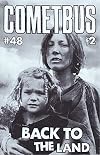
Picked this up in a used bookstore because the cover and the black/white, cover with artful, visual layout of the pages compelled me to read it.
This indie and exploratory--it's punk social anthropology.
This particular issue stands alone, but is probably richer if you experience the series.
Back to the Land is a series of interviews with young adult 'kids' or parents who were disillusioned with capitalism, declining cities, and rising crime in the '70s-80s' and left the city for the show more rural/mountains (going 'back to the land,' as it were) as homesteaders.
For many, despite their idealism about living off the land, rural living didn't work out as intended and the families ended up returning.
The interviews are interesting (author/publisher is from Berkeley, so that's vibe). Keep in mind this was published in 2000. So the 'kids' interviewed are middle age now with kids of their own. A follow-up look at their lives would be pretty cool (and maybe there is one).
I just found/read this, but I think if I'd happened upon it closer to it's publishing date I would have eagerly scooped them all. This particular series/subject matter probably isn't for me, at least at this stage of my life. But it's somebody's, maybe yours, and if you're drawn to it it's absolutely worth the time.
I did/do find plenty of other of Cometbus issues/subject matter super-interesting though and am curious how his work has changed and evolved as he's aged. So...I fully intend to rabbit hole.
If you've gotten this far and are intrigued to see what other Cometbus stuff is out there, check out his website: https://microcosmpublishing.com/catalog/artist/aaron-cometbus show less
This indie and exploratory--it's punk social anthropology.
This particular issue stands alone, but is probably richer if you experience the series.
Back to the Land is a series of interviews with young adult 'kids' or parents who were disillusioned with capitalism, declining cities, and rising crime in the '70s-80s' and left the city for the show more rural/mountains (going 'back to the land,' as it were) as homesteaders.
For many, despite their idealism about living off the land, rural living didn't work out as intended and the families ended up returning.
The interviews are interesting (author/publisher is from Berkeley, so that's vibe). Keep in mind this was published in 2000. So the 'kids' interviewed are middle age now with kids of their own. A follow-up look at their lives would be pretty cool (and maybe there is one).
I just found/read this, but I think if I'd happened upon it closer to it's publishing date I would have eagerly scooped them all. This particular series/subject matter probably isn't for me, at least at this stage of my life. But it's somebody's, maybe yours, and if you're drawn to it it's absolutely worth the time.
I did/do find plenty of other of Cometbus issues/subject matter super-interesting though and am curious how his work has changed and evolved as he's aged. So...I fully intend to rabbit hole.
If you've gotten this far and are intrigued to see what other Cometbus stuff is out there, check out his website: https://microcosmpublishing.com/catalog/artist/aaron-cometbus show less
Lists
PUNK timeline (1)
LAST GASP (1)
You May Also Like


Associated Authors
Statistics
- Works
- 97
- Also by
- 2
- Members
- 1,017
- Popularity
- #25,335
- Rating
- 3.8
- Reviews
- 20
- ISBNs
- 17
- Languages
- 3
- Favorited
- 5