
Terence Ward
Author of Searching for Hassan: A Journey to the Heart of Iran
About the Author
He was born in Boulder, Colorado & spent his childhood in Saudi Arabia & Iran. He speaks Arabic, Italian, Greek, Indonesian & Farsi. He has been a management consultant advising corporations & governments in the Islamic world. He lives in New York City. (Bowker Author Biography)
Works by Terence Ward
The Guardian of Mercy: How an Extraordinary Painting by Caravaggio Changed an Ordinary Life Today (2016) 44 copies, 1 review
Tagged
Common Knowledge
Members
Reviews
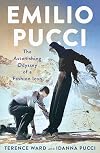
Rating: 4.25* of five
The Publisher Says: The Drama of War and Postwar Italy Through the Life of One of Its Most Celebrated Icons
When people think of fashion designer Emilio Pucci, it is of his bright, swirling colors and easy, freeing fabrics, and everyone from Sophia Loren to Jackie Kennedy donning the eye-catching dresses that personify La Dolce Vita. What few know about Pucci, however, is that before creating his world-famous fashions, he played a critical role in the war against the show more Nazis, risking his life to smuggle out to the Allies one of the most important documents of World War II.
The authors bring to life Italy’s darkest and brightest days, with the extraordinary Emilio Pucci at its center. Italy at the end of the war was broken, and Florence, which the Pucci family had called home for seven centuries, lay in ruins. Pucci returned home bruised in body and soul, having endured trials that would have broken many, but, like Italy itself, rose from the ashes, and went on to design some of the most exuberant fashion of all time. He helped usher in a new era of creativity in Italy, which again became a mecca of fashion, art, design, film, and more.
A host of supporting characters—including Mussolini’s daughter and Allen Dulles, and, most importantly, the timeless city of Florence and the mythic island of Capri—enrich this compelling narrative that will draw readers of all kinds, from war and history buffs, to fashionistas and fans of espionage thrillers along with the millions of readers who devour books about Italy and her many charms.
I RECEIVED A DRC FROM THE PUBLISHER VIA NETGALLEY. THANK YOU.
My Review: Born in the Kingdom of Italy midway through World War I, Pucci was in the prime of his life during WWII becoming a flyer in the Royal Italian Air Force; he was an aristocrat, deeply in the circles familiar with Mussolini and was his daughter Edda Ciano's BFF. He was responsible for the Ciano Diaries reaching Allied hands and Edda Ciano escaping the Germans' tender ministrations as the daughter of a traitor to the German cause. (Husband Galeazzo not so much; murdered by the Gestapo.) Pucci was himself tortured by the Gestapo as a follow-on consequence of being involved with Edda and her family. No great revelations were given by him, apparently.
It interested me that Idanna Pucci, his niece, co-created the story told herein. Pucci's daughter Laudomia maintains the Pucci archives; her mother Cristina is still living; how is it neither of them chose to write this fascinating story? It's possible the Idanna Pucci, being their elder, simply had more perspective; and she is an author of four decades' standing and her husband Ward (ten years her junior) slightly less duration at twenty-plus years. The couple have also produced documentaries.
It is clear Pucci deserves this attention because he was always somewhere interesting as world events unfolded. Never central, but frequently spotlighted, as he was after the frankly horrifying 1966 Florentine floods when he was instrumental in getting the US fashion industry as well as the general population to volunteer in the monumental cleanup as well as donate money and material aid. It is no exaggeration to say the assistance provided at his behest changed many Florentine lives.
Pucci's stamp on the pop culture of the 1960s was immense, as well. His color palette and choices of fabrics for his collections were widely emulated. He was well-enough known that my kid-self knew his name. I saw his work knowingly, because Braniff was my mother's preferred airline and their stewardesses (it's what they were called in those days) proudly discussed their suits as designed by Pucci. It accords well with the 1937 Reed College graduate's entire life spent in very classy social life...he designed the Reed College ski team's togs...and reinforces the perception of him as a member of a global elite.
It was a very interesting read that felt less like a biography (despite its chronological organization) than it did a family chat. If I'd been invited to an Easter feast in Palazzo Pucci, this is the kind of knowledge I'd've expected to come away with. Only here it's in depth and extensively footnoted.
Fashionistas, Italian and WWII as well as 1960s culture's history buffs are strongly encouraged to get themselves a copy. I suspect the most disappointment will be felt by the fashionistas, as that genre's devoted readers are not always terribly interested in name-dropping outside their area of fascination. Pucci being who he was, a staid local politician as well as a trendsetting designer, there are many diversions from purely the fashion world. It is, I promise, worth all y'all's time to venture a bit outside the boundaries of subject-matter interest. On all sides of Pucci's fascinating life's activities. show less
The Publisher Says: The Drama of War and Postwar Italy Through the Life of One of Its Most Celebrated Icons
When people think of fashion designer Emilio Pucci, it is of his bright, swirling colors and easy, freeing fabrics, and everyone from Sophia Loren to Jackie Kennedy donning the eye-catching dresses that personify La Dolce Vita. What few know about Pucci, however, is that before creating his world-famous fashions, he played a critical role in the war against the show more Nazis, risking his life to smuggle out to the Allies one of the most important documents of World War II.
The authors bring to life Italy’s darkest and brightest days, with the extraordinary Emilio Pucci at its center. Italy at the end of the war was broken, and Florence, which the Pucci family had called home for seven centuries, lay in ruins. Pucci returned home bruised in body and soul, having endured trials that would have broken many, but, like Italy itself, rose from the ashes, and went on to design some of the most exuberant fashion of all time. He helped usher in a new era of creativity in Italy, which again became a mecca of fashion, art, design, film, and more.
A host of supporting characters—including Mussolini’s daughter and Allen Dulles, and, most importantly, the timeless city of Florence and the mythic island of Capri—enrich this compelling narrative that will draw readers of all kinds, from war and history buffs, to fashionistas and fans of espionage thrillers along with the millions of readers who devour books about Italy and her many charms.
I RECEIVED A DRC FROM THE PUBLISHER VIA NETGALLEY. THANK YOU.
My Review: Born in the Kingdom of Italy midway through World War I, Pucci was in the prime of his life during WWII becoming a flyer in the Royal Italian Air Force; he was an aristocrat, deeply in the circles familiar with Mussolini and was his daughter Edda Ciano's BFF. He was responsible for the Ciano Diaries reaching Allied hands and Edda Ciano escaping the Germans' tender ministrations as the daughter of a traitor to the German cause. (Husband Galeazzo not so much; murdered by the Gestapo.) Pucci was himself tortured by the Gestapo as a follow-on consequence of being involved with Edda and her family. No great revelations were given by him, apparently.
It interested me that Idanna Pucci, his niece, co-created the story told herein. Pucci's daughter Laudomia maintains the Pucci archives; her mother Cristina is still living; how is it neither of them chose to write this fascinating story? It's possible the Idanna Pucci, being their elder, simply had more perspective; and she is an author of four decades' standing and her husband Ward (ten years her junior) slightly less duration at twenty-plus years. The couple have also produced documentaries.
It is clear Pucci deserves this attention because he was always somewhere interesting as world events unfolded. Never central, but frequently spotlighted, as he was after the frankly horrifying 1966 Florentine floods when he was instrumental in getting the US fashion industry as well as the general population to volunteer in the monumental cleanup as well as donate money and material aid. It is no exaggeration to say the assistance provided at his behest changed many Florentine lives.
Pucci's stamp on the pop culture of the 1960s was immense, as well. His color palette and choices of fabrics for his collections were widely emulated. He was well-enough known that my kid-self knew his name. I saw his work knowingly, because Braniff was my mother's preferred airline and their stewardesses (it's what they were called in those days) proudly discussed their suits as designed by Pucci. It accords well with the 1937 Reed College graduate's entire life spent in very classy social life...he designed the Reed College ski team's togs...and reinforces the perception of him as a member of a global elite.
It was a very interesting read that felt less like a biography (despite its chronological organization) than it did a family chat. If I'd been invited to an Easter feast in Palazzo Pucci, this is the kind of knowledge I'd've expected to come away with. Only here it's in depth and extensively footnoted.
Fashionistas, Italian and WWII as well as 1960s culture's history buffs are strongly encouraged to get themselves a copy. I suspect the most disappointment will be felt by the fashionistas, as that genre's devoted readers are not always terribly interested in name-dropping outside their area of fascination. Pucci being who he was, a staid local politician as well as a trendsetting designer, there are many diversions from purely the fashion world. It is, I promise, worth all y'all's time to venture a bit outside the boundaries of subject-matter interest. On all sides of Pucci's fascinating life's activities. show less
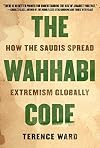
It's a bit hard to know what to think about Saudi Arabia. Certainly they have been in a unique situation for around the last 60-100 years with vast wealth, a feudal political system and a fundamentalist version of Islam being rigidly enforced. I found Ward's book really interesting especially in terms of explaining how Saudi Arabia has been exporting Wahhabism throughout the world and their clever (and effective) use of "soft power". Sometimes I found myself wondering how objective and well show more informed the author is....after all he comes from a western tradition ...and yes he grew up in Saudi Arabia but in a kind of walled off slice of America, modelled on Arizona-style suburbia) with (as he puts it lawns, swimming pools and snack bars). But he's obviously spent a lot of his life in Saudi Arabia and been a consultant on Middle Eastern affairs, so I assume that he's pretty well informed. Most of what he says I think I already knew, though maybe the impact and the scale of the missionary effort of the wahhabists had not really sunk in with me.
Also, I was not aware that there had been some efforts by Muslims from the other three main streams of more moderate Islam to reject the Wahabi creed.In addition I had not really focused on the fact that the Wahhabi sect was really relatively recent....founded about 200 years ago. (I found myself thinking that the Puritans were a similar fundamentalist offshoot of Christianity ...but maybe without the harsh executions etc....On the other hand,19 of the "witches of Salem" were hung for their "sins").
I think Ward makes his points very well that the Saud family have appropriated power in Saudi Arabia in an alliance with the Wahhabi religious sect and have massively financed the spread of these doctrines internationally through the funding of schools, preachers, literature etc. He also makes a strong case that most of the violence of Islam can be traced back to Saudi Arabia via direct support or financing or through the offshoot schools. I lived in Malaysia in the 1980's where there was a fairly mild stream of Islam but over the years it has become more strident and fundamentalist.....with more than hints of corruption of the previous Prime Minister via "loans" from Saudi Arabia.
I also did some work in Saudi Arabia and must say that I was impressed with the calibre of the men that I worked with (no women of course). But these guys were hard working, smart and friendly. But it was not a relaxed atmosphere...full of prohibitions and discrimination against immigrant workers. (I witnessed some poor immigrant worker at the airport struggling in a massive queue, to get out of the country, being abused and sent to the back of the queue simply because he had overstepped an invisible line on the floor). And there was the undercurrent that everyone was being watched by secret police.
The current Crown Prince gets some attention from Ward....both as a proselytiser of Wahhabism and as a mover and shaker who was going to modernise Saudi Arabia and curb the power of the religious leaders. But all of this was prior to the assassination of Adnan Kashoggi in the Turkish Embassy with apparent direct links (according the the US intelligence report) back to the Crown Prince. It remains to be seen whether or how he will survive the taint associated with this brutal murder.
Perhaps, more important might be the move away from oil to sustainable energy. Though here, I suspect the Saudis are ahead of the game and have been moving steadily into the production of petrochemicals as a way of diversifying and adding value to their oil reserves.
This is not a long book and reads (more or less as the author sets it out) as a briefing document for his interested and intelligent Italian niece. It is mildly scary, assuming what he says to be correct ...and he doesn't really touch on the use of the Israeli hacking software enabling Saudi Intelligence to tap the phones of dissidents abroad. (Is this any worse than the Israeli's, Americans, or Russians are doing? I'm not sure but it's certainly not nice). Not a great book but certainly very interesting. I give it 3.5 stars. show less
Also, I was not aware that there had been some efforts by Muslims from the other three main streams of more moderate Islam to reject the Wahabi creed.In addition I had not really focused on the fact that the Wahhabi sect was really relatively recent....founded about 200 years ago. (I found myself thinking that the Puritans were a similar fundamentalist offshoot of Christianity ...but maybe without the harsh executions etc....On the other hand,19 of the "witches of Salem" were hung for their "sins").
I think Ward makes his points very well that the Saud family have appropriated power in Saudi Arabia in an alliance with the Wahhabi religious sect and have massively financed the spread of these doctrines internationally through the funding of schools, preachers, literature etc. He also makes a strong case that most of the violence of Islam can be traced back to Saudi Arabia via direct support or financing or through the offshoot schools. I lived in Malaysia in the 1980's where there was a fairly mild stream of Islam but over the years it has become more strident and fundamentalist.....with more than hints of corruption of the previous Prime Minister via "loans" from Saudi Arabia.
I also did some work in Saudi Arabia and must say that I was impressed with the calibre of the men that I worked with (no women of course). But these guys were hard working, smart and friendly. But it was not a relaxed atmosphere...full of prohibitions and discrimination against immigrant workers. (I witnessed some poor immigrant worker at the airport struggling in a massive queue, to get out of the country, being abused and sent to the back of the queue simply because he had overstepped an invisible line on the floor). And there was the undercurrent that everyone was being watched by secret police.
The current Crown Prince gets some attention from Ward....both as a proselytiser of Wahhabism and as a mover and shaker who was going to modernise Saudi Arabia and curb the power of the religious leaders. But all of this was prior to the assassination of Adnan Kashoggi in the Turkish Embassy with apparent direct links (according the the US intelligence report) back to the Crown Prince. It remains to be seen whether or how he will survive the taint associated with this brutal murder.
Perhaps, more important might be the move away from oil to sustainable energy. Though here, I suspect the Saudis are ahead of the game and have been moving steadily into the production of petrochemicals as a way of diversifying and adding value to their oil reserves.
This is not a long book and reads (more or less as the author sets it out) as a briefing document for his interested and intelligent Italian niece. It is mildly scary, assuming what he says to be correct ...and he doesn't really touch on the use of the Israeli hacking software enabling Saudi Intelligence to tap the phones of dissidents abroad. (Is this any worse than the Israeli's, Americans, or Russians are doing? I'm not sure but it's certainly not nice). Not a great book but certainly very interesting. I give it 3.5 stars. show less
The Guardian of Mercy: How an Extraordinary Painting by Caravaggio Changed an Ordinary Life Today by Terence Ward
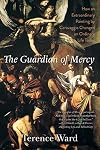
Interesting story. Quick read. I kept waiting for a little more.
Lists
You May Also Like


Statistics
- Works
- 5
- Members
- 194
- Popularity
- #112,876
- Rating
- 4.1
- Reviews
- 3
- ISBNs
- 18
- Languages
- 3