
Emily Yellin
Author of Our Mothers' War: American Women at Home and at the Front During World War II
About the Author
Emily Yellin is the author of Our Mother's War and was a longtime contributor to the New York Times. She has also written for Time, the Washington Post, the International Herald Tribune, News-week, Smithsonian magazine, and other publications. She currently lives in Memphis, Tennessee. For more show more information visit www.EmilyYellin.com. show less
Image credit: photo by Sharon Bicks
Works by Emily Yellin
Our Mothers' War: American Women at Home and at the Front During World War II (2004) 263 copies, 8 reviews
Your Call Is (Not That) Important to Us: Customer Service and What It Reveals About Our World and Our Lives (2009) 68 copies, 4 reviews
Women of World War II DVD 1 copy
Tagged
Common Knowledge
- Birthdate
- 1961-10-10
- Gender
- female
- Education
- University of Wisconsin-Madison (BA English Literature)
Northwestern University (MS Journalism) - Relationships
- Yellin, Carol Lynn (mother)
Yellin, David G. (father) - Birthplace
- White Plains, New York, USA
- Places of residence
- Memphis, Tennessee, USA
London, England, UK
Los Angeles, California, USA
Chicago, Illinois, USA
New York, New York, USA - Associated Place (for map)
- USA
Members
Reviews
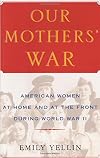
Yellin, a journalist, has crafted a well-written, captivating story that has received excellent reviews. For the most part, it is also historically accurate, navigating the confusing shoals of the differences in the various womens military services correctly. I noticed only a few small factual errors. For example, the sister of the five Sullivan brothers who died together aboard the Juneau, Genevieve Sullivan, joined the WAVES, not the WAC. In addition, the date that Congress passed the bill show more establishing the WAAC is wrong. Finally, the Phelps/Eisenhower story is in here. Yellin cites the Humphrey book as her source for this story. Overall, Yellin appears to have done a very good job researching her topic, using excellent, professionally accepted secondary sources. Judith Lawrence Bellafaire is cited numerous times, from In Defense of a Nation and the two CMH pamphlets. In at least one review, Yellin was criticized for doing a better job portraying white women's experiences and not being as sensitive as she should have been in dealing with the issues of racism and sexism. I did not find that criticism to be valid as I read "Jane Crow," Yellin's chapter on black women on the homefront and in the military. Her information on segregation in the services was completely accurate, and I learned many things I did not know from her description of the segregated homefront. Her chapters on women spies and Asian American women also contained much information that was new to me. I was unaware, for example, of Mildred Fish Harnack, a Milwaukee native who was guillotined by Hitler when she was caught sending information out of Germany. Tennis star Alice Marble's contribution to U.S. espionage and her precipitous escape made facsinating reading. Yellin's description of the career of the infamous Tokyo Rose (Iva Toguri D'Aquino) explained how the angry temper of the times, racism and the false testimonies against her combined to falsely imprison her and emphasized her eventual pardon. show less
Emily Yellin decided to write this after discovering her mother's letters and diary entries from World War II. "From my mother's writings, I was understanding for the first time what ultimate sacrifices women made for the war." [1]
Yellin's book has a very clear goal: addressing the ways that World War II women addressed and occasionally overcame attitudes about being a woman and a wife. She incorporates letters and journal entries from other women to show how they adapted to the shifting show more roles experienced on the homefront during World War II. Yellin asserts “through my mother, and all the women in this book, I came to see that the small things, the less dramatic changes in the world, were sometimes the most revolutionary. And often those were the kind women effected.” [2] The book addresses the ways that these incredible women ventured out of the realm of socially acceptable, often banding together, to create new ideas of acceptability.
The book doesn't attempt to paint a picture of a struggle free adaptation for women and Yellin makes time to address the problems that these women encountered in assuming new roles and responsibilities. Yellin stresses that each of these women was well aware that they would have to give up these roles once the war was over. A touch of bias is evident in Yellin's writing, probably because she was inspired to create this work after learning new things about her own mother. Yellin's bias however, is focused on highlighting the bravery displayed by these various women. So not necessarily a bad thing!
In some ways this bias is taken to the extreme with the women portrayed as martyrs almost. I don't think that she overplays the importance of the emotional burden these women carried, if anything she highlights the importance of acknowledging that various levels existed in adapting to the changes on the homefront. While Yellin has some clear bias and it tints some of her examination she truly believes that the women on the homefront sacrificed the most of any participant of World War II. I think most important about Yellin's book is that she uses letters, journals, and diaries written by these women because she believes “before the war, no one imagined a woman’s voice could be influential.” [3] Her sole aim is to prove that a woman's voice is and can be influential.
I would suggest reading the book with a critical eye simply because Yellin's bias is so transparent at times. However, I don't think it subtracts from the point that she makes. World War II was a time of extreme social upheaval and change; in no place more so than on the homefront. It took brave women to adapt to new expectations and take on new roles. These women experienced a vast amount of freedom; yet they knew that it was not something that could last. Even knowing that they stepped into these new roles with little hesitation. Yellin is correct that the small things sometimes matter the most and prove to be most revolutionary.
[1] Emily Yellin, Our Mothers' War: American Women at Home and at the Front during World War II (New York: Free Press, 2005), xii.
[2] Yellin, Our Mothers' War, 381.
[3] Yellin, Our Mothers' War, 77. show less
Yellin's book has a very clear goal: addressing the ways that World War II women addressed and occasionally overcame attitudes about being a woman and a wife. She incorporates letters and journal entries from other women to show how they adapted to the shifting show more roles experienced on the homefront during World War II. Yellin asserts “through my mother, and all the women in this book, I came to see that the small things, the less dramatic changes in the world, were sometimes the most revolutionary. And often those were the kind women effected.” [2] The book addresses the ways that these incredible women ventured out of the realm of socially acceptable, often banding together, to create new ideas of acceptability.
The book doesn't attempt to paint a picture of a struggle free adaptation for women and Yellin makes time to address the problems that these women encountered in assuming new roles and responsibilities. Yellin stresses that each of these women was well aware that they would have to give up these roles once the war was over. A touch of bias is evident in Yellin's writing, probably because she was inspired to create this work after learning new things about her own mother. Yellin's bias however, is focused on highlighting the bravery displayed by these various women. So not necessarily a bad thing!
In some ways this bias is taken to the extreme with the women portrayed as martyrs almost. I don't think that she overplays the importance of the emotional burden these women carried, if anything she highlights the importance of acknowledging that various levels existed in adapting to the changes on the homefront. While Yellin has some clear bias and it tints some of her examination she truly believes that the women on the homefront sacrificed the most of any participant of World War II. I think most important about Yellin's book is that she uses letters, journals, and diaries written by these women because she believes “before the war, no one imagined a woman’s voice could be influential.” [3] Her sole aim is to prove that a woman's voice is and can be influential.
I would suggest reading the book with a critical eye simply because Yellin's bias is so transparent at times. However, I don't think it subtracts from the point that she makes. World War II was a time of extreme social upheaval and change; in no place more so than on the homefront. It took brave women to adapt to new expectations and take on new roles. These women experienced a vast amount of freedom; yet they knew that it was not something that could last. Even knowing that they stepped into these new roles with little hesitation. Yellin is correct that the small things sometimes matter the most and prove to be most revolutionary.
[1] Emily Yellin, Our Mothers' War: American Women at Home and at the Front during World War II (New York: Free Press, 2005), xii.
[2] Yellin, Our Mothers' War, 381.
[3] Yellin, Our Mothers' War, 77. show less
A great book about American women's various experiences during World War II. The plight of the wives and mothers of the soldiers is there, of course, but so are the stories of women in the military, volunteers such as the Red Cross, entertainers, and sex workers. Also chapters focus on the very different experiences of women of color, Japanese-American women, lesbians, and other women who are not as well covered by other texts.
Your call is (not that) important to us : customer service and what it reveals about our world and our lives by Emily Yellin
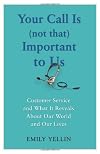
This book is just dull. While there are some entertaining discussions about companies who clearly are terrible at customer service, the author spends most of her time visiting several companies to see how each addresses its customer service needs. The problem with this, of course, is that only companies that are known for having good customer service are willing to allow a writer in to observe their operations. This is what makes the book so dull. There is very little insight to be gained show more from interviewing people who like their jobs and who work for companies who take customer service seriously, because those companies are in the minority. I think a topic like this would have benefited greatly from an undercover Barbara Ehrenreich approach. Another drawback of the book is that the author discusses customer service at call centers while barely touching upon person to person customer service, which is still a big part of everyone's life. show less
You May Also Like


Statistics
- Works
- 5
- Members
- 334
- Popularity
- #71,210
- Rating
- 3.8
- Reviews
- 12
- ISBNs
- 12