
Edward W. Said (1935–2003)
Author of Orientalism
About the Author
Born in Jerusalem and educated at Victoria College in Cairo and at Princeton and Harvard universities, Edward Said has taught at Columbia University since 1963 and has been a visiting professor at Harvard and Johns Hopkins University. He has had an unusual dual career as a professor of comparative show more literature, a recognized expert on the novelist and short story writer Joseph Conrad, (see Vol. 1) and as one of the most significant contemporary writers on the Middle East, especially the Palestinian question and the plight of Palestinians living in the occupied territories. Although he is not a trained historian, his Orientalism (1978) is one of the most stimulating critical evaluations of traditional Western writing on Middle Eastern history, societies, and literature. In the controversial Covering Islam (1981), he examined how the Western media have biased Western perspectives on the Middle East. A Palestinian by birth, Said has sought to show how Palestinian history differs from the rest of Arabic history because of the encounter with Jewish settlers and to present to Western readers a more broadly representative Palestinian position than they usually obtain from Western sources. Said is presently Old Dominion Foundation Professor in the Humanities at Columbia, editor of Arab Studies Quarterly, and chair of the board of trustees of the Institute of Arab Studies. He is a member of the Palestinian National Council as well as the Council on Foreign Relations in New York. (Bowker Author Biography) Edward W. Said is University Professor of English & Comparative Literature at Columbia University. He is the author of nineteen books, including "Orientalism" (which was nominated for a National Book Critics Circle Award), "Culture & Imperialism", "The End of the Peace Process", & "Out of Place", a memoir. He lives in New York City. (Bowker Author Biography) show less
Series
Works by Edward W. Said
Covering Islam: How the Media and the Experts Determine How We See the Rest of the World (1981) 754 copies, 4 reviews
The Politics of Dispossession: The Struggle for Palestinian Self-Determination, 1969-1994 (1994) 243 copies, 2 reviews
Blaming the Victims: Spurious Scholarship and the Palestinian Question (1988) — Editor — 238 copies, 2 reviews
Peace and Its Discontents: Essays on Palestine in the Middle East Peace Process (1995) 154 copies, 1 review
Nationalism, colonialism, and literature: Yeats and decolonization (A Field Day pamphlet) (1988) 4 copies
Pracht und Geheimnis - Kleidung und Schmuck aus Palästina und Jordanien — Contributor — 2 copies
خيانة المثقفين: النصوص الأخيرة 2 copies
Alif 2 copies
A Profile of the Palestinian People 2 copies
An Ideology of Difference 2 copies
Songs of an Eastern Humanist 1 copy
Invention, memory and place 1 copy
The Question of Palestine 1 copy
Oblasti povedati resnico 1 copy
Permission to Narrate 1 copy
Kultur ve Emperyalizm 1 copy
The Reader 1 copy
Literature and Society 1 copy
Spectacular horror... 1 copy
الثقافة والإمبريالية 1 copy
Orientalism once more 1 copy
Said Edward 1 copy
فلوبير في مصر 1 copy
Associated Works
Mimesis: the representation of reality in western literature (1942) — Introduction, some editions — 2,647 copies, 17 reviews
The Story and Its Writer: An Introduction to Short Fiction (1976) — Contributor — 1,214 copies, 3 reviews
Fateful Triangle : The United States, Israel, and the Palestinians (1983) — Foreword — 674 copies, 3 reviews
Jewish History, Jewish Religion: The Weight of Three Thousand Years (1994) — Foreword, some editions — 165 copies, 1 review
Eqbal Ahmad, confronting empire : interviews with David Barsamian ; foreword by Edward W. Said (2000) — Foreword — 104 copies, 1 review
Napoleon in Egypt: Al-Jabarti's Chronicle of the French Occupation, 1798 (1993) — Contributor — 46 copies, 1 review
Democracy in Print: The best of the Progressive Magazine, 1909-2009 (2009) — Contributor — 14 copies
Public Intellectuals: An Endangered Species? (Rights & Responsibilities) (2006) — Contributor — 10 copies
Tagged
Common Knowledge
- Canonical name
- Said, Edward W.
- Legal name
- Saïd, Edward Wadie
- Other names
- Sa'ed, Edward
Saed, Edward
سعيد, إدوارد - Birthdate
- 1935-11-01
- Date of death
- 2003-09-25
- Gender
- male
- Education
- Princeton University (AB|1957)
Harvard University (MA|1960|Ph.D|1964)
St. George's School
Victoria College
Northfield Mount Hermon School - Occupations
- professor (English and Contemporary Literature)
- Organizations
- Columbia University
West–Eastern Divan Orchestra - Awards and honors
- BBC Reith Lecturer (1993)
Premio Príncipe de Asturias (2002)
Lannan Literary Award (Lifetime Achievement ∙ 2001)
Royal Society of Literature
American Philosophical Society (2000)
American Academy of Arts and Letters (Literature, 2002) (show all 13)
Anisfield-Wolf Book Award for Non-Fiction (2000)
Morton Dauwen Zabel Award (2000)
Sultan Owais Prize (1997)
Lionel Trilling Book Award (1976)
René Wellek Prize (1984)
New Yorker Book Award for Non-Fiction (1999)
Laureate, Spinoza Lens (1999) - Relationships
- Makdisi, Saree (nephew)
Said Makdisi, Jean (sister)
Zahlan, Rosemarie Saïd (sister) - Cause of death
- leukemia (chronic lymphocytic leukemia)
- Nationality
- Palestine
USA (citizenship) - Birthplace
- Jerusalem, Mandatory Palestine
- Places of residence
- Jerusalem, Palestine
Cairo, Egypt
Lebanon
New York, New York, USA - Place of death
- New York, New York, USA
- Burial location
- Protestant Cemetery, Broumana, Jabal Lubnan, Lebanon
Members
Reviews
The Politics of Dispossession: The Struggle for Palestinian Self-Determination, 1969-1994 by Edward W. Said
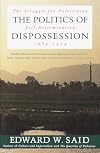
I've been interested in the history of Palestine for a long time, and this year I started to really become obsessed. It started when I stumbled upon a book in Philadelphia, and has been quite the journey. But lately I realized that all the words I have read have been written by Jews. It was time for a Palestinian voice, and just about every other author I read mentioned Edward Said.
I like a lot about The Politics of Dispossession but what I liked the most was that Said focused not only on show more Palestine, but on the whole region and the people who inhabit it. I hadn't thought about it until I read this book, but of course that makes sense; Palestinians have been scattered all over the world (but especially the area immediately surrounding historic Palestine), and have been for a while, so in order to learn about them we need to learn about the different countries they now reside in.
In addition to history and facts about many areas—Iraq, Jordan, Lebanon, Egypt—he also wrote about current events. Since these essays are from 1969-94, wrote a bit about the (first) Iraq war. I was only a child at the time, but I remember the buildup, all the ribbons tied around trees, and hearing about how evil Saddam was. I remember “us” kicking ass and destroying the opposition. I also remember hearing that US troops shot at the backs of the retreating Iraqi army, but I didn't really have the intelligence to fully grasp what that meant. Obviously I've since learned that the war had nothing to do with freeing anyone, that the US military is full of cowards who are too dumb to think for themselves, and that things aren't always what they seem. I wish I would have read (and been able to comprehend) Said's essays back then.
Said writes about Iraq being a cultural hub for all of the Arab world; how they had some fantastic universities and how women were freer than they were in a lot of other countries in the region. Comparing that to the Iraq of 2025, after another, longer war and way too many sanctions, makes me physically sick.
Martin Buber harped a lot about how the Jews moving to Palestine, first and foremost, need to learn the culture of those around them. Learn what makes their neighbors tick, how to speak the language, and the history and norms of the area. Said agrees, and takes it a step further: He points out how, in addition the US not having any solid Arab studies programs and the lack of books translated to English from Arabic, most Arabs hardly know anything about western culture. It seems so obvious, but knowing your neighbors makes for a lot less tumultuous life.
That said, I did get frustrated with Said's writing at times. It felt like (and I have at least a dozen examples circled in the book) that Said confuses Jews, zionists, and Israelis, and uses all the interchangeably. Not all Jews are zionist, not all zionists are Jews, not all Jews are Israeli, etc It freaks me out when people don't know that, especially when one of the people is an intellectual who wrote a lot about Palestine and Israel. There's also a weirdness around Said not saying anything about how the vast, vast, vast majority of zionists are Christian (perhaps because he is a Christian). He talks about how all the politicans in the US “scramble for Jewish votes,” which to me seems crazy. Less than two and a half percent of the US population is Jewish (that's around 7.5 million people); some of them can't or don't vote and some aren't zionist. It seems like what he meant to say is that politicians scramble to get the zionist—largely Christian—vote. Said also claims that zionism benefits Jews; I would argue that zionism benefits zionists, the majority of whom are not Jewish. Finally, his repeated use of the term “Judeo-Christian” shows us what he really thinks.
Despite the most recent essay in this book being thirty-one years old, almost everything he talks about is relevant today. Starting in the 1970s, politicians referred to any Palestinian who even criticized Israel as terrorists; this is still going on, and has only gotten worse. Golda Meir, one of the first prime ministers of Israel, said that Palestinians don't exist; this is something we still hear from just about every zionist. Said was freaked out that (I don't remember the exact number) the US giving Israel over $50 billion in a few year span; now Israel gets ten times that every year. It feels like more people are talking about this stuff now, but reading about how much nothing has changed for the better sure makes me feel hopeless.
If you're interested in learning more about Palestine, but have only read books from non-Palestinians, Edward Said will fill that gap. This book is very educational, and not only has he written tons more, but this book is also filled with other recommended reading. It has flaws, sure, but it's a necessary read for anyone who cares that children are being starved to death simply because they happened to be born Palestinian. show less
I like a lot about The Politics of Dispossession but what I liked the most was that Said focused not only on show more Palestine, but on the whole region and the people who inhabit it. I hadn't thought about it until I read this book, but of course that makes sense; Palestinians have been scattered all over the world (but especially the area immediately surrounding historic Palestine), and have been for a while, so in order to learn about them we need to learn about the different countries they now reside in.
In addition to history and facts about many areas—Iraq, Jordan, Lebanon, Egypt—he also wrote about current events. Since these essays are from 1969-94, wrote a bit about the (first) Iraq war. I was only a child at the time, but I remember the buildup, all the ribbons tied around trees, and hearing about how evil Saddam was. I remember “us” kicking ass and destroying the opposition. I also remember hearing that US troops shot at the backs of the retreating Iraqi army, but I didn't really have the intelligence to fully grasp what that meant. Obviously I've since learned that the war had nothing to do with freeing anyone, that the US military is full of cowards who are too dumb to think for themselves, and that things aren't always what they seem. I wish I would have read (and been able to comprehend) Said's essays back then.
Said writes about Iraq being a cultural hub for all of the Arab world; how they had some fantastic universities and how women were freer than they were in a lot of other countries in the region. Comparing that to the Iraq of 2025, after another, longer war and way too many sanctions, makes me physically sick.
Martin Buber harped a lot about how the Jews moving to Palestine, first and foremost, need to learn the culture of those around them. Learn what makes their neighbors tick, how to speak the language, and the history and norms of the area. Said agrees, and takes it a step further: He points out how, in addition the US not having any solid Arab studies programs and the lack of books translated to English from Arabic, most Arabs hardly know anything about western culture. It seems so obvious, but knowing your neighbors makes for a lot less tumultuous life.
That said, I did get frustrated with Said's writing at times. It felt like (and I have at least a dozen examples circled in the book) that Said confuses Jews, zionists, and Israelis, and uses all the interchangeably. Not all Jews are zionist, not all zionists are Jews, not all Jews are Israeli, etc It freaks me out when people don't know that, especially when one of the people is an intellectual who wrote a lot about Palestine and Israel. There's also a weirdness around Said not saying anything about how the vast, vast, vast majority of zionists are Christian (perhaps because he is a Christian). He talks about how all the politicans in the US “scramble for Jewish votes,” which to me seems crazy. Less than two and a half percent of the US population is Jewish (that's around 7.5 million people); some of them can't or don't vote and some aren't zionist. It seems like what he meant to say is that politicians scramble to get the zionist—largely Christian—vote. Said also claims that zionism benefits Jews; I would argue that zionism benefits zionists, the majority of whom are not Jewish. Finally, his repeated use of the term “Judeo-Christian” shows us what he really thinks.
Despite the most recent essay in this book being thirty-one years old, almost everything he talks about is relevant today. Starting in the 1970s, politicians referred to any Palestinian who even criticized Israel as terrorists; this is still going on, and has only gotten worse. Golda Meir, one of the first prime ministers of Israel, said that Palestinians don't exist; this is something we still hear from just about every zionist. Said was freaked out that (I don't remember the exact number) the US giving Israel over $50 billion in a few year span; now Israel gets ten times that every year. It feels like more people are talking about this stuff now, but reading about how much nothing has changed for the better sure makes me feel hopeless.
If you're interested in learning more about Palestine, but have only read books from non-Palestinians, Edward Said will fill that gap. This book is very educational, and not only has he written tons more, but this book is also filled with other recommended reading. It has flaws, sure, but it's a necessary read for anyone who cares that children are being starved to death simply because they happened to be born Palestinian. show less
A bit of an intellectual masturbation: he's all over the place, as befits Said's sprawling knowledge. He does tie it together, but doing so relies on a vague and philosophical tone throughout. It helps to have read some of his other work to understand what he is saying. The knowing irony of Said invoking Freud and Beethoven's late style, in which pieces were crafted more for themselves than the public, is that Said appears to be doing exactly the same thing here (in his last book). The show more entire speech is in service of the last paragraph, where he brings out his old saw of the humanist one state solution. It is a triumph - but only because he is so profoundly right. If he were to have made the argument in plainer language, however, it would not be such an exciting point to have made, since there is no direct connection, apart from his musing, between Freud identifying Moses as an Egyptian and the practical hope for a one state outcome. Still, a jolly romp from a great thinker - and nice and short, so you can easily get through it without a headache. show less
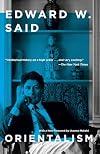
Edward Said's Orientalism is a masterwork, one of the earliest and most thorough examinations of the "colonialism of consciousness." Establishing an early beach head, it was the harbinger of an entire school of post colonial history. And, as a Palestinian, a person made invisible by colonialism, it is deeply felt.
One of the central tenets of the book is that the rise of "Orientalism" - the area studies of the Non-occidental East - coincided with the West's domination of that region for show more purposes of economic exploitation. The task Said gives himself is to study the patterns of bias through which generations of scholars, paying particular attention to the French, British and later American, came to analysize the lands they dominated. He is well suited to the task because not only was he on the receiving end of these prejudices but because working in the precincts of Western intellectual institutions, primarily Columbia University, he could well anticipate the hostile reaction his provocations would engender, not least because he was familiar, having been subjected to it, with prejudice against the Arabs and racism. Another key element of his thesis is that successive generations of scholars never adequately interrogated the underlying assumptions of their predecessors but built upon their biases. He created an astonishingly thorough evaluation of the West's attitude and understanding of the Orient beginning with Homer but picking up speed with Napolean's invasion of Egypt straight through to Bernard Lewis who he despises. To be fair, Said would rail against anyone's attempt to summarize or claim to enunciate the essential in another culture. His intellectual approach owes much to Foucault and others. You should be warmed that given the French influence on the region and the amount of scholarship the French have devoted to the subject long French excerpts are not translated as if to say, if you are serious about this topic you damn well better speak French. Year by year, decade by decade, Said excavates the prejudices and ignorance that went into building the institutions, though located exclusively in the West, of Oriental study. Again knowing how marginalized and anticipating the hostility, Said is extraordinarily thorough.
There are, however, two difficulties, the reader should prepare for. One is that Siad frequently criticizes texts that you are probably not familiar with so we have only his view. I found, for instance, his assertion that the West repeatedly prioritizes the Orient through sex, to be unpersuasive. Though the book is some what time stamped because only in passing does he mention the androcentric bias in history, something which will become far more prevalent in years after this publication. Secondly Said is a very pedantic writer. He has the tedious habit of using lists in virtually every sentence until it becomes a compulsion and it makes the book with its obsessive thoroughness a hard slog.
But not all is hopeless. He finds scholarly progress, those able to look past the blinders of colonial intellectual hegemony, in the works of HR Gibbs and Louis Massignol.
This book has such prominence because it opened the way for a whole wave of post-Colonial, post modernist theory. A true groundbreaker and necessary reading. show less
One of the central tenets of the book is that the rise of "Orientalism" - the area studies of the Non-occidental East - coincided with the West's domination of that region for show more purposes of economic exploitation. The task Said gives himself is to study the patterns of bias through which generations of scholars, paying particular attention to the French, British and later American, came to analysize the lands they dominated. He is well suited to the task because not only was he on the receiving end of these prejudices but because working in the precincts of Western intellectual institutions, primarily Columbia University, he could well anticipate the hostile reaction his provocations would engender, not least because he was familiar, having been subjected to it, with prejudice against the Arabs and racism. Another key element of his thesis is that successive generations of scholars never adequately interrogated the underlying assumptions of their predecessors but built upon their biases. He created an astonishingly thorough evaluation of the West's attitude and understanding of the Orient beginning with Homer but picking up speed with Napolean's invasion of Egypt straight through to Bernard Lewis who he despises. To be fair, Said would rail against anyone's attempt to summarize or claim to enunciate the essential in another culture. His intellectual approach owes much to Foucault and others. You should be warmed that given the French influence on the region and the amount of scholarship the French have devoted to the subject long French excerpts are not translated as if to say, if you are serious about this topic you damn well better speak French. Year by year, decade by decade, Said excavates the prejudices and ignorance that went into building the institutions, though located exclusively in the West, of Oriental study. Again knowing how marginalized and anticipating the hostility, Said is extraordinarily thorough.
There are, however, two difficulties, the reader should prepare for. One is that Siad frequently criticizes texts that you are probably not familiar with so we have only his view. I found, for instance, his assertion that the West repeatedly prioritizes the Orient through sex, to be unpersuasive. Though the book is some what time stamped because only in passing does he mention the androcentric bias in history, something which will become far more prevalent in years after this publication. Secondly Said is a very pedantic writer. He has the tedious habit of using lists in virtually every sentence until it becomes a compulsion and it makes the book with its obsessive thoroughness a hard slog.
But not all is hopeless. He finds scholarly progress, those able to look past the blinders of colonial intellectual hegemony, in the works of HR Gibbs and Louis Massignol.
This book has such prominence because it opened the way for a whole wave of post-Colonial, post modernist theory. A true groundbreaker and necessary reading. show less
Show me a more influential work of literary criticism than this one. Said's argument is reductive, ungenerous, exhilarating, compendious, and has supersaturated the way we see world and life. Without him how do we understand Bhabha, the Afghan war, MIA, the weirdo who trained us at the American school in Japan? He tars with a broad brush - throws a wild rock - and yet ends up right on target. This review isn't saying much, but it's in the nature of this brave-and-bold counterhegemonic show more riposte that you want to affirm rather than engage with it--or I do, at least. Everybody, be a little less essentialist, a little less triumphalist, today. show less
Lists
Literary Theory (1)
Reading LIst (1)
Awards


You May Also Like


Associated Authors
Statistics
- Works
- 105
- Also by
- 31
- Members
- 16,702
- Popularity
- #1,351
- Rating
- 3.9
- Reviews
- 117
- ISBNs
- 435
- Languages
- 28
- Favorited
- 34


