
Alexander Jablokov
Author of Deepdrive
About the Author
Series
Works by Alexander Jablokov
Alexander Jablokov 14 copies
Asimov's Science Fiction: Vol. 48, No. 3 & 4 [March/April 2024] — Contributor — 5 copies
A Deeper Sea [short fiction] 4 copies
Market Report [short fiction] 3 copies
Wrong Number 2 copies
Plinth Without Figure 2 copies
Warning Label 2 copies
The Forgotten Taste Of Honey 1 copy
Ecobomb 1 copy
The Last of Operation Shroud 1 copy
Complete Short Fiction 1 copy
The Fury at Colonus 1 copy
The Return Of Black Murray 1 copy
Deathbinder 1 copy
Adoption {novelette} 1 copy
The Comfort Of Strangers 1 copy
Ring of Memory {novelette} 1 copy
Associated Works
The Year's Best Science Fiction: Ninth Annual Collection (1992) — Contributor — 457 copies, 4 reviews
The Year's Best Science Fiction: Eighth Annual Collection (1991) — Contributor — 418 copies, 6 reviews
The Year's Best Science Fiction: Twenty-Eighth Annual Collection (2011) — Contributor — 329 copies, 3 reviews
The Year's Best Science Fiction: Seventh Annual Collection (1990) — Contributor — 312 copies, 2 reviews
The Year's Best Science Fiction: Thirty-First Annual Collection (2014) — Contributor — 206 copies, 3 reviews
The Magazine of Fantasy and Science Fiction January/February 2012, Vol. 122, No. 1 & 2 (2012) — Contributor — 21 copies
The Magazine of Fantasy and Science Fiction September 2007, Vol. 113, No. 3 (2007) — Author — 17 copies
The Magazine of Fantasy and Science Fiction November/December 2010, Vol. 119, No. 5 & 6 (2010) — Author — 13 copies, 1 review
Asimov's Science Fiction: Vol. 40, No. 10 & 11 [October/November 2016] (2016) — Contributor — 10 copies
Asimov's Science Fiction: Vol. 41, No. 7 & 8 [July/August 2017] (2017) — Contributor — 9 copies, 1 review
Asimov's Science Fiction: Vol. 43, No. 1 & 2 [January/February 2019] (2019) — Contributor — 5 copies, 1 review
Asimov's Science Fiction: Vol. 50, No. 1 & 2 [January/February 2026] — Contributor — 2 copies
Tagged
Common Knowledge
- Birthdate
- 1956-04-29
- Gender
- male
- Occupations
- Marketing Director
communications engineer - Organizations
- Science Fiction and Fantasy Writers of America (SFWA)
- Agent
- Martha Millard
- Nationality
- USA
- Places of residence
- Cambridge, Massachusetts, USA
Chicago, Illinois, USA
Somerville, Massachusetts, USA - Associated Place (for map)
- Massachusetts, USA
Members
Reviews
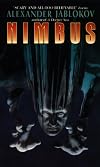
My reaction to reading this book in 1994. Spoilers follow.
In some ways this novel – Jablokov’s self-described attempt to do a cyberpunkish film noir – is Jablokov’s best novel. The story has the needed suspense and mystery to not only do credit to Jablokov’s attempt at homage but also to compel the reader to read more.
The themes include, but are not restricted to, Jablokov’s usual death and art as jazz musician and seller/installer of black market mental prosthetics, Peter show more Ambrose, is forced into the role of detective as his former fellow veterans of the Group (a secret research project in the Devolution Wars – Jablokov has a knack for suggesting complex historical events in the background of his stories with just a well-chosen phrase or bit of nomenclature) begin turning up dead. Naturally, for a film noirish story, he meets a woman and falls in love with her.
I liked what Jablokov did with some fairly off the shelf components of modern sf. Nanotechnology is used to redecorate homes casually overnight. Brain modifications (a lá George Alec Effinger’s Budayeen series) are common with implanted abilities, personalities, neuroses, and psychoses. Jablokov seems to be satirizing some elements of modern science fiction, particularly the alternate history and cyberpunk aesthetics. In this novel’s world, constructing alternate worlds is a craze. Ambrose’s friend Sheldon has constructed an elaborate time line where jazz took a different path and rock-n-roll was never invented. He fabricates supporting artifacts like photos and musical instruments and scores. Fellow Nimbus member Hank Rush, utterly devoted to transforming himself into a machine, ridding Earth of man, and a cohort of a ring of extorting environmental terrorists, has fake fossils which purport to document the evolution, from the Cambrian era, of his machine evolution. Cyberpunk is wryly poked fun at with passing references to a fad involving a fetish for industrial era relics including motor oil in coffee and on penises. Jablokov also makes the valid point that a computer Net is not a magic pathway to education and enlightenment but just another pathway for more of the same with “datadork” foolishness, error, rumor, and conspiracy theories.
Thematically, at its most basic level, this is a novel on the perils and human toll (in alienation, loneliness, depravity, and death) of a mechanistic view of the universe – or, more correctly, an extrapolation on the consequences of mechanistic thought as applied to the human psyche. Narrator Ambrose supports himself by modifying brains to spec with everything from custom neuroses to increased associational abilities to increased sexual potency. He sees his clients brains as “complex gray oatmeal” and, as his ex-wife Corinne notes, he compulsively views others as little more than machines to be modified. Yet, he has resisted most modifications to himself – with the large exception of blocking his old memories of the Nimbus project and reconstructing a new personality – and realizes that his modification don’t “force the universe to make sense … [or] make you a better human … just a more efficient one”. Self-modification is practiced by several characters. Anthony Watkins, another Nimbus alum, habitually takes psychoactive drugs and deliberately induces psychoses in himself. Rush is utterly devoted to becoming more machine like and moving off world. Nimbus alum Lori Inversato has extensive modifications allowing her to change her body, sex, and personality at will. However, if psychic and body manipulation can be voluntary, it can be coerced too. Helena Mennaura, another Nimbus messenger, has constructed an elaborate fantasy life of marriage and a family complete with supporting artifacts (again, a sort of play on a personal alternate history) and has accepted, as part of her employment conditions, that she can only consciously recall her research when at work. Priscilla McThornly, Gideon Farley's mistress and Ambrose’s lover, was covertly brought up to be a high price prostitute.
The methods used are social and psychological with no high tech but the goal of creating a personality by coercion is the same. Gene Michaud, as head of a security company, socially manipulates urban gangs in order to develop them into mercenary troops. Rush wants to force humanity to become like him and stop infecting Earth. Jablokov seems to thematically be saying that these scientific tools can be used, like all technologically and science, for good and ill. Sometimes the destruction is deliberately self-inflected as when Mennaura chops her mind to induce aphasias. And, of course, the novel ends on the note of Linden Straussman possessing, in sort of demonic fashion, the recently modified brain of Gideon Farley and somehow controlling, even after death, the Nimbus group. Of course, with manipulation comes deceit which also is engineered with the tool of this society. Corinne becomes an unknowing lock to Ambrose’s memories; Michaud is spied on by a supposedly inert machine of Rush; Mennaura is blackmailed into giving the tainted “virt” to Ambrose for implant in Farley.
In this world where everything – including the human soul and mind – can be broken down into bits for processing (the evil fallout of present tech trends) the only salvation, Ambrose seems to say, lies in honesty as he learns to confide in his ex-wife and current lover. It’s also significant that one of the moral compasses of this novel is a cop, Amanda TerAlst who, as an “Inherent Potentialist”, is philosophically opposed to modification. In short, this novel is thematically sophisticated, perhaps more than any other Jablokov work.
Yet, the novel didn’t quite work at the end. Jablokov does a little bit of handwaving at end to explain the book's murders. I accept the psychic possession of Farley via the Straussman tainted implant. Yet, the explanation at to how Straussman was kept alive in the minds of the Nimbus Group was incomplete (especially given Ambrose's technical expertise – Jablokov could have given some pseudo scientific explanation). It’s a notion that doesn’t mesh well with Straussman’s personality being resurrected accidentally because of TerAlst’s investigation. (I bought Straussman implanting tropism and different gifts in the Nimbus Group to be used later, but what “crimes” they committed and blamed on Straussman is not clear.) The philosophic point of the ending is that chance plays a role even in this mechanistic universe (Straussman dies in an accident; Priscilla’s transformation to whore is derailed by incest with a brother; TerAlst revives Straussman’s pysche by mistake; and Rush says that chance drives evolution; Farley’s original personality emerges to commit suicide). show less
In some ways this novel – Jablokov’s self-described attempt to do a cyberpunkish film noir – is Jablokov’s best novel. The story has the needed suspense and mystery to not only do credit to Jablokov’s attempt at homage but also to compel the reader to read more.
The themes include, but are not restricted to, Jablokov’s usual death and art as jazz musician and seller/installer of black market mental prosthetics, Peter show more Ambrose, is forced into the role of detective as his former fellow veterans of the Group (a secret research project in the Devolution Wars – Jablokov has a knack for suggesting complex historical events in the background of his stories with just a well-chosen phrase or bit of nomenclature) begin turning up dead. Naturally, for a film noirish story, he meets a woman and falls in love with her.
I liked what Jablokov did with some fairly off the shelf components of modern sf. Nanotechnology is used to redecorate homes casually overnight. Brain modifications (a lá George Alec Effinger’s Budayeen series) are common with implanted abilities, personalities, neuroses, and psychoses. Jablokov seems to be satirizing some elements of modern science fiction, particularly the alternate history and cyberpunk aesthetics. In this novel’s world, constructing alternate worlds is a craze. Ambrose’s friend Sheldon has constructed an elaborate time line where jazz took a different path and rock-n-roll was never invented. He fabricates supporting artifacts like photos and musical instruments and scores. Fellow Nimbus member Hank Rush, utterly devoted to transforming himself into a machine, ridding Earth of man, and a cohort of a ring of extorting environmental terrorists, has fake fossils which purport to document the evolution, from the Cambrian era, of his machine evolution. Cyberpunk is wryly poked fun at with passing references to a fad involving a fetish for industrial era relics including motor oil in coffee and on penises. Jablokov also makes the valid point that a computer Net is not a magic pathway to education and enlightenment but just another pathway for more of the same with “datadork” foolishness, error, rumor, and conspiracy theories.
Thematically, at its most basic level, this is a novel on the perils and human toll (in alienation, loneliness, depravity, and death) of a mechanistic view of the universe – or, more correctly, an extrapolation on the consequences of mechanistic thought as applied to the human psyche. Narrator Ambrose supports himself by modifying brains to spec with everything from custom neuroses to increased associational abilities to increased sexual potency. He sees his clients brains as “complex gray oatmeal” and, as his ex-wife Corinne notes, he compulsively views others as little more than machines to be modified. Yet, he has resisted most modifications to himself – with the large exception of blocking his old memories of the Nimbus project and reconstructing a new personality – and realizes that his modification don’t “force the universe to make sense … [or] make you a better human … just a more efficient one”. Self-modification is practiced by several characters. Anthony Watkins, another Nimbus alum, habitually takes psychoactive drugs and deliberately induces psychoses in himself. Rush is utterly devoted to becoming more machine like and moving off world. Nimbus alum Lori Inversato has extensive modifications allowing her to change her body, sex, and personality at will. However, if psychic and body manipulation can be voluntary, it can be coerced too. Helena Mennaura, another Nimbus messenger, has constructed an elaborate fantasy life of marriage and a family complete with supporting artifacts (again, a sort of play on a personal alternate history) and has accepted, as part of her employment conditions, that she can only consciously recall her research when at work. Priscilla McThornly, Gideon Farley's mistress and Ambrose’s lover, was covertly brought up to be a high price prostitute.
The methods used are social and psychological with no high tech but the goal of creating a personality by coercion is the same. Gene Michaud, as head of a security company, socially manipulates urban gangs in order to develop them into mercenary troops. Rush wants to force humanity to become like him and stop infecting Earth. Jablokov seems to thematically be saying that these scientific tools can be used, like all technologically and science, for good and ill. Sometimes the destruction is deliberately self-inflected as when Mennaura chops her mind to induce aphasias. And, of course, the novel ends on the note of Linden Straussman possessing, in sort of demonic fashion, the recently modified brain of Gideon Farley and somehow controlling, even after death, the Nimbus group. Of course, with manipulation comes deceit which also is engineered with the tool of this society. Corinne becomes an unknowing lock to Ambrose’s memories; Michaud is spied on by a supposedly inert machine of Rush; Mennaura is blackmailed into giving the tainted “virt” to Ambrose for implant in Farley.
In this world where everything – including the human soul and mind – can be broken down into bits for processing (the evil fallout of present tech trends) the only salvation, Ambrose seems to say, lies in honesty as he learns to confide in his ex-wife and current lover. It’s also significant that one of the moral compasses of this novel is a cop, Amanda TerAlst who, as an “Inherent Potentialist”, is philosophically opposed to modification. In short, this novel is thematically sophisticated, perhaps more than any other Jablokov work.
Yet, the novel didn’t quite work at the end. Jablokov does a little bit of handwaving at end to explain the book's murders. I accept the psychic possession of Farley via the Straussman tainted implant. Yet, the explanation at to how Straussman was kept alive in the minds of the Nimbus Group was incomplete (especially given Ambrose's technical expertise – Jablokov could have given some pseudo scientific explanation). It’s a notion that doesn’t mesh well with Straussman’s personality being resurrected accidentally because of TerAlst’s investigation. (I bought Straussman implanting tropism and different gifts in the Nimbus Group to be used later, but what “crimes” they committed and blamed on Straussman is not clear.) The philosophic point of the ending is that chance plays a role even in this mechanistic universe (Straussman dies in an accident; Priscilla’s transformation to whore is derailed by incest with a brother; TerAlst revives Straussman’s pysche by mistake; and Rush says that chance drives evolution; Farley’s original personality emerges to commit suicide). show less

A grand byzantine space opera with militant martians, alien artifacts, and court intrigues that stretch from the Himalayas to the asteroid belt with Jablokov's world-building a wonderful mix of high tech and gothic elegance (art figures prominently). I could have done without some of the James Bond antics but I suppose it's all part of the genre. A good read.

My reaction to reading this novel in 1993. Spoilers follow.
I didn’t like this novel version as well as the novella version of the same name.
The dolphins – the best part of this novel and the novella – are just as obnoxious, petty, irritating, and sexually perverted as in the original novella. They, in fact, seem more vicious here (drowning sailors when no one’s around and saving them dramatically when someone is) as do the philosophical orcas. But their motives seemed diffused by show more the novel’s length. Their religion only comes across has half understood, an unclear motivation for driving whale Clarence on the rocks and for orcas taking an interest in dolphin messiah and God’s Remora Weismuller. Jablokov does a nice job in evoking the phrases of a dolphin language as well as their obsession with hierarchy, sex, and eating. After all, with no oppossable thumbs and no fire, there’s not a lot for them to do. And the idea of a dolphin language that mimics the echoes of real objects is a great idea. The act of echoing, in dolphin mythology, is an act of creating and describing the world.
In fact, this novel can be seen as another example of Jablokov’s concern with the subjects of death, art, and religion. The dolphins and orcas see death as an act that can give meaning to the universe and their lives. Their mythology has God’s echoing as a creative act as well as a description and understanding of the world. The religious Vsevolod Makarygin, son of an Russian Orthodox priest, tells Weissmuller “If shouting the shape of reality is what you should do – then do it. … Echo land …”. Religion is thick in the book – not only with the dolphins but also the pious Makarygin who helps main character Colonel Ilya Stasov find solace and some kind of purpose in their terrible internment by the Japanese in a prisoner of war camp.
The tech in this book is well thought out, but clearly in the background. Jablokov, a communications engineer, is more interested in human relationships and the struggle between Stasov and the dolphins he forces to speak after a self-imposed silence of thousands of years. Both dolphins and Stasov see themselves as using each other for their own ends. Stasov overcomes his guilt at torturing the dolphins into speaking and uses them to realize his vision of a cyborg whale contacting lifeforms on Jupiter.) This vision of his serves a religious function. While the novella has the dolphins trying to flee Earth in cyborg form due to, well, seemingly due to man’s new interest in them on top of man’s old disregard but nothing is totally clear, the novel has the impulse to go into space a religious one, and the orcas want revenge on the enigmatic Jovians that eat Clarence in the deeper sea of Jupiter. They also want to hunt man, Stasov speculates, in space. This uncertainity of motives in this book, their lack of a clear rationale is a weakness though one could read this understanding of motives the object of the lifelong quest of Stasov’s eluded to at novel’s end. Even the reasons for why dolphins stopped speaking to man after the explosion of Thera is not clear.
Jablokov diluted his story in expanding it with the main difference in plot being Stasov on-again-off-again love affair Anna Calderone. His characters' motives seem less clear even though he kept the best part of the novella – the creation of a cetacean consciousness. show less
I didn’t like this novel version as well as the novella version of the same name.
The dolphins – the best part of this novel and the novella – are just as obnoxious, petty, irritating, and sexually perverted as in the original novella. They, in fact, seem more vicious here (drowning sailors when no one’s around and saving them dramatically when someone is) as do the philosophical orcas. But their motives seemed diffused by show more the novel’s length. Their religion only comes across has half understood, an unclear motivation for driving whale Clarence on the rocks and for orcas taking an interest in dolphin messiah and God’s Remora Weismuller. Jablokov does a nice job in evoking the phrases of a dolphin language as well as their obsession with hierarchy, sex, and eating. After all, with no oppossable thumbs and no fire, there’s not a lot for them to do. And the idea of a dolphin language that mimics the echoes of real objects is a great idea. The act of echoing, in dolphin mythology, is an act of creating and describing the world.
In fact, this novel can be seen as another example of Jablokov’s concern with the subjects of death, art, and religion. The dolphins and orcas see death as an act that can give meaning to the universe and their lives. Their mythology has God’s echoing as a creative act as well as a description and understanding of the world. The religious Vsevolod Makarygin, son of an Russian Orthodox priest, tells Weissmuller “If shouting the shape of reality is what you should do – then do it. … Echo land …”. Religion is thick in the book – not only with the dolphins but also the pious Makarygin who helps main character Colonel Ilya Stasov find solace and some kind of purpose in their terrible internment by the Japanese in a prisoner of war camp.
The tech in this book is well thought out, but clearly in the background. Jablokov, a communications engineer, is more interested in human relationships and the struggle between Stasov and the dolphins he forces to speak after a self-imposed silence of thousands of years. Both dolphins and Stasov see themselves as using each other for their own ends. Stasov overcomes his guilt at torturing the dolphins into speaking and uses them to realize his vision of a cyborg whale contacting lifeforms on Jupiter.) This vision of his serves a religious function. While the novella has the dolphins trying to flee Earth in cyborg form due to, well, seemingly due to man’s new interest in them on top of man’s old disregard but nothing is totally clear, the novel has the impulse to go into space a religious one, and the orcas want revenge on the enigmatic Jovians that eat Clarence in the deeper sea of Jupiter. They also want to hunt man, Stasov speculates, in space. This uncertainity of motives in this book, their lack of a clear rationale is a weakness though one could read this understanding of motives the object of the lifelong quest of Stasov’s eluded to at novel’s end. Even the reasons for why dolphins stopped speaking to man after the explosion of Thera is not clear.
Jablokov diluted his story in expanding it with the main difference in plot being Stasov on-again-off-again love affair Anna Calderone. His characters' motives seem less clear even though he kept the best part of the novella – the creation of a cetacean consciousness. show less
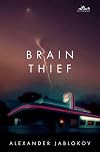
(Reprinted from the Chicago Center for Literature and Photography [cclapcenter.com]. I am the original author of this essay, as well as the owner of CCLaP; it is not being reprinted illegally.)
At first glance, the "trippy" "cyberpunk" novel Brain Thief by Alexander Jablokov looks like something that'd be right up my alley, to the point that it's one of the few titles I've ever bothered to put on reserve at my local library, instead of my usual habit of choosing books based on whatever random show more titles happen to be there on the day of my visit. But alas, this novel is neither trippy nor cyberpunk, but rather a sorta ham-fisted gonzo comedy that shares exactly enough surface-level elements with trippy cyberpunk to justify some lazy marketer slapping the words onto the dust jacket, a book that supposedly concerns the day-after-tomorrow high-tech industry centered around Boston and an artificially intelligent entity that has gone rogue, but whose entire first half (which is as far as I read) mostly consists of zany chase scenes that for some unknown reason are set in locations that feel more like rural California in 1956. Of course, details like these have been forgiven in other bizarro novels I've reviewed here, but Brain Thief also happens to be egregiously guilty of the most common crime among all genre fiction in general, of ignoring character development in their service of an overly convoluted plot; and so not only does this book mostly consist of zany chase scenes when it's been advertised as a brainy thriller, but they are chase scenes set among disposable cartoon characters, completely failing to generate any interest among the reader as to what their fates might be, and instead forcing the reader to judge the book solely by how clever it is (which unfortunately is "not very"). I mean, not every book out there has to be Proust, but for God's sake, I want an artist to at least make an effort at getting us to feel like we're following the fate of a real human being, and not just some cardboard chess piece that emerged whole-cloth from their mind's eye; and this of course is the big problem among CGI-obsessed Hollywood these days too, and why such big-budget spectacles like Avatar still end up feeling flat and listless no matter how inventive the special effects. This book is the textual version of that, and it comes recommended to only the most hardcore fans of bizarro and gonzo fiction out there.
Out of 10: 5.7 show less
At first glance, the "trippy" "cyberpunk" novel Brain Thief by Alexander Jablokov looks like something that'd be right up my alley, to the point that it's one of the few titles I've ever bothered to put on reserve at my local library, instead of my usual habit of choosing books based on whatever random show more titles happen to be there on the day of my visit. But alas, this novel is neither trippy nor cyberpunk, but rather a sorta ham-fisted gonzo comedy that shares exactly enough surface-level elements with trippy cyberpunk to justify some lazy marketer slapping the words onto the dust jacket, a book that supposedly concerns the day-after-tomorrow high-tech industry centered around Boston and an artificially intelligent entity that has gone rogue, but whose entire first half (which is as far as I read) mostly consists of zany chase scenes that for some unknown reason are set in locations that feel more like rural California in 1956. Of course, details like these have been forgiven in other bizarro novels I've reviewed here, but Brain Thief also happens to be egregiously guilty of the most common crime among all genre fiction in general, of ignoring character development in their service of an overly convoluted plot; and so not only does this book mostly consist of zany chase scenes when it's been advertised as a brainy thriller, but they are chase scenes set among disposable cartoon characters, completely failing to generate any interest among the reader as to what their fates might be, and instead forcing the reader to judge the book solely by how clever it is (which unfortunately is "not very"). I mean, not every book out there has to be Proust, but for God's sake, I want an artist to at least make an effort at getting us to feel like we're following the fate of a real human being, and not just some cardboard chess piece that emerged whole-cloth from their mind's eye; and this of course is the big problem among CGI-obsessed Hollywood these days too, and why such big-budget spectacles like Avatar still end up feeling flat and listless no matter how inventive the special effects. This book is the textual version of that, and it comes recommended to only the most hardcore fans of bizarro and gonzo fiction out there.
Out of 10: 5.7 show less
Lists
Awards


You May Also Like


Associated Authors
Statistics
- Works
- 42
- Also by
- 34
- Members
- 1,051
- Popularity
- #24,523
- Rating
- 3.6
- Reviews
- 30
- ISBNs
- 28
- Languages
- 4
- Favorited
- 2
