
John Barnes (1) (1957–)
Author of A Million Open Doors
For other authors named John Barnes, see the disambiguation page.
About the Author
Image credit: Author's Blog Profile
Series
Works by John Barnes
The Timeline Wars (Patton's Spaceship, Washington's Dirigible, Caesar's Bicycle) (1997) 57 copies, 1 review
Every Hole Is Outlined 7 copies
Martian Heart 5 copies
Things Undone 4 copies
How to Build a Future 2 copies
Poga 2 copies
Rod Rapid And His Electric Chair 2 copies
The Lost Princess Man 2 copies
The Limit of Vision 1 copy
Associated Works
The Year's Best Science Fiction: Twenty-Fifth Annual Collection (2008) — Contributor — 512 copies, 3 reviews
The Year's Best Science Fiction: Twenty-Fourth Annual Collection (2007) — Contributor — 458 copies, 6 reviews
The Year's Best Science Fiction: Twenty-Seventh Annual Collection (2010) — Contributor — 325 copies, 6 reviews
Bruce Coville's Book of Monsters: Tales to Give You the Creeps (1993) — Contributor — 284 copies, 3 reviews
The Year's Best Science Fiction: Twenty-Ninth Annual Collection (2012) — Contributor — 275 copies, 5 reviews
The Year's Best Science Fiction: Thirty-Third Annual Collection (2016) — Contributor — 190 copies, 2 reviews
The Very Best of the Best: 35 Years of The Year's Best Science Fiction (2019) — Contributor — 183 copies, 1 review
More Human Than Human: Stories of Androids, Robots, and Manufactured Humanity (2017) — Contributor — 62 copies, 2 reviews
Isaac Asimov's Science Fiction Magazine: Vol. 12, No. 7 [July 1988] (1988) — Contributor — 20 copies, 1 review
Isaac Asimov's Science Fiction Magazine: Vol. 10, No. 12 [December 1986] (1986) — Contributor — 14 copies
ZomerSFeer : nieuwe verhalen van John Barnes, David Brin, Walter Jon Williams (1996) — Contributor — 8 copies
Tagged
Common Knowledge
- Canonical name
- Barnes, John
- Legal name
- Barnes, John Allen
- Birthdate
- 1957-02-28
- Gender
- male
- Education
- Washington University (BA|1978|MA|1981)
University of Montana (MA|MFA|1988)
University of Pittsburgh (Ph.D|1995) - Organizations
- Western State College
Science Fiction Writers American
American Society for Theatre Research - Agent
- Ashley Grayson
- Relationships
- Dalkey, Kara (former spouse | 1993-2001)
- Nationality
- USA
- Birthplace
- Angola, Indiana, USA
- Places of residence
- Colorado, USA
- Associated Place (for map)
- USA
Members
Discussions
Found: Sci Fi Trilogy in Name that Book (November 2023)
sf all citizens monitored online, last untagged rebel is pursued for years in Name that Book (May 2011)
Reviews
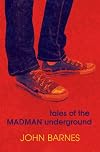
Karl Shoemaker, a member of a school therapy group dubbed "the madman underground" by it's close-knit members, decides he is going to spend his senior year of high school in 1973 as a "normal" kid.
John Barnes tells the Madman Underground's story through Karl, a responsible young man with a mother who just can't seem to grow up. His father's death and his mother's subsequent antics have landed him a spot as one of the Madmen – a group of kids in the school's therapy program all dealing show more with issues of their own. The group of friends from all walks of life is unified by their "issues" and they depend on each other for support, and sometimes, for rescue. Barnes' narrative is smart, always funny, and often a little off-color. It deals with heavy topics, such as abuse, neglect, drugs and alcohol, molestation, and homosexuality, but does so in a way that feels natural and authentic. Because of the mature subject matter and the adult, sometimes vulgar language, this book is best suited for a high school library or the teen /young adult section of a public library. Although some of the issues may be unsettling, they are presented with enough humor and honesty (without being a “problem” novel) to draw in, rather than alienate, teens.
**on a strictly personal note, this was one of my very favorite young adult novels I have read in a very long time. It was so funny, engaging, and honest in it's portrayal of perceived "troubled" teen-dom without being a preachy, "problem" novel or feeling forced. Plus, it was just funny, and the characters were intensely likeable, even when they weren't. show less
John Barnes tells the Madman Underground's story through Karl, a responsible young man with a mother who just can't seem to grow up. His father's death and his mother's subsequent antics have landed him a spot as one of the Madmen – a group of kids in the school's therapy program all dealing show more with issues of their own. The group of friends from all walks of life is unified by their "issues" and they depend on each other for support, and sometimes, for rescue. Barnes' narrative is smart, always funny, and often a little off-color. It deals with heavy topics, such as abuse, neglect, drugs and alcohol, molestation, and homosexuality, but does so in a way that feels natural and authentic. Because of the mature subject matter and the adult, sometimes vulgar language, this book is best suited for a high school library or the teen /young adult section of a public library. Although some of the issues may be unsettling, they are presented with enough humor and honesty (without being a “problem” novel) to draw in, rather than alienate, teens.
**on a strictly personal note, this was one of my very favorite young adult novels I have read in a very long time. It was so funny, engaging, and honest in it's portrayal of perceived "troubled" teen-dom without being a preachy, "problem" novel or feeling forced. Plus, it was just funny, and the characters were intensely likeable, even when they weren't. show less
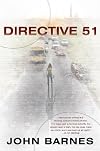
I found this book compelling and interesting. I love “civilization collapses” scenarios, so this was right up my street. I bought all the science fiction elements without a problem. This book was like a love song to rational thinking, as it shows one person after another in its huge cast solving problems with their lucid, reasonable minds. Although the novel tells you that people are out in the street attacking, robbing, and sexually assaulting each other, the reader doesn’t have to show more see too much of that. Instead you see stuff like an angry mob being quieted by a truthful speech. Or you have two embittered enemies who are both intelligent, honorable men sitting down together and solving their differences with the help of a moderator. I don’t think that is very realistic, but I love reading about it.
My favorite character was Lenny Plekhanov, and I just love the fact that he is a nerd with a disability who uses a wheelchair AND he is the sexy love interest. That made me so happy. When have you ever seen that? Immediately I started worrying that he was going to die, because usually the character with a disability dies, often smothered by a pillow for their own good. Sure enough, his life is under threat because he has a pacemaker and other implants that come in contact with his skin, and terrorists have released technology-destroying nano biotes that might stop all his machinery. I won’t tell you what happens. Anyway, everyone in the book might die at any time; they’re in a pretty dicey situation.
I am eager to read the second book, despite the fact that there was something bizarre about this one. All the characters are foaming mad about upholding the oaths that they swore. Everyone is constantly rabbiting on about who the president is going to be, and that the process has to follow the constitutional guidelines. If all technology were wiped out, and there was no food, and no transportation, and no communication, and people are running around killing each other, I don’t think anyone would care one iota who the president was or whether the government followed the rules on that. It would be the last thing on my mind, for sure. But these people are obsessed. In one scene, you have character A arresting character B to fulfill his oath. Character B telling character A the only thing that upsets him is that A is breaking his oath. Character C resigning so he doesn’t have to break his oath. Character D in torment over his oath. Really? I have never gotten the impression that politicos and four-star generals are very serious about the oaths they took to uphold the Constitution. But John Barnes is good enough that I’m willing to suspend my disbelief so that I can find out what happens next. show less
My favorite character was Lenny Plekhanov, and I just love the fact that he is a nerd with a disability who uses a wheelchair AND he is the sexy love interest. That made me so happy. When have you ever seen that? Immediately I started worrying that he was going to die, because usually the character with a disability dies, often smothered by a pillow for their own good. Sure enough, his life is under threat because he has a pacemaker and other implants that come in contact with his skin, and terrorists have released technology-destroying nano biotes that might stop all his machinery. I won’t tell you what happens. Anyway, everyone in the book might die at any time; they’re in a pretty dicey situation.
I am eager to read the second book, despite the fact that there was something bizarre about this one. All the characters are foaming mad about upholding the oaths that they swore. Everyone is constantly rabbiting on about who the president is going to be, and that the process has to follow the constitutional guidelines. If all technology were wiped out, and there was no food, and no transportation, and no communication, and people are running around killing each other, I don’t think anyone would care one iota who the president was or whether the government followed the rules on that. It would be the last thing on my mind, for sure. But these people are obsessed. In one scene, you have character A arresting character B to fulfill his oath. Character B telling character A the only thing that upsets him is that A is breaking his oath. Character C resigning so he doesn’t have to break his oath. Character D in torment over his oath. Really? I have never gotten the impression that politicos and four-star generals are very serious about the oaths they took to uphold the Constitution. But John Barnes is good enough that I’m willing to suspend my disbelief so that I can find out what happens next. show less
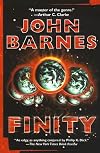
Lyle Peripart is an average astronomer, an American ex-pat living in New Zealand and making a pretty good go of it, in a world where the Nazis won WW2 and Twelve Reichs divide the globe. He's got a steady relationship, a nice house, and a talking suborbital rocketship. When he accepts a new job with a mysterious industrial tycoon his life gets seriously weird. He starts running into a Gestapo agent, his fiance is a gun-slinging international assassin rather than a history professor, and show more there are gaps in what Lyle can say and think: worlds and phrases that trigger headaches and amnesia. The biggest problem: no two people agree on what history looks like, and no one has every actually communicated with America. An entire country has been missing for decades, memory is a lie, and something is very fishy.
What follows is a thrilling quest into the empty heart of America, the weirdness of Many Worlds Quantum Mechanics, and what it means to really Pursue Happiness above all else. Finity is a strange strange book, a breezy picaresque tied to quantum speculation and a brutal death march, but it's quite cool and an under appreciated gem. show less
What follows is a thrilling quest into the empty heart of America, the weirdness of Many Worlds Quantum Mechanics, and what it means to really Pursue Happiness above all else. Finity is a strange strange book, a breezy picaresque tied to quantum speculation and a brutal death march, but it's quite cool and an under appreciated gem. show less
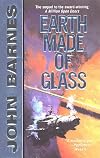
A sequel to A Million Open Doors, which I did not like much, also set in Barnes’s Thousand Cultures universe and featuring the same characters, Girault and Margaret Leones. Earth Made of Glass was shortlisted for the Clarke Award in 1999.
This second Thousand Cultures novel is, I think, a better book - at least, I liked it slightly more - but not for the right reasons. Like the novel preceding it, the story could easily take place in the present-day. It doesn’t need to be science fiction. show more In A Million Open Doors it was toxic masculine society versus repressed puritanical society. Here, it’s racist society versus enclosed society. In the first novel, the two cultures were invented, openly so, but invented based on a set of principles. In Earth Made of Glass, the two cultures, which share the limited habitable area of the world of Briand, are appropriated. The Tamil Mandalam are an attempt to create the culture of southern India in the first few centuries CE, specifically that which generated the Cankam, a huge body of epic poetry often considered to be the historical highlight of Tamil literary culture. The Maya of Kintulum, on the other hand, are a best-guess at how the Maya actually lived. None of those involved in setting up the two cultures had any connection, cultural, racial or geographic, to them.
By the time the springer arrives at Briand, the Tamil and the Maya hate each other, and consider each other to be less than human. A past disaster has resulted in a Maya shanty town outside the Tamil capital of Tajavur. Ethnic violence is commonplace. The main Maya city of Yaxkintulum is completely off-limits to the Tamil. Girault and Margaret are sent in undercover to find some way to stop the ethnic violence and bring both cultures peacefully into the Council of Humanity fold.
Barnes does a good job of describing Tanjavur and its cultures, but the endless racism towards the Maya gets tiresome very quickly. (As does the joke about people trying to pronounce Girault correctly.) And when the action shifts to Yaxkintulum, it proves just as fascinating a place (and, ironically, the Maya relied heavily on AI to invent the stories and myths which are carved into every available surface in the city). The Maya want to improve relations, and embark on a risky plan. They send a Mayan prophet to Tanjavur, with a message to not let their lives be defined by their literary corpus or mythology. Things began to look up, but then rapidly go downhill.
The two cultures are fascinating, but it feels like a guilty pleasure. Occitan and Caledony in A Million Open Doors were entirely invented; Tamil Mandalam and the Maya are not. They’re very deliberately skewed takes on real cultures. It feels like misuse, or perhaps even abuse, even though they make for a more interesting read than the dull Occitan and Caledon cultures. There is also a major female player in the plot - she’s not a character because Barnes’s characterisation of her is basically “slut”, but she has more impact on the story than anyone else. Every mention of her leaves a bad taste in the mouth. Even more so, when the narrative seems to expect the reader to admire the most racist of the Tamils.
There were two more novels after Earth Made of Glass, The Merchants of Souls in 2001 and The Armies of Memory in 2006. There’s mention in both A Million Open Doors and Earth Made of Glass of an alien race whose artefacts have been discovered in numerous places, and that sort of makes me want to read the rest of the quartet, even though I may find lots in them I don’t like… show less
This second Thousand Cultures novel is, I think, a better book - at least, I liked it slightly more - but not for the right reasons. Like the novel preceding it, the story could easily take place in the present-day. It doesn’t need to be science fiction. show more In A Million Open Doors it was toxic masculine society versus repressed puritanical society. Here, it’s racist society versus enclosed society. In the first novel, the two cultures were invented, openly so, but invented based on a set of principles. In Earth Made of Glass, the two cultures, which share the limited habitable area of the world of Briand, are appropriated. The Tamil Mandalam are an attempt to create the culture of southern India in the first few centuries CE, specifically that which generated the Cankam, a huge body of epic poetry often considered to be the historical highlight of Tamil literary culture. The Maya of Kintulum, on the other hand, are a best-guess at how the Maya actually lived. None of those involved in setting up the two cultures had any connection, cultural, racial or geographic, to them.
By the time the springer arrives at Briand, the Tamil and the Maya hate each other, and consider each other to be less than human. A past disaster has resulted in a Maya shanty town outside the Tamil capital of Tajavur. Ethnic violence is commonplace. The main Maya city of Yaxkintulum is completely off-limits to the Tamil. Girault and Margaret are sent in undercover to find some way to stop the ethnic violence and bring both cultures peacefully into the Council of Humanity fold.
Barnes does a good job of describing Tanjavur and its cultures, but the endless racism towards the Maya gets tiresome very quickly. (As does the joke about people trying to pronounce Girault correctly.) And when the action shifts to Yaxkintulum, it proves just as fascinating a place (and, ironically, the Maya relied heavily on AI to invent the stories and myths which are carved into every available surface in the city). The Maya want to improve relations, and embark on a risky plan. They send a Mayan prophet to Tanjavur, with a message to not let their lives be defined by their literary corpus or mythology. Things began to look up, but then rapidly go downhill.
The two cultures are fascinating, but it feels like a guilty pleasure. Occitan and Caledony in A Million Open Doors were entirely invented; Tamil Mandalam and the Maya are not. They’re very deliberately skewed takes on real cultures. It feels like misuse, or perhaps even abuse, even though they make for a more interesting read than the dull Occitan and Caledon cultures. There is also a major female player in the plot - she’s not a character because Barnes’s characterisation of her is basically “slut”, but she has more impact on the story than anyone else. Every mention of her leaves a bad taste in the mouth. Even more so, when the narrative seems to expect the reader to admire the most racist of the Tamils.
There were two more novels after Earth Made of Glass, The Merchants of Souls in 2001 and The Armies of Memory in 2006. There’s mention in both A Million Open Doors and Earth Made of Glass of an alien race whose artefacts have been discovered in numerous places, and that sort of makes me want to read the rest of the quartet, even though I may find lots in them I don’t like… show less
Lists
Awards


You May Also Like


Associated Authors
Statistics
- Works
- 63
- Also by
- 33
- Members
- 8,364
- Popularity
- #2,880
- Rating
- 3.6
- Reviews
- 150
- ISBNs
- 297
- Languages
- 11
- Favorited
- 13