
Patricia Anthony (1947–2013)
Author of Cold Allies
About the Author
Works by Patricia Anthony
Associated Works
Isaac Asimov's Science Fiction Magazine: Vol. 16, No. 8 [July 1992] (1992) — Contributor — 14 copies
Urania Millemondinverno 1991 — Contributor — 1 copy
Tagged
Common Knowledge
- Canonical name
- Anthony, Patricia
- Legal name
- Anthony, Patricia Marie
- Birthdate
- 1947-03-29
- Date of death
- 2013-08-02
- Gender
- female
- Occupations
- teacher
writer - Nationality
- USA
- Birthplace
- San Antonio, Texas, USA
- Associated Place (for map)
- Texas, USA
Members
Discussions
Patricia Anthony 1947-2013 in Science Fiction Fans (September 2013)
Patricia Anthony? in Science Fiction Fans (July 2011)
Reviews

Rating: 4* of five
The Book Report: Travis Lee Stanhope leaves Harvard for France to join in the fighting of The Great War (WWI to thee and me), as so many of his generation of young American men did, on the side of the Allies. He chronicles his experiences as the lone Texan among European officers and men who, unlike the cruel and dismissive Yankee boys he's been spending his education among, chaff him good-naturedly about his accent and his origins.
He becomes, by virtue of his origins, a show more sharpshooter, and develops a track record of success in his task. He also makes some very...well...some discoveries, shall we say, that completely revolutionize his view of the material world, and what it contains, and what it conceals.
War isn't hell. War is only the gateway to it.
My Review: This wasn't a bestseller in 1998, when it was published. It wasn't widely reviewed. It wasn't a succès d'estime. High Literature, as defined by the unofficial and unconstituted American academy, excludes all forms of genre fiction...that condescending little shudder-word used to mark off the territory of Serious Books by excluding those which a writer without an MFA from Iowa, or a PhD in Literature, might wish to produce and an ordinary person might wish to read.
I'd direct those academicians, self-appointed or recognized at large, to books like this one Magical realism isn't simply a Latin American phenomenon. This epistolary work (and right there is the reason it was never a bestseller) rivals the storytelling gifts of Mujica Lainez or Cortazar or Vargas Llosa.
Don't overlook Travis Lee's magical adventures. You'll be the poorer for it. show less
The Book Report: Travis Lee Stanhope leaves Harvard for France to join in the fighting of The Great War (WWI to thee and me), as so many of his generation of young American men did, on the side of the Allies. He chronicles his experiences as the lone Texan among European officers and men who, unlike the cruel and dismissive Yankee boys he's been spending his education among, chaff him good-naturedly about his accent and his origins.
He becomes, by virtue of his origins, a show more sharpshooter, and develops a track record of success in his task. He also makes some very...well...some discoveries, shall we say, that completely revolutionize his view of the material world, and what it contains, and what it conceals.
War isn't hell. War is only the gateway to it.
My Review: This wasn't a bestseller in 1998, when it was published. It wasn't widely reviewed. It wasn't a succès d'estime. High Literature, as defined by the unofficial and unconstituted American academy, excludes all forms of genre fiction...that condescending little shudder-word used to mark off the territory of Serious Books by excluding those which a writer without an MFA from Iowa, or a PhD in Literature, might wish to produce and an ordinary person might wish to read.
I'd direct those academicians, self-appointed or recognized at large, to books like this one Magical realism isn't simply a Latin American phenomenon. This epistolary work (and right there is the reason it was never a bestseller) rivals the storytelling gifts of Mujica Lainez or Cortazar or Vargas Llosa.
Oh. Bobby, I can't remember what he said—I only recall the joy of it, the terror of watching the dark approach. Then we were at the cypress; O'Shaughnessey had to see it coming. He had to. The dark took up all Here, all Now. I wanted to run, but with the helplessness of dreamers, I trailed O'Shaughnessey inside.
I don't remember closing my eyes as we passed through that shadow membrane, but I remember opening them. Around me lay the broken countryside of No Man's Land. That was all. Nothing frightening, but a place like a thousand others—a spot where ghosties wander, searching for the land of the found,
O'Shaughnessey stopped, offered his hand in a goodbye, no extraordinary power but that of affection in his touch. “Travis?” he said.
“Yes?”
He leaned close to whisper a secret. His breath was warm and smelled of chocolate. “It's love.”
Don't overlook Travis Lee's magical adventures. You'll be the poorer for it. show less

Father Inquisitor Manoel Pessoa arrives in the small Portuguese village of Quintas as is immediately confronted by strange confessions of abductions and fornication with angels, of pregnant virgins and lights in the sky. Pessoa, a man of tentative faith and even less respect for his priestly vows, attempts to quell the wild talk lest more zealous prosecutors of heresy take interest. To this point, Anthony plays coy with her setup, using writers' sleight-of-hand to offer teasing glimpses of show more the supposed "angels," and the books plods deliberately along. But then the aliens pull a Roswell, plowing their silver acorn of a space ship into the side of a mountain, and all bets are off.
Portugal's idiot King Afonso sees the fiery crash, takes it as a sign from God, and mounts a quest after the falling star from heaven. Inquisitor-General Gomes hears of the King's quest, mysterious grey "angels" and other heresies, prompting him to travel to Quintas to open a full inquiry of his own. Pessoa is caught in the middle, desperate to protect villagers--ignorant of their peril--who defy his protection; baffled by the strange, silent, grey "angels" within whose eyes some see paradise and others see damnation; and Inquisitor-General Gomes, who's hell-bent to burn the entire heretical village at the stake and none too discreet about his desire to consign the Jesuit-trained Pessoa to the flames as well.
As she has in previous books--Brother Termite, Cold Allies and Happy Policeman--Anthony uses her aliens as a catalyst, a mirror held up to the provide greater insight into the human condition. The aliens don't explain themselves--they don't have to, and if they did, it wouldn't matter. From Pessoa to Gomes to Afonso, everyone sees the aliens as they want to, and no amount of argument or evidence affects those beliefs in the slightest. The aliens remain enigmas to the end, their thoughts and motivations unknown, unknowable. The humans remain enigmas as well, despite the fact that their thoughts and motivations are naked and exposed.
With subject matter as serious as the Inquisition, there's a danger of portraying events as black-and-white melodrama. Fortunately, Anthony avoids this, without slighting the brutality and horror the Inquisition fostered. Pessoa and the other protagonists are not sainted, aren't even necessarily nice. Gomes and his ilk aren't baseless caricatures of evil--Gomes truly believes the burnings work to save the souls of the condemned--even though they bring untold suffering to Quintas.
Religious fiction is a tricky business, usually falling into the categories of satire or inspirational. Religious science fiction is an even rarer bird, given the genre's tendency to embrace atheism. Anthony manages to carve out a niche all her own with God's Fires. Rather than the irreverent lampoon of James Morrow's Towing Jehovah or Only Begotten Daughter, Anthony's God's Fires owes more to Poul Anderson's High Crusade and A Canticle for Liebowitz by Walter Miller, Jr., although it's more earthy and immediate than either of those two titles, as firmly grounded in reality as any work of speculative fiction can be. show less
Portugal's idiot King Afonso sees the fiery crash, takes it as a sign from God, and mounts a quest after the falling star from heaven. Inquisitor-General Gomes hears of the King's quest, mysterious grey "angels" and other heresies, prompting him to travel to Quintas to open a full inquiry of his own. Pessoa is caught in the middle, desperate to protect villagers--ignorant of their peril--who defy his protection; baffled by the strange, silent, grey "angels" within whose eyes some see paradise and others see damnation; and Inquisitor-General Gomes, who's hell-bent to burn the entire heretical village at the stake and none too discreet about his desire to consign the Jesuit-trained Pessoa to the flames as well.
As she has in previous books--Brother Termite, Cold Allies and Happy Policeman--Anthony uses her aliens as a catalyst, a mirror held up to the provide greater insight into the human condition. The aliens don't explain themselves--they don't have to, and if they did, it wouldn't matter. From Pessoa to Gomes to Afonso, everyone sees the aliens as they want to, and no amount of argument or evidence affects those beliefs in the slightest. The aliens remain enigmas to the end, their thoughts and motivations unknown, unknowable. The humans remain enigmas as well, despite the fact that their thoughts and motivations are naked and exposed.
With subject matter as serious as the Inquisition, there's a danger of portraying events as black-and-white melodrama. Fortunately, Anthony avoids this, without slighting the brutality and horror the Inquisition fostered. Pessoa and the other protagonists are not sainted, aren't even necessarily nice. Gomes and his ilk aren't baseless caricatures of evil--Gomes truly believes the burnings work to save the souls of the condemned--even though they bring untold suffering to Quintas.
Religious fiction is a tricky business, usually falling into the categories of satire or inspirational. Religious science fiction is an even rarer bird, given the genre's tendency to embrace atheism. Anthony manages to carve out a niche all her own with God's Fires. Rather than the irreverent lampoon of James Morrow's Towing Jehovah or Only Begotten Daughter, Anthony's God's Fires owes more to Poul Anderson's High Crusade and A Canticle for Liebowitz by Walter Miller, Jr., although it's more earthy and immediate than either of those two titles, as firmly grounded in reality as any work of speculative fiction can be. show less

Anthony's first published novel set the pattern for all her books. A SFnal premise, usually involving aliens, that challenges the endurance and beliefs of a number of characters. Here, global warming has made the Middle East unlivable, Arab warriors have been engaged in a successful march into Europe, and the US has been helping Europe primarily with remote-controlled tanks called CRAVs. To complicate things, mysterious blue lights have been watching the battles and sometimes killing or show more mutilating soldiers, but only the Arab ones. Are they potential allies in this losing war?
As in other Anthony books, the aliens never provide answers. They only raise more questions, questions our characters either don't understand or can't answer. To me, the mood that permeates this novel of hers and others is helplessness. Which is not to say the novel fails. I think she was a brilliant author, just not a comforting one.
Recommended. You should read at least one Anthony novel, and this as strong as any of her books. show less
As in other Anthony books, the aliens never provide answers. They only raise more questions, questions our characters either don't understand or can't answer. To me, the mood that permeates this novel of hers and others is helplessness. Which is not to say the novel fails. I think she was a brilliant author, just not a comforting one.
Recommended. You should read at least one Anthony novel, and this as strong as any of her books. show less
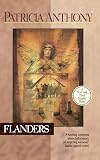
4.5. Flanders is the Southern Gothic World War I novel you didn't know you wanted, and is a significant entry in the "war is hell" genre.
Our Texan narrator, the surprisingly compelling and uncorny Travis Lee Stanhope, signs up to be a British sharpshooter and struggles with all sorts of demons and ghosts, both figurative and (ambiguously) supernatural. An epistolary novel composed of letters whose destination becomes increasingly unclear, the prose is sharp and evocative and Travis Lee is an show more unforgettable character.
The novel's rhythm is set by the company's tour of duty, with intense days in the trenches followed by days of respite in the rest area. This cyclical structure manages to capture the boredom, anxiety, and angst of front-line combat in a way I've rarely seen.
That said, the dense repetition and slow pacing made this book at times a slog. Yet I was sufficiently invested in the story that it kept my attention to the end. show less
Our Texan narrator, the surprisingly compelling and uncorny Travis Lee Stanhope, signs up to be a British sharpshooter and struggles with all sorts of demons and ghosts, both figurative and (ambiguously) supernatural. An epistolary novel composed of letters whose destination becomes increasingly unclear, the prose is sharp and evocative and Travis Lee is an show more unforgettable character.
The novel's rhythm is set by the company's tour of duty, with intense days in the trenches followed by days of respite in the rest area. This cyclical structure manages to capture the boredom, anxiety, and angst of front-line combat in a way I've rarely seen.
That said, the dense repetition and slow pacing made this book at times a slog. Yet I was sufficiently invested in the story that it kept my attention to the end. show less
Lists
Awards


You May Also Like


Associated Authors
Statistics
- Works
- 17
- Also by
- 8
- Members
- 1,220
- Popularity
- #21,043
- Rating
- 3.4
- Reviews
- 25
- ISBNs
- 43
- Languages
- 4
- Favorited
- 2