
Linda Nagata
Author of The Bohr Maker
About the Author
Disambiguation Notice:
"Trey Shiels" is a pseudonym Linda Nagata used on some editions of "The Dread Hammer".
Series
Works by Linda Nagata
Nightside on Callisto 3 copies
In the Tide 3 copies
Codename: Delphi 2 copies
A Moment Before It Struck 2 copies
Through Your Eyes 2 copies
The Flood 1 copy
The Way Home {Short Story} 1 copy
Hooks Nets and Time 1 copy
The Bird Catcher's Children 1 copy
Old Mother 1 copy
Associated Works
The Year's Best Science Fiction: Thirtieth Annual Collection (2013) — Contributor — 254 copies, 3 reviews
The Best Science Fiction and Fantasy of the Year, Volume 7 (2013) — Contributor — 154 copies, 3 reviews
The Year's Best Science Fiction: Thirty-Fifth Annual Collection (2018) — Contributor — 153 copies, 3 reviews
Nebula Awards Showcase 2002: The Year's Best SF and Fantasy (2002) — Contributor — 95 copies, 1 review
The Best Science Fiction and Fantasy of the Year, Volume 12 (2018) — Contributor — 47 copies, 2 reviews
Asimov's Science Fiction: Vol. 37, No. 4 & 5 [April/May 2013] (2013) — Contributor — 15 copies, 1 review
Asimov's Science Fiction: Vol. 42, No. 11 & 12 [November/December 2018] (2018) — Contributor — 8 copies, 1 review
Tagged
Common Knowledge
- Other names
- Shiels, Trey
- Birthdate
- 1960-11-07
- Gender
- female
- Education
- University of Hawaii at Manoa
- Nationality
- USA
- Birthplace
- San Diego, California, USA
- Places of residence
- Maui, Hawaii, USA
- Disambiguation notice
- "Trey Shiels" is a pseudonym Linda Nagata used on some editions of "The Dread Hammer".
- Associated Place (for map)
- USA
Members
Reviews
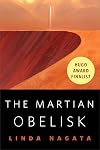
Ender von sf-lit hat im ScifiNet-Forum Linda Nagatas Roman Morgengrauen (Red #1) vorgestellt. Die Autorin hatte ich so noch gar nicht auf dem Schirm. Nicht nur, dass ich Morgengrauen direkt bei Genialokal als eBook erstanden habe, auch zwei weitere Geschichten von Linda Nagata durften auf meinem eReader einziehen. Eine davon war die Kurzgeschichte The Martian Obelisk, die es auch kostenlos hier gibt, aber für die ich auch gern meine 99 Cent gezahlt habe. Die Inhaltsangabe klang einfach show more nett. Und die Geschichte zog mich sofort in ihren Bann. Der Schreibstil ist schnörkellos und sehr ruhig, er hat fast etwas prosaisches ohne dabei zu überladen-bildhaft daherzukommen. Architektin Susannah Li-Langford, achtzig Jahre alt. Sie lebt in einer Welt, die durch Unwetter, resistente Viren und die zunehmende Stärke der Naturgewalten dem Ende geweiht ist. Es ist eine Welt, die am Ende von dem stehen wird, was nach uns kommt. Schon jetzt kämpfen wir mit heißeren Sommern, längeren Trockenperioden und extremen Unwettern. Die Auswirkungen auf die Lebensmittelproduktion sind gigantisch, wenn auch für uns in unserer Luxus-Blase kaum spürbar. Diese Welt hat Susannah alles gekostet. Ihre Kinder sind tot. Ihr Mann ebenfalls. Hoffnung gibt es keine mehr. Nirgends.
Things had just gotten worse, and worse still, and people gave up. Not everyone, not all at once—there was no single event marking the beginning of the end—but there was a sense of inevitability about the direction history had taken.
Einzig ihr Projekt, den Obelisk auf dem Mars zu bauen, ein Monument das tausend Jahre bestehen und ein letztes Zeugnis von der Größe der Spezies Mensch, hält sie irgendwie am Laufen. Ihr Auftraggeber Nathaniel, selbst auch schon über achtzig Jahre alt, hängt ebenso am Erfolg dieses Projekts.
Aber dann taucht die Frage auf, für was man sich entscheidet: das Monument oder das Leben?
“We humans are amazing,” she mused, “in our endless ability to lie to ourselves.”
Und dabei streut Nagata etwas Hoffnung in die Geschichte ein. Hoffnung, die eigentlich niemand mehr haben möchte.
“There’s a lesson for us in that. We assume we can see forward to tomorrow, but we can’t. We can’t ever really know what’s to come—and we can’t know what we might do, until we try.”
Der ruhige Erzählstil wird bis zum Ende beibehalten. Man kann sich dem menschlichen Faktor dieser kurzen Geschichte einfach nicht entziehen. Man weiß nicht, ob diese gefühlte Beklemmung Traurigkeit oder Hoffnung ist. Und das Schlimme ist – bei guten Kurzgeschichten ist das eigentlich immer der Fall – man will mehr davon. Mehr von der Traurigkeit. Mehr von der Hoffnung. Mehr von dieser Klaustrophobie, auf einem Planeten eingesperrt zu sein, der stirbt.
Fazit
Die Kurzgeschichte ist eine der Finalisten der Hugo Awards 2018 gewesen und meines Erachtens absolut zu Recht. Sie hat alles, was eine Kurzgeschichte ausmacht und die Autorin verdient definitiv mehr Aufmerksamkeit. show less
Things had just gotten worse, and worse still, and people gave up. Not everyone, not all at once—there was no single event marking the beginning of the end—but there was a sense of inevitability about the direction history had taken.
Einzig ihr Projekt, den Obelisk auf dem Mars zu bauen, ein Monument das tausend Jahre bestehen und ein letztes Zeugnis von der Größe der Spezies Mensch, hält sie irgendwie am Laufen. Ihr Auftraggeber Nathaniel, selbst auch schon über achtzig Jahre alt, hängt ebenso am Erfolg dieses Projekts.
Aber dann taucht die Frage auf, für was man sich entscheidet: das Monument oder das Leben?
“We humans are amazing,” she mused, “in our endless ability to lie to ourselves.”
Und dabei streut Nagata etwas Hoffnung in die Geschichte ein. Hoffnung, die eigentlich niemand mehr haben möchte.
“There’s a lesson for us in that. We assume we can see forward to tomorrow, but we can’t. We can’t ever really know what’s to come—and we can’t know what we might do, until we try.”
Der ruhige Erzählstil wird bis zum Ende beibehalten. Man kann sich dem menschlichen Faktor dieser kurzen Geschichte einfach nicht entziehen. Man weiß nicht, ob diese gefühlte Beklemmung Traurigkeit oder Hoffnung ist. Und das Schlimme ist – bei guten Kurzgeschichten ist das eigentlich immer der Fall – man will mehr davon. Mehr von der Traurigkeit. Mehr von der Hoffnung. Mehr von dieser Klaustrophobie, auf einem Planeten eingesperrt zu sein, der stirbt.
Fazit
Die Kurzgeschichte ist eine der Finalisten der Hugo Awards 2018 gewesen und meines Erachtens absolut zu Recht. Sie hat alles, was eine Kurzgeschichte ausmacht und die Autorin verdient definitiv mehr Aufmerksamkeit. show less

"The Last Good Man" is a Compelling immersive tale of a near-future Military Contractor seeking the truth about her son's brutal execution.
I wasn't sure this would be my kind of book. Set in the near future, it tells the story of a woman soldier working for a Private Military Contractor (PMC) licensed by the US government, who finds something she doesn't like while on a hostage rescue mission.
I see PMCs as a scourge on the earth and the US's tendency to use force in countries it's not at show more war with as criminal, so I doubted I'd be sympathetic but I was curious, so I gave it a try.
Three hours into this fourteen hours long audiobook, I was hooked. The first mission was still in progress and I still didn't know what the bad thing was that our soldier was going to discover but instead of finding myself tapping my fingers in impatience at the pace, I was enjoying myself. I found it unexpectedly compelling to get a blow by blow account of the planning and execution of the mission. it felt real. It was tense without being melodramatic.
One of the things that kept me reading was the credible but very scary biomimetic robotics being used. This is not far out tech. Many of the physical characteristics are already available and the AI and Swarm technologies are catching up fast. When they become available for real, they will transform warfare, and terrorism and private armies and organised crime.
I also liked the thoughtful way in which the role of PMCs was talked through. The dangers of having a private military capability that makes money from was but has no incentive to bring or keep the peace were given ait time, as was the impact of a boundaryless war: the ability to pursue a conflict globally, based on infrastructure capability rather than national sovereignty.
The most surprising thing for me was that the book managed to be character-driven. The soldier, Tru Brighton, ends up on a very personal quest for the truth around the public and barbaric execution of her soldier son eight years earlier. This worked partly because Tru is likeable as a mature soldier and as a mother and partly because her quest is not for comfort or even for revenge but just to know the truth.
There's a reasonably complicated plot that kept me invested all the way through without making me feel I was being teased in the way some smug bet-you-didn't-see-that-coming thrillers do. It allowed some great action scenes and a constantly shifting perspective on the truth as new facts came to light.
I listened to the audiobook version and was impressed by how well Liisa Ivary delivered the story. She has tremendous range in both pace and characterisation.
show less
I wasn't sure this would be my kind of book. Set in the near future, it tells the story of a woman soldier working for a Private Military Contractor (PMC) licensed by the US government, who finds something she doesn't like while on a hostage rescue mission.
I see PMCs as a scourge on the earth and the US's tendency to use force in countries it's not at show more war with as criminal, so I doubted I'd be sympathetic but I was curious, so I gave it a try.
Three hours into this fourteen hours long audiobook, I was hooked. The first mission was still in progress and I still didn't know what the bad thing was that our soldier was going to discover but instead of finding myself tapping my fingers in impatience at the pace, I was enjoying myself. I found it unexpectedly compelling to get a blow by blow account of the planning and execution of the mission. it felt real. It was tense without being melodramatic.
One of the things that kept me reading was the credible but very scary biomimetic robotics being used. This is not far out tech. Many of the physical characteristics are already available and the AI and Swarm technologies are catching up fast. When they become available for real, they will transform warfare, and terrorism and private armies and organised crime.
I also liked the thoughtful way in which the role of PMCs was talked through. The dangers of having a private military capability that makes money from was but has no incentive to bring or keep the peace were given ait time, as was the impact of a boundaryless war: the ability to pursue a conflict globally, based on infrastructure capability rather than national sovereignty.
The most surprising thing for me was that the book managed to be character-driven. The soldier, Tru Brighton, ends up on a very personal quest for the truth around the public and barbaric execution of her soldier son eight years earlier. This worked partly because Tru is likeable as a mature soldier and as a mother and partly because her quest is not for comfort or even for revenge but just to know the truth.
There's a reasonably complicated plot that kept me invested all the way through without making me feel I was being teased in the way some smug bet-you-didn't-see-that-coming thrillers do. It allowed some great action scenes and a constantly shifting perspective on the truth as new facts came to light.
I listened to the audiobook version and was impressed by how well Liisa Ivary delivered the story. She has tremendous range in both pace and characterisation.
show less
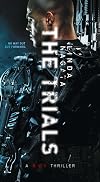
A month and a half has gone by since I read and reviewed The Red: First Light by Linda Nagata, and I have to admit I’m still reeling from the ending. Everything in that story from its climax onwards was nothing short of an insanely red hot face-melting explosion of whiplash-inducing action and frenzy. That’s the kind of experience that stays with you for a long time, but nonetheless I felt more than ready to take on its sequel.
Our protagonist Lieutenant James Shelley is back in the show more battle for justice, but first he and his soldiers must answer for their own actions taken in the unauthorized mission known as First Light. As the country struggles to rebuild its infrastructure and communications systems in the wake of an all-out nuclear terrorist attack, everyone in the team known as the Apocalypse Squad find themselves facing court-martials.
Meanwhile, out in the cloud still lurks the rogue AI program known as “The Red”. Given time, it can get anywhere and access anything linked to the network, including the neural implants in soldiers’ brains – soldiers like Shelley, who has long questioned the motives of the Red. It has already hacked into his head and lead him here; what more does it have planned for him and his team?
When I first learned of the title for this book, I thought it would be referring to the story and the characters’ experiences in a more symbolic sense. Turns out, it was quite literal as well. There are a couple courtroom trials in the spotlight here, and we begin with Apocalypse Squad’s. The public is torn on the actions Shelley and his team took at the end of the first book, and there’s a period of suspense where we are left wondering whether they’ll find the support they need from the government or be thrown under the bus. If you enjoy tense courtroom dramas, you will also enjoy this intro.
Because this is a spoiler-free review, I won’t be revealing what happens. Still, if you’ve read the first book or even my review of First Light, you’ve probably already guessed that the men and women of Apocalypse Squad remain fiercely loyal to Shelley and to each other. This is a series where there’s never a shortage when it comes to the examples of camaraderie between soldiers and kinds of lives they lead. In both this novel and its predecessor, I find there are lots of powerful themes imbedded in the story. Like, what it might mean for a soldier who sees the army as his or her family, support system, and their whole life. What might happen if they suddenly lose contact with that world. It also briefly explores the subject of PTSD, how soldiers with it deal with what they’ve seen while serving in the line of duty, and why some find it difficult to adjust to life after the military.
Compared to the first book though, the plot of this one felt a little more scattered and choppy. I know I said that I felt prepared to tackle the sequel, but now I have to wonder: Was I? The ending of the First Light really blew me away. It was hard to fathom anything else that could surpass it or even match it. I was right, in a way; the ending of The Trials was pretty intense, but it didn’t quite beat the first installment when it came to shock factor and emotional impact.
Another thing that I didn’t notice in First Light but bothered me here was the main character. It’s no secret that Shelley is impulsive and likes to be in charge (it’s emphasized multiple times in this book, mentioned by other characters and even admitted by the protagonist) but in portraying him in this light, I think the author may have done her job a little too well. So many times, I found myself fed up with Shelley and his attitude. He was insufferable when he was getting in Jaynie Vasquez’s face, while she was his commanding officer, even as he acknowledged that he was not in the best position to lead. I also didn’t like the fact he became romantically involved with Delphi so quickly, despite what she meant to him. I realize Shelley’s skullnet can dampen painful emotions and stabilize them to an extent – but I still hadn’t gotten over what happened at the end of the first book, and seeing Shelley blithely moving on made me like him a bit less. This is something that goes beyond simple urges and impulses.
Audiobook comments: The feelings I had about the audiobook version of First Light applies here too. Kevin T. Collins is a good narrator, very enthusiastic and full of energy which is important for a fast-paced, highly charged series like The Red. There were a couple slips where he uses the wrong voice for a character who is speaking, but overall his performance was very satisfactory.
Final thoughts: The Trials was a great sequel, but doesn’t supplant First Light as my favorite book of the series so far – certainly not for the lack of trying though! I’m looking forward to the third book, Going Dark, which will be out later this fall. I’ll most likely listen to the audiobook too, because I’ve been really enjoying these books in this format. Sure gets the blood pumping. show less
Our protagonist Lieutenant James Shelley is back in the show more battle for justice, but first he and his soldiers must answer for their own actions taken in the unauthorized mission known as First Light. As the country struggles to rebuild its infrastructure and communications systems in the wake of an all-out nuclear terrorist attack, everyone in the team known as the Apocalypse Squad find themselves facing court-martials.
Meanwhile, out in the cloud still lurks the rogue AI program known as “The Red”. Given time, it can get anywhere and access anything linked to the network, including the neural implants in soldiers’ brains – soldiers like Shelley, who has long questioned the motives of the Red. It has already hacked into his head and lead him here; what more does it have planned for him and his team?
When I first learned of the title for this book, I thought it would be referring to the story and the characters’ experiences in a more symbolic sense. Turns out, it was quite literal as well. There are a couple courtroom trials in the spotlight here, and we begin with Apocalypse Squad’s. The public is torn on the actions Shelley and his team took at the end of the first book, and there’s a period of suspense where we are left wondering whether they’ll find the support they need from the government or be thrown under the bus. If you enjoy tense courtroom dramas, you will also enjoy this intro.
Because this is a spoiler-free review, I won’t be revealing what happens. Still, if you’ve read the first book or even my review of First Light, you’ve probably already guessed that the men and women of Apocalypse Squad remain fiercely loyal to Shelley and to each other. This is a series where there’s never a shortage when it comes to the examples of camaraderie between soldiers and kinds of lives they lead. In both this novel and its predecessor, I find there are lots of powerful themes imbedded in the story. Like, what it might mean for a soldier who sees the army as his or her family, support system, and their whole life. What might happen if they suddenly lose contact with that world. It also briefly explores the subject of PTSD, how soldiers with it deal with what they’ve seen while serving in the line of duty, and why some find it difficult to adjust to life after the military.
Compared to the first book though, the plot of this one felt a little more scattered and choppy. I know I said that I felt prepared to tackle the sequel, but now I have to wonder: Was I? The ending of the First Light really blew me away. It was hard to fathom anything else that could surpass it or even match it. I was right, in a way; the ending of The Trials was pretty intense, but it didn’t quite beat the first installment when it came to shock factor and emotional impact.
Another thing that I didn’t notice in First Light but bothered me here was the main character. It’s no secret that Shelley is impulsive and likes to be in charge (it’s emphasized multiple times in this book, mentioned by other characters and even admitted by the protagonist) but in portraying him in this light, I think the author may have done her job a little too well. So many times, I found myself fed up with Shelley and his attitude. He was insufferable when he was getting in Jaynie Vasquez’s face, while she was his commanding officer, even as he acknowledged that he was not in the best position to lead. I also didn’t like the fact he became romantically involved with Delphi so quickly, despite what she meant to him. I realize Shelley’s skullnet can dampen painful emotions and stabilize them to an extent – but I still hadn’t gotten over what happened at the end of the first book, and seeing Shelley blithely moving on made me like him a bit less. This is something that goes beyond simple urges and impulses.
Audiobook comments: The feelings I had about the audiobook version of First Light applies here too. Kevin T. Collins is a good narrator, very enthusiastic and full of energy which is important for a fast-paced, highly charged series like The Red. There were a couple slips where he uses the wrong voice for a character who is speaking, but overall his performance was very satisfactory.
Final thoughts: The Trials was a great sequel, but doesn’t supplant First Light as my favorite book of the series so far – certainly not for the lack of trying though! I’m looking forward to the third book, Going Dark, which will be out later this fall. I’ll most likely listen to the audiobook too, because I’ve been really enjoying these books in this format. Sure gets the blood pumping. show less
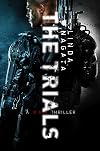
Second book in a series starts with a very interesting, albeit highly confusing military trial of our hero Lt Shelley and his team. Following their actions against the industry giant [intent of destroying the mysterious Red even if it means detonating the nuclear weapons on US territory] Shelley's team is charged with working with outside national force to penalize US citizen.
While public opinion is very much leaning towards Shelley's team, mysterious forces, both antagonistic and show more supportive of our heroes, start to approach and execute their own plans. While Shelley will try to stay out of the obvious conflict between Red and the Dragons (long living, almost immortal corporate leaders) he will find himself sucked into conflicts with various factions, shadow military outfits, paramilitaries bent on controlling the Red and finally outfit that seems to be directly at Red's service.
Author's style is truly beautiful and - as story progresses and our heroes are bounced around the urban areas hit by bomb attacks, rural areas under constant buzz of drones and automated weapons hunting for them to final battle that will leave Shelley at the mercy of of the nature - Nagata manages to give us various entanglements between the members of the team, their fears, their sorrow when teammates are harmed or even killed, constant attempts to finding the meaning for themselves in the new world outside the military that discharged them from service after the trials.
There is not a boring moment in the book, and this includes love scenes and flirts between team-members, that I usually find very boring and nothing but page filler.
Action scenes are wonderfully written, everyone is fair game, everyone can be hurt and even killed (that boarding operation on the cargo ship was breath taking, and action on the Dragon owned Earth orbiting satellite-habitat was so reminiscent of Neuromancer it got me giggling with joy :)) so you are glued to the very last page to see how it will end.
If you like stories like that of TV show Person of Interest - this is the book for you.
Highly recommended to fans of SF, action, and political thrillers. Onto the last book in the series :) show less
While public opinion is very much leaning towards Shelley's team, mysterious forces, both antagonistic and show more supportive of our heroes, start to approach and execute their own plans. While Shelley will try to stay out of the obvious conflict between Red and the Dragons (long living, almost immortal corporate leaders) he will find himself sucked into conflicts with various factions, shadow military outfits, paramilitaries bent on controlling the Red and finally outfit that seems to be directly at Red's service.
Author's style is truly beautiful and - as story progresses and our heroes are bounced around the urban areas hit by bomb attacks, rural areas under constant buzz of drones and automated weapons hunting for them to final battle that will leave Shelley at the mercy of of the nature - Nagata manages to give us various entanglements between the members of the team, their fears, their sorrow when teammates are harmed or even killed, constant attempts to finding the meaning for themselves in the new world outside the military that discharged them from service after the trials.
There is not a boring moment in the book, and this includes love scenes and flirts between team-members, that I usually find very boring and nothing but page filler.
Action scenes are wonderfully written, everyone is fair game, everyone can be hurt and even killed (that boarding operation on the cargo ship was breath taking, and action on the Dragon owned Earth orbiting satellite-habitat was so reminiscent of Neuromancer it got me giggling with joy :)) so you are glued to the very last page to see how it will end.
If you like stories like that of TV show Person of Interest - this is the book for you.
Highly recommended to fans of SF, action, and political thrillers. Onto the last book in the series :) show less
Lists
io9 Book Club (1)
Wishlist (1)
Awards


You May Also Like


Associated Authors
Statistics
- Works
- 43
- Also by
- 31
- Members
- 3,277
- Popularity
- #7,812
- Rating
- 3.7
- Reviews
- 190
- ISBNs
- 87
- Languages
- 3
- Favorited
- 7

