
A'Lelia Bundles
Author of On Her Own Ground: The Life and Times of Madam C. J. Walker
About the Author
A'Lelia Bundles, former ABC News Washington deputy bureau chief and chair emerita of the National Archives Foundation, has written four books about her great-great-grandmother Madam C. J. Walker. An Emmy Award-winning television news producer, she participated in writing residencies at Yaddo and show more MacDowell. She lives in Washington, DC. show less
Image credit: Uncredited image from Walkerlegacy.com
Works by A'Lelia Bundles
Madam C.J.Walker 1 copy
Associated Works
Tagged
Common Knowledge
- Birthdate
- 1952-06-07
- Gender
- female
- Occupations
- journalist
author - Organizations
- National Association of Black Journalists
Alpha Kappa Alpha
Phi Beta Kappa - Relationships
- Madame C. J. Walker (great-great-grandmother)
- Nationality
- USA
- Birthplace
- Chicago, Illinois, USA
- Associated Place (for map)
- Illinois, USA
Members
Reviews

Before I read this book, I knew Madam C.J. Walker must have been one tough cookie! And she certainly was. But her story is more than just "daughter of slaves makes good."
Madam Walker was the daughter of slaves. Orphaned at 7, she lived with her sister and brother-in-law in what was apparently an abusive household. She married at 14 to escape the situation and, at 20, was left a widow, with a child to support. Leaving Mississippi for St. Louis, she began an extraordinary journey, one that show more would lead her not merely to wealth and fame, but to a position of influence and importance in the affairs of her race and her nation. She overcame obstacles of race, gender and class to found a business that would help give independence and financial stability to thousands of women. From the very beginning of her success, she used her money to help others, not merely through employment, but by setting an example of charitable giving that lasted throughout her life.
As a woman rising from poverty, attempting to establish herself as a leader, she often met with resistance even in her own community (it took quite some time, for instance, for Booker T. Washington to acknowledge her as a leading businesswoman). But she persisted, and, even more to her credit, was able to walk a fine line between the supporters of Washington and those of W.E.B. DuBois, who took Washington to task as not aggressive enough in fighting for civil rights.
I was fascinated by the section discussing Madam Walker's involvement in the efforts of the African-American community to have the issue of race placed on the table at the Versailles Peace Conference after World War I. This was a part of our history that I had not been aware of before reading this book. It does not surprise me that the government was spying on prominent African - Americans and community organizations (plus ça change, plus c'est la même chose!). And anyone, black or white, whom the government perceived as not being completely behind the official point of view was denied a passport to travel to the conference. The issue never came to the table.
Unfortunately, as with a lot of strong, determined women, Madam Walker was not as successful in her choice of men (a difficulty her daughter also had!). But she did not hesitate to do what needed to be done in her personal life. Her daughter, Lelia (later A'Lelia), whom she raised with the usual mother-daughter conflicts, grew up to become an important part of the family business, though not an artist in any field herself, a key supporter of artists of the Harlem Renaissance.
The author, A'Lelia Bundles, is her subject's great-great-great-granddaughter, and is a journalist. Her experience in that field surely was a major factor in the quality of this book. The woman knows research and documentation! She has provided endnotes, as well as a lengthy bibliography. Madam Walker is fortunate in her biographer and Ms. Bundles is fortunate in her ancestors! show less
Madam Walker was the daughter of slaves. Orphaned at 7, she lived with her sister and brother-in-law in what was apparently an abusive household. She married at 14 to escape the situation and, at 20, was left a widow, with a child to support. Leaving Mississippi for St. Louis, she began an extraordinary journey, one that show more would lead her not merely to wealth and fame, but to a position of influence and importance in the affairs of her race and her nation. She overcame obstacles of race, gender and class to found a business that would help give independence and financial stability to thousands of women. From the very beginning of her success, she used her money to help others, not merely through employment, but by setting an example of charitable giving that lasted throughout her life.
As a woman rising from poverty, attempting to establish herself as a leader, she often met with resistance even in her own community (it took quite some time, for instance, for Booker T. Washington to acknowledge her as a leading businesswoman). But she persisted, and, even more to her credit, was able to walk a fine line between the supporters of Washington and those of W.E.B. DuBois, who took Washington to task as not aggressive enough in fighting for civil rights.
I was fascinated by the section discussing Madam Walker's involvement in the efforts of the African-American community to have the issue of race placed on the table at the Versailles Peace Conference after World War I. This was a part of our history that I had not been aware of before reading this book. It does not surprise me that the government was spying on prominent African - Americans and community organizations (plus ça change, plus c'est la même chose!). And anyone, black or white, whom the government perceived as not being completely behind the official point of view was denied a passport to travel to the conference. The issue never came to the table.
Unfortunately, as with a lot of strong, determined women, Madam Walker was not as successful in her choice of men (a difficulty her daughter also had!). But she did not hesitate to do what needed to be done in her personal life. Her daughter, Lelia (later A'Lelia), whom she raised with the usual mother-daughter conflicts, grew up to become an important part of the family business, though not an artist in any field herself, a key supporter of artists of the Harlem Renaissance.
The author, A'Lelia Bundles, is her subject's great-great-great-granddaughter, and is a journalist. Her experience in that field surely was a major factor in the quality of this book. The woman knows research and documentation! She has provided endnotes, as well as a lengthy bibliography. Madam Walker is fortunate in her biographer and Ms. Bundles is fortunate in her ancestors! show less
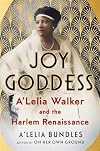
Thank you to NetGalley and the publisher, Scribner, for this DRC in exchange for a fair and honest review. The thoughts and opinions expressed below are my own.
This was one of my top ten publications that I was looking forward to the most this year. A’Lelia Walker was truly a one-of-a-kind individual, with an unconventional backstory and who was determined to live in her own way. Walker’s great-granddaughter and namesake A’Lelia Bundles documents the history of this remarkable woman show more and her role in the development of Black American culture during and after the Harlem Renaissance. In this exhaustive, meticulously-researched biography, Bundles gives a complete picture of Walker and the many roles she played from business owner to arts patron to philanthropist, as well as someone with a great appreciation for the things and experiences that sparked delight and fascination. The book includes an equally meticulous index of the famous fixtures and locations mentioned in the text, previously unpublished photos of Walker and her travels, as well as primary source documents from the Walker family collection. These documents and ephemera are themselves fascinating to see and could constitute a book in their own right.
I am pleased to see that Scribner remains the publisher for this work, as they did for “On. Her Own Ground” decades ago. first read Ms. Bundles’ work as a child when she authored the Madam C.J. Walker entry in the “Black Americans of Achievement” series, from Chelsea House Publishers. I’ve always admired the way that Ms. Bundles unapologetically takes charge of her family history, setting the tone for the narrative and pushing back against any inconsistencies or outright lies which other authors/creatives have placed in previous works. She takes the same approach here with her great-grandmother, as has been outlined on her personal blog; as such she is not afraid to call out those individuals by name and shown where their work is inaccurate. The biography is neither overly laudatory nor dry and sparse. The reader gets a full sense of A’Lelia Walker’s character, flaws included. Yet one also gets the insights that can only come from one who is intimately familiar with the subject through kinship and the family stories that come with it.
This introspective look at Walker’s life and motivations reveal how unique her rise and her presence was, and how she viewed her salon as a way to nurture burgeoning Black talent in one of the nation’s Black cultural capitals. Yet Bundles also shows how that uniqueness placed her at the intersections of different social and intra-racial poles, which often didn’t have the space to count someone like her, and contributed to her push to carve out a space and definition of herself. She was part of the Black American elite, but not a member of the generational Talented Tenth, either by lineage or proximity to certain institutions. (I love the author’s refutation of Walker’s reputation as an airhead; evidenced by her book collection and the fact that she presided over a literary salon.) Walker literally grew up alongside her mother’s business; she spent her childhood and young adulthood either in poverty or gradually coming out of it as the Walker empire was established, which gave her a different perspective than some of her peers. And because the business was built from the ground up, so was the blueprint for keeping it running, which both Madame C.J. Walker and A’Lelia Walker learned as they went along. Ms. Bundles also outlines the tensions between Walker’s desires to keep the business running while also experiencing the benefits of success that her mother had worked so hard for, while simultaneously searching for inner peace and contentment.
As a final note: For years, I was the senior librarian in the children’s department at the Countee Cullen Library in Harlem, the building of which is part of the Schomburg Center. This building’s location was one of A’Lelia Walker’s famed houses; the composition and structure of the fixtures still show remnants of when it was a private residence. I thought about this often when I led programs and worked on the collection. Being there reinforced how the legacies and memories built there remain with us show less
This was one of my top ten publications that I was looking forward to the most this year. A’Lelia Walker was truly a one-of-a-kind individual, with an unconventional backstory and who was determined to live in her own way. Walker’s great-granddaughter and namesake A’Lelia Bundles documents the history of this remarkable woman show more and her role in the development of Black American culture during and after the Harlem Renaissance. In this exhaustive, meticulously-researched biography, Bundles gives a complete picture of Walker and the many roles she played from business owner to arts patron to philanthropist, as well as someone with a great appreciation for the things and experiences that sparked delight and fascination. The book includes an equally meticulous index of the famous fixtures and locations mentioned in the text, previously unpublished photos of Walker and her travels, as well as primary source documents from the Walker family collection. These documents and ephemera are themselves fascinating to see and could constitute a book in their own right.
I am pleased to see that Scribner remains the publisher for this work, as they did for “On. Her Own Ground” decades ago. first read Ms. Bundles’ work as a child when she authored the Madam C.J. Walker entry in the “Black Americans of Achievement” series, from Chelsea House Publishers. I’ve always admired the way that Ms. Bundles unapologetically takes charge of her family history, setting the tone for the narrative and pushing back against any inconsistencies or outright lies which other authors/creatives have placed in previous works. She takes the same approach here with her great-grandmother, as has been outlined on her personal blog; as such she is not afraid to call out those individuals by name and shown where their work is inaccurate. The biography is neither overly laudatory nor dry and sparse. The reader gets a full sense of A’Lelia Walker’s character, flaws included. Yet one also gets the insights that can only come from one who is intimately familiar with the subject through kinship and the family stories that come with it.
This introspective look at Walker’s life and motivations reveal how unique her rise and her presence was, and how she viewed her salon as a way to nurture burgeoning Black talent in one of the nation’s Black cultural capitals. Yet Bundles also shows how that uniqueness placed her at the intersections of different social and intra-racial poles, which often didn’t have the space to count someone like her, and contributed to her push to carve out a space and definition of herself. She was part of the Black American elite, but not a member of the generational Talented Tenth, either by lineage or proximity to certain institutions. (I love the author’s refutation of Walker’s reputation as an airhead; evidenced by her book collection and the fact that she presided over a literary salon.) Walker literally grew up alongside her mother’s business; she spent her childhood and young adulthood either in poverty or gradually coming out of it as the Walker empire was established, which gave her a different perspective than some of her peers. And because the business was built from the ground up, so was the blueprint for keeping it running, which both Madame C.J. Walker and A’Lelia Walker learned as they went along. Ms. Bundles also outlines the tensions between Walker’s desires to keep the business running while also experiencing the benefits of success that her mother had worked so hard for, while simultaneously searching for inner peace and contentment.
As a final note: For years, I was the senior librarian in the children’s department at the Countee Cullen Library in Harlem, the building of which is part of the Schomburg Center. This building’s location was one of A’Lelia Walker’s famed houses; the composition and structure of the fixtures still show remnants of when it was a private residence. I thought about this often when I led programs and worked on the collection. Being there reinforced how the legacies and memories built there remain with us show less
On Her Own Ground: The Life and Times of Madam C.J. Walker (Lisa Drew Books (Paperback)) by A'Lelia Bundles
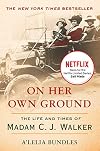
What Madame C. J. Walker was able to accomplish in her lifetime is simply remarkable given the numerous impediments she encountered. She is the epitome of the rags to riches success story -- as well an example of what guts and determination really mean. While the biography is well written -- it's the facts themselves that make Madame Walker's story so intriguing and inspiring. Walker went from extreme poverty to wealthy business owner, civil rights leader, and philanthropist.
Madame Walker show more grew up extremely poor in Mississippi, prior to and through the turn of the century, in a society that perpetuated violence on African Americans in frightening proportions. Not only did she have to endure the racism and violence of society at large, but her own home life was destitute and abusive as well. She moved to Saint Louis, becoming a laundress and caring for her daughter -- furnishing her with the best education and protective home life that she could muster given low wages and living in poorer neighborhoods. In an effort to make her and her daughter's life better she became a sales agent for hair care products, and seeing the potential to branch out on her own with her own formula, she gradually built a large, national sales force and began manufacturing her own hair care products. As a result she became one of the wealthiest women in America.
Walker was able to accomplish this despite extreme barriers. First, racism and sexism, especially in turn of the century America, could alone have stymied any ambitions she had. She clearly, however, had the help of the African American community, and that her product was marketed primarily to women and African Americans meant that she faced only one tough competitor in this niche market. Her vision allowed her build this into something more substantial -- a national brand name and sales force. Lacking formal education, she certainly chose those who helped her run her business wisely. And she overcame husbands (three in all, two that we know much about) who, in the long run, did more to hinder than help her.
What is truly heart warming about Walker is what she did once she became wealthy. She gave freely of her money to a wide range of causes to help her local communities, the African American community, the poor, civil rights organizations, and African American soldiers during World War I. She was very vocal and active in the civil rights movements of time and was also active and vocal in national (African American) business associations. This -- plus continuing to travel widely to build up her business! It is shocking that she not more widely known for her philanthropy and for being a leader in the civil rights movement -- not to mention being such an astute businesswoman.
And she had GUTS! She stood up to Booker T. Washington and forced him to let her speak at a National Negro Business League convention. She actively helped organize and fund civil rights organizations. She must have been quite robust as well. She traveled widely across the United States and a few times overseas. In the early 1900's traveling to such an extent must have been physically and mentally exhausting.
Madame C.J. Walker was a living tribute to her local communities, her race, and the nation. She deserves more than a postage stamp to commemorate her life. show less
Madame Walker show more grew up extremely poor in Mississippi, prior to and through the turn of the century, in a society that perpetuated violence on African Americans in frightening proportions. Not only did she have to endure the racism and violence of society at large, but her own home life was destitute and abusive as well. She moved to Saint Louis, becoming a laundress and caring for her daughter -- furnishing her with the best education and protective home life that she could muster given low wages and living in poorer neighborhoods. In an effort to make her and her daughter's life better she became a sales agent for hair care products, and seeing the potential to branch out on her own with her own formula, she gradually built a large, national sales force and began manufacturing her own hair care products. As a result she became one of the wealthiest women in America.
Walker was able to accomplish this despite extreme barriers. First, racism and sexism, especially in turn of the century America, could alone have stymied any ambitions she had. She clearly, however, had the help of the African American community, and that her product was marketed primarily to women and African Americans meant that she faced only one tough competitor in this niche market. Her vision allowed her build this into something more substantial -- a national brand name and sales force. Lacking formal education, she certainly chose those who helped her run her business wisely. And she overcame husbands (three in all, two that we know much about) who, in the long run, did more to hinder than help her.
What is truly heart warming about Walker is what she did once she became wealthy. She gave freely of her money to a wide range of causes to help her local communities, the African American community, the poor, civil rights organizations, and African American soldiers during World War I. She was very vocal and active in the civil rights movements of time and was also active and vocal in national (African American) business associations. This -- plus continuing to travel widely to build up her business! It is shocking that she not more widely known for her philanthropy and for being a leader in the civil rights movement -- not to mention being such an astute businesswoman.
And she had GUTS! She stood up to Booker T. Washington and forced him to let her speak at a National Negro Business League convention. She actively helped organize and fund civil rights organizations. She must have been quite robust as well. She traveled widely across the United States and a few times overseas. In the early 1900's traveling to such an extent must have been physically and mentally exhausting.
Madame C.J. Walker was a living tribute to her local communities, her race, and the nation. She deserves more than a postage stamp to commemorate her life. show less
Langston Hughes called her “the joy goddess of Harlem’s 1920s,” when “the Negro was in vogue.”
She was born to a struggling single mother whose ingenuity catapulted her from a small business owner into a millionaire and social leader.
With exquisite taste and great social intelligence, she orchestrated dazzling social venues and events. Her talent for elegance and beauty impressed high society and the public.
She was unlucky in love, with precarious health, and aware that she was not show more as savvy a business woman as her mother had been.
Joy Goddess vividly portrays an extraordinary woman in extraordinary times, transporting readers back into history. Growing up with A’Lelia’s heirlooms, the author was fascinated by her great-grandmother, daughter of self-made millionaire Madam Walker.
A’Lelia believed in the power of the creative arts to “heal, enlighten, and entertain.” Like her mother, she patronized the arts and groups advancing racial advancement. She created interracial events and socialized with queer and gay folk. Her social circle was filled with names we still recognize: Langston Hughes, Countee Cullen, Walter White, Alfred Knopf, Paul Robeson, W. E. B. DuBois, Eubie Blake.
A’Lelia struggled to balance her personal gifts and sorrows with the demands of running a large business. She married for love but to men who were interested in her money and status and put their own careers first. Beneath the glamor and riches, a very human and hurting woman emerges in these pages.
Thanks to the publisher for a free book. show less
She was born to a struggling single mother whose ingenuity catapulted her from a small business owner into a millionaire and social leader.
With exquisite taste and great social intelligence, she orchestrated dazzling social venues and events. Her talent for elegance and beauty impressed high society and the public.
She was unlucky in love, with precarious health, and aware that she was not show more as savvy a business woman as her mother had been.
Joy Goddess vividly portrays an extraordinary woman in extraordinary times, transporting readers back into history. Growing up with A’Lelia’s heirlooms, the author was fascinated by her great-grandmother, daughter of self-made millionaire Madam Walker.
A’Lelia believed in the power of the creative arts to “heal, enlighten, and entertain.” Like her mother, she patronized the arts and groups advancing racial advancement. She created interracial events and socialized with queer and gay folk. Her social circle was filled with names we still recognize: Langston Hughes, Countee Cullen, Walter White, Alfred Knopf, Paul Robeson, W. E. B. DuBois, Eubie Blake.
A’Lelia struggled to balance her personal gifts and sorrows with the demands of running a large business. She married for love but to men who were interested in her money and status and put their own careers first. Beneath the glamor and riches, a very human and hurting woman emerges in these pages.
Thanks to the publisher for a free book. show less
Lists
Awards


You May Also Like


Associated Authors
Statistics
- Works
- 9
- Also by
- 1
- Members
- 474
- Popularity
- #52,000
- Rating
- 3.6
- Reviews
- 16
- ISBNs
- 30
