
Arnold G. Nelson
Author of Stretching Anatomy
About the Author
Works by Arnold G. Nelson
Tagged
Common Knowledge
Members
Reviews
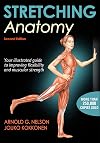
I love the Anatomy Series by Human Kinetics, and “Stretching Anatomy” is a good addition. The illustrations of people without skin performing the exercises make it easy for me to understand how the exercises work and which ones I need.
I have run seven marathons without injury, and I never missed stretching before and after a run. Obviously, I am a firm believer in the benefits of preparing your muscles before you require them to exert. This applies when I play tennis, racquetball or any show more sport. As we age, I think that careful pre-exercise stretching is even more important in preventing injury.
“Stretching Anatomy” is comprehensive, detailed and timely. It covers the basics: neck; shoulders, back and chest; arms, wrists, and hands; lower trunk; hips; knees and thighs, and feet and calves. The beginning of each chapter describes the specific muscles, such as the neck, and how they work. Each exercise in the chapter instructs on the execution and the muscles stretched, including notes with greater detail on the attributes of the exercise. The authors add important safety tips to prevent injury while executing the movement.
The stretches do not require specialized equipment, such as elastic bands. Generally, the exercises use a wall, a door frame, the floor or a step or stair.
“Stretching Anatomy” covers “Dynamic Stretching,” a more active form of stretching useful to prepare for serious exertion in specific sports. It is designed to improve range of motion, loosens up muscles and increases heart rate, body temperature, and blood flow. This addresses the recent criticism of traditional pre-performance stretching (holding the body in elongated positions for 30 seconds or more) as detrimental to performance and even resulting in injury. With the inclusion of “Dynamic Stretching,” this book is current and addresses the controversy.
The last chapter of “Stretching Anatomy” is on customized stretching routines at levels for beginners, intermediates, advanced and expert. It also suggests both pre-event and training stretching routines for specific sports, like running and tennis. The inclusion of a stretching routine to lower blood glucose addresses a 2011 study published in the “Journal of Physiotherapy” on the ability of static stretching to help regulate blood glucose.
For those who enjoy sports and activities, want to prevent injury and enhance performance and do not have a personal training or coach, “Stretching Anatomy” is a valuable tool. Take care of your body. show less
I have run seven marathons without injury, and I never missed stretching before and after a run. Obviously, I am a firm believer in the benefits of preparing your muscles before you require them to exert. This applies when I play tennis, racquetball or any show more sport. As we age, I think that careful pre-exercise stretching is even more important in preventing injury.
“Stretching Anatomy” is comprehensive, detailed and timely. It covers the basics: neck; shoulders, back and chest; arms, wrists, and hands; lower trunk; hips; knees and thighs, and feet and calves. The beginning of each chapter describes the specific muscles, such as the neck, and how they work. Each exercise in the chapter instructs on the execution and the muscles stretched, including notes with greater detail on the attributes of the exercise. The authors add important safety tips to prevent injury while executing the movement.
The stretches do not require specialized equipment, such as elastic bands. Generally, the exercises use a wall, a door frame, the floor or a step or stair.
“Stretching Anatomy” covers “Dynamic Stretching,” a more active form of stretching useful to prepare for serious exertion in specific sports. It is designed to improve range of motion, loosens up muscles and increases heart rate, body temperature, and blood flow. This addresses the recent criticism of traditional pre-performance stretching (holding the body in elongated positions for 30 seconds or more) as detrimental to performance and even resulting in injury. With the inclusion of “Dynamic Stretching,” this book is current and addresses the controversy.
The last chapter of “Stretching Anatomy” is on customized stretching routines at levels for beginners, intermediates, advanced and expert. It also suggests both pre-event and training stretching routines for specific sports, like running and tennis. The inclusion of a stretching routine to lower blood glucose addresses a 2011 study published in the “Journal of Physiotherapy” on the ability of static stretching to help regulate blood glucose.
For those who enjoy sports and activities, want to prevent injury and enhance performance and do not have a personal training or coach, “Stretching Anatomy” is a valuable tool. Take care of your body. show less
Nelson and Kokkonen's 'Stretching Anatomy' is simple enough for novices to understand. It's a good place to go to discover what movements will allieviate muscle pain and help tone body parts suffering from under use.
A few years ago I fell and damaged my rotator cuff; it's an all too common problem. But I never connected the pain in my upper arm with the injury to my shoulder. duh. It's like the old saw - everything's connected. PT and Yoga restored the use of my frozen arm, but now I show more understand that I have to keep that shoulder active. 'Stretching Anatomy' has shown me just how to do it.
And when friends and family complain of stiffness or muscle pain, I lend my book out. It's simple to understand. The diagrams are clear and the exercise directions are easy to follow.
Yea! show less
A few years ago I fell and damaged my rotator cuff; it's an all too common problem. But I never connected the pain in my upper arm with the injury to my shoulder. duh. It's like the old saw - everything's connected. PT and Yoga restored the use of my frozen arm, but now I show more understand that I have to keep that shoulder active. 'Stretching Anatomy' has shown me just how to do it.
And when friends and family complain of stiffness or muscle pain, I lend my book out. It's simple to understand. The diagrams are clear and the exercise directions are easy to follow.
Yea! show less
 This review was written for LibraryThing Early Reviewers.
I am a visual learner. If I can see something, it makes much more sense to me and I can always remember it better and longer. That’s why I was so eager to get this Stretching Anatomy book. I’d used a library copy of the 1st edition in the past, so I was familiar with the book and knew it would make a useful addition to my home reference collection. The first edition has become a classic with over a quarter million copies sold. If you do an OCLC WorldCat search on the first edition, you show more see that this book is held by just about every major public library and virtually all university libraries where they have a strong kinesiology department. With a pedigree like that, you can’t go wrong
The book has an introduction, nine chapters, and an index called “Stretch Finder.” The names of the nine chapters are: 1) Neck; 2) Shoulders, Back and Chest; 3) Arms, Wrists, and Hands; 4) Lower Trunk; 5) Hips; 6) Knees and Thighs; 7) Feet and Calves; 8) Dynamic Stretches; and 9) Customizing your Stretching Program. There are multiple illustrations within each chapter, each covering a specific stretch. Each illustration is accompanied by a detailed explanation for that stretch, including direction on how to execute the stretch, a listing of exactly which muscles are stretched and how much, and finally there is a paragraph or two of miscellaneous notes about that stretch. Naturally, the illustration shows exactly and very clearly all the muscles involved in the stretch. Toward the top of each page, there is a blue tab with vertical white lettering identifying where you are in the book; you can use these tabs to thumb through the book easily and quickly to find each chapter and exercise you need.
Chapter eight on dynamic stretch briefly discusses what a dynamic stretch is and how it differs from the typical static stretch. It also touches on the pros and cons of these two methods of stretching. The chapter contains nine dynamic stretching exercises covering most major muscle groups used by athletes in the performance of their sports.
Chapter nine, “Customizing your Stretching Program,” is the longest single chapter in the book at over thirty pages. The pages start with a small section devoted to general, non-sport-specific exercises, then they go on to a lengthy set of tables specific to different types of sports. In each case, beginning, intermediate, and advanced levels of these exercise routines are highlighted. Each table is color-enhanced to increase easy of use.
There is a small, but very useful index at the end called the “Stretch Finder.”
This book lets you see *inside* every stretch. That’s its beauty. You easily can visualize exactly what is going on inside your body as you perform these exercises. You can see in your mind’s eye how your muscles are moving. Personally, I can’t imagine anyone undertaking a serious stretching routine without it. To my mind, it's indispensable. show less
The book has an introduction, nine chapters, and an index called “Stretch Finder.” The names of the nine chapters are: 1) Neck; 2) Shoulders, Back and Chest; 3) Arms, Wrists, and Hands; 4) Lower Trunk; 5) Hips; 6) Knees and Thighs; 7) Feet and Calves; 8) Dynamic Stretches; and 9) Customizing your Stretching Program. There are multiple illustrations within each chapter, each covering a specific stretch. Each illustration is accompanied by a detailed explanation for that stretch, including direction on how to execute the stretch, a listing of exactly which muscles are stretched and how much, and finally there is a paragraph or two of miscellaneous notes about that stretch. Naturally, the illustration shows exactly and very clearly all the muscles involved in the stretch. Toward the top of each page, there is a blue tab with vertical white lettering identifying where you are in the book; you can use these tabs to thumb through the book easily and quickly to find each chapter and exercise you need.
Chapter eight on dynamic stretch briefly discusses what a dynamic stretch is and how it differs from the typical static stretch. It also touches on the pros and cons of these two methods of stretching. The chapter contains nine dynamic stretching exercises covering most major muscle groups used by athletes in the performance of their sports.
Chapter nine, “Customizing your Stretching Program,” is the longest single chapter in the book at over thirty pages. The pages start with a small section devoted to general, non-sport-specific exercises, then they go on to a lengthy set of tables specific to different types of sports. In each case, beginning, intermediate, and advanced levels of these exercise routines are highlighted. Each table is color-enhanced to increase easy of use.
There is a small, but very useful index at the end called the “Stretch Finder.”
This book lets you see *inside* every stretch. That’s its beauty. You easily can visualize exactly what is going on inside your body as you perform these exercises. You can see in your mind’s eye how your muscles are moving. Personally, I can’t imagine anyone undertaking a serious stretching routine without it. To my mind, it's indispensable. show less
This is a great book for explaining how the muscles work and how stretching works. It is a nice addition to my weekly yoga practice, I now can identify which muscles I'm stretching and why holding a certain pose opens it up.
The illustrations are crisp and the text is clear. It is also easy to thumb through and learn a few nuggets of information here and there.
This book will be added next to [Light on Yoga] as a reference book.
The illustrations are crisp and the text is clear. It is also easy to thumb through and learn a few nuggets of information here and there.
This book will be added next to [Light on Yoga] as a reference book.
This review was written for LibraryThing Early Reviewers.You May Also Like


Statistics
- Works
- 1
- Members
- 416
- Popularity
- #58,579
- Rating
- 4.1
- Reviews
- 14
- ISBNs
- 21
- Languages
- 5
