

Leslie Kaminoff
Author of Yoga Anatomy
About the Author
Image credit: Leslie Kaminoff
Works by Leslie Kaminoff
Yoga : anatomie et mouvements : Un guide illustré des postures, mouvements et techniques respiratoires (2015) 3 copies, 1 review
Jóga - anatomie : [váš ilustrovaný průvodce pozicemi, pohyby a dýchacími technikami] (2011) 2 copies
Jóga anatómia 1 copy
Tagged
Common Knowledge
Members
Reviews
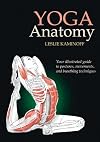
Yoga Anatomy by Leslie Kaminoff discusses yoga's effect on the body and the body's effect on yoga. Kaminoff starts by explaining the dynamics of breathing and of yoga breath. This section alone is worth the cost of the book! I noticed an immediate improvement in my breathing during yoga poses and therefore an improvement in the poses after reading the section on breathing. Yoga Anatomy then goes on to show yoga poses from an anatomical view highlighting the parts of the body that should be show more working and/or that are affected by the pose. The yoga name and a translation for each pose is provided. Each pose is classified and given a level. The joints that are active, the work the body is doing, the muscles being lengthened, the obstacles for each pose, notes to help with the pose, and breathing are all discussed in relationship to each pose. There are moments when the descriptions for the poses have so much in common, the reader feels a sense of de ja vu while reading. I even felt like there were times when I wasn't actually internalizing what I was reading until I was moving into a pose the next day or even a few days later and would suddenly remember reading about the pose and realize why the pose hadn't been working for me and how to correct my stance, my breathing, or my focus. Yoga Anatomy is easy to read and understand, but a reader should be prepared to take some time, especially if the goal is to use the book to improve one's yoga practice. I read it a little at a time over several months in order to internalize what I read about each pose. Yoga Anatomy is a great book for anyone interested in practicing yoga or for anyone who practices yoga but struggles from time to time with a pose or yoga breath. Yoga Anatomy has earned a permanent place on my bookshelf as a reference book! After all, it's already proven beneficial to my yoga practice. show less
This book is as technical as an anatomy book. It has been a long time since I read with a highlighter in hand. I used that highlighter a lot. There is a lot of detail that will require multiple readings to fully understand. I see why this book is so immensely popular.
The subject matter is interesting but the illustrations (including the cover) just slay me: every single flayed figure, shown in bones, muscles, and ligaments, is wearing shorts, and the ones with longer hair wear tops. Qu'est-ce point?
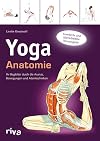
The book starts with two short chapters on the anatomy of breathing and the spine. The following main part of the book is a description of a variety of yoga postures (asanas). More or less all postures are covered in a systematic/uniform way, which consists of: a) anatomically correct drawings of a person in the posture (in the style seen on the cover), b) a listing of the involved/stressed muscles and joints, c) hints and warnings, and d) notes about the influence of the posture on show more breathing. On average, each posture is covered in two pages.
I found the first two chapters mostly comprehensible, sound, and interesting. In the main part I found items b) particularly boring/needless and skipped them. This made the whole book rather short, since a) and b) together on average take more than half of the space for each posture. The drawings of a) are nice and give a good view of the postures, but I could not make too much of all the muscles which are drawn into them. Items c) and d) contain some good suggestions.
It was a problem for me that the author uses a lot of anatomical terminology which I was not able to understand; an issue that should have been made clear on the backcover of the book. Nevertheless, despite the deep anatomical background, at times I had to doubt the logical correctness of the observations. For example, towards the end of chapter two the author claims on the same page (p. 36, German edition) that i) a flexion of the spine is related to inhalation and ii) a flexion of the spine results in exhalation. Also, the contact points of the body with earth in Padmasa seem questionable: the author claims that both knees shall touch the ground. This will lead to a skew position of the spine.
The book reminded me of a physiotherapist that once treated me: he always had a deep anatomical and impressive sounding answer to every aliment. Unfortunately, I was never really able to understand/follow his explanation. The cause might well have been my inferior knowledge ... or he did not really understand himself. God knows. show less
I found the first two chapters mostly comprehensible, sound, and interesting. In the main part I found items b) particularly boring/needless and skipped them. This made the whole book rather short, since a) and b) together on average take more than half of the space for each posture. The drawings of a) are nice and give a good view of the postures, but I could not make too much of all the muscles which are drawn into them. Items c) and d) contain some good suggestions.
It was a problem for me that the author uses a lot of anatomical terminology which I was not able to understand; an issue that should have been made clear on the backcover of the book. Nevertheless, despite the deep anatomical background, at times I had to doubt the logical correctness of the observations. For example, towards the end of chapter two the author claims on the same page (p. 36, German edition) that i) a flexion of the spine is related to inhalation and ii) a flexion of the spine results in exhalation. Also, the contact points of the body with earth in Padmasa seem questionable: the author claims that both knees shall touch the ground. This will lead to a skew position of the spine.
The book reminded me of a physiotherapist that once treated me: he always had a deep anatomical and impressive sounding answer to every aliment. Unfortunately, I was never really able to understand/follow his explanation. The cause might well have been my inferior knowledge ... or he did not really understand himself. God knows. show less
You May Also Like


Associated Authors
Statistics
- Works
- 15
- Members
- 977
- Popularity
- #26,369
- Rating
- 4.0
- Reviews
- 14
- ISBNs
- 43
- Languages
- 12