
David C. Colander
Author of Microeconomics
About the Author
David Colander is the Christian A. Johnson Distinguished Professor of Economics at Middlebury College
Works by David C. Colander
Complexity and the Art of Public Policy: Solving Society's Problems from the Bottom Up (2014) 24 copies, 2 reviews
Selected Economic Writings of Abba P. Lerner (New York University series in selected economic writings) (1983) — Editor — 15 copies
Where Economics Went Wrong: Chicago's Abandonment of Classical Liberalism (2018) 12 copies, 1 review
Post Walrasian Macroeconomics: Beyond the Dynamic Stochastic General Equilibrium Model (2006) 10 copies
The Changing Face of Economics: Conversations with Cutting Edge Economists (2004) 10 copies, 1 review
Educating Economists: The Teagle Discussion on Re-evaluating the Undergraduate Economics Major (1992) — Editor — 9 copies
Tagged
Common Knowledge
- Gender
- male
- Education
- Columbia University (PhD)
- Occupations
- distinguished professor (Economics)
- Organizations
- Middlebury College
Columbia University
Vassar College
University of Miami
Princeton University
Members
Reviews
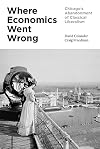
So far, after reading the first chapter, not a promising start. The author seems to be labouring a single point: that the classical liberal economists had kept a strict 'firewall' between theory per se, and policy recommendations, and did not let the two be confused. The modern economists, however, melded the two together ina n effort to become the wise men of their era. I don't object to the idea, but it could have been stated in a few crisp sentences. I have to see whether the rest of the show more book adds to this bald asservation, or if it adds more content.
Things get a bit warmer by Chapter 2, and by Chapter 3, we are well and truly on the chase. The main point so far seems to be that the mainstream economists split into two camps, those in MIT-Harvard who went with a fully specified mathematical model of the whole economy, and claimed that one could control the economy that way; and the other, the Chicago school, which eschewed control, and professed confidence in the self-regulating and self-correcting nature of the competitive economy. Both schools, however, abandoned the central principle of hat the author calls Classical Liberalism, wherein theory was limited to conceptual matters, and actual policy was left to political and social institutions. In fact the author says that the Classicals erected a 'firewall' between theory and practice, and prohibited economic theories being carried over and applied to the actual world.
Of course the actual book is more complicated than this crass explanation, but it does require a specific knowledge of the work of the various economists and their application to real world situations. Even though this book by itself may not enlighten the average reader, even one with a background in economics, it will serve well as a framework to dig deeper and improve one's understanding of the issues involved. However, I cannot get rid of the impression that much of the book is a repetition of the same central idea, stated and restated in slightly different ways, but repetitively all the same.
This is one of those books where I felt one needed to go through all the endnotes- all 76 pages of them! (On re-reading the Introduction, it transpires that the authors themselves recognize that the end-notes constitute what they call a book-within-a-book!) show less
Things get a bit warmer by Chapter 2, and by Chapter 3, we are well and truly on the chase. The main point so far seems to be that the mainstream economists split into two camps, those in MIT-Harvard who went with a fully specified mathematical model of the whole economy, and claimed that one could control the economy that way; and the other, the Chicago school, which eschewed control, and professed confidence in the self-regulating and self-correcting nature of the competitive economy. Both schools, however, abandoned the central principle of hat the author calls Classical Liberalism, wherein theory was limited to conceptual matters, and actual policy was left to political and social institutions. In fact the author says that the Classicals erected a 'firewall' between theory and practice, and prohibited economic theories being carried over and applied to the actual world.
Of course the actual book is more complicated than this crass explanation, but it does require a specific knowledge of the work of the various economists and their application to real world situations. Even though this book by itself may not enlighten the average reader, even one with a background in economics, it will serve well as a framework to dig deeper and improve one's understanding of the issues involved. However, I cannot get rid of the impression that much of the book is a repetition of the same central idea, stated and restated in slightly different ways, but repetitively all the same.
This is one of those books where I felt one needed to go through all the endnotes- all 76 pages of them! (On re-reading the Introduction, it transpires that the authors themselves recognize that the end-notes constitute what they call a book-within-a-book!) show less
Complexity and the Art of Public Policy: Solving Society's Problems from the Bottom Up by David Colander
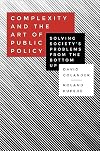
I really wanted to like this book, but ultimately found it more frustrating than enlightening. I was (and remain) enthusiastic that public policy could benefit from taking a more complexity-informed approach, and was interested in seeing what this could mean fleshed out in more detail. Unfortunately, the first 2/3 of the book felt like an extended exercise in just repeating 'complexity frame good, standard approach bad' over and over again. And when it finally got to what should have been show more the 'show, don't tell' section in Part 3, it felt more like a grab-bag of random ideas than a well-considered agenda. I would have loved to see a complexity framework for public policy developed and applied in more depth, but if they weren't going to do that, I think the existing content could easily have been covered in half the space or less. Given the chance again, I'd probably just read the final summary chapter, as it hits most of the key points in a clearer and less repetitive way, without actually losing much of the substance. show less
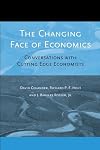
It's an unfortunate (though, to some degree, unavoidable) fact of undergrad education that introductory courses in economics focus on core theory that's at least a few decades old. (The bulk of what's taught in a typical "ECON 101" course was state-of-the-art some 50-100 years ago!) Even first-year PhD courses seldom stray close to the "cutting edge". So this book, which gives a snapshot of some of the most interesting work in economics circa 2002 through interviews with a dozen economists, show more provides a valuable service to potential and current grad students. It may also be a useful antidote to straw man attacks on economic science, though those with no background in economics might gain more from reading one of the many recent popular books on economics.
The authors interview ten working economists: Deirdre McCloskey, Ken Binmore, Herb Gintis, Robert Frank, Matthew Rabin, William Brock, Duncan Foley, Richard Norgaard, Robert Axtell, and H. Peyton Young. These "cutting edge" economists aren't necessarily young (most earned their PhD in the 60s or 70s); indeed, all are in the midst of well-established research programs, with plenty of publications on their CVs. Interviews with two Nobel laureates, Ken Arrow and Paul Samuelson, provide additional perspective.
The selection of interviewees is representative, not comprehensive or definitive. I could probably come up with a list of ten equally-interesting interview subjects (Leigh Tesfatsion, Al Roth, Ernst Fehr, Steven Durlauf, Larry Blume, Oded Galor, and Sam Bowles spring to mind immediately), but the authors seem to have chosen a sample that's about the right size. Perhaps within a few years it will be time for a sequel to this volume with a new sample of economists. If so, it would be interesting to hear from a few economists earlier in their careers. Macroeconomists are also underrepresented in the current book, but perhaps the authors were wise not to duplicate the work in Conversations With Leading Economists : Interpreting Modern Macroeconomics, not to mention the classic Conversations With Economists: New Classical Economists and Opponents Speak Out on the Current Controversy in Macroeconomics.
I recommend this book to anyone thinking about a career in economics and unsure whether there are open areas of research they'd find interesting. I also recommend it to anyone mired in their first year of study toward the PhD, as a reminder that there's life beyond their core coursework. show less
The authors interview ten working economists: Deirdre McCloskey, Ken Binmore, Herb Gintis, Robert Frank, Matthew Rabin, William Brock, Duncan Foley, Richard Norgaard, Robert Axtell, and H. Peyton Young. These "cutting edge" economists aren't necessarily young (most earned their PhD in the 60s or 70s); indeed, all are in the midst of well-established research programs, with plenty of publications on their CVs. Interviews with two Nobel laureates, Ken Arrow and Paul Samuelson, provide additional perspective.
The selection of interviewees is representative, not comprehensive or definitive. I could probably come up with a list of ten equally-interesting interview subjects (Leigh Tesfatsion, Al Roth, Ernst Fehr, Steven Durlauf, Larry Blume, Oded Galor, and Sam Bowles spring to mind immediately), but the authors seem to have chosen a sample that's about the right size. Perhaps within a few years it will be time for a sequel to this volume with a new sample of economists. If so, it would be interesting to hear from a few economists earlier in their careers. Macroeconomists are also underrepresented in the current book, but perhaps the authors were wise not to duplicate the work in Conversations With Leading Economists : Interpreting Modern Macroeconomics, not to mention the classic Conversations With Economists: New Classical Economists and Opponents Speak Out on the Current Controversy in Macroeconomics.
I recommend this book to anyone thinking about a career in economics and unsure whether there are open areas of research they'd find interesting. I also recommend it to anyone mired in their first year of study toward the PhD, as a reminder that there's life beyond their core coursework. show less
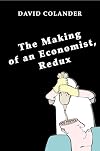
Roughly half the material here is available in related journal articles, but the transcripts of interviews with students aren't. That makes this book invaluable for prospective graduate students in economics who want to get a clearer picture of what they're getting into.
Lists
You May Also Like


Associated Authors
Statistics
- Works
- 41
- Members
- 473
- Popularity
- #52,093
- Rating
- 3.8
- Reviews
- 7
- ISBNs
- 166
- Languages
- 1