
Israel Gutman (1923–2013)
Author of Resistance: The Warsaw Ghetto Uprising
About the Author
Image credit: Israel Guttman
Works by Israel Gutman
Lexikon der Gerechten unter den Völkern (Hg. von Israel Gutman unter Mitarbeit von Sara Bender). Deutsche und Österreicher (2005) 9 copies
The Holocaust and Resistance: An Outline of Jewish History in Nazi Occupied Europe (1933-1945) (1972) 9 copies
The encyclopedia of the righteous among the nations : rescuers of Jews during the Holocaust. Europe and other countries ... (2007) 7 copies
Rechtvaardigen onder de volkeren : Nederlanders met een Yad Vashem-onderscheiding voor hulp aan joden (2005) 7 copies
The Catastrophe of European Jewry : antecedents, history, reflections : selected papers (1976) 6 copies
Dictionnaire des Justes de France : (titres décernés de 1962 à 1999) : suivi de la liste des titres décernés en 2000, 2001 et 2002 (2003) 4 copies
The Encyclopedia of the Righteous Among the Nations: Rescuers of Jews During the Holocaust - Poland (2 volumes) (2004) 3 copies
The Encyclopedia of the Righteous Among the Nations: Rescuers of Jews during the Holocaust - Belgium (2005) 2 copies
Denying the Holocaust 2 copies
פרקים בתולדות השואה 1 copy
מחנות הריכוז הנאציים : מבנה ומגמות, דמות האסיר, היהודים במחנות : הרצאות ודיונים בכינוס הבינלאומי… 1 copy
The encyclopedia of the righteous among the nations : rescuers of Jews during the Holocaust. Poland 1 copy
Żydzi warszawsky 1939-1943 1 copy
Associated Works
The Righteous Among the Nations: Rescuers of Jews During the Holocaust (2007) — Introduction, some editions — 97 copies, 1 review
Die Yad Vashem Enzyklopädie der Ghettos während des Holocaust (2014) — Foreword, some editions — 9 copies
Tagged
Common Knowledge
- Legal name
- גוטמן, ישראל
- Other names
- GUTMAN, Israel
- Birthdate
- 1923-05-20
- Date of death
- 2013-10-01
- Gender
- male
- Occupations
- historian
editor
professor of history - Organizations
- Yad Vashem (Founder, International Institute for Holocaust Research; Chief Historian, 1996-2000)
Hebrew University of Jerusalem - Nationality
- Poland (birth)
Israel - Birthplace
- Warsaw, Poland
- Places of residence
- Jerusalem, Israel
- Place of death
- Jerusalem
- Associated Place (for map)
- Warsaw, Poland
Members
Reviews
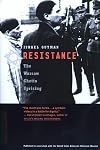
Written at the request of the Holocaust Museum in Washington, DC, this has to be the definitive description of the Jewish uprising in the Warsaw ghetto in April 1943. It lays the groundwork by describing Warsaw before the war, the development of the Jewish ghetto, and the Nazi orders that moved all Polish Jews to the ghetto, thereby overcrowding it to an unbelievable extent. The Jews were then stripped of rights to travel, to make money, to find clothing, so that the ghetto became full of show more starving people, with the exception of a small number who had some resources that they managed to keep. Many Jews were employed in non-Jewish enterprises, not least in the making of weapons for the war, and this employment gave them hopes of survival.
When the purging began it was with promises that the people would simply be sent to work camps. Many thought they could survive it. There were rumors that they were death camps but it was difficult to confirm with limited access to news. Much of the ghetto was emptied out by the time the resistance gained ground.
There were several attempts by ghetto residents to connect with resistance movements outside, including the Communist party, which was thought to be a source of weapons and assistance against the Nazis. In the end, however, it was the young people of the ghetto who developed the plans and found weapons, and even organized the development of a series of underground bunkers to hold hundreds of people. It was young people who were willing to die in the effort to resist the Nazis, a David-and-Goliath situation that was doomed to fail.
This account is important because of the details, and because of the restraint Gutman shows in illuminating the lack of assistance by other countries and even by nearby Polish citizens. Yes, there were small underground groups that helped, but in general those opposed to the Nazi treatment of the Jews simply wrung their hands. When the ghetto was on fire and Nazis were shooting every Jew they could find there were street fairs outside the ghetto walls, and people were going about their business and enjoying themselves.
Many ask why the Jews were such "sheep" for so long. This book goes a long way to answer that question. What choice did they have, especially when there was a chance they could escape death? They had little choice, yet they did resist. While the rest of the world stood by.
I can't help but think of how the rest of the world continues to stand by when atrocities are committed. Syria? Rwanda? Bosnia? Rohingya? Darfur? Our hands are still dirty. show less
When the purging began it was with promises that the people would simply be sent to work camps. Many thought they could survive it. There were rumors that they were death camps but it was difficult to confirm with limited access to news. Much of the ghetto was emptied out by the time the resistance gained ground.
There were several attempts by ghetto residents to connect with resistance movements outside, including the Communist party, which was thought to be a source of weapons and assistance against the Nazis. In the end, however, it was the young people of the ghetto who developed the plans and found weapons, and even organized the development of a series of underground bunkers to hold hundreds of people. It was young people who were willing to die in the effort to resist the Nazis, a David-and-Goliath situation that was doomed to fail.
This account is important because of the details, and because of the restraint Gutman shows in illuminating the lack of assistance by other countries and even by nearby Polish citizens. Yes, there were small underground groups that helped, but in general those opposed to the Nazi treatment of the Jews simply wrung their hands. When the ghetto was on fire and Nazis were shooting every Jew they could find there were street fairs outside the ghetto walls, and people were going about their business and enjoying themselves.
Many ask why the Jews were such "sheep" for so long. This book goes a long way to answer that question. What choice did they have, especially when there was a chance they could escape death? They had little choice, yet they did resist. While the rest of the world stood by.
I can't help but think of how the rest of the world continues to stand by when atrocities are committed. Syria? Rwanda? Bosnia? Rohingya? Darfur? Our hands are still dirty. show less

(From back dust cover)
It was a magic touch on behalf of the angel of history or a simple miracle, that a rare photographic document like the "Auschwitz Album" survived, and was donated to the photo archives of Yad Vashem.
This album is unique: there is not a similar album of its kind in the whole world. It document, in about two hundred photos from every direction and from every angle, the process of arrival, the enlisting, the selection, the confiscation of property and the preparation for show more the physical liquidation of a Jewish transport. This Transport came from the area of Carpato-Ruthenia, a region annexed in 1939 to Hungary from Czechoslovakia, and arrived at the ramp of the extermination camp Auschwitz-Birkenau on May 1944. The most surprising and striking fact is that the Album fell into the hands of a survivor of that same death transport. Lili Jacob opened an album and suddenly recognized the people of her community, who arrived with her to the platform of Birkenau: her rabbi, her numerous family relatives and ... herself.
Yad Vashem and the Auschwitz-Birkenau State Museum present you with this Deluxe Edition that includes one picture that had been missing for years and additional information on the deportees' identity and their tragic fate. show less
It was a magic touch on behalf of the angel of history or a simple miracle, that a rare photographic document like the "Auschwitz Album" survived, and was donated to the photo archives of Yad Vashem.
This album is unique: there is not a similar album of its kind in the whole world. It document, in about two hundred photos from every direction and from every angle, the process of arrival, the enlisting, the selection, the confiscation of property and the preparation for show more the physical liquidation of a Jewish transport. This Transport came from the area of Carpato-Ruthenia, a region annexed in 1939 to Hungary from Czechoslovakia, and arrived at the ramp of the extermination camp Auschwitz-Birkenau on May 1944. The most surprising and striking fact is that the Album fell into the hands of a survivor of that same death transport. Lili Jacob opened an album and suddenly recognized the people of her community, who arrived with her to the platform of Birkenau: her rabbi, her numerous family relatives and ... herself.
Yad Vashem and the Auschwitz-Birkenau State Museum present you with this Deluxe Edition that includes one picture that had been missing for years and additional information on the deportees' identity and their tragic fate. show less
Para que lo sepan las generaciones venideras. La recordación del Holocausto en Yad Vashem by Israel Gutman

Materiales del Centro Yad Vashem
Il 19 aprile 1943 migliaia di soldati nazisti ricevettero l'ordine di deportare nei campi di sterminio di Treblinka e di Auschwitz tutti gli ebrei del ghetto di Varsavia, ridotto a pochi blocchi di edifici che ospitavano quanto restava del mezzo milione e più di cittadini ebrei della capitale polacca. Chi avesse resistito doveva essere ucciso. Alcune centinaia di questi ebrei chiusi in trappola, per lo più adolescenti, armati solo di pistole, bombe molotov e qualche mitragliatrice leggera show more decisero di difendersi combattendo. Questo libro è l'esauriente racconto della rivolta e degli avvenimenti che a essa portarono. Negli anni '20 e '30 Varsavia ospitava la comunità ebraica più numerosa e più viva d'Europa. Comprendeva ricchi, poveri e classe media, assimilati agnostici e ferventi sionisti, rappresentanti di tutta la gamma di fazioni politiche e religiose. Poi venne l'assalto tedesco, di inaudita violenza, contro gli ebrei: isolamento, fame, disperazione e malattie; quindi le deportazioni. Intorno al ghetto venne eretto un muro e a centinaia di migliaia gli abitanti vennero deportati a Treblinka. Ma intanto la resistenza cominciò a prender forma e quando giunse l'ordine dell'attacco finale i combattenti del ghetto erano pronti. Il libro, che si avvale di commoventi, drammatici estratti da diari, lettere e altri documenti dell'epoca, si presenta come una lucida ricostruzione di un periodo capitale della storia ebraica e mondiale. (fonte: retro di copertina) show less
Nov 10, 2022Italian
Awards


You May Also Like


Associated Authors
Statistics
- Works
- 53
- Also by
- 4
- Members
- 695
- Popularity
- #36,411
- Rating
- 4.5
- Reviews
- 5
- ISBNs
- 56
- Languages
- 7
- Favorited
- 3