
Rebecca Hickox
Author of The Golden Sandal: A Middle Eastern Cinderella Story
About the Author
Works by Rebecca Hickox
Tagged
Common Knowledge
- Gender
- female
Members
Reviews

The daughter of a widowed fisherman, Maha was lonely for a mother's love, and convinced her father to marry their neighbor. Unfortunately for her, her new stepmother was resentful and unkind, and the young girl was made to do all the work, while her stepsister lazed around. After sparing the talking red fish she finds one day, Maha gains a magical ally who helps her throughout her childhood and adolescence. When denied the chance to attend the henna party of a wealthy merchant's daughter, show more Maha appeals to the fish, and is given enchanted clothing to wear. Returning home at the end of the evening, she loses one of her golden sandals, and it is found by the merchant's son, who is so struck by its dainty beauty, that he decides he must marry its owner...
Adapted from the Iraqi tale of The Little Red Fish and the Clog of Gold, to be found in Inea Bushnaq's 1986 Arab Folktales, this Middle Eastern Cinderella story has many of the elements associated with this tale type, from the unkind stepmother and lazy stepsister, to the magical protector/guide. There is even a party to which the Cinderella figure wishes to go, although here it is a women's only party, rather than the ball of the western tradition. The Golden Sandal: A Middle Eastern Cinderella Story is the second folkloric picture-book I have read from author Rebecca Hickox, following upon her Zorro and Quwi: Tales of a Trickster Guinea Pig, and I enjoyed the narrative, appreciating the mixture of familiar and unfamiliar elements. The accompanying artwork from illustrator Will Hillenbrand, created on velum in a variety of media (he discusses his method in a note at the read), was likewise appealing. The only thing I would criticize is the author's claim, in her afterword, that the Chinese variant of this tale type is the oldest recorded version. This is in fact untrue, as the ancient Egyptian version - see Shirley Climo's The Egyptian Cinderella for a retelling - is the oldest known version. Leaving that aside, this is one I would recommend to young folklore enthusiasts, and to anyone seeking Cinderella variants from around the world. show less
Adapted from the Iraqi tale of The Little Red Fish and the Clog of Gold, to be found in Inea Bushnaq's 1986 Arab Folktales, this Middle Eastern Cinderella story has many of the elements associated with this tale type, from the unkind stepmother and lazy stepsister, to the magical protector/guide. There is even a party to which the Cinderella figure wishes to go, although here it is a women's only party, rather than the ball of the western tradition. The Golden Sandal: A Middle Eastern Cinderella Story is the second folkloric picture-book I have read from author Rebecca Hickox, following upon her Zorro and Quwi: Tales of a Trickster Guinea Pig, and I enjoyed the narrative, appreciating the mixture of familiar and unfamiliar elements. The accompanying artwork from illustrator Will Hillenbrand, created on velum in a variety of media (he discusses his method in a note at the read), was likewise appealing. The only thing I would criticize is the author's claim, in her afterword, that the Chinese variant of this tale type is the oldest recorded version. This is in fact untrue, as the ancient Egyptian version - see Shirley Climo's The Egyptian Cinderella for a retelling - is the oldest known version. Leaving that aside, this is one I would recommend to young folklore enthusiasts, and to anyone seeking Cinderella variants from around the world. show less

In this retelling of a Peruvian folktale, Zorro the fox chases after Quwi the guinea pig, only to be outwitted at every turn. An engaging trickster tale for young readers, this story presents a charming inversion of the usual animal-fable motif of the clever fox. As Hickox informs the reader in her afterword, the mouse, rabbit and guinea pig can all function as a trickster in the Peruvian Quechua tradition, which leaves the fox to play the gullible fool.
Although I cannot say that Kim show more Howard’s colorful artwork here is a personal favorite – I found it a little blurry and indistinct at times – I did enjoy the story of Zorro and Quwi, and finished it with a desire to know more about this cavy trickster. Recommended to young folklore enthusiasts, and to anyone with an appreciation for guinea pigs and their finer qualities! show less
Although I cannot say that Kim show more Howard’s colorful artwork here is a personal favorite – I found it a little blurry and indistinct at times – I did enjoy the story of Zorro and Quwi, and finished it with a desire to know more about this cavy trickster. Recommended to young folklore enthusiasts, and to anyone with an appreciation for guinea pigs and their finer qualities! show less
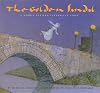
This Iraqi Cinderella tale will be familiar to American children, yet sufficiently different to keep their interest. It is a multi-cultural fable that introduces a slice of middle-eastern culture. Instead of wishing for an invitation to a prince's ball, Maha longs to attend a bride's henna. When the magic red fish supplies her with the accoutrements necessary to attend, she washes herself in the river before donning her new garments, obviously a ritual of preparation for an important event. show more In another cultural twist, it is the mother that searches out Maha, as she is the arranger of the family's marriages.
The illustrations by Will Hillenbrand are done in a complex process using vellum, bristol board, oils, oil pastel, egg tempera, watercolor, artist crayons and woodless pencils. The detailed "Illustrator's Note" on the last page explains the process. The result is illustrations in muted tones that suggest an age-old fairy tale, but are sufficiently colorful to suggest majesty and exoticness. Many of the illustrations are two page spreads. The hennaed bride at the merchant's house meeting a noble, yet simply dressed Maha underscores the cultural difference between The Golden Sandal and Cinderella. The illustrations follow the story line and offer additional bits of information. It is through the illustrations that we learn of the stepsister's clumsiness and see evidence of her mean-spiritedness. There is welcome humor and revenge in the story and illustrations as well, as the stepmother's revengeful plan backfires, and the stepdaughter is left with a bald head full of blisters - humorously illustrated by Hillenbrand.
This is a wonderful opportunity to introduce children to Middle-Eastern culture in a way that is at once familiar and exotic.
Connections:
This Iraqi fairy tale is a wonderful way to gently remind children that there is more in Iraq than war. There are children - children whose parents read them bedtime stories, much the same type of stories as we read here in the United States. For older children, a great companion read would be The Librarian of Basra: A True Story from Iraq by Jeanette Winter. show less
The illustrations by Will Hillenbrand are done in a complex process using vellum, bristol board, oils, oil pastel, egg tempera, watercolor, artist crayons and woodless pencils. The detailed "Illustrator's Note" on the last page explains the process. The result is illustrations in muted tones that suggest an age-old fairy tale, but are sufficiently colorful to suggest majesty and exoticness. Many of the illustrations are two page spreads. The hennaed bride at the merchant's house meeting a noble, yet simply dressed Maha underscores the cultural difference between The Golden Sandal and Cinderella. The illustrations follow the story line and offer additional bits of information. It is through the illustrations that we learn of the stepsister's clumsiness and see evidence of her mean-spiritedness. There is welcome humor and revenge in the story and illustrations as well, as the stepmother's revengeful plan backfires, and the stepdaughter is left with a bald head full of blisters - humorously illustrated by Hillenbrand.
This is a wonderful opportunity to introduce children to Middle-Eastern culture in a way that is at once familiar and exotic.
Connections:
This Iraqi fairy tale is a wonderful way to gently remind children that there is more in Iraq than war. There are children - children whose parents read them bedtime stories, much the same type of stories as we read here in the United States. For older children, a great companion read would be The Librarian of Basra: A True Story from Iraq by Jeanette Winter. show less
"Maha, the beloved daughter of a widowed fisherman from Iraq, joins the burgeoning ranks of beguiling picture-book Cinderellas from around the world. In this simply written version, Maha's father gives in to his daughter's urgings that he marry their "good neighbor," thereby giving her a mother and sister. Maha's fortunes alter - for the worse - and her needed fairy godmother appears as a red fish whose life Maha has spared. Maha earns the fish's eternal gratitude ("call for me any time and show more ask what you will"). The fish insures Maha's presence at the henna-painting celebration for a new bride, warning only that Maha leave before her stepmother. She does, but loses one of her golden sandals in her race across the footbridge. Illustrator Hillenbrand uses both interior and external architectural details to re-create the limpid Middle Eastern landscape. Beginning with young Maha's mended vest and her rooster's proud comb, Hillenbrand's dazzling reds contrast his more muted palette and direct our attention toward important elements in the tale: the scarlet henna-stained hands and feet of the bride; the crimson vest of Tariq, brother to the bride, who discovers Maha's sandal and deter-mines its owner will be his wife; the ruby fish. Throughout, Hillenbrand lightens the tale with humorous touches, none more so than his final portrait of Maha's stepsister, bald head polka-dotted with red blisters (a plan to cause Maha to lose all her hair having backfired) and a red fish earring dangling from her ear. A concluding note from author and illustrator records their respective research in bringing a new and appealing version of "Cinderella" to young readers." -Horn Book Magazine show less
Lists
Awards


You May Also Like


Associated Authors
Statistics
- Works
- 5
- Members
- 702
- Popularity
- #36,076
- Rating
- 3.6
- Reviews
- 70
- ISBNs
- 14