
Ai-Ling Louie
Author of Yeh-Shen: A Cinderella Story from China
About the Author
Works by Ai-Ling Louie
Tagged
Common Knowledge
- Birthdate
- 1949
- Gender
- female
- Nationality
- USA
- Birthplace
- New York, New York, USA
- Associated Place (for map)
- New York, USA
Members
Reviews

Yeh-Shen is mistreated by her cruel stepmother in this Chinese Cinderella story, taken from the 9th-century collection, The Miscellaneous Record of You Yang. Made to do all of the work and dressed in rags, Yeh-Shen's only comfort is the magical fish she befriends. When this too is taken by her stepmother, she is in despair, until she discovers that the bones of her fish can still speak to her, and can grant her wishes. Using this magic to attend a festival, she leaves behind one of her show more golden slippers, and when this footwear finds its way into the hands of a king, her life is transformed...
Originally published in 1982, Yeh-Shen: A Cinderella Story from China was a tale handed down in author Ai-Ling Louie's family, and is one she was surprised to discover predated the European variant of the story (which first saw print in 1634 AD) by some centuries. She makes this point in her brief note, and includes a reproduction of the original Chinese text of her tale. It's interesting to note that Louie speculates that this tale-type might have traveled from Asia to Europe, given the difference of recorded dates between the two versions. I'm not sure what the state of research into the subject was, back in the 80s, but I think this idea is called into question by the existence of the Egyptian Cinderella story of Rhodopis, which was recorded in the late first century BC by the Greek geographer Strabo, and then in the work of the Roman author Aelian (ca. 175–235 AD). Of course, it is still possible that the story originated in Asia, and simply traveled west far earlier than Louie posited. But when it comes to the written record, the Egyptian variant of this story is certainly the earliest recorded, that we know of.
Leaving all of that aside, this was an engaging story, one with many familiar elements - the cruel stepfamily, the magical aid to the heroine, the dainty slipper which inspires a king to seek out its owner - and some others that were quite different from the version with which many western readers will be familiar. I was struck by the fact that the king in question becomes enchanted with Yeh-Shen simply by looking at her slipper, without ever having seen her in person. This was quite similar to the scenario in The Golden Sandal: A Middle Eastern Cinderella Story, which relates an Iraqi version of the tale. It's clear that part of what enchanted the king here is the smallness of the slipper, making me wonder about the relationship of this idea - the desirability of small and dainty feet on women - to the Chinese practice of foot-binding. That is something I would have been interested to see explored, in the author's note, although sadly Louie does not mention it. The accompanying artwork from Ed Young, done in pastel and watercolor, has a delicate beauty that is well-suited to the tale, and add a sense of mystery and enchantment to the reading experience. Recommended to young folk and fairy-tale lovers, and to readers interested in Cinderella stories. show less
Originally published in 1982, Yeh-Shen: A Cinderella Story from China was a tale handed down in author Ai-Ling Louie's family, and is one she was surprised to discover predated the European variant of the story (which first saw print in 1634 AD) by some centuries. She makes this point in her brief note, and includes a reproduction of the original Chinese text of her tale. It's interesting to note that Louie speculates that this tale-type might have traveled from Asia to Europe, given the difference of recorded dates between the two versions. I'm not sure what the state of research into the subject was, back in the 80s, but I think this idea is called into question by the existence of the Egyptian Cinderella story of Rhodopis, which was recorded in the late first century BC by the Greek geographer Strabo, and then in the work of the Roman author Aelian (ca. 175–235 AD). Of course, it is still possible that the story originated in Asia, and simply traveled west far earlier than Louie posited. But when it comes to the written record, the Egyptian variant of this story is certainly the earliest recorded, that we know of.
Leaving all of that aside, this was an engaging story, one with many familiar elements - the cruel stepfamily, the magical aid to the heroine, the dainty slipper which inspires a king to seek out its owner - and some others that were quite different from the version with which many western readers will be familiar. I was struck by the fact that the king in question becomes enchanted with Yeh-Shen simply by looking at her slipper, without ever having seen her in person. This was quite similar to the scenario in The Golden Sandal: A Middle Eastern Cinderella Story, which relates an Iraqi version of the tale. It's clear that part of what enchanted the king here is the smallness of the slipper, making me wonder about the relationship of this idea - the desirability of small and dainty feet on women - to the Chinese practice of foot-binding. That is something I would have been interested to see explored, in the author's note, although sadly Louie does not mention it. The accompanying artwork from Ed Young, done in pastel and watercolor, has a delicate beauty that is well-suited to the tale, and add a sense of mystery and enchantment to the reading experience. Recommended to young folk and fairy-tale lovers, and to readers interested in Cinderella stories. show less
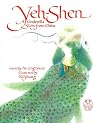
I enjoyed both the story and illustrations in this book. A twist on the traditional Cinderella story we have always heard, but excellent for Chinese students. Since the fish was such a significant piece of the story being her only friend and then the bones being magic, on every page an illustration of a fish was apparent which I liked because it tied it all together on the main focus. I like how it kept certain Chinese traits as well, like small feet being something admired, because the king show more wanted to find whoever owned the very tiny shoe. The author who retold this story used an excellent voice for the young readers. The main message in this story was about not wasting wants on selfish desires but of true desires of the heart. Also I like how it showed through hard work and persevering kindness one can have a happy ending after all. One thing I did not like about this book is the gruesome ending it had for the step mother and step sister dying in the cave. While many could consider this a happy ending because they "got what they deserved" I do not believe that that type of ending should be viewed as positive to children. Overall, excellent book and apparently the first true story of Cinderella made it extra intriguing relating it to what most other people think is the traditional story. show less
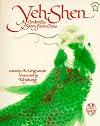
As much as I enjoy the fact that the Cinderella story is one which is retold in almost every culture around the world, this rendition leaves much wanting. The story itself is wonderful, due to Louie's clear and concise prose, but the illustrations did not mesh well with the narrative. Clearly the designer of the book was trying to emulate Chinese aesthetics, but Young's illustrations were placed oddly in relation to the text and rarely seemd to actually illuminate the story. This overall show more dissonance was further enhanced by the fact that there was so much white space on the pages, both in relation to the illustrated portions and the text boxes, which really acted as a detriment to the overall aesthetics than to act as a balance to the interactions of the illustrations and text. show less
The king doesn't even meet the girl but yearns for her based on finding her shoe. When they do meet, he falls in love with her just by a quick peek at her face. At least in the European versions the young people dance together for a few hours.
The art is just that, art. I didn't care for it all. And I found it not *illustrative* at all. I would not have liked it when I was a child, either. Sure, it's interesting that there's an ancient Chinese Cinderella story. But that doesn't mean this book show more needed to be published.
My opinion. Sorry if yours differs; no offense intended. show less
The art is just that, art. I didn't care for it all. And I found it not *illustrative* at all. I would not have liked it when I was a child, either. Sure, it's interesting that there's an ancient Chinese Cinderella story. But that doesn't mean this book show more needed to be published.
My opinion. Sorry if yours differs; no offense intended. show less
Lists
Awards


You May Also Like


Associated Authors
Statistics
- Works
- 7
- Members
- 1,643
- Popularity
- #15,627
- Rating
- 3.6
- Reviews
- 69
- ISBNs
- 18
- Languages
- 1