
Hugh Whitemore (1936–2018)
Author of Breaking the Code
About the Author
Image credit: Hugh Whitemore in 1986.
Works by Hugh Whitemore
Pack of Lies [1987 TV movie] — Writer — 4 copies
Elizabeth R: Part IV: Horrible Conspiracies [1971 TV episode] — Writer — 2 copies
My House In Umbria (DVD) 1 copy
Tagged
Common Knowledge
- Birthdate
- 1936-06-16
- Date of death
- 2018-07-17
- Gender
- male
- Education
- Royal Academy of Dramatic Art
- Occupations
- playwright
screenwriter - Organizations
- Royal Academy of Dramatic Art (Council member)
- Awards and honors
- Royal Society of Literature (Fellow)
- Nationality
- UK
- Birthplace
- Tunbridge Wells, England
- Places of residence
- London, England, UK
- Associated Place (for map)
- UK
Members
Reviews

New York writer and book lover Helene Hanff corresponded with Frank Doel, an employee of Marks and Company Booksellers in London, over the course of twenty years (1949-1969). She initially requested specific used books and Doel did his best to find a copy, shipping them overseas by book rate. Eventually she, Frank, and the other employees of the antiquarian bookshop developed a fond friendship. Many of the letters provide an idea of what life was like in London at the time. I was surprised show more to find out how long rationing endured after WWII. Hanff sent gift-packages containing meat and eggs, which were in short supply and were greatly appreciated by the staff. Hanff is quite witty and teasing in her letters. Doel’s replies were initially crisp and business-like but gradually became warm and friendly in tone. I particularly enjoyed the historical events sprinkled into their correspondences, such as the inauguration of Queen Elizabeth II, the reelection of Prime Minister Winston Churchill, and the aforementioned food rationing. It was a pleasure to read of a friendship formed around a shared love of books. I don’t read too many I can call “delightful,” but this is one of them. show less

While inhabiting a suburban world of Battenburg cake, ginger nut biscuits, jumble sales, commuting to work and returning home for tea with her spinster aunt, Stevie Smith (1902-1971) was a writer of fiercely honest, despairing and darkly amusing poetry and modernist novels. 'Smart writing people think it's not at all chic to live in the suburbs with an aunt, but I don't care what they think. I've never cared about chic things, fashion and so on. What does it matter?' Hugh Whitemore's play, show more written in 1977, for three actors was one of the first tributes to a woman with a unique writing voice. His play is a convincing and moving patchwork creation from Smith's written oeuvre and friends' and colleagues' reminiscences.
Now Stevie is almost a period piece with echoes of Elizabeth Gaskell's Cranford and Barbara Pym singletons with a darker edge. Smith seems to speak for thousands of unmarried women through the ages when she wrote of her home at Avondale Road, Palmers Green.
It was a house of female habitation,
Two ladies fair inhabited the house,
And they were brave. For although Fear knocked loud
Upon the door, and said he must come in,
They did not let him in.
The play is full of terrible almost inexplicable pain (a misguided suicide attempt at work),comedy and pathos. The award of the Queen's medal at Buckingham Palace is very funny: 'She made me feel awfully like a schoolgirl again, being interviewed by a rather cordial headmistress.' Smith's death at the end of the play is terribly moving as she wishes a friend 'beautifully happy'. Hers is a voice we need to hear again. Hugh Whitemore's play of her life can be a brilliant beginning to a renewed appreciation of her genius. show less
Now Stevie is almost a period piece with echoes of Elizabeth Gaskell's Cranford and Barbara Pym singletons with a darker edge. Smith seems to speak for thousands of unmarried women through the ages when she wrote of her home at Avondale Road, Palmers Green.
It was a house of female habitation,
Two ladies fair inhabited the house,
And they were brave. For although Fear knocked loud
Upon the door, and said he must come in,
They did not let him in.
The play is full of terrible almost inexplicable pain (a misguided suicide attempt at work),comedy and pathos. The award of the Queen's medal at Buckingham Palace is very funny: 'She made me feel awfully like a schoolgirl again, being interviewed by a rather cordial headmistress.' Smith's death at the end of the play is terribly moving as she wishes a friend 'beautifully happy'. Hers is a voice we need to hear again. Hugh Whitemore's play of her life can be a brilliant beginning to a renewed appreciation of her genius. show less
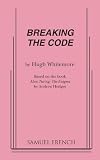
It's always a bit of a challenge to read a play without having seen it. This one is particularly difficult because it skips in time from childhood to war efforts and post war events and back again; visual cues from the stage would make the transition easier than on the page.
This said, this 'time warping' is an effective ploy to recount not only Alan Turing's professional contributions (computing and cryptography) but also his personal difficulties. It gives a very tight account of the man in show more his research, his personality and the main events of his life. Despite the very technical nature of his work, it is explained in an easily accessible fashion, with a sense of wonder. Generally a precise look at a man's extraordinary contribution. show less
This said, this 'time warping' is an effective ploy to recount not only Alan Turing's professional contributions (computing and cryptography) but also his personal difficulties. It gives a very tight account of the man in show more his research, his personality and the main events of his life. Despite the very technical nature of his work, it is explained in an easily accessible fashion, with a sense of wonder. Generally a precise look at a man's extraordinary contribution. show less

Watched mostly for something to do while exercising. Learned lots about the period and persons that I didn't know, although I have read a lot about that era. Performances were good, but more appropriate to stage than film. Costumes and settings were magnificent.
I classed it as fiction rather than nonfiction, despite the accuracy of the script, because it is a docudrama, not a documentary.
I classed it as fiction rather than nonfiction, despite the accuracy of the script, because it is a docudrama, not a documentary.
Lists
Awards


You May Also Like


Associated Authors
Statistics
- Works
- 26
- Members
- 718
- Popularity
- #35,341
- Rating
- 4.2
- Reviews
- 30
- ISBNs
- 53
- Languages
- 2