
About the Author
Sinclair McKay is a features writer for The Telegraph and The Mail on Sunday. He is also the acclaimed author of the bestselling The Secret Life of Bletchley Park.
Works by Sinclair McKay
The Secret Life of Bletchley Park: The WWII Codebreaking Centre and the Men and Women Who Worked There (2010) 785 copies, 28 reviews
Bletchley Park Brainteasers: The World War II Codebreakers Who Beat the Enigma Machine--And More Than 100 Puzzles and Riddles That Inspired Them (2017) 202 copies, 3 reviews
The Secret Listeners: The Men and Women Posted Across the World to Intercept the German Codes for Bletchley Park (2012) 139 copies, 5 reviews
The Lady in the Cellar: Murder, Scandal and Insanity in Victorian Bloomsbury (2018) 87 copies, 8 reviews
Secret Britain: A journey through the Second World War's hidden bases and battlegrounds (2021) 37 copies, 1 review
The Scotland Yard Puzzle Book: Crime Scenes, Conundrums and Whodunnits to test your inner detective (2019) 35 copies
Secret Life of Fighter Command: Testimonials from the men and women who beat the Luftwaffe (2015) 31 copies
The Scotland Yard Puzzle Book: Test Your Inner Detective by Solving Some of the World's Most Difficult Cases (2020) 18 copies
Secret Agent Brainteasers: More Than 100 Codebreaking Puzzles Inspired by Britain's Espionage Masterminds (2019) 12 copies
The Hidden History of Code-Breaking: The Secret World of Cyphers, Uncrackable Codes, and Elusive Encryptions (2023) 11 copies
Vuur en duisternis 1 copy
Tagged
Common Knowledge
- Birthdate
- 20th c.
- Gender
- male
- Occupations
- journalist
- Nationality
- UK
- Places of residence
- London, England, UK
- Associated Place (for map)
- England, UK
Members
Reviews
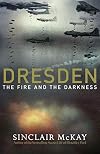
I have visited Dresden three times; I read Kurt Vonnegut's Slaughterhouse Five many years ago, and began to explore the history and consequences of the firebombing of the city. But Sinclair McKay's book was the first account I've ever read of the raid from beginning to end, with both some detailed scene-setting and an account of the city's fortunes in the post-war era, first as part of the DDR and then latterly after reunification. This bracketing of the account of the bombing is important, show more setting the story in context both before and after the war.
The book uses eye-witness accounts from both sides of the conflict to describe the events of the bombing raid in horrible detail. At the same time, the account is very even-handed. Although the question as to whether the bombing of Dresden was a war crime or not is examined, McKay does not come down on either side; for him, the story of the post-war reconciliation is more important. He devotes some time to the account of the restoration of the Frauenkirche and the role of British charities and craftsmen in that work. He also explores the use of Dresden in propaganda both during and after the war. In particular, he goes into some level of detail over the varying accounts of the death toll; many have found it convenient to inflate the death toll in Dresden, partially to attempt to paint the Allies in a poor light. Some accounts have inflated the death toll by as many as ten times; the persistence of this number might make you wonder who really won the propaganda war.
McKay devotes space to examining the personality and reactions of Arthur 'Bomber' Harris, in charge of RAF Bomber Command. Many have tried to depict him as a war criminal precisely because of the bombing of Dresden as well as other German cities such as Cologne and Hamburg; McKay's analysis suggests that he was firmly in the mainstream of military thinking at the time on both sides. Ultimately, McKay says, if the bombing of Dresden was a war crime, so was the bombing of Coventry, London, Guernica, Rotterdam or Warsaw.
For someone who has done so much research, McKay has some odd omissions, though. The German author Karl May, often erroneously described as a writer of 'Westerns', is referenced but his connections with Dresden are not; the Pragerstrasse, the main street leading from the central railway station to the centre of the Altstadt, is described a lot but its post-war reconstruction is only referenced for its blocks of apartments and not for the three monolithic buildings built as hotels that for a long time were its most notable architectural feature. Also, Dresden Mitte railway station is not mentioned. This was a considerable structure, having a large steel-framed overall roof; in the bombing, all the glass in the roof was shattered, but the structure itself remained. It was demolished in the immediate post-war years, not because it was unsafe but because of the costs involved in restoring the roof.
(On the other hand, I had a real "I never knew that!" moment when McKay casually comments that Oliver Dowding, in charge of RAF Fighter Command during the Battle of Britain, regularly attended séances after the war to try to contact the souls of the young airmen who fell during the war. McKay includes this in part to emphasise the adulation given to fighter pilots in post-war Britain and contrast it with the rather more muted official attitude towards Bomber Command crew, especially when it comes to the political significance of statues and monuments.)
McKay also mentions Freeman Dyson, the physicist, who as a young conscript was put to work by the RAF doing statistical analysis of the outcomes of bombing raids. He provides an interesting pen-portrait of the young Dyson, and then later goes on to talk about some of his doubts and concerns over the bombing of Dresden. Nowhere does he mention that in later life, Dyson went to work on the USA's Project Orion, the ultimate swords-into-ploughshares project that proposed building a spaceship powered by exploding atomic bombs behind it. Orion attracted a number of scientists, including Edward Teller, precisely because of its potential as a pacifist icon (odd though that may seem to us now). As an expression of Dyson's own unease at the bombing of Dresden, this would have made an interesting counterpoint.
But none of these omissions really change the impression this book will leave on the reader. Given that I know some of the parts of Dresden, I could easily visualise the places being talked about, even though my most recent visit was ten years in the past. I first visited in the decade immediately following reunification, and at that time the city still presented a very East German appearance. In contrast, on my last visit (itself more than ten years ago), I was surprised by the amount of new building that had gone on since my previous one, and the casual traveller now might not imagine any of the horrors of the bombing if they were merely passing through. And such has been the amount of time and effort expended in restoring parts of the Altstadt, there are few obvious memorials to the victims of the bombing unless you know the history of the city. And then, the very city itself becomes that memorial; and its story needs retelling to future generations to show who the victims of war really are, and how reprehensible are those who cause war to be waged, no matter what their justification. show less
The book uses eye-witness accounts from both sides of the conflict to describe the events of the bombing raid in horrible detail. At the same time, the account is very even-handed. Although the question as to whether the bombing of Dresden was a war crime or not is examined, McKay does not come down on either side; for him, the story of the post-war reconciliation is more important. He devotes some time to the account of the restoration of the Frauenkirche and the role of British charities and craftsmen in that work. He also explores the use of Dresden in propaganda both during and after the war. In particular, he goes into some level of detail over the varying accounts of the death toll; many have found it convenient to inflate the death toll in Dresden, partially to attempt to paint the Allies in a poor light. Some accounts have inflated the death toll by as many as ten times; the persistence of this number might make you wonder who really won the propaganda war.
McKay devotes space to examining the personality and reactions of Arthur 'Bomber' Harris, in charge of RAF Bomber Command. Many have tried to depict him as a war criminal precisely because of the bombing of Dresden as well as other German cities such as Cologne and Hamburg; McKay's analysis suggests that he was firmly in the mainstream of military thinking at the time on both sides. Ultimately, McKay says, if the bombing of Dresden was a war crime, so was the bombing of Coventry, London, Guernica, Rotterdam or Warsaw.
For someone who has done so much research, McKay has some odd omissions, though. The German author Karl May, often erroneously described as a writer of 'Westerns', is referenced but his connections with Dresden are not; the Pragerstrasse, the main street leading from the central railway station to the centre of the Altstadt, is described a lot but its post-war reconstruction is only referenced for its blocks of apartments and not for the three monolithic buildings built as hotels that for a long time were its most notable architectural feature. Also, Dresden Mitte railway station is not mentioned. This was a considerable structure, having a large steel-framed overall roof; in the bombing, all the glass in the roof was shattered, but the structure itself remained. It was demolished in the immediate post-war years, not because it was unsafe but because of the costs involved in restoring the roof.
(On the other hand, I had a real "I never knew that!" moment when McKay casually comments that Oliver Dowding, in charge of RAF Fighter Command during the Battle of Britain, regularly attended séances after the war to try to contact the souls of the young airmen who fell during the war. McKay includes this in part to emphasise the adulation given to fighter pilots in post-war Britain and contrast it with the rather more muted official attitude towards Bomber Command crew, especially when it comes to the political significance of statues and monuments.)
McKay also mentions Freeman Dyson, the physicist, who as a young conscript was put to work by the RAF doing statistical analysis of the outcomes of bombing raids. He provides an interesting pen-portrait of the young Dyson, and then later goes on to talk about some of his doubts and concerns over the bombing of Dresden. Nowhere does he mention that in later life, Dyson went to work on the USA's Project Orion, the ultimate swords-into-ploughshares project that proposed building a spaceship powered by exploding atomic bombs behind it. Orion attracted a number of scientists, including Edward Teller, precisely because of its potential as a pacifist icon (odd though that may seem to us now). As an expression of Dyson's own unease at the bombing of Dresden, this would have made an interesting counterpoint.
But none of these omissions really change the impression this book will leave on the reader. Given that I know some of the parts of Dresden, I could easily visualise the places being talked about, even though my most recent visit was ten years in the past. I first visited in the decade immediately following reunification, and at that time the city still presented a very East German appearance. In contrast, on my last visit (itself more than ten years ago), I was surprised by the amount of new building that had gone on since my previous one, and the casual traveller now might not imagine any of the horrors of the bombing if they were merely passing through. And such has been the amount of time and effort expended in restoring parts of the Altstadt, there are few obvious memorials to the victims of the bombing unless you know the history of the city. And then, the very city itself becomes that memorial; and its story needs retelling to future generations to show who the victims of war really are, and how reprehensible are those who cause war to be waged, no matter what their justification. show less
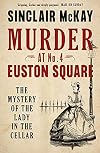
Murder at No. 4 Euston Square by Sinclair McKay is an engrossing read as both true crime and a history of Victorian England (or at least a slice of life during that time).
I came to the book primarily for the true crime story. I was surprised to find that much of the book was the history of city life during the time, as well as a bit of a glimpse at the early days of what is now forensic science. While I enjoyed the crime story I think I was more intrigued learning about everything from show more boarding houses to prisons and mental institutions.
Though some may be turned off by not being strictly sensationalistic true crime from beginning to end I think many will appreciate the contextualizing that all of the history offers. It certainly should help to minimize the comments you often see on books from bygone eras where a reader wonders why the police didn't just perform some test or follow some procedure when, in fact, it wasn't yet available or known. Plus the history is just plain interesting.
Reviewed from a copy made available by the publisher via NetGalley. show less
I came to the book primarily for the true crime story. I was surprised to find that much of the book was the history of city life during the time, as well as a bit of a glimpse at the early days of what is now forensic science. While I enjoyed the crime story I think I was more intrigued learning about everything from show more boarding houses to prisons and mental institutions.
Though some may be turned off by not being strictly sensationalistic true crime from beginning to end I think many will appreciate the contextualizing that all of the history offers. It certainly should help to minimize the comments you often see on books from bygone eras where a reader wonders why the police didn't just perform some test or follow some procedure when, in fact, it wasn't yet available or known. Plus the history is just plain interesting.
Reviewed from a copy made available by the publisher via NetGalley. show less
This is an extremely well written and balanced account of one of the most controversial actions of the Allies in the Second World War: the firebombing of the German city of Dresden by British and US bomber planes on 13-14 February 1945. Its detractors, especially in later decades far distant from the preoccupations and reality of the time, have described it as a war crime and its architect Sir Arthur ("Bomber") Harris as a war criminal, as an attack on a cultural metropolis of limited show more military strategic significance, where many refugees had gathered. Harris and others saw it as eliminating a major centre where many peacetime industries had been converted to military use, a vital step in ensuring that the Nazi regime, already dying though it didn't admit it, was finished off properly and forced to recognise the reality of its own demise, in order to save the lives of thousands of Allied pilots and civilians. Others have seen it in more simple terms of revenge as just reprisal for similar Nazi destruction of numerous other cities earlier in the war, notably Coventry, but also Rotterdam and many others. Churchill's views changed over time; while ultimately politically responsible for ordering the firebombing, he seemed to regret it afterwards, and wanted to revert back to a strict focus on purely military targets - though the distinction between military and civilian targets was less clear-cut than many might imagine.
The first third of this book covers the history of Dresden as an artistic and cultural centre and the way in which the Nazis changed, or in some cases failed to change, the character of the city and its people from 1933. Thereafter it follows the experiences of a range of ordinary people, both Dresden residents sheltering from the bombardment and trying to locate family and friends afterwards in a city centre incomprehensibly smashed beyond recognition and where 25,000 people had been killed in one night, and the bomber pilots who had seen large numbers of their fellow pilots shot down and many towns and cities in Britain ravaged and their citizens killed by air raids.
These groups' perceptions on these events may seem utterly irreconcilable. And yet the twinning of Dresden with Coventry in 1959 was surely a very significant event, a joining of two cities both of which had their hearts torn out through war, but which had been rebuilt. More specifically, the destroyed Frauenkirche cathedral in central Dresden, left in ruins through the duration of the communist East German state partly as an attempted reminder to the population of the actions of "imperialist" Americans and British, was rebuilt after the fall of the Berlin Wall, and one of the British craftsmen working on the golden orb and cross at its apex was the son of one of the bomber pilots who took part in the raid.
Ultimately, the raid can only be seen against the context of its time, after five years of total war and an existential struggle for existence that left all its participants desperate and exhausted. This was an engrossing read, and the author lets the reader make his or her own mind up about these cataclysmic events. show less
The first third of this book covers the history of Dresden as an artistic and cultural centre and the way in which the Nazis changed, or in some cases failed to change, the character of the city and its people from 1933. Thereafter it follows the experiences of a range of ordinary people, both Dresden residents sheltering from the bombardment and trying to locate family and friends afterwards in a city centre incomprehensibly smashed beyond recognition and where 25,000 people had been killed in one night, and the bomber pilots who had seen large numbers of their fellow pilots shot down and many towns and cities in Britain ravaged and their citizens killed by air raids.
These groups' perceptions on these events may seem utterly irreconcilable. And yet the twinning of Dresden with Coventry in 1959 was surely a very significant event, a joining of two cities both of which had their hearts torn out through war, but which had been rebuilt. More specifically, the destroyed Frauenkirche cathedral in central Dresden, left in ruins through the duration of the communist East German state partly as an attempted reminder to the population of the actions of "imperialist" Americans and British, was rebuilt after the fall of the Berlin Wall, and one of the British craftsmen working on the golden orb and cross at its apex was the son of one of the bomber pilots who took part in the raid.
Ultimately, the raid can only be seen against the context of its time, after five years of total war and an existential struggle for existence that left all its participants desperate and exhausted. This was an engrossing read, and the author lets the reader make his or her own mind up about these cataclysmic events. show less
The Secret Lives of Codebreakers: The Men and Women Who Cracked the Enigma Code at Bletchley Park by Sinclair McKay
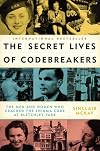
Recently I saw the 2014 film The Imitation Game about British Intelligence’s codebreaking of German communications during World War II. The movie was interesting enough that I went straight to Barnes & Noble and bought a book to learn more. I just finished reading The Secret Lives of Codebreakers: The Men and Women Who Cracked the Enigma Code at Bletchley Park, which was published a few years before the film came out.
The film is based on real events, with important differences. The film show more depicts seven or eight people achieving one big breakthrough that opens the German Enigma code and gives England the upper hand for the rest of the war. In real life, there were about 10,000 people at Bletchley, there were several different versions of Germany’s Enigma machine, there were several breakthroughs and setbacks, and a constant effort to keep up with changing keys and encryptions. Different branches had different codes: army, air force, intelligence, navy (the “shark” key used by the U-Boats).
Bletchley Park was an old estate converted to the covert wartime campus for cryptanalysis. Most of the codebreaking work was done in a series of rapidly constructed huts.
The movie’s main genius character is Alan Turing. In real life Turing is one of a select few whose flashes of brilliance produced major advances in proto-computer decryption and codebreaking in general. Turing was a major figure, but he was not alone.
The first big break happens early in the book, “On a snowy January morning in 1940” (77), followed by Turing’s controversial and covert trip to France to share information with French and Polish cryptographers in Paris. This was followed shortly by John Herivel’s simple but valuable insight, to look at messages not just as puzzles to decode, but as messages sent by humans. The insight was to consider the personality of the German Enigma operators. Eventually, British listeners learned to recognize the different operators of different messages, with knowledge of their individual quirks and ways of greeting and signing off, which gave important clues to associate known words with encoded characters.
The naval Enigma code was the most complex and seemingly random, and was considered unbreakable. This is where Turing’s personality helped as much as his intellect. He latched onto that challenge simply because it was deemed impossible. “Turing thought it could be broken because it would be so interesting to break it” (134). His new method of calculation became known as Banburismus, which finally broke Germany’s navy Enigma.
Operations at Bletchley Park ran twenty-four hours a day every day, starting in 1939 several months before WWII, lasting until several months after the war ended in the summer of 1945. The intensity of the work was often tedious as well as grueling. The pressure resulted in highly charged but focused recreational activities. They formed clubs and competitions in chess, riding, tennis and other sports, dances, professional-level plays and concerts. Breaks for tea in the afternoon, or at three in the morning, often consisted of mathematical conversations among the many math professors and recent graduates who had been recruited.
One intelligence officer who was not stationed at Bletchley, but whose liaison work with naval intelligence brought him regularly to Bletchley Park, was Ian Fleming, creator of James Bond and author of the James Bond novels. Fleming used his knowledge of Enigma and Bletchley Park’s codebreaking in several Bond stories; for example, the central role of the Soviet enciphering machine called LEKTOR in Fleming’s 1957 From Russia with Love. Many other residents of Bletchley went on to brilliant careers as writers, actors, musicians, mathematicians, statesmen, and of course, spies.
Decoding machines evolved during the war. With almost unlimited funds and brainpower, and with survival at stake, great strides were made with each new iteration. During the latter part of the war, the ultimate electronic-valve digital machine, Colossus, became essentially the very first true computer in history (263). It was primarily the brainchild of Max Newman, Thomas Flowers, and Alan Turing. Colossus filled a room, and with the eccentric Turing standing next to it, gave observers the distinct impression of the mad scientist with his effervescent bulbs and dials making idiosyncratic noises.
But it wasn’t mad, it was one of the most productive concentrated moments in history. In retrospect, evaluating the advantages the codebreakers gave to the allies, General Eisenhower (later President Eisenhower) and other analysts said Bletchley Park shortened the war by two years. That equates to millions of lives saved, on both sides. It’s an amazing accomplishment, in sharp contrast against the absolute silence about it after the war, and the complete absence of any public recognition for this bizarre collection of masterminds and heroes.
Bletchley Park was completely unknown to all but those who worked there or held the highest clearance, such as the Prime Minister Winston Churchill and two or three others. Even generals and admirals leading the allied forces knew nothing of Bletchley’s existence. Inside information about German, Japanese, and Italian plans and movements vaguely emanated from British Intelligence “sources.” But allied military leaders knew nothing about Bletchley Park, the super-secret sub-unit under the very secret Government Code and Cypher School (GC&CS), operating under the invisible branch called MI6.
The Official Secrets Act that all Bletchley Park workers signed prohibited those 10,000 people from breathing a word of their activities for thirty years, until an unauthorized book in the 1970s revealed the secrets of the park. Even after that, most still kept silent. People in different “Huts” were not allowed to reveal their work to co-workers in other Huts. Some couples who met at Bletchley and married, after decades, still never told each other what they had done in their respective Huts or sections.
During the 1990s Bletchley Park was rescued from dilapidation, restored, and converted to a permanent museum, with several original codebreaking machines intact. The story of the Park was widely known by then, and many veterans of the Huts could finally return and revisit the old grounds. Today 200,000 people a year visit the Bletchley Park Museum.
BP, as it was affectionately called, is one of the most important and least known pieces of history. Despite the film’s flaws, I’m grateful for The Imitation Game. It roused my interest and led me to learn more. Search the Internet for bonus features on Bletchley Park. show less
The film is based on real events, with important differences. The film show more depicts seven or eight people achieving one big breakthrough that opens the German Enigma code and gives England the upper hand for the rest of the war. In real life, there were about 10,000 people at Bletchley, there were several different versions of Germany’s Enigma machine, there were several breakthroughs and setbacks, and a constant effort to keep up with changing keys and encryptions. Different branches had different codes: army, air force, intelligence, navy (the “shark” key used by the U-Boats).
Bletchley Park was an old estate converted to the covert wartime campus for cryptanalysis. Most of the codebreaking work was done in a series of rapidly constructed huts.
The movie’s main genius character is Alan Turing. In real life Turing is one of a select few whose flashes of brilliance produced major advances in proto-computer decryption and codebreaking in general. Turing was a major figure, but he was not alone.
The first big break happens early in the book, “On a snowy January morning in 1940” (77), followed by Turing’s controversial and covert trip to France to share information with French and Polish cryptographers in Paris. This was followed shortly by John Herivel’s simple but valuable insight, to look at messages not just as puzzles to decode, but as messages sent by humans. The insight was to consider the personality of the German Enigma operators. Eventually, British listeners learned to recognize the different operators of different messages, with knowledge of their individual quirks and ways of greeting and signing off, which gave important clues to associate known words with encoded characters.
The naval Enigma code was the most complex and seemingly random, and was considered unbreakable. This is where Turing’s personality helped as much as his intellect. He latched onto that challenge simply because it was deemed impossible. “Turing thought it could be broken because it would be so interesting to break it” (134). His new method of calculation became known as Banburismus, which finally broke Germany’s navy Enigma.
Operations at Bletchley Park ran twenty-four hours a day every day, starting in 1939 several months before WWII, lasting until several months after the war ended in the summer of 1945. The intensity of the work was often tedious as well as grueling. The pressure resulted in highly charged but focused recreational activities. They formed clubs and competitions in chess, riding, tennis and other sports, dances, professional-level plays and concerts. Breaks for tea in the afternoon, or at three in the morning, often consisted of mathematical conversations among the many math professors and recent graduates who had been recruited.
One intelligence officer who was not stationed at Bletchley, but whose liaison work with naval intelligence brought him regularly to Bletchley Park, was Ian Fleming, creator of James Bond and author of the James Bond novels. Fleming used his knowledge of Enigma and Bletchley Park’s codebreaking in several Bond stories; for example, the central role of the Soviet enciphering machine called LEKTOR in Fleming’s 1957 From Russia with Love. Many other residents of Bletchley went on to brilliant careers as writers, actors, musicians, mathematicians, statesmen, and of course, spies.
Decoding machines evolved during the war. With almost unlimited funds and brainpower, and with survival at stake, great strides were made with each new iteration. During the latter part of the war, the ultimate electronic-valve digital machine, Colossus, became essentially the very first true computer in history (263). It was primarily the brainchild of Max Newman, Thomas Flowers, and Alan Turing. Colossus filled a room, and with the eccentric Turing standing next to it, gave observers the distinct impression of the mad scientist with his effervescent bulbs and dials making idiosyncratic noises.
But it wasn’t mad, it was one of the most productive concentrated moments in history. In retrospect, evaluating the advantages the codebreakers gave to the allies, General Eisenhower (later President Eisenhower) and other analysts said Bletchley Park shortened the war by two years. That equates to millions of lives saved, on both sides. It’s an amazing accomplishment, in sharp contrast against the absolute silence about it after the war, and the complete absence of any public recognition for this bizarre collection of masterminds and heroes.
Bletchley Park was completely unknown to all but those who worked there or held the highest clearance, such as the Prime Minister Winston Churchill and two or three others. Even generals and admirals leading the allied forces knew nothing of Bletchley’s existence. Inside information about German, Japanese, and Italian plans and movements vaguely emanated from British Intelligence “sources.” But allied military leaders knew nothing about Bletchley Park, the super-secret sub-unit under the very secret Government Code and Cypher School (GC&CS), operating under the invisible branch called MI6.
The Official Secrets Act that all Bletchley Park workers signed prohibited those 10,000 people from breathing a word of their activities for thirty years, until an unauthorized book in the 1970s revealed the secrets of the park. Even after that, most still kept silent. People in different “Huts” were not allowed to reveal their work to co-workers in other Huts. Some couples who met at Bletchley and married, after decades, still never told each other what they had done in their respective Huts or sections.
During the 1990s Bletchley Park was rescued from dilapidation, restored, and converted to a permanent museum, with several original codebreaking machines intact. The story of the Park was widely known by then, and many veterans of the Huts could finally return and revisit the old grounds. Today 200,000 people a year visit the Bletchley Park Museum.
BP, as it was affectionately called, is one of the most important and least known pieces of history. Despite the film’s flaws, I’m grateful for The Imitation Game. It roused my interest and led me to learn more. Search the Internet for bonus features on Bletchley Park. show less
Lists
Awards


You May Also Like


Statistics
- Works
- 30
- Members
- 2,212
- Popularity
- #11,593
- Rating
- 3.6
- Reviews
- 70
- ISBNs
- 120
- Languages
- 9