
Jack Cavanaugh
Author of The Puritans
About the Author
Jack Cavanaugh is a veteran sportswriter whose work has appeared most notably on the sports pages of the New York Times. He is the author of Giants Among Men, Season of '42, and Tunney, which was nominated for the Pulitzer Prize for Biography. Cavanaugh is currently an adjunct professor at the show more Columbia University Graduate School of Journalism and at Quinnipiac University in Connecticut. A native of Stamford, Connecticut, he is also a columnist for the Stamford Advocate. show less
Series
Works by Jack Cavanaugh
Quest for the Promised Land: Oppressed by British Rule, the Van Der Kemps Cross a Hostile Wilderness to Find a Home (African Covenant Series) (1997) 46 copies
The Gipper: George Gipp, Knute Rockne, and the Dramatic Rise of Notre Dame Football (2010) 32 copies, 2 reviews
Season of '42: Joe D., Teddy Ballgame, and Baseball's Fight to Survive a Turbulent First Year of War (2012) 25 copies, 2 reviews
Giants Among Men: How Robustelli, Huff, Gifford, and the Giants Made New York a Football Town and Changed the NFL (2008) 18 copies, 1 review
Mr. Inside and Mr. Outside: World War II, Army's Undefeated Teams, and College Football's Greatest Backfield Duo (2014) 9 copies
UND NIEMAND KENNT DAS MORGEN 1 copy
Tagged
Common Knowledge
Members
Reviews
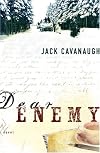
I really liked the story flow in this intense tale of survival in war torn France and the coming together of two people from very different worlds. The author has a gift for telling a gripping narrative that keeps the reader going, scene from scene, without any slow gaps of extensive exposition or over intense scenes of war battles.
I was really touched by the primary theme as well. The idea that individual people can’t be judged by their overall society or by their government is a powerful show more one; that just being a part of a country or group of people doesn’t define an individual. That’s a great idea to explore in a Christian WWII work, and the author pulls it off well.
The characters shined well; both Annie and Karl kept me spellbound by their struggle to deal with the horrors of war and keep an identity that is separate from all the carnage around them. I adored how they found common ground between them even through the tragedy that surrounded their meeting. Their growth as individuals and their coming together as a couple really made this book.
I actually really liked this one. From some of the reviews already written, I was thinking I might have some problems, but everything was smooth sailing. I adored the characters, smooth story, and themes explored. I’d definitely recommend this to anyone who enjoys WWII historical fiction with a Christian fiction flavor. show less
I was really touched by the primary theme as well. The idea that individual people can’t be judged by their overall society or by their government is a powerful show more one; that just being a part of a country or group of people doesn’t define an individual. That’s a great idea to explore in a Christian WWII work, and the author pulls it off well.
The characters shined well; both Annie and Karl kept me spellbound by their struggle to deal with the horrors of war and keep an identity that is separate from all the carnage around them. I adored how they found common ground between them even through the tragedy that surrounded their meeting. Their growth as individuals and their coming together as a couple really made this book.
I actually really liked this one. From some of the reviews already written, I was thinking I might have some problems, but everything was smooth sailing. I adored the characters, smooth story, and themes explored. I’d definitely recommend this to anyone who enjoys WWII historical fiction with a Christian fiction flavor. show less
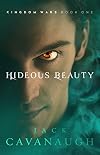
Normally I'm not a fan of supernatural thrillers, but this book changed everything. Jack Cavanaugh brings forth a wealth of knowledge of Scriptures to back up his plot of angels, demons, and Nephilim, and his characters are so dynamic and interesting that it's easy to get lost in the pages of the story, rather than hung up on the biblical details. Above all, there is nothing preachy about this first book, and in fact the Gospel itself is not presented, but it does introduce the reader to the show more very real spiritual battle taking place that we cannot see. show less
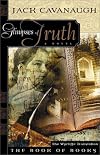
This was a book I wasn't sure I would enjoy when I first started reading it, but the more I read, the more I got interested, and by the time I finished, there were tears in my eyes. The author takes a time in history that I knew very little about, and makes it come alive for me.
Thomas Torr was a man chosen by John Wycliffe to assist in translating the Latin Vulgate into English, so that the common people could read God's Word. but in the late 1300's, by order of the Roman Church, possession show more of an English Bible is punishable by death. This story shows what happened to Thomas, the mistakes he made, the people he trusted who betrayed him, and the people he loved who loved him to the end.
You will go from rural England to the grandeur of Rome. You will experience the life of the peasant people and the corruption of the religious leaders at that time. This story is a "vivid and accurate depiction of church history". How blessed we are to have the Bible today, available to all to read and enjoy. This book makes you stop and think about what people went through, to give us what we have today. show less
Thomas Torr was a man chosen by John Wycliffe to assist in translating the Latin Vulgate into English, so that the common people could read God's Word. but in the late 1300's, by order of the Roman Church, possession show more of an English Bible is punishable by death. This story shows what happened to Thomas, the mistakes he made, the people he trusted who betrayed him, and the people he loved who loved him to the end.
You will go from rural England to the grandeur of Rome. You will experience the life of the peasant people and the corruption of the religious leaders at that time. This story is a "vivid and accurate depiction of church history". How blessed we are to have the Bible today, available to all to read and enjoy. This book makes you stop and think about what people went through, to give us what we have today. show less
As romance/historical novels goes this one was not too bad. The subject matter was interesting and original, and one that is sadly too little explored for its effects.
I did detect what appeared to be a distinct bias against the aristocratic and upper classes, as well as a number of historical inaccuracies.
It was claimed, for instance that the nobility who had been sympathetic to John Wycliffe during his life turned thier backs on his teachings as soon as he died because they did want to show more give up thier 'easy' lives and that only the peasants remained faithful.
Any serious examination of the 14th century shows that the aristocracy of the period had anything but 'easy' lives, and there were a signifigant number who did hold onto the teachings of Wycliffe for many years after his death. Indeed, these became the leaders of that became known as the 'Lollard' movement for decades afterwards.
One of the heroes, a peasant outlaw names Cayle holds to a set of beliefs that closely resemble modern Communism, when this ideology did not exist in the 14th century, and the impostition of such concepts onto the historical setting just does not fit.
Finally, one of the characters is burned at the stake for his beliefs at the end on the orders of a local official. At this time only the Church could condemn people to burning, which was the specific punishment for herecy, and none of the followers of Wycliffe suffered this penalty until 20-30 years after this book is set.
I got the feeling that this novel was in some ways intended pander to the tastes and ideas of an American audience, especially with its emphasis on the development politcal freedom and the supposed 'oppression' of the lower classes by the wicked aristorcracy, and this makes the novel appear somewhat polemical, and most of the characters beliefs and attitudes rather anachronistic. show less
I did detect what appeared to be a distinct bias against the aristocratic and upper classes, as well as a number of historical inaccuracies.
It was claimed, for instance that the nobility who had been sympathetic to John Wycliffe during his life turned thier backs on his teachings as soon as he died because they did want to show more give up thier 'easy' lives and that only the peasants remained faithful.
Any serious examination of the 14th century shows that the aristocracy of the period had anything but 'easy' lives, and there were a signifigant number who did hold onto the teachings of Wycliffe for many years after his death. Indeed, these became the leaders of that became known as the 'Lollard' movement for decades afterwards.
One of the heroes, a peasant outlaw names Cayle holds to a set of beliefs that closely resemble modern Communism, when this ideology did not exist in the 14th century, and the impostition of such concepts onto the historical setting just does not fit.
Finally, one of the characters is burned at the stake for his beliefs at the end on the orders of a local official. At this time only the Church could condemn people to burning, which was the specific punishment for herecy, and none of the followers of Wycliffe suffered this penalty until 20-30 years after this book is set.
I got the feeling that this novel was in some ways intended pander to the tastes and ideas of an American audience, especially with its emphasis on the development politcal freedom and the supposed 'oppression' of the lower classes by the wicked aristorcracy, and this makes the novel appear somewhat polemical, and most of the characters beliefs and attitudes rather anachronistic. show less
Lists
Awards


You May Also Like


Associated Authors
Statistics
- Works
- 44
- Members
- 3,439
- Popularity
- #7,395
- Rating
- 3.9
- Reviews
- 39
- ISBNs
- 139
- Languages
- 4
- Favorited
- 4