
Julio Llamazares
Author of The Yellow Rain
About the Author
Works by Julio Llamazares
Associated Works
Tagged
Common Knowledge
- Birthdate
- 1955-03-28
- Gender
- male
- Nationality
- Spain
- Birthplace
- Vegamian, Leon, Spain
- Associated Place (for map)
- Leon, Spain
Members
Reviews
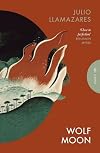
Real Rating: 4.75* of five
The Publisher Says: A tense, lyrical novel of life on the run in Franco's Spain that offers a bold, timeless challenge against fascism and authoritarianism.
FOR FANS OF ROGUE MALE: A literary thriller full of action and dramatic landscapes, and the first novel to break the national pact of silence after Francisco Franco’s death.
1937. Having lost the Civil War in Spain, four republican soldiers lead a fugitive existence deep in the Cantabrian mountains. They are on show more the run, skirmishing with Franco's soldiers, knowing that surrender means execution. Wounded and hungry, the hold-outs are drawn from the safety of the mountains into the villages they once inhabited, not only risking their lives but also the lives of anyone caught helping them. Trapped in the lonely mountains, with their harsh winters and unforgiving summers, it is only a matter of time before the Fascists hunt them down.
Living in caves, barely surviving on scraps provided by the villagers they dare to make contact with, Ángel and his friends are tortured by heat, cold, damp, hunger and above all, fear—fear for themselves, and for those still willing to help them. And if they do survive, what kind of country will there be left to live in?
First published in 1985, Wolf Moon was the first novel to break with the Pacto de Olvido, a political and cultural amnesty in Spain, following Franco's death in 1975, which provided cover for the regime's supporters. Brimming with tension and violence, it is a testament to enduring loyalty: to a cause, to justice, and to brothers-in-arms.
I RECEIVED A DRC FROM THE PUBLISHER VIA EDELWEISS+. THANK YOU.
My Review: Fascism's end is a terrible, trying time: how does a society disfigured from within reckon with the reality that some subset of the population liked this evil, supported it, didn't want it to end while another (probably larger) subset did little or nothing to oppose the way things were? France after WWII, Spain after Franco...they chose to do only a little to reckon with the evils recently departed. It's always interesting to learn about the people who opposed the slide into fascism, as we do here, in the context of reckoning with the way it happened.
A novel about factual events published ten years after Franco's death, this story highlights the tragic terror of night falling across the rural beauty of Spain's Asturias region. Four young Republican soldiers spend nine years resisting Franco's fascist government, abetted by the peasants whose lives are materially worse under this government...until as the Falangistas figure out who's probably doing what to help the men, they're brutalized into acquiescence. That's the end of these Maquis, a name the Deep Space Nine fans are noticing with delight and yes this is where it came from.
Ángel, our narrator, is a schoolteacher. It's how the author gets away with putting in so much beautiful language:
It's evocative. It's lovely, at least it is to me, and it says exactly what you need to know at that point in the plot: they're hunted, they're cold, they frequently have trouble finding food. All without saying that, but talking evocatively about the sensations of it. It's a great technique for keeping a richly satisfying story under 200pp.
As this tale is based on the real experiences of several men it's not necessary for the author to pretend the ending is a surprise. As he was the very first to break the "pact of forgetting" after Franco's death, it was wise for him to stare the law down not try to waffle around it, cutting a bit, refocusing stuff...just put it out there, let the chips fall where they may. (It doesn't hurt that he was only 30ish when it came out, with only two poetry collections before this short novel.)
It's quite the debut, being sad, infuriating, outrageously knowing in that "we're all in on the joke" way that can fall flat, ruining a story's impact on your feelings; this iteration does not. It makes old-man-read-it-before here doff his hairpiece to this talented tyro. Many are the stories flattened and rendered anemic by a misjudged or badly executed tonal choice like this one.
It's a case of biblio-Stockholm Syndrome. Author Llamazares became the moon that lit me over his story's trails, and the brighter suns of later writers on the topic (eg, Javier Cercas' Soldiers of Salamis) merely cause me reader's sunburn.
Get one soonest, because this story will play out again in our lifetimes. show less
The Publisher Says: A tense, lyrical novel of life on the run in Franco's Spain that offers a bold, timeless challenge against fascism and authoritarianism.
FOR FANS OF ROGUE MALE: A literary thriller full of action and dramatic landscapes, and the first novel to break the national pact of silence after Francisco Franco’s death.
1937. Having lost the Civil War in Spain, four republican soldiers lead a fugitive existence deep in the Cantabrian mountains. They are on show more the run, skirmishing with Franco's soldiers, knowing that surrender means execution. Wounded and hungry, the hold-outs are drawn from the safety of the mountains into the villages they once inhabited, not only risking their lives but also the lives of anyone caught helping them. Trapped in the lonely mountains, with their harsh winters and unforgiving summers, it is only a matter of time before the Fascists hunt them down.
Living in caves, barely surviving on scraps provided by the villagers they dare to make contact with, Ángel and his friends are tortured by heat, cold, damp, hunger and above all, fear—fear for themselves, and for those still willing to help them. And if they do survive, what kind of country will there be left to live in?
First published in 1985, Wolf Moon was the first novel to break with the Pacto de Olvido, a political and cultural amnesty in Spain, following Franco's death in 1975, which provided cover for the regime's supporters. Brimming with tension and violence, it is a testament to enduring loyalty: to a cause, to justice, and to brothers-in-arms.
I RECEIVED A DRC FROM THE PUBLISHER VIA EDELWEISS+. THANK YOU.
My Review: Fascism's end is a terrible, trying time: how does a society disfigured from within reckon with the reality that some subset of the population liked this evil, supported it, didn't want it to end while another (probably larger) subset did little or nothing to oppose the way things were? France after WWII, Spain after Franco...they chose to do only a little to reckon with the evils recently departed. It's always interesting to learn about the people who opposed the slide into fascism, as we do here, in the context of reckoning with the way it happened.
A novel about factual events published ten years after Franco's death, this story highlights the tragic terror of night falling across the rural beauty of Spain's Asturias region. Four young Republican soldiers spend nine years resisting Franco's fascist government, abetted by the peasants whose lives are materially worse under this government...until as the Falangistas figure out who's probably doing what to help the men, they're brutalized into acquiescence. That's the end of these Maquis, a name the Deep Space Nine fans are noticing with delight and yes this is where it came from.
Ángel, our narrator, is a schoolteacher. It's how the author gets away with putting in so much beautiful language:
Since we got here I’ve scarcely felt the terrible moaning of the beast in the depths of my stomach, which bayed despairingly so many times in the final months of the war. It was even worse during the five days when we did not eat at all as we fled across the mountains, in the rain, from a more physical beast, more human and bloodthirsty, which pursued us implacably. It is as if the dampness and cold of the cave have penetrated my bones and my soul, imprisoning me here, lying beside the fire day and night with no interest in eating and talking or even peering through the mouth of the cave to look at the hard, overcast sky.
It's evocative. It's lovely, at least it is to me, and it says exactly what you need to know at that point in the plot: they're hunted, they're cold, they frequently have trouble finding food. All without saying that, but talking evocatively about the sensations of it. It's a great technique for keeping a richly satisfying story under 200pp.
As this tale is based on the real experiences of several men it's not necessary for the author to pretend the ending is a surprise. As he was the very first to break the "pact of forgetting" after Franco's death, it was wise for him to stare the law down not try to waffle around it, cutting a bit, refocusing stuff...just put it out there, let the chips fall where they may. (It doesn't hurt that he was only 30ish when it came out, with only two poetry collections before this short novel.)
It's quite the debut, being sad, infuriating, outrageously knowing in that "we're all in on the joke" way that can fall flat, ruining a story's impact on your feelings; this iteration does not. It makes old-man-read-it-before here doff his hairpiece to this talented tyro. Many are the stories flattened and rendered anemic by a misjudged or badly executed tonal choice like this one.
It's a case of biblio-Stockholm Syndrome. Author Llamazares became the moon that lit me over his story's trails, and the brighter suns of later writers on the topic (eg, Javier Cercas' Soldiers of Salamis) merely cause me reader's sunburn.
Get one soonest, because this story will play out again in our lifetimes. show less
Death, isolation, abandonment....fun topics I know, but this novella is incredibly powerful. The writing is some of the most lyrical, stunning prose I have read in a very long time. This book is about death....the death of a way of life, the death of a village, the death of loved ones, and the death of self. Not for the faint of heart, because this will shake you to the depths of your soul!
The dying days of the Pyrenees village Ainielle and its last inhabitant Andres. Sad and poignant imagining of how it feels to know that the memory of a place and a community is disappearing with him. I can understand why this has become a cult classic in Spain and even feel an urge to hike there myself, it is symbolic of so much desertion of rural villages across Europe over the last 50 years. The book has it cliches about ghosts and the colour yellow representing a sepia tone, but it is show more still haunting. show less

Beautiful sad book about last man living for many years along in the mountain village after all habitants left to bigger cities one by one. Loneliness, time, memories and ghosts and death talk in such detail. Beautifully written.
Lists
Edad Media (1)
Awards


You May Also Like


Associated Authors
Statistics
- Works
- 43
- Also by
- 1
- Members
- 1,174
- Popularity
- #21,919
- Rating
- 3.7
- Reviews
- 46
- ISBNs
- 162
- Languages
- 17
- Favorited
- 3