
Donald Kingsbury
Author of Man-Kzin Wars IV
About the Author
Series
Works by Donald Kingsbury
Historical Crisis 2 copies
Associated Works
Analog Science Fiction/Science Fact: Vol. XCVIII, No. 4 (April 1978) (1978) — Contributor — 27 copies
Analog Science Fiction/Science Fact: Vol. XCVIII, No. 7 (July 1978) (1978) — Contributor — 27 copies, 1 review
Analog Science Fiction/Science Fact: Vol. XCV, No. 12 (December 1975) (1975) — Contributor — 24 copies
Tagged
Common Knowledge
- Canonical name
- Kingsbury, Donald
- Legal name
- Kingsbury, Donald MacDonald
- Birthdate
- 1929-02-12
- Gender
- male
- Education
- McGill University
- Occupations
- lecturer in mathematics
science fiction writer - Nationality
- USA (birth)
Canada (1953) - Birthplace
- San Francisco, California, USA
- Places of residence
- San Francisco, California, USA
New Guinea
Tyrone, New Mexico, USA
New Hampshire, USA
Montréal, Québec, Canada - Associated Place (for map)
- USA
Members
Discussions
Found: Science fiction approx 1970? in Name that Book (January 2023)
Reviews

Like I say about most Niven stuff: Utterly cool.: In the future, an antidepressant-pacified and docile humanity, (sound familiar? Look around), goes into massive culture shock when the first aliens they meet don't even attempt contact, but only try to kill them from the getgo. Once again, utterly cool, and I agree with the message I think that is embedded in these stories: Don't get TOO comfortable in peacetime, and DON'T start believing that you're safe, or it'll come back around again and show more get you!!! WWI, the war to end all wars!!!!???? WWII anybody? It'll happen again and again, as Niven nimbly demonstrates. Plus the Kzinti themselves are vastly interesting creatures, because you have to wonder how a society based solely on violence and dominance rituals remains stable enough to conquer space, and then keep it. Read it. show less

The dust jacket of Psychohistorical Crisis claims that Donald Kingsbury is following in Isaac Asimov's footsteps by just reusing psychohistory in the same way another sf author might reuse "the starship, the robot, the time machine." Indeed, the blurb goes on to indicate that Psychohistorical Crisis is about a man named Eron Osa trying to discover what crime he committed could be so heinous that he no longer remembers it. Nothing too Asimovian there, it would seem (or even show more psychohistorical).
But this is nothing more than marketing spin, probably designed to avoid the wrath of the Asimov Estate. Psychohistorical Crisis is, in fact, a very close sequel to Asimov's Foundation novels-- his original Foundation novels, as Psychohistorical Crisis ignores Gaia and the robots and anything else Asimov introduced in Foundation's Edge or later works. (Well, ignores them except for a couple jokes at their expense.) The book dodges copyright by substitution: "Splendid Wisdom" for Trantor, "Faraway" for Terminus, "Cloun-the-Stubborn" for the Mule, "Founder" for Hari Seldon, and so on. Once you get used to it, this actually works very well; it's easy to imagine that "Trantor" actually means "splendid wisdom," or that Terminus's name shifted in the two millennia since we last went there. It was the less clever ones that threw me out of the story every time they cropped up, like "Lakgan" for Kalgan. Really? That's not even trying.
Ignoring the copyright dodge, Psychohistorical Crisis is certainly the best Foundation novel to be published since Second Foundation. In fact, it's probably the best Foundation novel full stop. Asimov was great at introducing concepts, and he was great at scale, but Psychohistorical Crisis demonstrates that Asimov never really fully exploited psychohistory. For Asimov, psychohistory was primarily an avenue for his typical hard sf puzzle stories: given this social circumstance, what way would Hari Seldon have seen out of it? Later, this got more complicated: given psychohistory, what could knock it off track? what could you do to get it back on track? But fundamentally, the original trilogy, and to a lesser extent Foundation's Edge and Foundation and Earth, are all puzzle stories, not strongly interested in the how or why of psychohistory, just the what.
What occurred to me while reading Psychohistorical Crisis is that, weirdly, the Foundation stories were never all that interested in history. History is sketchy in those stories, and given that the Galactic Empire has been around for 12,000 years (and humanity has been in space for 50,000), there's actually not been that much of it. Psychohistorical Crisis is replete with history; references to fragments of past events abound, and history directly influences the decisions of almost every major character in readily explicable way. There's not just one galactic history, either, but Kingsbury draws attention to how different groups have their own histories, that may or may not connect to reality or other histories.
There were too many conflicting histories, a quantum ripple of alternate pasts. There were too many wars and too many intrigues and too many stars and too vast a span of time for one human... to comprehend. (374)
Asimov is often praised for his scale, but I think Kingsbury accomplishes more with it here than he ever did. Kingsbury is very interested in how we process and understand our own history. There's a repeated joke about how the characters are always getting the history of pre-spaceflight Earth wrong, which sometimes got on my nerves because I think that kinda thing's been done to death (we're told that Lincoln wrote the Ten Commandments, and that Dickens's London was Neolithic), but it fits into the project of the book as a whole. To my surprise, I was utterly captivated by chapters solely about how it is impossible by physical law to know all of history, or about how the Egyptians developed the measurement of time. (The appendix on this topic, however, is much less interesting.)
The key to what Kingsbury did, I think, lies in a passing reference to Thomas Kuhn's The Structure of Scientific Revolutions: "I've been plotting galactic patterns of scholarship. It is always the same curve. Flat, then a sharp increase, then flat again when knowledge matures. During the explosion, scholars always think the explosion will go on forever. They do not value what is known. Their pleasure is to seek new discoveries. During the mature phase, scholars always think that everything is known and see scholarship as the art of applying the known" (382). This pretty clearly maps onto Kuhn's ideas of "normal science" and "revolutionary science."
Kingsbury's genius lies in finding a "psychohistorical crisis." This is not a "crisis" in the Asimovian sense-- one predicted by psychohistory-- but in the Kuhnian sense-- the discovery of a point where a scientific paradigm no longer applies. Kingsbury found a point where psychohistory would break down, not because of external forces like a telepath or a hive-mind, but because of the tenets of psychohistory itself. And it's not even a real science! It is a puzzle story in that sense, I suppose, but it's one that's interested in what makes psychohistory work in a way that Asimov never was, I don't think.
In addition, Psychohistorical Crisis gives us interesting characters, a twisty plot, and fantastic worldbuilding. It's everything one could want out of a science fiction novel, and it deserves to be much more widely known. Both as a part of Asimov's universe (I can't believe it took me ten years to read it when I read stuff like Foundation's Fear right off because it was "authorized") and as an excellent work of science fiction in general. show less
But this is nothing more than marketing spin, probably designed to avoid the wrath of the Asimov Estate. Psychohistorical Crisis is, in fact, a very close sequel to Asimov's Foundation novels-- his original Foundation novels, as Psychohistorical Crisis ignores Gaia and the robots and anything else Asimov introduced in Foundation's Edge or later works. (Well, ignores them except for a couple jokes at their expense.) The book dodges copyright by substitution: "Splendid Wisdom" for Trantor, "Faraway" for Terminus, "Cloun-the-Stubborn" for the Mule, "Founder" for Hari Seldon, and so on. Once you get used to it, this actually works very well; it's easy to imagine that "Trantor" actually means "splendid wisdom," or that Terminus's name shifted in the two millennia since we last went there. It was the less clever ones that threw me out of the story every time they cropped up, like "Lakgan" for Kalgan. Really? That's not even trying.
Ignoring the copyright dodge, Psychohistorical Crisis is certainly the best Foundation novel to be published since Second Foundation. In fact, it's probably the best Foundation novel full stop. Asimov was great at introducing concepts, and he was great at scale, but Psychohistorical Crisis demonstrates that Asimov never really fully exploited psychohistory. For Asimov, psychohistory was primarily an avenue for his typical hard sf puzzle stories: given this social circumstance, what way would Hari Seldon have seen out of it? Later, this got more complicated: given psychohistory, what could knock it off track? what could you do to get it back on track? But fundamentally, the original trilogy, and to a lesser extent Foundation's Edge and Foundation and Earth, are all puzzle stories, not strongly interested in the how or why of psychohistory, just the what.
What occurred to me while reading Psychohistorical Crisis is that, weirdly, the Foundation stories were never all that interested in history. History is sketchy in those stories, and given that the Galactic Empire has been around for 12,000 years (and humanity has been in space for 50,000), there's actually not been that much of it. Psychohistorical Crisis is replete with history; references to fragments of past events abound, and history directly influences the decisions of almost every major character in readily explicable way. There's not just one galactic history, either, but Kingsbury draws attention to how different groups have their own histories, that may or may not connect to reality or other histories.
There were too many conflicting histories, a quantum ripple of alternate pasts. There were too many wars and too many intrigues and too many stars and too vast a span of time for one human... to comprehend. (374)
Asimov is often praised for his scale, but I think Kingsbury accomplishes more with it here than he ever did. Kingsbury is very interested in how we process and understand our own history. There's a repeated joke about how the characters are always getting the history of pre-spaceflight Earth wrong, which sometimes got on my nerves because I think that kinda thing's been done to death (we're told that Lincoln wrote the Ten Commandments, and that Dickens's London was Neolithic), but it fits into the project of the book as a whole. To my surprise, I was utterly captivated by chapters solely about how it is impossible by physical law to know all of history, or about how the Egyptians developed the measurement of time. (The appendix on this topic, however, is much less interesting.)
The key to what Kingsbury did, I think, lies in a passing reference to Thomas Kuhn's The Structure of Scientific Revolutions: "I've been plotting galactic patterns of scholarship. It is always the same curve. Flat, then a sharp increase, then flat again when knowledge matures. During the explosion, scholars always think the explosion will go on forever. They do not value what is known. Their pleasure is to seek new discoveries. During the mature phase, scholars always think that everything is known and see scholarship as the art of applying the known" (382). This pretty clearly maps onto Kuhn's ideas of "normal science" and "revolutionary science."
Kingsbury's genius lies in finding a "psychohistorical crisis." This is not a "crisis" in the Asimovian sense-- one predicted by psychohistory-- but in the Kuhnian sense-- the discovery of a point where a scientific paradigm no longer applies. Kingsbury found a point where psychohistory would break down, not because of external forces like a telepath or a hive-mind, but because of the tenets of psychohistory itself. And it's not even a real science! It is a puzzle story in that sense, I suppose, but it's one that's interested in what makes psychohistory work in a way that Asimov never was, I don't think.
In addition, Psychohistorical Crisis gives us interesting characters, a twisty plot, and fantastic worldbuilding. It's everything one could want out of a science fiction novel, and it deserves to be much more widely known. Both as a part of Asimov's universe (I can't believe it took me ten years to read it when I read stuff like Foundation's Fear right off because it was "authorized") and as an excellent work of science fiction in general. show less
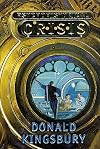
Out of all of the bad sequels to the Foundation trilogy, namely the Bear/Benford/Brin ones and Asimov's own attempts, this one probably comes nearest to standing on its own, in part because it wisely ignores the existence of all the rest of those terrible books, and it tries to give its own take on the concept of psychohistory instead of thinking up stupid new gimmicks like chaos plagues or living planets.
It opens several thousand years after the Foundation reunified the Galaxy, where show more psychohistorian Eron Osa has been sentenced to have his brain augmentation implant destroyed for an unknown crime. The action follows him and a few others as he tries to figure out what he did to have such a drastic punishment applied to him, and what's become of psychohistory after it "won" and the Interregnum is only a brief and distant memory behind the new Second Empire.
The book is largely decent. Kingsbury has renamed a bunch of stuff (e.g. Trantor is now Splendid Wisdon, Hari Seldon is the Founder, the Mule is Cloun-the-Stubborn, Kalgan is Lakgan, etc) presumably for copyright reasons, but it's not too hard to figure out what's going on. Eron Osa is an okay protagonist, somewhat in the mold of Golan Trevize from Foundation's Edge/Foundation and Earth, though luckily this book avoids mentioning anything that happened in those. As far as concepts go, there's some interesting stuff about the relationship between psychohistory and the determinism/free will debate, and also good investigation into if the dynamic of having Second Foundationers continuously pulling puppet strings from the shadows is actually stable or not. Kingsbury is probably right that they aren't in a stable equilibrium, and that an economist Illuminati whose efforts only work if no one knows they exist probably wouldn't be in business for very long.
Unfortunately the good bits are lost in a story that takes forever to go anywhere, and you miss Asimov's ability to say what he wanted to say in about 80 pages per time period and then move on. Easily the most irritating parts of the book are whenever Kingsbury gets cute with the state of historical knowledge in the year one zillion. Get ready to read lots of "funny" passages that the reader is supposed to chuckle at like "Democracy was invented by the slave Lincoln, who led a great revolt against his Virginian masters, forcing them to come down from Mount Ararat to grant his people the Magna Carta." And yet somehow the Second Empire has complete copies of works by people like Cicero, Max Planck, and Edward Gibbon (in a nod to the origin of the original Foundation trilogy), and they've figured out that Earth is the original planet of mankind, leading to some pointless scenes where Eron has to re-engineer a WW2-era bomber. What's the point of this stuff? Even worse, the cutesy history references are often placed in irritating sub-Dune-quality chapter epigraphs, which are never insightful and frequently long enough to noticeably slow down the book.
The original Foundation trilogy had a number of good features:
- Quick pacing
- Memorable characters
- A willingness to leave those characters behind as the story required
- Action and different scenery
- A then-clever concept of macroeconomists trying to prevent the fall of the Space Roman Empire
- Social commentary that was both apt and concise
- A sense of excitement and intellectual thrill
This book has some good extensions of Asimov's original ideas about civilizational dynamics, but like a number of other books, including some by Asimov himself, it's run into the problem that the original trilogy said so much with so few words that further works in this vein are basically pointless unless you happen to be both as smart as Asimov and without a trace of that fanfiction-y vibe that infests so many sci-fi sequels. Nice try though. show less
It opens several thousand years after the Foundation reunified the Galaxy, where show more psychohistorian Eron Osa has been sentenced to have his brain augmentation implant destroyed for an unknown crime. The action follows him and a few others as he tries to figure out what he did to have such a drastic punishment applied to him, and what's become of psychohistory after it "won" and the Interregnum is only a brief and distant memory behind the new Second Empire.
The book is largely decent. Kingsbury has renamed a bunch of stuff (e.g. Trantor is now Splendid Wisdon, Hari Seldon is the Founder, the Mule is Cloun-the-Stubborn, Kalgan is Lakgan, etc) presumably for copyright reasons, but it's not too hard to figure out what's going on. Eron Osa is an okay protagonist, somewhat in the mold of Golan Trevize from Foundation's Edge/Foundation and Earth, though luckily this book avoids mentioning anything that happened in those. As far as concepts go, there's some interesting stuff about the relationship between psychohistory and the determinism/free will debate, and also good investigation into if the dynamic of having Second Foundationers continuously pulling puppet strings from the shadows is actually stable or not. Kingsbury is probably right that they aren't in a stable equilibrium, and that an economist Illuminati whose efforts only work if no one knows they exist probably wouldn't be in business for very long.
Unfortunately the good bits are lost in a story that takes forever to go anywhere, and you miss Asimov's ability to say what he wanted to say in about 80 pages per time period and then move on. Easily the most irritating parts of the book are whenever Kingsbury gets cute with the state of historical knowledge in the year one zillion. Get ready to read lots of "funny" passages that the reader is supposed to chuckle at like "Democracy was invented by the slave Lincoln, who led a great revolt against his Virginian masters, forcing them to come down from Mount Ararat to grant his people the Magna Carta." And yet somehow the Second Empire has complete copies of works by people like Cicero, Max Planck, and Edward Gibbon (in a nod to the origin of the original Foundation trilogy), and they've figured out that Earth is the original planet of mankind, leading to some pointless scenes where Eron has to re-engineer a WW2-era bomber. What's the point of this stuff? Even worse, the cutesy history references are often placed in irritating sub-Dune-quality chapter epigraphs, which are never insightful and frequently long enough to noticeably slow down the book.
The original Foundation trilogy had a number of good features:
- Quick pacing
- Memorable characters
- A willingness to leave those characters behind as the story required
- Action and different scenery
- A then-clever concept of macroeconomists trying to prevent the fall of the Space Roman Empire
- Social commentary that was both apt and concise
- A sense of excitement and intellectual thrill
This book has some good extensions of Asimov's original ideas about civilizational dynamics, but like a number of other books, including some by Asimov himself, it's run into the problem that the original trilogy said so much with so few words that further works in this vein are basically pointless unless you happen to be both as smart as Asimov and without a trace of that fanfiction-y vibe that infests so many sci-fi sequels. Nice try though. show less

Courtship Rite takes place on a human colony world, Geta, that has forgotten it is a colony. Their legends tell them "God" brought them across the stars to protect them from "war", and "God" still watches over them from the sky. We learn later that their word for "God" was the original colonists word for "ship", and the colony ship does indeed still orbit above them.
The only source of protein the colonists have are bees and human flesh, so cannibalism is common and accepted. They also show more practice genetic engineering.
The story follows one family of three half brothers and their wives. The men share a common father and were raised in a public creche where any failure would result in death. They married a young girl from a clan that specializes in math and a spoiled rich girl of their own clan. Their clan specializes in government. They are about to marry a scientist when they are ordered by their clan leader to marry a woman from a coastal clan who advocates heretical beliefs, such as evolution and not killing people for food. They decide to use the "Courtship Rite", where they try to kill her several times and if she lives they will marry her. Since she doesn't know them or want to marry them this is bit unfair to her, but they were a angry about the order and it is the central motivation of the plot.
They also have to deal with a clan of clone women who make their living as courtesans, and clan of seafarers who want to rule the coastal area.
This is my favorite kind of Science Fiction: religion, politics, social engineering, and philosophy. By an author who does it all very well. I give it 5 out of 5 stars show less
The only source of protein the colonists have are bees and human flesh, so cannibalism is common and accepted. They also show more practice genetic engineering.
The story follows one family of three half brothers and their wives. The men share a common father and were raised in a public creche where any failure would result in death. They married a young girl from a clan that specializes in math and a spoiled rich girl of their own clan. Their clan specializes in government. They are about to marry a scientist when they are ordered by their clan leader to marry a woman from a coastal clan who advocates heretical beliefs, such as evolution and not killing people for food. They decide to use the "Courtship Rite", where they try to kill her several times and if she lives they will marry her. Since she doesn't know them or want to marry them this is bit unfair to her, but they were a angry about the order and it is the central motivation of the plot.
They also have to deal with a clan of clone women who make their living as courtesans, and clan of seafarers who want to rule the coastal area.
This is my favorite kind of Science Fiction: religion, politics, social engineering, and philosophy. By an author who does it all very well. I give it 5 out of 5 stars show less
Lists
Awards


You May Also Like


Associated Authors
Statistics
- Works
- 13
- Also by
- 15
- Members
- 1,754
- Popularity
- #14,665
- Rating
- 3.7
- Reviews
- 24
- ISBNs
- 25
- Languages
- 6
- Favorited
- 7