
Eve Babitz (1943–2021)
Author of Slow Days, Fast Company: The World, The Flesh, and L.A.
About the Author
Eve Babitz is the author of five critically acclaimed books She is a frequent contributor to magazines and weeklies, including Vogue, Elle, and L.A. Weekly. As a lifelong resident of Los Angeles and a graduate of Hollywood High, Babitz has spent her life capturing the elusive spirit of this show more enigmatic city. show less
Works by Eve Babitz
I Used to Be Charming: The Rest of Eve Babitz (New York Review Books Classics) (2019) 158 copies, 2 reviews
The Cool School (WS) 1 copy
La mia Hollywood 1 copy
Associated Works
Drinking, Smoking and Screwing: Great Writers on Good Times (1994) — Contributor — 354 copies, 5 reviews
Tagged
Common Knowledge
- Birthdate
- 1943-05-13
- Date of death
- 2021-12-17
- Gender
- female
- Education
- Hollywood High School
- Occupations
- author
artist - Agent
- Erica Spellman Silverman
- Cause of death
- Huntington's disease (complications)
- Nationality
- USA
- Birthplace
- Los Angeles, California, USA
- Places of residence
- Los Angeles, California, USA
- Place of death
- Los Angeles, California, USA
- Associated Place (for map)
- Los Angeles, California, USA
Members
Reviews
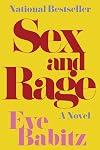
I'd actually barely heard of Eve Babitz before picking this one up, and I've got to admit that the big, bold colors on the cover helped make my decision to buy it easier. In a lot of ways, the story inside, which involves a surfer girl called Jacaranda who takes up with and is later dropped by a crowd of fabulously wealthy pseudo-sophisticates is about as subtle as the cover. But Babitz seems to be writing directly against New York ideas about California and pulls of a gorgeous trick by show more wholeheartedly embracing its most shallow aspects. Jacaranda herself, and some of her friends, are beautiful and likable, but it's hard to say, at the end of the novel, that we know very much about what goes on inside of them. We know even less about Jacaranda's writing, which is what finally rescues her from a life of alcoholism and shallow cliquishness, but that's less of a bug than a feature here. Babitz herself embraces glossy surfaces here and makes it pretty clear that she's not here to amuse the crowd at the "New Yorker" by finding lots of deep meaning in West Coast locales where it might not exist anyway. Even in its last scenes, "Sex and Rage," she seems to be arguing that the shallow and thrilling also has something to say.
This may or may not sound terrible to you, but "Sex and Rage" succeeds mostly because the author doesn't miss a note. Her writing's vibrant and her observations are sharp; I agree with the reviewer that described Jacaranda not as written but "sculpted." It also helps that the novel has the relentless momentum of an amphetamine binge and that Babitz seems to have a preternatural understanding of the tribal rites that govern the interractions of the pointlessly rich. This isn't to say that "Sex and Rage" is some sort of underhanded criticism or satire -- I honestly don't think that it is. But I think it's possible that a lot of midcentury American life felt easy and fun and a bit superfical to a fair number of lucky people, and the fact that Babitz picked up on this while it was mostly still going on means that she might have possessed insight on the level of such generational prophets as, say, Tom Wolfe. If she did, it's a further credit to her that she seems to have no intention of judging her subjects, fictional though they may be. Anyway, I don't know if I'll read Babitz again, but I've got to admit that "Sex and Rage" is really something special: a novel reads as well on a beach blanket as it does in an artsy café. That's not a trick that just any writer could pull off. show less
This may or may not sound terrible to you, but "Sex and Rage" succeeds mostly because the author doesn't miss a note. Her writing's vibrant and her observations are sharp; I agree with the reviewer that described Jacaranda not as written but "sculpted." It also helps that the novel has the relentless momentum of an amphetamine binge and that Babitz seems to have a preternatural understanding of the tribal rites that govern the interractions of the pointlessly rich. This isn't to say that "Sex and Rage" is some sort of underhanded criticism or satire -- I honestly don't think that it is. But I think it's possible that a lot of midcentury American life felt easy and fun and a bit superfical to a fair number of lucky people, and the fact that Babitz picked up on this while it was mostly still going on means that she might have possessed insight on the level of such generational prophets as, say, Tom Wolfe. If she did, it's a further credit to her that she seems to have no intention of judging her subjects, fictional though they may be. Anyway, I don't know if I'll read Babitz again, but I've got to admit that "Sex and Rage" is really something special: a novel reads as well on a beach blanket as it does in an artsy café. That's not a trick that just any writer could pull off. show less

Eve Babitz is a writer born and bred in L.A. She wrote exquisitely about the California lifestyle in the 70s and 80s and 90s. In the late 90s, she was horrifically burned in a fire at her home and has made a slow recovery over the past twenty years. Almost a recluse during this time, her publishers recently decided to reissue several of her books, including this delightful collection of short fiction. But is it fiction? It’s told in the first person and I got the idea that Babitz was show more telling her own story here. Not that it matters. She brilliantly portrays her beloved hometown on her own terms. With biting humor and an acerbic eye for detail, every cutting line adds fuel to the fire that propels the narrative forward. Whether she’s describing the AIDS epidemic, the casual drug use by Babitz and most people she came in contact with, her love of tango and learning to dance it herself, the diverse friends/lovers she managed to surround herself with, the Rodeo Gardens or a number of celebrities she just naturally hung around with, she manages to quickly draw you in. There is an obvious suggestion of the envy and jealousy underneath it all. And that’s the California Babitz loves.
I was marking passages like crazy because the writing is just so remarkable. The first page of the story titled “Slumming at the Rodeo Gardens” had me chuckling. It begins this way:
”It seems that the only people on TV who don’t dye their hair these days are recently released captives….This mentality, alas, is really bad in L.A., where the light is so pitiless….If you want to see all this striving against the ravages of being human in state-of-the-art proportions, go to the Rodeo Gardens on any Saturday afternoon; it is there that body lifts, skin peels, fat suctioning, teeth bonds and collagen flourish in the gracious noonday sun.”
California’s reputation is well-deserved I guess.
Literary references abound in this book. Apparently Babitz is just like us: a voracious reader. Proust, M.F.K. Fisher, Barbara Pym (that startled me. Only a reader like myself would mention the highly under rated Barbara Pym.), Virginia Woolf and….Joan Didion:
”I wanted to look up to and admire men, not be like Joan Didion, whose writing scared the hell out of most men I knew…Joan Didion, who knew how to wear clothes, was too brilliant and great for anyone to write like and too skinny and sultry to look like. I thought if I couldn’t be like Joan, then I’d have to be dowdy and/or crazy, like Virginia Woolf.”
I thought Babitz reminded me a little of Didion but I changed my mind. Didion never made me laugh out loud. I’ll be reading more by Eve Babitz. I’ve found a wonderful new writer who’s been writing for over thirty years. show less
I was marking passages like crazy because the writing is just so remarkable. The first page of the story titled “Slumming at the Rodeo Gardens” had me chuckling. It begins this way:
”It seems that the only people on TV who don’t dye their hair these days are recently released captives….This mentality, alas, is really bad in L.A., where the light is so pitiless….If you want to see all this striving against the ravages of being human in state-of-the-art proportions, go to the Rodeo Gardens on any Saturday afternoon; it is there that body lifts, skin peels, fat suctioning, teeth bonds and collagen flourish in the gracious noonday sun.”
California’s reputation is well-deserved I guess.
Literary references abound in this book. Apparently Babitz is just like us: a voracious reader. Proust, M.F.K. Fisher, Barbara Pym (that startled me. Only a reader like myself would mention the highly under rated Barbara Pym.), Virginia Woolf and….Joan Didion:
”I wanted to look up to and admire men, not be like Joan Didion, whose writing scared the hell out of most men I knew…Joan Didion, who knew how to wear clothes, was too brilliant and great for anyone to write like and too skinny and sultry to look like. I thought if I couldn’t be like Joan, then I’d have to be dowdy and/or crazy, like Virginia Woolf.”
I thought Babitz reminded me a little of Didion but I changed my mind. Didion never made me laugh out loud. I’ll be reading more by Eve Babitz. I’ve found a wonderful new writer who’s been writing for over thirty years. show less

Rereading Eve's Hollywood [1974] reawakened many memories in me and compelled me to realize that so much of the Los Angeles that I adore was probably imbued within me before I ever lived there: I imbibed it all from this novelistic memoir! You see, I lived in San Diego when I read this, not realizing that a sub-text inside all of the vignettes and character studies was a screed against the East Coast literati who held the miraculous City of Angels in contempt (or was this pure envy?). Its show more many chapters contain studied portraits of famous characters who are hidden behind nom de plumes. There are asides about places (Angel's Flight) or comfort foods (taquitos). And then there are the longer yarns, peopled with Manson Family members or great painters and composers (Ruscha or Stravinsky) coupled with rockers like Gram Parsons or Mick Jagger. Now, there was a time in 1992 [WARNING: Name Drop Alert!] when I met Eve Babitz. You see, I knew she would be turning up at this literary soiree, so I brought my first editions with me and I 'ambushed' her. Little did I know, having not read her recent biography, that she has been known to tell her literary fans to "Beat it" and point to the door. In my case, as I shyly approached her, books and pen in hand, she turned to her friend Carolyn See and said, "Look Carolyn! This wonderful young man has all of my books!" (Much later I realized, seeing that her characterization of me was a half-truth, that good a writer as she was, she clearly was a bad judge of character!) All of my books, all inscribed and treasured, went out of print as new generations took the literary stage. But the cream always rises to the top, and, book by book, Eve Babitz's oeuvre is back in print and she has gone from being once a glamorous and talented scenester to a literary icon! show less
Slow Days, Fast Company: The World, The Flesh, and L.A. (New York Review Books Classics) by Eve Babitz
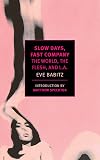
A memoir or a not-quite memoir--Babitz writes about LA (definitely a character here), her life as a 30ish woman in the pre-AIDS era, her friends and lovers. She uses pseudonyms for real people, some who went on to successful public careers have been identified.
I enjoyed LA as character--the roads, the winds, the long trip to Bakersfield (the road is better now), the crowds of actors and artists hoping to make it big. Some things are the same these days, but some are very different.
What I show more found interesting was what is missing--the Vietnam War. This book was published in 1977. Amongst all these men, where are the vets? They had to have been there? Was this an intentional exclusion, or were those men truly absent from her life--whether they were married with kids in the suburbs, or suffering from PTSD and not hanging out in crowded, loud bars. show less
I enjoyed LA as character--the roads, the winds, the long trip to Bakersfield (the road is better now), the crowds of actors and artists hoping to make it big. Some things are the same these days, but some are very different.
What I show more found interesting was what is missing--the Vietnam War. This book was published in 1977. Amongst all these men, where are the vets? They had to have been there? Was this an intentional exclusion, or were those men truly absent from her life--whether they were married with kids in the suburbs, or suffering from PTSD and not hanging out in crowded, loud bars. show less
Lists
Awards


You May Also Like


Associated Authors
Statistics
- Works
- 12
- Also by
- 2
- Members
- 2,226
- Popularity
- #11,511
- Rating
- 3.8
- Reviews
- 52
- ISBNs
- 62
- Languages
- 6
- Favorited
- 7
