
Sigurd F. Olson (1899–1982)
Author of The Singing Wilderness
About the Author
Image credit: Photo by Alfred Eisenstaedt
Series
Works by Sigurd F. Olson
Meaning Of Wilderness: Essential Articles and Speeches (Outdoor Essays & Reflections) (2001) 27 copies
Lonley Land 1 copy
Associated Works
Tagged
Common Knowledge
- Legal name
- Olson, Sigurd Ferdinand
- Birthdate
- 1899-04-04
- Date of death
- 1982-01-13
- Gender
- male
- Education
- University of Wisconsin (1920)
- Occupations
- backcountry guide
naturalist
environmentalist
writer
conservation activist - Organizations
- Vermilion Community College
Pasr President: National Parks Association
Past President: Wilderness Society - Awards and honors
- John Burroughs Nature Award (1974)
Dedication: Sigurd Olson Environmental Institute, Northland College
Honors: Sierra Club
Honors: National Wildlife Federation - Short biography
- For more than thirty years, Sigurd Olson served as a wilderness guide in the lakes and forests the Quetico-Superior country of northern Minnesota and northeastern Ontario. He was known honorifically as the Bourgeois — a term the voyageurs of old used of their trusted leaders.
He is widely credited with the successful passage of the BWCA Wilderness Act, as well as the played major roles in the establishment and preservation of Voyageurs National Park in northern Minnesota, Alaska's Arctic National Wildlife Refuge, and Point Reyes National Seashore in California. - Nationality
- USA
- Birthplace
- Humboldt Park, Illinois, USA
- Places of residence
- Humboldt Park, Illinois, USA (birth)
Madison, Wisconsin, USA
Ely, Minnesota, USA - Place of death
- Ely, Minnesota, USA
- Burial location
- Park Hill Cemetery, Duluth, Minnesota, USA
- Associated Place (for map)
- Minnesota, USA
Members
Reviews
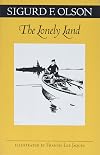
I'd read some Sigurd Olson before picking up "The Lonely Land," but not a lot. Definitely not enough. So far, what I've noticed is different in this work is a) that it's not a collection of essays about disparate events and observations, but the telling of an entire story and b) the presence of other people plays a much larger role in "The Lonely Land" than the other Olson I've read.
In "Listening Point," "The Singing Wilderness," and many of Olson's other works, he largely writes accounts of show more solitary walks in the woods. It's stuff that has always resonated deeply in me because solitary walks in the woods are one of my favorite pastimes. But there's no denying that we often experience the wild with other people -- not just any people, but companions in the deepest sense of the word -- and the people and the relationships of the wild are not periphery to the experience. Though I couldn't find one passage in "The Lonely Land" that perfectly illustrates this (yet), it is seen throughout the book by the prevalence of the "we" over the "I." The presence of the other men in "The Lonely Land" only enhances the act of experiencing. The only times he seems to use “I” is when he is specifically describing something he did: building the fire or boiling water, steering the canoe, or the few other actions one performs alone when embarked on an adventure like the one in this book. The collaborative efforts of paddling a canoe or of making camp is one of the most glorious things about a canoe trip, in my mind. That feeling is well-described here.
I've thought for a while that one of the principal goals when I write a story is to somehow weave together the drama of the wild, of man interacting with the wild, and of interacting with man in the wild. The tension necessary to the success of this story is a product of all this combined, not just the excitement and adrenaline of running rapids, or observations of the flora and fauna, both of which exist in fine form, but also the engaging tale of friendship, of companionship, and a shared quest for the "payments" of wilderness travel.
The great thing is that not only are each of Olson's fellow Voyageurs complex and well-defined "characters" in the book, he doesn't neglect two things which I have always come to his books for: the "philosophical turn" of his spirit -- as Deb noticed in his digression about the ethics of hiring an Indian with a motor to tow them down the long, wind-blown lake or as Dave did in his post about the effect of money on the enjoyment of labor; and his powerful but unpretentious, and beautifully accurate, observations about the natural world -- as Dave admired in Olson's description of the rock and the geologic history of the area through which the Voyageurs were traveling. Also, not necessarily unique to "The Lonely Land," but definitely important, is the human history of the land, which in recounting, Olson only adds another fascinating layer to the story. show less
In "Listening Point," "The Singing Wilderness," and many of Olson's other works, he largely writes accounts of show more solitary walks in the woods. It's stuff that has always resonated deeply in me because solitary walks in the woods are one of my favorite pastimes. But there's no denying that we often experience the wild with other people -- not just any people, but companions in the deepest sense of the word -- and the people and the relationships of the wild are not periphery to the experience. Though I couldn't find one passage in "The Lonely Land" that perfectly illustrates this (yet), it is seen throughout the book by the prevalence of the "we" over the "I." The presence of the other men in "The Lonely Land" only enhances the act of experiencing. The only times he seems to use “I” is when he is specifically describing something he did: building the fire or boiling water, steering the canoe, or the few other actions one performs alone when embarked on an adventure like the one in this book. The collaborative efforts of paddling a canoe or of making camp is one of the most glorious things about a canoe trip, in my mind. That feeling is well-described here.
I've thought for a while that one of the principal goals when I write a story is to somehow weave together the drama of the wild, of man interacting with the wild, and of interacting with man in the wild. The tension necessary to the success of this story is a product of all this combined, not just the excitement and adrenaline of running rapids, or observations of the flora and fauna, both of which exist in fine form, but also the engaging tale of friendship, of companionship, and a shared quest for the "payments" of wilderness travel.
The great thing is that not only are each of Olson's fellow Voyageurs complex and well-defined "characters" in the book, he doesn't neglect two things which I have always come to his books for: the "philosophical turn" of his spirit -- as Deb noticed in his digression about the ethics of hiring an Indian with a motor to tow them down the long, wind-blown lake or as Dave did in his post about the effect of money on the enjoyment of labor; and his powerful but unpretentious, and beautifully accurate, observations about the natural world -- as Dave admired in Olson's description of the rock and the geologic history of the area through which the Voyageurs were traveling. Also, not necessarily unique to "The Lonely Land," but definitely important, is the human history of the land, which in recounting, Olson only adds another fascinating layer to the story. show less

The cover of the dust jacket says it all; a fawn cautiously peers around a boulder, its dappled sides letting it blend in with the dappled sunlight on the rocks. Olson's essays follow the seasons and niches, but carefully avoid ecological jargon and scientific names. He takes readers with him as we look at the lichen on a rock, or the drifts of yellow pollen caught in the damp edge of a puddle. Be prepared to spend time on your knees in a bog in Olson's favorite haunts in the Northwoods of show more northern Wisconsin, Minnesota, and Ontario. A classic, its reduced scale is perfect for children, encouraging them to explore and notice details, stop, sniff and get their noses down where the arbutus is blooming. show less
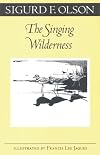
Most of the essays included in this book were written shortly before I was born (1945) or shortly thereafter. The sad part of this book is that the wilderness that he writes about is gone and it would take hundreds of year before that wilderness regenerates itself. On the other hand the author does find peace and beauty which should encourage us to work hard to protect what we have left and to go out and enjoy what we have. Definitely one that should be reread often.
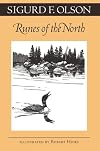
Here is a reflective guide to the northern wilderness written with a oneness & communion with nature that is unique to Olson's pen. His life is dedicated to conservation - wilderness, wildlife, scenic beauty. He closes his book with "When I consider thy heavens, the work of they fingers, the moon and the stars, which thou has ordained, What is man that thou are mindful of him?
Lists
Awards


You May Also Like


Associated Authors
Statistics
- Works
- 17
- Also by
- 2
- Members
- 1,397
- Popularity
- #18,396
- Rating
- 4.3
- Reviews
- 13
- ISBNs
- 46
- Favorited
- 7