
Mary M. Cerullo
Author of Sea turtles: ocean nomads
Series
Works by Mary M. Cerullo
Seeking Giant Sharks: A Shark Diver's Quest for Whale Sharks, Basking Sharks, and Manta Rays (Shark Expedition) (2014) 80 copies, 1 review
City Fish, Country Fish: How Fish Adapt to Tropical Seas and Cold Oceans (2012) 27 copies, 3 reviews
Tagged
Common Knowledge
There is no Common Knowledge data for this author yet. You can help.
Members
Reviews

Author Mary M. Cerullo and undersea photographer Jeffrey L. Rotman present an immensely engaging and informative examination of the world's fishes** in this outstanding work of picture-book natural history. Taking their inspiration from Aesop's tale of The Town Mouse and the Country Mouse, they contrast and compare tropical and temperate fish populations, likening the former to "city fish" because they live in and around huge coral reefs that function as urban centers, and the latter to show more "country fish" because they are less centralized, and often live closer to the "land" (ie: the ocean floor). Topics presented include the colors of the ocean (blue seas vs. green soup), the colors of fishes (electric vs. earth), living spaces (hi-rise condos vs. room to roam), the shape that fits (flat and compact vs. solid and sturdy), working together (symbiosis vs. schooling), and secrets of survival (specialization vs. self-reliance). The book concludes with a discussion of how fishes are alike, despite these regional differences, and includes a glossary and suggestions for further reading at the rear.
Having greatly enjoyed this author's Sea Soup: Phytoplankton and Sea Soup: Zooplankton, which were also published by Tilbury House - an independent Maine-baised publisher whose children's catalogue is generally outstanding - I was excited to see that she had a new oceanographic picture-book coming out, and City Fish, Country Fish did not disappoint! The framing device she uses is effective, allowing readers to consider the ocean's fish populations in ways they might not have before, and her informative text is unfailingly engaging. The brilliant photography of Jeffrey L. Rotman adds greatly to the reading experience, offering a visual counterpart to the tropical/temperate comparison being used in the text, while also just presenting some gorgeous images! All in all, a wonderful work, one I would recommend to all young marine biologists and would-be ichthyologists.
**As the author notes in a brief afterword, the plural form "fish" is used by scientists when referring to a group of fish of the same species, while "fishes" is used when referring to several different kinds of fish. show less
Having greatly enjoyed this author's Sea Soup: Phytoplankton and Sea Soup: Zooplankton, which were also published by Tilbury House - an independent Maine-baised publisher whose children's catalogue is generally outstanding - I was excited to see that she had a new oceanographic picture-book coming out, and City Fish, Country Fish did not disappoint! The framing device she uses is effective, allowing readers to consider the ocean's fish populations in ways they might not have before, and her informative text is unfailingly engaging. The brilliant photography of Jeffrey L. Rotman adds greatly to the reading experience, offering a visual counterpart to the tropical/temperate comparison being used in the text, while also just presenting some gorgeous images! All in all, a wonderful work, one I would recommend to all young marine biologists and would-be ichthyologists.
**As the author notes in a brief afterword, the plural form "fish" is used by scientists when referring to a group of fish of the same species, while "fishes" is used when referring to several different kinds of fish. show less

OK, boys and girls, have you thanked a phytoplankter today? No? Well what are you waiting for?!? As children's science author Mary M. Cerullo and marine photographer Bill Curtsinger - who also collaborated on the companion volume Sea Soup: Zooplankton - demonstrate in this engaging picture-book exploration of the world of phytoplankton (plural form), these tiny floating sea organisms are incredibly important to the survival (the establishment, even) of life on our planet. Not only do they show more feed the zooplankton - who are, in turn, the diet of countless marine species - but they are central to the formation of everything from limestone rock to oil (as well as coral reefs), and absorb nearly half of the carbon dioxide we humans produce every year, giving us half of our oxygen in return. Small they may be - but not insignificant!
Sea Soup: Phytoplankton is a book I would most likely never have picked up (or even been aware of), were I not trying to read the entire children's catalogue of Maine-based Tilbury House, one of my favorite smaller, independent publishers. I'm glad that I did, however, as I learned a lot, and discovered a non-fiction picture-book team whose work I can wholeheartedly recommend. Engaging and informative - there's a lot of detail packed into this short book! - it's a title I would recommend to all young readers with an interest in the natural world, and specifically, in marine biology. show less
Sea Soup: Phytoplankton is a book I would most likely never have picked up (or even been aware of), were I not trying to read the entire children's catalogue of Maine-based Tilbury House, one of my favorite smaller, independent publishers. I'm glad that I did, however, as I learned a lot, and discovered a non-fiction picture-book team whose work I can wholeheartedly recommend. Engaging and informative - there's a lot of detail packed into this short book! - it's a title I would recommend to all young readers with an interest in the natural world, and specifically, in marine biology. show less
Is it possible to have too many giant squid books? In my opinion, you can NEVER have too many!
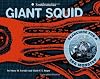
This Smithsonian title published by Capstone is lavishly illustrated with striking black and white tentacles, photographs, and historical illustrations. It has an excellent layout, different colored pages highlighting different arcs of the plot from historical legends about the giant squid to current scientific research.
The text follows the ancient tales of the kraken up to present-day explorations show more of the giant squid's deep sea habitat, focusing on the lifelong studies of Clyde Roper. Beginning with his observations of snails, he moved on to study other mollusks and eventually became fascinated with the giant squid. With the help of other scientists, he was able to discover many unknown details about the squid's life. The book ends with the first live photos of the giant squid and talks about some of the aspects of this mysterious creature that are still unknown.
A glossary, index, and further reading are included.
Verdict: This is a great look at current research on the giant squid, written for a younger middle grade audience. There's plenty of gory dissection pictures as well as scientific photos to wow the readers. Pair this with H. P. Newquist's Here There Be Monsters for older kids and have a squid book for every reader! Highly recommended.
ISBN: 1429675411; Published by Capstone; Ebook provided by the publisher through Netgalley; Purchased for the library show less
This Smithsonian title published by Capstone is lavishly illustrated with striking black and white tentacles, photographs, and historical illustrations. It has an excellent layout, different colored pages highlighting different arcs of the plot from historical legends about the giant squid to current scientific research.
The text follows the ancient tales of the kraken up to present-day explorations show more of the giant squid's deep sea habitat, focusing on the lifelong studies of Clyde Roper. Beginning with his observations of snails, he moved on to study other mollusks and eventually became fascinated with the giant squid. With the help of other scientists, he was able to discover many unknown details about the squid's life. The book ends with the first live photos of the giant squid and talks about some of the aspects of this mysterious creature that are still unknown.
A glossary, index, and further reading are included.
Verdict: This is a great look at current research on the giant squid, written for a younger middle grade audience. There's plenty of gory dissection pictures as well as scientific photos to wow the readers. Pair this with H. P. Newquist's Here There Be Monsters for older kids and have a squid book for every reader! Highly recommended.
ISBN: 1429675411; Published by Capstone; Ebook provided by the publisher through Netgalley; Purchased for the library show less
Fascinating, engagingly written account of giant squids and the scientists who study them, accompanied by stunning photos and illuminating diagrams. I always wondered how squids and their relatives, such as the octopus, propelled themselves backwards. "A squid can make a quick escape using jet propulsion. It shoots water out of its body through a funnel to rocket backward, like a balloon suddenly releasing its air." The balloon analogy helped me to picture this exactly and the labeled show more drawing on page 13 showed me where the squid's funnel is located, right below it's eye. Clyde Roper is a real adventure-scientist, willing to wade into the guts of a dead, beached sperm whale to search for squid beaks in all three stomachs, and braving squid bites to dive with Humboldt squid, and observe their hunting techniques to imagine what the giant squid might do. Beautiful photos of squid relatives including the chambered nautilis, cuttlefish, octopus, calamari squid (luminescently rainbow-colored), and glass squid (stunning). I only wish the author had provided sizes for these animals, but I can look them up on the web. Includes a glossary, websites, book resources, and index. show less
Awards


You May Also Like


Associated Authors
Statistics
- Works
- 21
- Members
- 1,071
- Popularity
- #24,021
- Rating
- 4.0
- Reviews
- 22
- ISBNs
- 74