

Sterling E. Lanier (1927–2007)
Author of Hiero's Journey
About the Author
Series
Works by Sterling E. Lanier
Le fantastorie del brigadiere 5 copies
Hiero's Answer 3 copies
Short Science Fiction Collection 051 2 copies
The Kings of the Sea 2 copies
Soldier Key {novelette} 2 copies
No Traveler Returns 1 copy
Associated Works
Isaac Asimov's Magical Worlds of Fantasy, Volume 9: Atlantis (1988) — Contributor — 93 copies, 1 review
The Best Fantasy Stories from the Magazine of Fantasy & Science Fiction (1985) — Contributor — 77 copies, 2 reviews
The Magazine of Fantasy and Science Fiction April 1974, Vol. 46, No. 4 (1974) — Contributor — 23 copies
The Magazine of Fantasy and Science Fiction July 1970, Vol. 39, No. 1 (1970) — Contributor — 18 copies
The Magazine of Fantasy and Science Fiction November 1969, Vol. 37, No. 5 (1969) — Contributor — 15 copies
The Magazine of Fantasy and Science Fiction July 1974, Vol. 47, No. 1 (1974) — Contributor — 15 copies
Worlds of If Science Fiction 152, January/February 1971 (Vol. 20, No. 9) (1971) — Contributor, some editions — 11 copies
The Magazine of Fantasy and Science Fiction 68. Mythen der nahen Zukunft. (1984) — Contributor — 7 copies
Tagged
Common Knowledge
- Legal name
- Lanier, Sterling Edmund
- Birthdate
- 1927-12-18
- Date of death
- 2007-06-28
- Gender
- male
- Education
- Harvard University (1951)
- Occupations
- research historian
editor
sculptor
novelist - Relationships
- Cummin, Lucy Andrews (goddaughter)
- Nationality
- USA
- Birthplace
- New York, New York, USA
- Places of residence
- Maryland, USA
- Place of death
- Sarasota, Florida, USA
- Associated Place (for map)
- USA
Members
Reviews

I found a battered old pocket paperback of Hiero's Journey by Sterling Lanier on the sale shelves for donated and withdrawn books at the public library. I wouldn't have given the ugly orange thing a second glance if I hadn't remembered it being listed in Appendix N of the original Dungeonmaster's Guide. So I spent my four bits and satisfied my curiosity.
The thing really is written in the episodic adventure style that is captured by pen-and-paper fantasy roleplaying, but the genre isn't show more sword and sorcery. Instead, it's a far-future post-apocalyptic scenario of the kind set out for play in the old Gamma World game. The foregone apocalypse is called "The Death," and evidently included nuclear and biological warfare. While there is a lot of physical fighting in the story, at least an equal share of attention is given to psychic powers and conflicts, with telepathy, divination, and various forms of mind-control practiced both by and against the protagonists.
There is an impressive diversity of new fauna (and suitably displaced flora) in this imagined future, many of which have their own psychic abilities. The heroes include a domesticated moose ("morse") of relatively high intelligence and what amounts to a talking bear, although the speech is all telepathy.
The Hiero of the title is a "Secondary Priest-Exorcist, Primary Rover and Senior Killman" who has been sent to find a fabled "computer" in a dead city beyond the Inland Sea (the former Great Lakes of North America). Hiero and the fellow denizens of his home abbey in the Metz Confederacy are of First Nations descent, while his eventual love interest and adventuring comrade Luchare is a black princess from Dalwah to the southeast. The only characters that are specified as white men are villains in the story, both savages and techno-magi of the Dark Brotherhood, but ideological racism is conspicuous by its absence from the story, unless you count the mutated sub-human races of the "Unclean."
The narrative voice rarely, but repeatedly, engages in a too-knowing relation of details in terms of the "ancient" knowledge of a 20th-century reader. For those who like this sort of thing, there is a lot more of it in a largely superfluous glossary appended to the novel. The pace of the book accelerates towards the end, and there is palatable narrative closure, despite the fact that the author went on to write a couple of sequels. show less
The thing really is written in the episodic adventure style that is captured by pen-and-paper fantasy roleplaying, but the genre isn't show more sword and sorcery. Instead, it's a far-future post-apocalyptic scenario of the kind set out for play in the old Gamma World game. The foregone apocalypse is called "The Death," and evidently included nuclear and biological warfare. While there is a lot of physical fighting in the story, at least an equal share of attention is given to psychic powers and conflicts, with telepathy, divination, and various forms of mind-control practiced both by and against the protagonists.
There is an impressive diversity of new fauna (and suitably displaced flora) in this imagined future, many of which have their own psychic abilities. The heroes include a domesticated moose ("morse") of relatively high intelligence and what amounts to a talking bear, although the speech is all telepathy.
The Hiero of the title is a "Secondary Priest-Exorcist, Primary Rover and Senior Killman" who has been sent to find a fabled "computer" in a dead city beyond the Inland Sea (the former Great Lakes of North America). Hiero and the fellow denizens of his home abbey in the Metz Confederacy are of First Nations descent, while his eventual love interest and adventuring comrade Luchare is a black princess from Dalwah to the southeast. The only characters that are specified as white men are villains in the story, both savages and techno-magi of the Dark Brotherhood, but ideological racism is conspicuous by its absence from the story, unless you count the mutated sub-human races of the "Unclean."
The narrative voice rarely, but repeatedly, engages in a too-knowing relation of details in terms of the "ancient" knowledge of a 20th-century reader. For those who like this sort of thing, there is a lot more of it in a largely superfluous glossary appended to the novel. The pace of the book accelerates towards the end, and there is palatable narrative closure, despite the fact that the author went on to write a couple of sequels. show less

It must have been at least 30 years since I last read this. I chiefly remember it being one of the inspirations for the Gamma World RPG; indeed some of the monsters from that RPG appear to have had the serial numbers filed off.
Over 5,000 years ago the old world was destroyed in nuclear and biological war. The North American survivors, some hideously mutated, started anew (Europe is known from legends; there has been no contact since the war). The continent is divided between two opposed show more groups: the Unclean Brotherhood who wish to return the world to pre-war technology, and the Church Universal in what used to be Canada. Per Hiero Desteen is sent by his abbot on a secret mission to the south to find a computer to aid in the Church's struggle against their enemies.
It's a bit preachy in places, and the world building is a bit on the black and white side. However, it's a reasonable read and an unusual story for the time with it's Canadian First Nations descended hero and lack of racism. Some of the science and biology is a bit shaky; I really don't believe a moth-balled base would survive intact for over 5,000 years; I would have expected the plastic sheeting to have long disintegrated. I also thought Hiero came across as a bit Mary-Sueish.
OK, recommended for the RPG influences. show less
Over 5,000 years ago the old world was destroyed in nuclear and biological war. The North American survivors, some hideously mutated, started anew (Europe is known from legends; there has been no contact since the war). The continent is divided between two opposed show more groups: the Unclean Brotherhood who wish to return the world to pre-war technology, and the Church Universal in what used to be Canada. Per Hiero Desteen is sent by his abbot on a secret mission to the south to find a computer to aid in the Church's struggle against their enemies.
It's a bit preachy in places, and the world building is a bit on the black and white side. However, it's a reasonable read and an unusual story for the time with it's Canadian First Nations descended hero and lack of racism. Some of the science and biology is a bit shaky; I really don't believe a moth-balled base would survive intact for over 5,000 years; I would have expected the plastic sheeting to have long disintegrated. I also thought Hiero came across as a bit Mary-Sueish.
OK, recommended for the RPG influences. show less
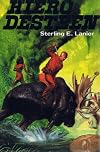
This book was okay, it had a few problematic bits and some interesting ideas in it. However, it was long and seemed overwritten. Uninteresting characters had conversations that went on for pages where they could have been edited way down. The book (actually an omnibus of two novels) was very Tolkienesque.
The main character, Hiero Desteen, spent a lot of time wandering around the world. This too seemed to take too long and introduced in several places creatures and monsters that resulted in show more nothing. Another weakness was that the author kept introducing new types of mutants instead of trying to build on a few. I wanted to know more about the Howlers and especially the Gliths. The two Gliths, one in each novel, are summarily killed and the Howlers are essentially orcs.
There were good ideas in here though such as the House, a titanic skyscraper-sized psychic mutant fungus colony that had the drive to grow over the entire face of the world. The Unclean, a brotherhood of psychic mutants controlling the other mutant types, trying to seek this thing out and then getting lead back into this thing was a plot point that I thought was clever.
The problematic elements were, fortunately, few but still unwelcome. The first was the age of the heroin and love-interest who is described as a girl which does not stop the protagonist from bedding her. In the second novel, her age is specified as seventeen. Another troublesome incident occurs when the girl-love-interest essentially prostitutes Hiero out to a bird-woman-mutant (a people that seemed to be at least somewhat modeled after elves) for a necklace which is glossed over as he found her strangely attractive anyway. He had been drugged during the encounter. The last was simply a sexist crack at a "pretty" military officer on the eve of battle.
The problematic bits aside, the book was okay. The battles were sometimes good but not that exciting, I've read better. The two novels, especially the first, could stand to be shorter and more to the point as the plots are not that complex. My final complaint is that the second novel leaves a major revelation about the main character wide open. It seems these two novels were a part of a trilogy but the third book never materialized, at least here anyway.
Would I recommend this book? Not really unless you were really hurting for some far-flung post-apocalypse swords and psionics adventure fiction. Otherwise, I think the reader might get bogged down in endless world-building tangents and dull conversations. show less
The main character, Hiero Desteen, spent a lot of time wandering around the world. This too seemed to take too long and introduced in several places creatures and monsters that resulted in show more nothing. Another weakness was that the author kept introducing new types of mutants instead of trying to build on a few. I wanted to know more about the Howlers and especially the Gliths. The two Gliths, one in each novel, are summarily killed and the Howlers are essentially orcs.
There were good ideas in here though such as the House, a titanic skyscraper-sized psychic mutant fungus colony that had the drive to grow over the entire face of the world. The Unclean, a brotherhood of psychic mutants controlling the other mutant types, trying to seek this thing out and then getting lead back into this thing was a plot point that I thought was clever.
The problematic elements were, fortunately, few but still unwelcome. The first was the age of the heroin and love-interest who is described as a girl which does not stop the protagonist from bedding her. In the second novel, her age is specified as seventeen. Another troublesome incident occurs when the girl-love-interest essentially prostitutes Hiero out to a bird-woman-mutant (a people that seemed to be at least somewhat modeled after elves) for a necklace which is glossed over as he found her strangely attractive anyway. He had been drugged during the encounter. The last was simply a sexist crack at a "pretty" military officer on the eve of battle.
The problematic bits aside, the book was okay. The battles were sometimes good but not that exciting, I've read better. The two novels, especially the first, could stand to be shorter and more to the point as the plots are not that complex. My final complaint is that the second novel leaves a major revelation about the main character wide open. It seems these two novels were a part of a trilogy but the third book never materialized, at least here anyway.
Would I recommend this book? Not really unless you were really hurting for some far-flung post-apocalypse swords and psionics adventure fiction. Otherwise, I think the reader might get bogged down in endless world-building tangents and dull conversations. show less

Hiero Desteen, Secondary Priest-Exorcist and Senior Killman of the Church Universal, is chosen by the Science Committee to travel from the Abbey Central in Sask to the Lost Cities of the southeast, in search of the computers that hold archives of the time before The Death. (He is one of six chosen to travel in different directions.)
It is the post-apocalypic world of the year 7476, thousands of years after human civilization destroyed itself with nuclear weapons and artificial disease. The show more Kandan Confederacy consists of Metz Republic in the west, the Otwah League in the east, city states of the southeast such as D’alwah on the coast of the Lantik, etc. The evil Unclean seek domination, and in recent years have been closing in, ambushing convoys and colonies of the abbey. The Unclean are assisted by the Leemutes, animals with lethal (non-reproducible) mutations, invariably disgusting in appearance: furhoppers, hairy howlers, man-rats, slimers, were-bears. In the background, observing and stepping in as needed, are the Eleveners, adherents of the eleventh commandment: “Thou shalt not destroy the Earth nor the Life thereon.” The Unclean and Eleveners are both alliances formed by scientists after The Death. The Unclean were psychologists, biochemists, physicists. The Eleveners were ecologists.
Hiero travels on the morse (mutated moose) Klootz, through the boreal forest and swamp to the Inland Sea (formerly the Great Lakes), to the port of Neeyana (possibly once Indiana), around a desert of lingering radiation, into the land of the Vilah-ree, onward to the site of an ancient city. Along the way he is joined by the intelligent bear Gorm, the runaway D’alwah princess Luchare, the Elevener Brother Aldo, merchant ship Captain Gimp and crew. He battles the Unclean wizards S’nerg and S’duna and S’carn, collecting technologically sophisticated devices from those he slays. He seeks guidance by casting and interpreting the 40 symbols, which warn him about the House... Communication by mind is the norm, though the relatively primitive societies of the southeast communicate vocally; Luchare has to be taught. As he encounters enemies, Hiero strengthens mental powers of shielding his own mind and penetrating others.
My reading experience was perhaps influenced by a poor electronic version, 837 pages (it’s not nearly this long, the numbers skipped) with no chapter divisions (they exist, but were not linked separately) and mental dialogue unmarked by punctuation or italics; the journey often felt like a mishmashy trudge, episodes strung together rather than an overarching story or character development. I was unaware of the glossary until I reached the end, and it would have provided coherence. There are some cool bits, especially the fungi. I’m curious enough to continue on to the second book.
(read 28 Jan 2013) show less
It is the post-apocalypic world of the year 7476, thousands of years after human civilization destroyed itself with nuclear weapons and artificial disease. The show more Kandan Confederacy consists of Metz Republic in the west, the Otwah League in the east, city states of the southeast such as D’alwah on the coast of the Lantik, etc. The evil Unclean seek domination, and in recent years have been closing in, ambushing convoys and colonies of the abbey. The Unclean are assisted by the Leemutes, animals with lethal (non-reproducible) mutations, invariably disgusting in appearance: furhoppers, hairy howlers, man-rats, slimers, were-bears. In the background, observing and stepping in as needed, are the Eleveners, adherents of the eleventh commandment: “Thou shalt not destroy the Earth nor the Life thereon.” The Unclean and Eleveners are both alliances formed by scientists after The Death. The Unclean were psychologists, biochemists, physicists. The Eleveners were ecologists.
Hiero travels on the morse (mutated moose) Klootz, through the boreal forest and swamp to the Inland Sea (formerly the Great Lakes), to the port of Neeyana (possibly once Indiana), around a desert of lingering radiation, into the land of the Vilah-ree, onward to the site of an ancient city. Along the way he is joined by the intelligent bear Gorm, the runaway D’alwah princess Luchare, the Elevener Brother Aldo, merchant ship Captain Gimp and crew. He battles the Unclean wizards S’nerg and S’duna and S’carn, collecting technologically sophisticated devices from those he slays. He seeks guidance by casting and interpreting the 40 symbols, which warn him about the House... Communication by mind is the norm, though the relatively primitive societies of the southeast communicate vocally; Luchare has to be taught. As he encounters enemies, Hiero strengthens mental powers of shielding his own mind and penetrating others.
My reading experience was perhaps influenced by a poor electronic version, 837 pages (it’s not nearly this long, the numbers skipped) with no chapter divisions (they exist, but were not linked separately) and mental dialogue unmarked by punctuation or italics; the journey often felt like a mishmashy trudge, episodes strung together rather than an overarching story or character development. I was unaware of the glossary until I reached the end, and it would have provided coherence. There are some cool bits, especially the fungi. I’m curious enough to continue on to the second book.
(read 28 Jan 2013) show less
Lists
Awards

You May Also Like


Associated Authors
Statistics
- Works
- 24
- Also by
- 18
- Members
- 1,334
- Popularity
- #19,298
- Rating
- 3.7
- Reviews
- 18
- ISBNs
- 36
- Languages
- 7
- Favorited
- 3
