
Diana Tutton (1915–1991)
Author of Guard Your Daughters
About the Author
Image credit: Diana Tutton
Works by Diana Tutton
Tagged
Common Knowledge
Members
Reviews
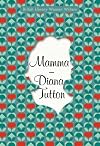
Women don’t stop being human beings once they have children, and in Mamma, Diana Tutton utilizes a taboo topic to highlight this in a way that seems very progressive for 1955. The main character, Joanna, is a 41 year old widow, and her 20 year old daughter Elizabeth sees her as simply “Mummy” and nothing beyond the boundaries of that role. The narrow, limiting way Elizabeth views her mother is an excellent representation of the way that society generally viewed older women at that time show more (and it still feels super relevant for today, too). The book is much less scandalous than the Goodreads blurb makes it seem, utilizing a great deal of restraint and delicacy with the subject matter. It was difficult for me to imagine a story like this having a happy ending, but Tutton actually manages to write a great ending for the story without it feeling too trite. A very interesting, thought provoking 4 star read! show less

A new all time favorite book! Guard Your Daughters was published in 1953. This book has the sisterhood solidarity of Little Women, the wit and complexity of Pride and Prejudice, and the dark undertones of a Shirley Jackson novel. It's also laugh-out-loud funny!
Guard Your Daughters would be such a relatable read for anyone who grew up homeschooled. Especially if they had a lot of siblings who they spent most of their time around. With fantastic names such as Thisbe, Cressida, Pandora, Morgan show more (after King Arthur's Morgan le Fay) and plain ol' Teresa (the youngest sister stuck with a boring name because her parents were fresh out of ideas by the time she came along), these sisters were a delight to follow. Watching them figure out how to deal with, as well as find ways to rebel against, the extreme isolation they experienced kept me interested throughout the story.
One particularly surprising aspect of Guard Your Daughters was the way that mental health featured within the plot. I didn't anticipate this at all, seeing as how it was published in 1953. It added so much more depth to the story.
In summary, I think it's a crime that this book isn't more widely read today! It's a forgotten gem. I feel so lucky to have stumbled across it. It's the sort of book you go out of your way to find a special copy of so you can keep it forever! show less
Guard Your Daughters would be such a relatable read for anyone who grew up homeschooled. Especially if they had a lot of siblings who they spent most of their time around. With fantastic names such as Thisbe, Cressida, Pandora, Morgan show more (after King Arthur's Morgan le Fay) and plain ol' Teresa (the youngest sister stuck with a boring name because her parents were fresh out of ideas by the time she came along), these sisters were a delight to follow. Watching them figure out how to deal with, as well as find ways to rebel against, the extreme isolation they experienced kept me interested throughout the story.
One particularly surprising aspect of Guard Your Daughters was the way that mental health featured within the plot. I didn't anticipate this at all, seeing as how it was published in 1953. It added so much more depth to the story.
In summary, I think it's a crime that this book isn't more widely read today! It's a forgotten gem. I feel so lucky to have stumbled across it. It's the sort of book you go out of your way to find a special copy of so you can keep it forever! show less
I love stories about big, odd families, and I love stories about British people in the early to mid-1900s and “Guard Your Daughters” gave me a 2 for 1 combo! It was published in 1953 and is about the Harvey family: mother, father, and five uniquely named daughters (Pandora, Thisbe, Morgan, Cressida, and Teresa). The Harvey parents kept their daughters in almost complete isolation from the outside world, homeschooling/unschooling their children. But the family created their own quirky show more culture.
At the opening of the story, only the oldest has left home and married, even though most of them are young adults. There is a lot of great humor, fun, and love between the family members, but most of the daughters long to be less isolated, which leads to tension. G Your Ds, does an excellent job at showing both the good and the harm of their unusual lifestyle.
If you were homeschooled/had a big family, you will probably be surprised at how much you relate to this book, even if you weren’t nearly as isolated as the Harvey daughters. show less
At the opening of the story, only the oldest has left home and married, even though most of them are young adults. There is a lot of great humor, fun, and love between the family members, but most of the daughters long to be less isolated, which leads to tension. G Your Ds, does an excellent job at showing both the good and the harm of their unusual lifestyle.
If you were homeschooled/had a big family, you will probably be surprised at how much you relate to this book, even if you weren’t nearly as isolated as the Harvey daughters. show less

‘Guard Your Daughters’ is an interesting little book that took me awhile to track down, as it’s been out of print for some time. It’s about a family in rural England who have five daughters, all of whom are sheltered with the exception of the eldest, who is married and living in London. The book is told from the perspective of the middle child who is 19 or so, and her narrative voice is delightful. Through the trials and tribulations of dealing with siblings as well as trying to find show more someone romantically, she’s humorous and has that wonderful British way of putting things. The girls have been educated at home but are well cultured in classical music and literature, so there is an intelligence to their dialogue. There is also a lovely undercurrent of darkness in the book – something’s wrong with their mother, but Tutton is wisely subtle about it until the end. I loved that, but I confess I wasn’t quite as satisfied with the ultimate explanation. The general message, that over-protecting your kids is unhealthy, is interesting to see from 1953 as a prelude to the sixties.
Quotes:
On old age, apparently from Castiglione:
“Therefore (me thinke) olde men be like unto them that sayling in a vessel out of an haven beholde the ground with their eyes, and the vessel to their seeming standeth still and the shore goeth; and yet it is cleane contrarie, for the haven, and likewise the time and pleasures, continue still in their estate, and we, with the vessel of mortalitie fleeing away, go one after another through the tempestuous sea, that swalloweth up and devoureth all things, neither is it graunted us at any time to come on shore againe, but alwaies beaten with contrarie windes, at the end we breake our vessel at some rocke.”
On oneness and yet isolation:
“Mother came with me one day, and a walk with her is always a revelation as she sees all sorts of little things in the hedgerows that no one else would notice. Sometimes, too, she would walk for a few yards with her eyes shut, and her lovely tragic face upturned to the air, as though its touch upon her brought peace. Oh, darling Mother! If only I could have come near to her, could have understood her sorrowful isolation and relieved it with my love.”
On the past:
“I lay smiling in the dark. There were wonderful things ahead, and I would not look back or regret what was gone. ‘But,’ I thought with a pang, ‘we shall never really be a family again. That part is done, and it was everything while it lasted.
‘That part of our story is ended now.’”
On poetry:
“If I could really grasp that farm there, the walnut tree, the pond, the sky, the cold air, all those and the emotion they give me – Oh, Morgan, and those two horsemen coming slowly over the hill! If I could put it in a poem what it all does to me – the – the intensity of it, do you understand? Well, it wouldn’t matter if the poem lasted or was completely lost. I’d have done it. I’d have made something perfect.” show less
Quotes:
On old age, apparently from Castiglione:
“Therefore (me thinke) olde men be like unto them that sayling in a vessel out of an haven beholde the ground with their eyes, and the vessel to their seeming standeth still and the shore goeth; and yet it is cleane contrarie, for the haven, and likewise the time and pleasures, continue still in their estate, and we, with the vessel of mortalitie fleeing away, go one after another through the tempestuous sea, that swalloweth up and devoureth all things, neither is it graunted us at any time to come on shore againe, but alwaies beaten with contrarie windes, at the end we breake our vessel at some rocke.”
On oneness and yet isolation:
“Mother came with me one day, and a walk with her is always a revelation as she sees all sorts of little things in the hedgerows that no one else would notice. Sometimes, too, she would walk for a few yards with her eyes shut, and her lovely tragic face upturned to the air, as though its touch upon her brought peace. Oh, darling Mother! If only I could have come near to her, could have understood her sorrowful isolation and relieved it with my love.”
On the past:
“I lay smiling in the dark. There were wonderful things ahead, and I would not look back or regret what was gone. ‘But,’ I thought with a pang, ‘we shall never really be a family again. That part is done, and it was everything while it lasted.
‘That part of our story is ended now.’”
On poetry:
“If I could really grasp that farm there, the walnut tree, the pond, the sky, the cold air, all those and the emotion they give me – Oh, Morgan, and those two horsemen coming slowly over the hill! If I could put it in a poem what it all does to me – the – the intensity of it, do you understand? Well, it wouldn’t matter if the poem lasted or was completely lost. I’d have done it. I’d have made something perfect.” show less
Lists
You May Also Like


Associated Authors
Statistics
- Works
- 3
- Members
- 200
- Popularity
- #110,007
- Rating
- 3.8
- Reviews
- 10
- ISBNs
- 9
- Languages
- 1