
Kenneth T. Jackson
Author of Crabgrass Frontier: The Suburbanization of the United States
About the Author
Image credit: Columbia University
Works by Kenneth T. Jackson
Associated Works
Forgotten Heroes: Inspiring American Portraits from Our Leading Historians (1999) — Contributor — 124 copies, 1 review
Tagged
Common Knowledge
- Canonical name
- Jackson, Kenneth T.
- Legal name
- Jackson, Kenneth Terry
- Birthdate
- 1939-07-27
- Gender
- male
- Education
- University of Chicago (MA | 1963 | PhD | 1966)
University of Memphis (BA | 1961) - Occupations
- professor
historian - Organizations
- Columbia University
United States Air Force
Society of American Historians
Organization of American Historians
New-York Historical Society - Awards and honors
- Fellow, American Academy of Arts and Sciences (2006)
Bancroft Prize (1986)
Francis Parkman Prize (1986) - Relationships
- Jackson, Barbara Bruce (wife)
- Nationality
- USA
- Birthplace
- Memphis, Tennessee, USA
- Places of residence
- New York, New York, USA
Mt. Kisco, New York, USA - Associated Place (for map)
- New York, USA
Members
Reviews
I hadn’t much thought about the connections between inner-city gentrification and the rise of the suburbs, but they do have a few things in common:
- they both have the effect of protecting the interests of the “in” group against the marginalized in American (and for that matter Canadian) society
- they hijack public resources for private ends
We know that gentrification pushes individuals in marginal jobs far from their place of work, or often into intolerable living conditions close to show more their work. It happened in 19th century New York as well as 21st century London and Paris.
Suburbanization — mostly a N. American phenomenon — causes government to build vast networks of highways to support the wealthy few in far-flung and increasingly gated communities.
It’s not good for society and it sure as shooting isn’t good for the environment.
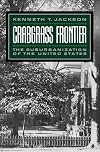
In “Crabgrass Frontier,” author Kenneth Jackson demonstrates how the rise of suburbs reinforced the racial divide in America.
- suburbs were allowed to opt out of public housing for propertyless African Americans
- zoning bylaws have been used to redraw the urban map and isolate marginalized groups
- Federal financing of home mortgages biased financing toward white veterans and their communities after the war, and even in Roosevelt programs in the wake of the Depression
It almost seems as though nothing happens in America that isn’t tied to race. show less
- they both have the effect of protecting the interests of the “in” group against the marginalized in American (and for that matter Canadian) society
- they hijack public resources for private ends
We know that gentrification pushes individuals in marginal jobs far from their place of work, or often into intolerable living conditions close to show more their work. It happened in 19th century New York as well as 21st century London and Paris.
Suburbanization — mostly a N. American phenomenon — causes government to build vast networks of highways to support the wealthy few in far-flung and increasingly gated communities.
It’s not good for society and it sure as shooting isn’t good for the environment.
In “Crabgrass Frontier,” author Kenneth Jackson demonstrates how the rise of suburbs reinforced the racial divide in America.
- suburbs were allowed to opt out of public housing for propertyless African Americans
- zoning bylaws have been used to redraw the urban map and isolate marginalized groups
- Federal financing of home mortgages biased financing toward white veterans and their communities after the war, and even in Roosevelt programs in the wake of the Depression
It almost seems as though nothing happens in America that isn’t tied to race. show less

An engaging book, but riddled with contradictions and, the author's impressive battery of statistics notwithstanding, rather glib. The superb chapter on redlining details the way racism festers in big government bureaucracies, and Jackson's solution is even bigger government, with even more bureaucracies.
Why does the US look so strange compared to other places with big cities, with failing urban cores surrounded by prosperous (ticklike, even) suburbs? Jackson gives the history of US suburbanization, which started with cheap transportation via streetcars and railroads and exploded with the rise of the automobile. He argues that there were two key preconditions—the suburban ideal of living in detached housing with an automobile (desires he argues are shared widely beyond the US, but the show more US’s wealth enabled more people to fulfill that ideal) and population growth, making geographic expansion seem desirable. And then there were two fundamental causes: racial prejudice (which led whites to flee cities when they could, and led to government policies that made it easier for whites to flee and harder for minorities, most especially African-Americans, to go anywhere—the government turned prejudice into policy, so that homes in “redlined” areas couldn’t get mortgages and therefore couldn’t help African-Americans build wealth) and cheap housing (also the result of government decisions to subsidize suburbanization, homeownership, and automobile transit, as well as new construction technology, abundant land, and relative wealth). Wealthy developers were allowed to shape government policy, unlike in Europe, so, for example, municipal services were extended to suburbs, often paid for by the cities they were draining.
Very interesting and depressing reading; published in 1984, Jackson makes some predictions about the future of suburbanization that, a quarter-century later, have mostly not been borne out, though they haven’t been disproved either. show less
Very interesting and depressing reading; published in 1984, Jackson makes some predictions about the future of suburbanization that, a quarter-century later, have mostly not been borne out, though they haven’t been disproved either. show less
The real danger of this book is that you go to look up something, and you get distracted by a half-dozen other things, which send you off on other paths, and then you forget what you wanted to look up in the first place. An absolute treasure trove.
Lists
Awards


You May Also Like


Associated Authors
Statistics
- Works
- 21
- Also by
- 4
- Members
- 1,782
- Popularity
- #14,447
- Rating
- 4.0
- Reviews
- 12
- ISBNs
- 62
- Favorited
- 1