
Stanisław Wyspiański (1869–1907)
Author of The Wedding
About the Author
Image credit: Detail from the Stanisław Wyspiański Monument, Cracow, Poland. Photo by user Rj1979 / Wikimedia Commons.
Works by Stanisław Wyspiański
Noc listopadowa 3 copies
Wyzwolenie 2 copies
Wyzwolenie; [dramat w trzech aktach] 2 copies
Lelewel ; Legion 2 copies
Meleager a tragedy 1 copy
Dzieła zebrane. Tom 15. Vol II: Monografia bibliograficzna: O twórczości pisarskiej i plastycznej 1 copy
Dramaty wybrane. 2 1 copy
Inscenizacje 1 copy
Wesele [opracowanie] 1 copy
Noc listopadowa 1 copy
Rapsody ; Hymn ; Wiersze 1 copy
Pisma prozą ; Juvenilia 1 copy
Tagged
Common Knowledge
- Canonical name
- Wyspiański, Stanisław
- Birthdate
- 1869-01-15
- Date of death
- 1907-11-28
- Gender
- male
- Occupations
- playwright
painter - Organizations
- Young Poland
- Nationality
- Polska
- Burial location
- Krypta Zasłużonych na Skałce, Kraków, Polska
Members
Reviews
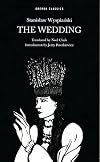
My sense is that this is a deeply meaningful to the people of Poland, reflecting in 1901 the pain of their past, a call to action for the present, and a bittersweet hope for the future, a mood still relevant today. The country has been partitioned several times in its history by its more powerful neighbors, with the one Wyspiański living through having begun in 1795 and lasting until 1918. During that period there were uprisings, but in an interesting dynamic, because of serfdom and their show more impoverished conditions, Polish peasants were generally not aligned to the cause, and in fact in one instance in 1846, goaded on by the Austrians, attacked the nobility.
Fast forward to 1900, a time when rural culture was idealized by the intelligentsia in cities like Cracow, and there was a realization that national unity could not be possible without getting the peasants on board. In what seems like a fanciful idea, there were marriages between young men from the city with peasant girls from the country, including one that Wyspiański attended, forming the basis for The Wedding.
In the first act, we see his acute eye for detail, as he introduces characters in short little scenes that make you feel like you’re making the rounds at the party. It’s in act two that the play really delivers though, when various phantoms are summoned and talk to the guests, starting with the folklore character of a straw-man who comes from the garden. A young woman meets her dead fiancée, and then figures from Poland’s past begin appearing. There’s Stanczyk, a court jester from King Zygmunt the Elder (1467-1548), who rues Poland’s having fallen in power with a journalist. There’s Ksavery Branicki, a traitor to Poland who conspired with Catherine the Great of Russia to do away with the Polish constitution of May 3, 1791. We see a Black Knight from Poland’s glory days at the Battle of Grunwald (1410) which marked the rise of the Polish-Lithuanian union as a dominant force in Europe, and Vernyhora, a 18th century Ukrainian who foretold of the destruction and resurrection of Poland. We also see Jakub Szela, the leader of the 1846 Polish peasant uprising against the nobles, which helped Austria. In bringing forth all of these ghosts Wyspiański is exorcising demons from the national psyche, and it was interesting to get the insight into both history and mindset.
The final act unfortunately goes on a little too long and is repetitive, but the ending is simply devastating. My understanding from Jerzy Peterkiewicz’s excellent introduction is that the play in general was written with short, spiky lines from folklore, an elevation of peasant speech that had some at the time walking out in the middle of the performance. It seems incredibly relevant to use this as the form for a work that seems to be about national unity and a hope to become independent again. I’m not sure if it translated quite as well into English, as the style comes across as a little lacking at times, but the significance of the play more than makes up for it. show less
Fast forward to 1900, a time when rural culture was idealized by the intelligentsia in cities like Cracow, and there was a realization that national unity could not be possible without getting the peasants on board. In what seems like a fanciful idea, there were marriages between young men from the city with peasant girls from the country, including one that Wyspiański attended, forming the basis for The Wedding.
In the first act, we see his acute eye for detail, as he introduces characters in short little scenes that make you feel like you’re making the rounds at the party. It’s in act two that the play really delivers though, when various phantoms are summoned and talk to the guests, starting with the folklore character of a straw-man who comes from the garden. A young woman meets her dead fiancée, and then figures from Poland’s past begin appearing. There’s Stanczyk, a court jester from King Zygmunt the Elder (1467-1548), who rues Poland’s having fallen in power with a journalist. There’s Ksavery Branicki, a traitor to Poland who conspired with Catherine the Great of Russia to do away with the Polish constitution of May 3, 1791. We see a Black Knight from Poland’s glory days at the Battle of Grunwald (1410) which marked the rise of the Polish-Lithuanian union as a dominant force in Europe, and Vernyhora, a 18th century Ukrainian who foretold of the destruction and resurrection of Poland. We also see Jakub Szela, the leader of the 1846 Polish peasant uprising against the nobles, which helped Austria. In bringing forth all of these ghosts Wyspiański is exorcising demons from the national psyche, and it was interesting to get the insight into both history and mindset.
The final act unfortunately goes on a little too long and is repetitive, but the ending is simply devastating. My understanding from Jerzy Peterkiewicz’s excellent introduction is that the play in general was written with short, spiky lines from folklore, an elevation of peasant speech that had some at the time walking out in the middle of the performance. It seems incredibly relevant to use this as the form for a work that seems to be about national unity and a hope to become independent again. I’m not sure if it translated quite as well into English, as the style comes across as a little lacking at times, but the significance of the play more than makes up for it. show less
Awards

You May Also Like


Statistics
- Works
- 59
- Members
- 199
- Popularity
- #110,456
- Rating
- 3.3
- Reviews
- 1
- ISBNs
- 48
- Languages
- 5
- Favorited
- 2