
Susan Squires
Author of Love at First Bite (Anthology 4-in-1)
About the Author
Series
Works by Susan Squires
Creating Breakthrough Ideas: The Collaboration of Anthropologists and Designers in the Product Development Industry (2002) — Editor — 14 copies, 1 review
Der Ruf der Wollust 2 copies
The Gift 2 copies
Associated Works
Dead After Dark (Shadow of the Moon / The Story of Son / Beyond the Night / Midnight Kiss Goodbye) (2008) — Contributor — 1,020 copies, 25 reviews
Tagged
Common Knowledge
- Gender
- female
- Awards and honors
- RITA Rita finalist for best paranormal romance
- Nationality
- USA
- Associated Place (for map)
- USA
Members
Reviews
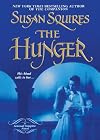
The Hunger was another wonderful read in the Companion series. Now that I've read and loved three stories from this series, I'm even more baffled as to why it doesn't get higher ratings and why I don't hear more about this talented author. Ms. Squires deftly combines an intense plot with well-drawn characters and an emotional romance. She is also good at setting a scene with her descriptive narration and even throws in real historical figures as background characters and weaves historical show more facts seamlessly into the plot. Everything just came together to create yet another story of hers that will be going on my keeper shelf.
Beatrix is a vampire who is over seven hundred years old. She is a rare vampire who was born rather than being made, which is something I'd like to know more about and hope the author explores further in future books of the series. She never knew her father and her mother was very distant while she was growing up, eventually abandoning her at the age of fourteen, about the time that born vampires transition. With no one to guide her through that formative period, Beatrix became animalistic, killing indiscriminately to survive, until Stephan Sincai came along and taught her another way to live. Stephan was an excellent mentor, and Beatrix fell in love with him for his kind and gentle ways. They eventually became lovers, but he ended up hurting Beatrix, causing her to run away with her “sister” Asharti. Following in the conscienceless Asharti's footsteps, Beatrix returned to her more bestial self, allowing her bloodlust and sexual desire to intermingle into an insatiable hunger. For a century, she repeatedly broke the vampire rules until something inside her snapped. She realized what she was doing was wrong and that she couldn't live that way any longer. For the past six hundred years, she has fashioned a well-honed persona as a much-sought-after courtesan. This supplies her with the blood she needs to survive, but she has remained celibate, believing that if she allows herself to experience sexual pleasure, she will lose control again. Beatrix takes only what she needs and leaves her “donors” alive with pleasant memories of ecstatic love-making, which only adds to her allure. Despite being adored by men, she feels very much alone in the world and has become apathetic about life. Lately, nightmares and memories of her past with Stephan and Asharti doggedly haunt her too until she can neither sleep nor eat and feels like she might go mad. Then the intriguing John Staunton comes into her life. She knows she shouldn't get too close and should treat him like all her other paramours, but something about John sparks her interest in a way she hasn't felt for a very long time. When John leaves on a spy mission, she thinks he's thrown her over for a mere prize fight, but she still misses him deeply. John is like a light to her darkened soul. When he returns, she cannot resist him, but their happiness is short-lived, as John must immediately go on another mission even more dangerous than the first. Beatrix was incredibly intelligent to figure out that John was a spy and then investigate, following the trail of breadcrumbs to figure out where he was, as well as very brave to go after him. I greatly enjoyed having a role reversal in which the heroine saves her hero from the clutches of the evil villain, but he does get the opportunity to pay her back.
John had his tender heart broken years ago, when he was just a callow youth, by two women, one of whom merely used him for sex. This relationship ended up being humiliatingly scandalous. As a result, he became promiscuous for a time but now has no enthusiasm for sexual encounters even though he has carefully cultivated a rakish reputation as a cover for his spy activities. In part because of his past, John felt he had nothing to lose and so became a volunteer spy for his country, risking life and limb. With all the appalling things he's experienced as both a spy and in his personal life, John has become cynical and jaded and disdains women, but when he meets Beatrix, something about her makes him believe that she might be different from the other women he's known. Throughout the ordeal of his first mission on the prison hulk, thoughts of Beatrix are what kept him going, even though he didn't think anything would ever come of their relationship. And yet, when he finally escaped, he was compelled by his heart to risk her rejection and finally complete his previous engagement with her. It doesn't entirely go as planned though, so he leaves on the second leg of his mission with another wounded heart. John goes after Asharti, not knowing that she is a powerful vampire, and ends up as her prisoner, suffering unspeakable horrors at her hand, which are not for the faint of heart. Even though he believes that Beatrix no longer cares about him, his memories and fantasies of her, again, are what keep him sane throughout his ordeal, but unfortunately, even after being rescued, there are more challenges for him to face before he can find true happiness. John was yet another hero in this series who is a deeply tortured soul.
Together, Beatrix and John make the perfect couple. Over the years, both have become soul wearied to the point that nothing excites them anymore. Each of them recognizes that the other is keeping secrets and that intrigues them, stirring their interest into wanting to uncover those secrets and learn more about each other. In the beginning, these two engage in a stimulating battle of wits and wills, resulting in an exquisite dance of intellectual seduction. Both Beatrix and John are perceptive enough to read between the lines and understand things that were never said in so many words. It's like they intuitively know what the other is thinking or feeling. Their communication goes far beyond mere words to encompass looks, touches, shared interests, and even actions. Unfortunately, due to both of them carrying deep wounds from betrayal and abandonment by those they loved, they, at one point, unintentionally hurt each other with their words and deeds, when all they were really doing was engaging in subconscious self-preservation. Yet, their actions in risking their lives to save each other spoke volumes as to their love. Beatrix and John were quite simply made for each other and share a rare and beautiful connection of body, mind and soul.
Every good villain has a good backstory, and it is in this book that we learn Asharti's. All the new information that was added to her character here is very intriguing. She's not merely the villainous vampire queen we first met in The Companion. Prior to being made vampire, she lived in the Middle East during the Middle Ages. She was very much a product of the time in which she was born and the fact that she was a woman on the wrong side in the Crusades. She witnessed many atrocities perpetrated against her people and was herself abused. As a result, when she became vampire, she vowed she would always be in control and never let anyone do things like that to her again. In many ways, her beginnings shaped the person she has become, although there may have been some natural underlying tendencies toward evil that were there all along and were awakened by her experiences. Instead of trying to heal and move on from all she suffered, Asharti became bitter, vengeful and sadistic. She no longer feels empathy for anyone and is a classic case of an abused person becoming the abuser.
Stephan is a fascinating character too. He is a very powerful and very old vampire, possibly thousands of years. In an effort to prove to the vampire council that born and made vampires are equal and that made vampires shouldn't be killed, especially if they were turned against their will, he mentored both Beatrix and Asharti. He tried to teach them how live by the vampire rules and that they didn't have to kill in order to survive. However, some of the things he did in his efforts to prove his point ended up breaking Bea's heart badly. Stephan is definitely one of the good guys, but his good intentions with Beatrix and Asharti went horribly awry. As a result, it appears he has been torturing himself for his responsibility in what they became, and I don't think he has ever quite stopped loving Beatrix either. I'll be quite interested to see him get his HEA ending in the next book, The Burning.
Even though The Hunger was written and published after The Companion, the events in the story predate it chronologically. Some readers may not find the ending of the book entirely satisfactory, but knowing that the story occurred before The Companion, I wasn't overly bothered by it. I already knew that Asharti would live to terrorize another day, and it does explain how she came to be in the Sahara Desert in that book. Overall, I thought this was a great read. I love how Susan Squires challenges me as a reader. Her prose is very rich, dense and intelligently written, more so than I typically see in romance, which is perhaps the reason her books don't get higher ratings. I sometimes find myself reading her books a bit slower than I usually do just to pick up on all the nuances of her writing style. She has obviously researched her time period and settings quite well too, occasionally even throwing in a little period vernacular, all elements that I can appreciate. I've really fallen in love with Ms. Squires writing style and can't wait to continue the series.
Note: The sensual scenes between the hero and heroine are only moderately steamy, but in Beatrix's flashbacks of her time with Asharti, she engaged in some pretty racy Bacchanalian pleasures that are somewhat explicitly described but tastefully so, in my opinion. There is also a brief discussion of a character having engaged in an incestuous relationship. Sensitive readers should be forewarned that there are some explicit scenes of physical and sexual violence as well. show less
Beatrix is a vampire who is over seven hundred years old. She is a rare vampire who was born rather than being made, which is something I'd like to know more about and hope the author explores further in future books of the series. She never knew her father and her mother was very distant while she was growing up, eventually abandoning her at the age of fourteen, about the time that born vampires transition. With no one to guide her through that formative period, Beatrix became animalistic, killing indiscriminately to survive, until Stephan Sincai came along and taught her another way to live. Stephan was an excellent mentor, and Beatrix fell in love with him for his kind and gentle ways. They eventually became lovers, but he ended up hurting Beatrix, causing her to run away with her “sister” Asharti. Following in the conscienceless Asharti's footsteps, Beatrix returned to her more bestial self, allowing her bloodlust and sexual desire to intermingle into an insatiable hunger. For a century, she repeatedly broke the vampire rules until something inside her snapped. She realized what she was doing was wrong and that she couldn't live that way any longer. For the past six hundred years, she has fashioned a well-honed persona as a much-sought-after courtesan. This supplies her with the blood she needs to survive, but she has remained celibate, believing that if she allows herself to experience sexual pleasure, she will lose control again. Beatrix takes only what she needs and leaves her “donors” alive with pleasant memories of ecstatic love-making, which only adds to her allure. Despite being adored by men, she feels very much alone in the world and has become apathetic about life. Lately, nightmares and memories of her past with Stephan and Asharti doggedly haunt her too until she can neither sleep nor eat and feels like she might go mad. Then the intriguing John Staunton comes into her life. She knows she shouldn't get too close and should treat him like all her other paramours, but something about John sparks her interest in a way she hasn't felt for a very long time. When John leaves on a spy mission, she thinks he's thrown her over for a mere prize fight, but she still misses him deeply. John is like a light to her darkened soul. When he returns, she cannot resist him, but their happiness is short-lived, as John must immediately go on another mission even more dangerous than the first. Beatrix was incredibly intelligent to figure out that John was a spy and then investigate, following the trail of breadcrumbs to figure out where he was, as well as very brave to go after him. I greatly enjoyed having a role reversal in which the heroine saves her hero from the clutches of the evil villain, but he does get the opportunity to pay her back.
John had his tender heart broken years ago, when he was just a callow youth, by two women, one of whom merely used him for sex. This relationship ended up being humiliatingly scandalous. As a result, he became promiscuous for a time but now has no enthusiasm for sexual encounters even though he has carefully cultivated a rakish reputation as a cover for his spy activities. In part because of his past, John felt he had nothing to lose and so became a volunteer spy for his country, risking life and limb. With all the appalling things he's experienced as both a spy and in his personal life, John has become cynical and jaded and disdains women, but when he meets Beatrix, something about her makes him believe that she might be different from the other women he's known. Throughout the ordeal of his first mission on the prison hulk, thoughts of Beatrix are what kept him going, even though he didn't think anything would ever come of their relationship. And yet, when he finally escaped, he was compelled by his heart to risk her rejection and finally complete his previous engagement with her. It doesn't entirely go as planned though, so he leaves on the second leg of his mission with another wounded heart. John goes after Asharti, not knowing that she is a powerful vampire, and ends up as her prisoner, suffering unspeakable horrors at her hand, which are not for the faint of heart. Even though he believes that Beatrix no longer cares about him, his memories and fantasies of her, again, are what keep him sane throughout his ordeal, but unfortunately, even after being rescued, there are more challenges for him to face before he can find true happiness. John was yet another hero in this series who is a deeply tortured soul.
Together, Beatrix and John make the perfect couple. Over the years, both have become soul wearied to the point that nothing excites them anymore. Each of them recognizes that the other is keeping secrets and that intrigues them, stirring their interest into wanting to uncover those secrets and learn more about each other. In the beginning, these two engage in a stimulating battle of wits and wills, resulting in an exquisite dance of intellectual seduction. Both Beatrix and John are perceptive enough to read between the lines and understand things that were never said in so many words. It's like they intuitively know what the other is thinking or feeling. Their communication goes far beyond mere words to encompass looks, touches, shared interests, and even actions. Unfortunately, due to both of them carrying deep wounds from betrayal and abandonment by those they loved, they, at one point, unintentionally hurt each other with their words and deeds, when all they were really doing was engaging in subconscious self-preservation. Yet, their actions in risking their lives to save each other spoke volumes as to their love. Beatrix and John were quite simply made for each other and share a rare and beautiful connection of body, mind and soul.
Every good villain has a good backstory, and it is in this book that we learn Asharti's. All the new information that was added to her character here is very intriguing. She's not merely the villainous vampire queen we first met in The Companion. Prior to being made vampire, she lived in the Middle East during the Middle Ages. She was very much a product of the time in which she was born and the fact that she was a woman on the wrong side in the Crusades. She witnessed many atrocities perpetrated against her people and was herself abused. As a result, when she became vampire, she vowed she would always be in control and never let anyone do things like that to her again. In many ways, her beginnings shaped the person she has become, although there may have been some natural underlying tendencies toward evil that were there all along and were awakened by her experiences. Instead of trying to heal and move on from all she suffered, Asharti became bitter, vengeful and sadistic. She no longer feels empathy for anyone and is a classic case of an abused person becoming the abuser.
Stephan is a fascinating character too. He is a very powerful and very old vampire, possibly thousands of years. In an effort to prove to the vampire council that born and made vampires are equal and that made vampires shouldn't be killed, especially if they were turned against their will, he mentored both Beatrix and Asharti. He tried to teach them how live by the vampire rules and that they didn't have to kill in order to survive. However, some of the things he did in his efforts to prove his point ended up breaking Bea's heart badly. Stephan is definitely one of the good guys, but his good intentions with Beatrix and Asharti went horribly awry. As a result, it appears he has been torturing himself for his responsibility in what they became, and I don't think he has ever quite stopped loving Beatrix either. I'll be quite interested to see him get his HEA ending in the next book, The Burning.
Even though The Hunger was written and published after The Companion, the events in the story predate it chronologically. Some readers may not find the ending of the book entirely satisfactory, but knowing that the story occurred before The Companion, I wasn't overly bothered by it. I already knew that Asharti would live to terrorize another day, and it does explain how she came to be in the Sahara Desert in that book. Overall, I thought this was a great read. I love how Susan Squires challenges me as a reader. Her prose is very rich, dense and intelligently written, more so than I typically see in romance, which is perhaps the reason her books don't get higher ratings. I sometimes find myself reading her books a bit slower than I usually do just to pick up on all the nuances of her writing style. She has obviously researched her time period and settings quite well too, occasionally even throwing in a little period vernacular, all elements that I can appreciate. I've really fallen in love with Ms. Squires writing style and can't wait to continue the series.
Note: The sensual scenes between the hero and heroine are only moderately steamy, but in Beatrix's flashbacks of her time with Asharti, she engaged in some pretty racy Bacchanalian pleasures that are somewhat explicitly described but tastefully so, in my opinion. There is also a brief discussion of a character having engaged in an incestuous relationship. Sensitive readers should be forewarned that there are some explicit scenes of physical and sexual violence as well. show less
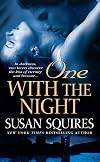
One with the Night was another great read in Susan Squire's Companion series. Once again, I'm rather shocked by the somewhat lower ratings for this series. Then again, perhaps it has something to do with the fact that she has a penchant for seriously torturing her heroes, sexually and physically. Said heroes are also typically more docile and submissive than most vampire heroes, though I hesitate to call some of them betas. However, for the most part, none of this bothers me. Overall, I show more enjoy the juxtaposition of the heroine essentially saving the hero. I also love how Ms. Squires takes her characters on an emotional and psychological journey that always culminates in them not only finding true and lasting love, but also finding some peace with their companion which up to that point has usually tormented them. I thoroughly enjoy watching them learn about themselves and each other and grow throughout the story to a place where I can believe in their rightness for one another and the power of their love.
Like nearly all of the heroes in this series to date, Callan is a deeply tortured man who was another of the evil Asharti's victims. She put him through hell as her own personal plaything, repeatedly raping and physically tormenting him throughout his time with her. At first it was via compulsion, but eventually, he submitted to her tortures which only left him further psychologically confused about whether he was a warped man who truly enjoyed her “attentions.” She coerced him into committing other atrocities for her as well, and when she was finally dead, he tried to create a vampire haven where others of his kind could find solace. Unfortunately, that plan backfired to the point that he became known as a traitor both to humans and vampires. Because of all this, he believes himself evil and unredeemable, but it doesn't stop the good in him from coming out in small ways. I loved how his part of the story opened with him “cleaning house” in a brothel and throwing the cruel manager and customers out while offering a new life to the prostitutes. Little good deeds like this are his way of trying to atone for the wrongs he committed in the past, but in reality, he doesn't believe he's doing much good. Callan is so tormented, he has tried several times to kill himself, but his companion won't allow it. Therefore, when he hears of a possible cure for vampirism, he's all too eager to find the doctor who is trying to discover it. Callan thinks that if he can become human again, he might finally be able to return to a normal life, and if not, then at least he'd be able to commit suicide. He just didn't expect to find love in the process. Not surprisingly, since escaping Asharti, Callan has chosen a celibate life for the past two years and doesn't really want to have anything to do with women or sex, but he can't resist the way Jane draws him. She's innocent, good, generous, and shockingly positive even in the face of her own vampirism. Although he desires her deeply, he believes it's only his companion driving him to the call of life, and he also believes himself not even close to good enough for her. Callan loathes himself so much for the things Asharti made him do that he eventually allows Jane to believe some things about himself that, while technically true, have more nuance to them than he's willing to admit. He even lets her think he's willingly having sex with the villainess, Elyta, when in reality she is compelling him in one way or another. Poor Callan has been raped so many times, first by Asharti and then Elyta, that he has trouble differentiating between a loving, healthy sexual relationship and abuse, but luckily through Jane's gentleness and their love for one another, he is finally able to experience and recognize the distinction.
Jane has always lived in the shadow of her father but is a very talented scientist and healer in her own right. She learned a great deal about doctoring by simply watching her father and reading anatomy books. In fact, she's a very bookish young lady in general, which was something I loved about her. She also taught herself midwifery by lying to her father about where she was and going into the slums to help pregnant woman. Despite all this, her father has little faith in her abilities, mainly because she's a woman, which has left her with some psychological scars of her own to overcome. Because of how she was turned vampire in a laboratory accident, Jane is still innocently unaware of the full extent of her condition and powers. She only knows what she and her father have been able to deduce scientifically. Because his only child has this “disease,” her father is working tirelessly to find a cure. It's very cute how Jane tries to comport herself like a proper lady, drinking her blood from a teacup, not allowing her "affliction" to turn her into a beast. This measure of control she exhibits over her companion definitely comes in handy in convincing Callan that not every vampire is a slave to the creature that shares their blood. She's definitely a scientist through and through. The fact that she treated her one and only sexual experience years ago as a science experiment was amusing, yet it was sad that she thought of herself as not attractive enough and too much of a bluestocking to be marriageable. This is what led to her wanting to experience sex outside of marriage, but her experiment definitely didn't produce the results she was looking for. She'd been told it would be a transforming experience, but hers was anything but until she meets Callan. However, Jane leans so far toward being a liberated woman that her first love-making experience with Callan leaves her feeling frightened that she might lose herself and her ambitions in her feelings for him. She also thinks it's just her companion producing a heightened sexual response, and that makes her feel warped for wanting sex with him so badly. Luckily, she finally comes to terms with all of this and eventually embraces every part of her new self. I also couldn't have been prouder of her when she showed her intelligence by deducing (with a little help) what was actually going on between Callan and Elyta and putting stop to it.
This is the first book in the series in which both characters begin the story as vampires, so the dynamic between them is a little different. Because of the companion in their blood, they experience an intense, raw sexual attraction from the moment they meet. It even provokes a sexual response when Callan is gravely wounded and unconscious. Events that occur later in the story change this dynamic, as they experience their attraction for each other in a different way. Always though, Callan is thinking of Jane first and foremost in everything he does which I found very romantic. They each also see things in the other that they can't see in themselves. Callan recognizes Jane's talents, creativity and femininity all of which she tries to hide or deny, because of how her father treated her as the son he never had. Jane intuitively senses the pain in Callan's past, because she can see it mirrored in his eyes. She also sees the goodness in him when he thinks of himself as nothing but evil. Both of them admit their love for one another to themselves, but each think the other can't love them back, which delays their verbal declarations until the very end. A part of me wished that they could have had a little more faith in each other and their ability to love, but it all ended well anyway.
For the first time in this series, I have to admit that the sexual abuse of the hero was a little harder for me to take. I think it was because a large part of it was happening in real time with Elyta, interspersed with some flashbacks to his time with Asharti as well, which made it all a little too overwhelming. It got to the point that Callan was spending so much time engaged in torturous sex acts with the villainess that I felt it was taking something away from his and Jane's burgeoning love. Of course, none of this is his fault, because Elyta first compelled him with her vampire powers, and later, by hanging Jane's safety over his head. At the time, he had little else with which to bargain except his body, so I did admire him for putting himself on the line like that to protect Jane. It was just difficult to read about him being abused over and over when he was already deeply damaged from his time with Asharti. It also didn't allow for a lot of time for Callan and Jane to develop a healthy sexual relationship, so that part seemed slightly rushed. Having Callan and Jane finally rekindle their intimacy right on the heels of the abuse seemed a little too soon as well. However, I will admit though, that their interactions were very sweet and romantic, and the author did a great job of differentiating between the two experiences for Callan.
There were a few common characters from past books who appear in One with the Night. Jane's father was first seen in The Companion as the doctor who Ian turned to, looking for a cure, and it is through his blood sample that Jane was infected. Stephan Sincai's mentor, the monk, Brother Flavio, arrives with Elyta and her maid, Clara. Although Flavio seems to have a guilty conscience for not doing more to help Stephan and is obviously not evil like Elyta, he is largely passive throughout the story. I thought it was sweet that Clara had been in love with Flavio for a long time and unable to express her feelings inside the confines of Mirso Monastery. She finally finds her voice, but sadly, we don't get to see much of what happens between these two. Perhaps they will appear again as supporting characters in future books of the series. There is also the vampire, Khalenberg, who is out to prevent anyone from discovering a cure. Although I don't distinctly recall him from the previous books, he may have appeared before, because he seemed to have knowledge of the other now-happy couples. I also thought the inclusion of the Loch Ness monster was clever.
Overall, I enjoyed reading One with the Night and thought that it was another worthy effort in the Companion series. The only reason I marked off the half-star was for the somewhat excessive sexual abuse, but in the grand scheme of things, it didn't take too much away from the rest of the story for me. I liked the journey to finding a cure and how that all turned out. I also admire the author for her talent with character studies and how she was able to bring Callan and Jane full-circle in both their relationship with each other and their individual relationships with their companions. Although the main characters for the next book of the series look like they are going to be brand new, I look forward to meeting them when I continue the series soon.
Note: The sexual tension and love scenes between the hero and heroine are fairly steamy but not really what I would term erotic. However, there are multiple scenes of the hero being raped both in the present and in flashbacks that are pretty intense and contain some BDSM style interactions (including a D/S “relationship”, bondage, flogging, and intimate piercing) between him and his female abusers, which are not for the faint of heart. show less
Like nearly all of the heroes in this series to date, Callan is a deeply tortured man who was another of the evil Asharti's victims. She put him through hell as her own personal plaything, repeatedly raping and physically tormenting him throughout his time with her. At first it was via compulsion, but eventually, he submitted to her tortures which only left him further psychologically confused about whether he was a warped man who truly enjoyed her “attentions.” She coerced him into committing other atrocities for her as well, and when she was finally dead, he tried to create a vampire haven where others of his kind could find solace. Unfortunately, that plan backfired to the point that he became known as a traitor both to humans and vampires. Because of all this, he believes himself evil and unredeemable, but it doesn't stop the good in him from coming out in small ways. I loved how his part of the story opened with him “cleaning house” in a brothel and throwing the cruel manager and customers out while offering a new life to the prostitutes. Little good deeds like this are his way of trying to atone for the wrongs he committed in the past, but in reality, he doesn't believe he's doing much good. Callan is so tormented, he has tried several times to kill himself, but his companion won't allow it. Therefore, when he hears of a possible cure for vampirism, he's all too eager to find the doctor who is trying to discover it. Callan thinks that if he can become human again, he might finally be able to return to a normal life, and if not, then at least he'd be able to commit suicide. He just didn't expect to find love in the process. Not surprisingly, since escaping Asharti, Callan has chosen a celibate life for the past two years and doesn't really want to have anything to do with women or sex, but he can't resist the way Jane draws him. She's innocent, good, generous, and shockingly positive even in the face of her own vampirism. Although he desires her deeply, he believes it's only his companion driving him to the call of life, and he also believes himself not even close to good enough for her. Callan loathes himself so much for the things Asharti made him do that he eventually allows Jane to believe some things about himself that, while technically true, have more nuance to them than he's willing to admit. He even lets her think he's willingly having sex with the villainess, Elyta, when in reality she is compelling him in one way or another. Poor Callan has been raped so many times, first by Asharti and then Elyta, that he has trouble differentiating between a loving, healthy sexual relationship and abuse, but luckily through Jane's gentleness and their love for one another, he is finally able to experience and recognize the distinction.
Jane has always lived in the shadow of her father but is a very talented scientist and healer in her own right. She learned a great deal about doctoring by simply watching her father and reading anatomy books. In fact, she's a very bookish young lady in general, which was something I loved about her. She also taught herself midwifery by lying to her father about where she was and going into the slums to help pregnant woman. Despite all this, her father has little faith in her abilities, mainly because she's a woman, which has left her with some psychological scars of her own to overcome. Because of how she was turned vampire in a laboratory accident, Jane is still innocently unaware of the full extent of her condition and powers. She only knows what she and her father have been able to deduce scientifically. Because his only child has this “disease,” her father is working tirelessly to find a cure. It's very cute how Jane tries to comport herself like a proper lady, drinking her blood from a teacup, not allowing her "affliction" to turn her into a beast. This measure of control she exhibits over her companion definitely comes in handy in convincing Callan that not every vampire is a slave to the creature that shares their blood. She's definitely a scientist through and through. The fact that she treated her one and only sexual experience years ago as a science experiment was amusing, yet it was sad that she thought of herself as not attractive enough and too much of a bluestocking to be marriageable. This is what led to her wanting to experience sex outside of marriage, but her experiment definitely didn't produce the results she was looking for. She'd been told it would be a transforming experience, but hers was anything but until she meets Callan. However, Jane leans so far toward being a liberated woman that her first love-making experience with Callan leaves her feeling frightened that she might lose herself and her ambitions in her feelings for him. She also thinks it's just her companion producing a heightened sexual response, and that makes her feel warped for wanting sex with him so badly. Luckily, she finally comes to terms with all of this and eventually embraces every part of her new self. I also couldn't have been prouder of her when she showed her intelligence by deducing (with a little help) what was actually going on between Callan and Elyta and putting stop to it.
This is the first book in the series in which both characters begin the story as vampires, so the dynamic between them is a little different. Because of the companion in their blood, they experience an intense, raw sexual attraction from the moment they meet. It even provokes a sexual response when Callan is gravely wounded and unconscious. Events that occur later in the story change this dynamic, as they experience their attraction for each other in a different way. Always though, Callan is thinking of Jane first and foremost in everything he does which I found very romantic. They each also see things in the other that they can't see in themselves. Callan recognizes Jane's talents, creativity and femininity all of which she tries to hide or deny, because of how her father treated her as the son he never had. Jane intuitively senses the pain in Callan's past, because she can see it mirrored in his eyes. She also sees the goodness in him when he thinks of himself as nothing but evil. Both of them admit their love for one another to themselves, but each think the other can't love them back, which delays their verbal declarations until the very end. A part of me wished that they could have had a little more faith in each other and their ability to love, but it all ended well anyway.
For the first time in this series, I have to admit that the sexual abuse of the hero was a little harder for me to take. I think it was because a large part of it was happening in real time with Elyta, interspersed with some flashbacks to his time with Asharti as well, which made it all a little too overwhelming. It got to the point that Callan was spending so much time engaged in torturous sex acts with the villainess that I felt it was taking something away from his and Jane's burgeoning love. Of course, none of this is his fault, because Elyta first compelled him with her vampire powers, and later, by hanging Jane's safety over his head. At the time, he had little else with which to bargain except his body, so I did admire him for putting himself on the line like that to protect Jane. It was just difficult to read about him being abused over and over when he was already deeply damaged from his time with Asharti. It also didn't allow for a lot of time for Callan and Jane to develop a healthy sexual relationship, so that part seemed slightly rushed. Having Callan and Jane finally rekindle their intimacy right on the heels of the abuse seemed a little too soon as well. However, I will admit though, that their interactions were very sweet and romantic, and the author did a great job of differentiating between the two experiences for Callan.
There were a few common characters from past books who appear in One with the Night. Jane's father was first seen in The Companion as the doctor who Ian turned to, looking for a cure, and it is through his blood sample that Jane was infected. Stephan Sincai's mentor, the monk, Brother Flavio, arrives with Elyta and her maid, Clara. Although Flavio seems to have a guilty conscience for not doing more to help Stephan and is obviously not evil like Elyta, he is largely passive throughout the story. I thought it was sweet that Clara had been in love with Flavio for a long time and unable to express her feelings inside the confines of Mirso Monastery. She finally finds her voice, but sadly, we don't get to see much of what happens between these two. Perhaps they will appear again as supporting characters in future books of the series. There is also the vampire, Khalenberg, who is out to prevent anyone from discovering a cure. Although I don't distinctly recall him from the previous books, he may have appeared before, because he seemed to have knowledge of the other now-happy couples. I also thought the inclusion of the Loch Ness monster was clever.
Overall, I enjoyed reading One with the Night and thought that it was another worthy effort in the Companion series. The only reason I marked off the half-star was for the somewhat excessive sexual abuse, but in the grand scheme of things, it didn't take too much away from the rest of the story for me. I liked the journey to finding a cure and how that all turned out. I also admire the author for her talent with character studies and how she was able to bring Callan and Jane full-circle in both their relationship with each other and their individual relationships with their companions. Although the main characters for the next book of the series look like they are going to be brand new, I look forward to meeting them when I continue the series soon.
Note: The sexual tension and love scenes between the hero and heroine are fairly steamy but not really what I would term erotic. However, there are multiple scenes of the hero being raped both in the present and in flashbacks that are pretty intense and contain some BDSM style interactions (including a D/S “relationship”, bondage, flogging, and intimate piercing) between him and his female abusers, which are not for the faint of heart. show less
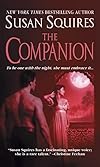
A wonderfully engrossing book featuring a tormented hero, a spunky heroine and an evil that could destroy the world. What more could a reader want? The sexual tension between the hero and heroine is palpable from their first meeting. The plot moves along at a great pace, and the writing is top-notch. I'm not a fan of the Regency era, but Ms. Squires's fabulous story more than made up for any shortcomings inherent in the genre (like the dreadful ton, and everything that comes along with it). show more I'm looking forward to reading the next book in the series. (A) show less
Creating Breakthrough Ideas: The Collaboration of Anthropologists and Designers in the Product Development Industry by Bryan Byrne
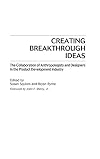
The subtitle -- "The collaboration of anthropologists and designers in the product development industry" -- is right on the spot. The book is a collection of chapters, most of which written by social scientists, addressing how anthropology can be used in user-centered product development and market research. In spite of the main title, there are not a lot of examples of breakthrough ideas but rather a broad range of models, methods and techniques intended to address the possible show more complementarity of user studies and creative design in various best-practice professional settings. In my opinion, most of the material in the book is directly transferable to interaction design and has significant relevance for the ongoing ethnography vs. systems development debate that has been simmering in our field since the early 1990s. show less
Lists
Awards


You May Also Like


Associated Authors
Statistics
- Works
- 33
- Also by
- 1
- Members
- 3,110
- Popularity
- #8,220
- Rating
- 3.8
- Reviews
- 67
- ISBNs
- 81
- Languages
- 2
- Favorited
- 1