
Walter E. Kaegi (1937–2022)
Author of Byzantium and the Early Islamic Conquests
About the Author
Works by Walter E. Kaegi
Associated Works
The Cambridge History of Egypt, Vol. 1: Islamic Egypt, 640-1517 (Volume 1) (1998) — Contributor — 35 copies
Visions of community in the post-Roman world : the West, Byzantium and the Islamic world, 300-1100 (2012) — Contributor — 5 copies
The 17th International Byzantine Congress : Major papers, Dumbarton Oaks/Georgetown University, Washington, D.C., August 3-8, 1986 (1986) — Contributor — 4 copies
Bibel, Byzanz und Christlicher Orient: Festschrift für Stephen Gerö zum 65. Geburtstag (2011) — Contributor — 2 copies
Tagged
Common Knowledge
- Legal name
- Kaegi, Walter Emil Jr.
- Birthdate
- 1937-11-08
- Date of death
- 2022-02-24
- Gender
- male
- Education
- Haverford College (AB|1959)
Harvard University (AM|1960; PhD|1965) - Occupations
- professor of history
- Organizations
- University of Chicago
- Short biography
- Married to Louise Kaegi, with two sons, Frederick and Christian.
- Nationality
- USA
- Birthplace
- New Albany, Indiana, USA
- Associated Place (for map)
- Indiana, USA
Members
Reviews

The reign of Heraclius (AD 610-641) was, I think it's fair to say, the most dramatic of any Roman or Byzantine emperor, with initial disasters followed by a spectacular recovery, followed by renewed disasters. It has as good claim as any to mark the transition from late antique East Rome to medieval Byzantium.
The life of Heraclius, then, is promising material for a biography, although that promise is tempered by the sources available not being all that we may wish. Kaegi pulls it off quite show more well, managing to discuss the gaps and uncertainties in the sources without bogging down the narrative unduly. The style is unexpectedly conversational for what's essentially an academic work, and there's some unnecessary repetitions, but those are minor faults. show less
The life of Heraclius, then, is promising material for a biography, although that promise is tempered by the sources available not being all that we may wish. Kaegi pulls it off quite show more well, managing to discuss the gaps and uncertainties in the sources without bogging down the narrative unduly. The style is unexpectedly conversational for what's essentially an academic work, and there's some unnecessary repetitions, but those are minor faults. show less
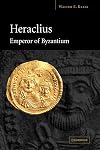
This book is fairly standard as far as academic biographies of medieval leaders go. Sources that constitute the life are more, or less, biased or contradictory. Kaegi uses a variety of sources to construct the narrative. The narrative Kaegi builds is, at times, garbled and can be confusing to follow. Despite this, it is still worth a read.
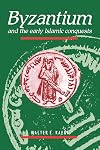
Walter Kaegi has taken us back to the surprising collapse of the Eastern Roman Empire in the face of the iitial Islamic expansoin into Persia, and the Empire. There are questions raised, but a remarkable lack of information to answer them. The Islamic wave fell upon two states that had just engaged in a quarter century of total war, and destroyed Persia, but Byzantium survived. The Eastern Roman state was deprived of the bulk of its revenue and considerable amounts of its recruiting grounds. show more Kaegi defines the questions, but, the records or other evidence is in exceptionally short supply. He does demonstrate that the Romans had not reclaimed a fully functioning economy, and had not even fully re-occupied the areas the Persians had seized in the earlier conflict. He has assembled such evidence as exists for the convulsion, but so complete was the Islamic takeover, that real conclusions came drawn as to the proportions of blame to be alloted. This is a necessary, but not a satisfying construction. show less
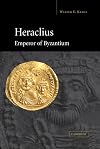
Sadly, this book is he best we have. Sources are sparse and compared to the amount normally associated with the genre. The acidents of time have dispersed the official material, and the general chronicles and hagiography consulted are seldom presenting anything but a stock figure usable for literary convention. Part of the time I found myself saddened, as there must have been more to the man than what we can prove. The Armenian History by Sebeos, Michael the Syrian, and the Hagiographies are show more of more use than any Arabic sources, where he is nothing more than the stock figure of blind resistance to the obvious will of Allah.
Kaegi believes far more in Heraclius as an astute politician, than a brilliant soldier. It seems that Heraclius , manipulated his Persian opponents weaknesses to relieve his empire of a very serious invasion. But when the Arabs suddenly injected themselves into history, neither of the more settled powers had any handle on the crisis. But Heraclius' empire survived, though badly reduced, while the Persians went into "A bit of a decline", for three hundred years. Kaegi has the reasons marshalled quite well.
It is a useful book, not the least part being an exploration of the kind of lemonade that can be made from the very few lemons presented. But it's not a lively read. show less
Kaegi believes far more in Heraclius as an astute politician, than a brilliant soldier. It seems that Heraclius , manipulated his Persian opponents weaknesses to relieve his empire of a very serious invasion. But when the Arabs suddenly injected themselves into history, neither of the more settled powers had any handle on the crisis. But Heraclius' empire survived, though badly reduced, while the Persians went into "A bit of a decline", for three hundred years. Kaegi has the reasons marshalled quite well.
It is a useful book, not the least part being an exploration of the kind of lemonade that can be made from the very few lemons presented. But it's not a lively read. show less
You May Also Like


Associated Authors
Statistics
- Works
- 9
- Also by
- 7
- Members
- 287
- Popularity
- #81,378
- Rating
- 4.0
- Reviews
- 4
- ISBNs
- 21