
Ted Kerasote
Author of Merle's Door: Lessons from a Freethinking Dog
About the Author
Ted Kerasote is the author of many books, including the national bestseller "Merle's Door: Lessons from a Freethinking Dog" and "Out There: In The Wild in a Wired Age", which won the National Outdoor Book Award. His essays and photographs have appeared in Audubon, Geo, Outside, Science, The New show more York Times, and more than sixty other periodicals. (Bowker Author Biography) show less
Image credit: Source: http://www.kerasote.com/merle-photos.html
Works by Ted Kerasote
Why Dogs Die Young 1 copy
Tagged
Common Knowledge
- Birthdate
- 1959-04-08
- Gender
- male
- Occupations
- journalist
- Nationality
- USA
- Associated Place (for map)
- USA
Members
Reviews
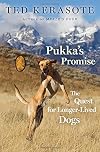
This book melds two narratives -- the story of an "orphaned" dog owner's journey from grief to a new beginning, and a thoroughgoing examination of many practices and products that put our dogs at risk. The author begins with the death of his beloved dog, tells how he grieved and how he became ready for another dog, how he searched for the dog and how he undertook his new companion's upbringing. But the author didn't just want another dog, he wanted to find out how he could give that dog the show more longest and healthiest life possible.
His research into the factors affecting dog health is extensive, compelling, and very, very useful. He looks into several different factors that contribute to health risks for today's dogs, looking first at inbreeding (which has contributed to major health issues for many breeds) and how a potential dog owner can try to avoid some of the risks, even if he/she chooses a purebred dog. He also discusses shelter dogs vs. dogs bred by breeders Then he moves on to important medical issues -- are vaccines dangerous? what about heartworm treatment? and what about flea/tick remedies? what about spaying and neutering? He includes an examination of the (multiple) environmental risks to dogs. Most shocking, to me, was his lengthy discussion of the commercial products we feed our dogs. If reading about the commercially prepared food humans eat is upsetting, reading about what is provided for dogs is even more upsetting!
Not every reader will agree with all of the author's points, and even if one agrees, it may not be possible to do as he thinks wise (the case for spaying/neutering city dogs, for example, is much more compelling that for country dogs like the author's.) But his tone is always reasonable, and he makes it very clear that there is a great deal of uncertainty about many aspects of how the modern environment affects dogs. He helps dog owners balance risks and the effort involved in limiting those risks. He also makes it very clear that try as we will, our dogs' lives will still be far too short. This is not propaganda, or faith-based dog care: it is carefully researched, well presented, and deeply felt.
This book will affect the care I give me new dog (my previous dog died last winter, too young, of cancer). I will discuss very carefully with my vet the possibility of minimizing vaccines, and of determining whether heartworm and/or flea/tick treatment are necessary for my climate. I will also do more research on what to feed my dog. Thank you, Mr. Kerasote, for your moving and informative book. show less
His research into the factors affecting dog health is extensive, compelling, and very, very useful. He looks into several different factors that contribute to health risks for today's dogs, looking first at inbreeding (which has contributed to major health issues for many breeds) and how a potential dog owner can try to avoid some of the risks, even if he/she chooses a purebred dog. He also discusses shelter dogs vs. dogs bred by breeders Then he moves on to important medical issues -- are vaccines dangerous? what about heartworm treatment? and what about flea/tick remedies? what about spaying and neutering? He includes an examination of the (multiple) environmental risks to dogs. Most shocking, to me, was his lengthy discussion of the commercial products we feed our dogs. If reading about the commercially prepared food humans eat is upsetting, reading about what is provided for dogs is even more upsetting!
Not every reader will agree with all of the author's points, and even if one agrees, it may not be possible to do as he thinks wise (the case for spaying/neutering city dogs, for example, is much more compelling that for country dogs like the author's.) But his tone is always reasonable, and he makes it very clear that there is a great deal of uncertainty about many aspects of how the modern environment affects dogs. He helps dog owners balance risks and the effort involved in limiting those risks. He also makes it very clear that try as we will, our dogs' lives will still be far too short. This is not propaganda, or faith-based dog care: it is carefully researched, well presented, and deeply felt.
This book will affect the care I give me new dog (my previous dog died last winter, too young, of cancer). I will discuss very carefully with my vet the possibility of minimizing vaccines, and of determining whether heartworm and/or flea/tick treatment are necessary for my climate. I will also do more research on what to feed my dog. Thank you, Mr. Kerasote, for your moving and informative book. show less
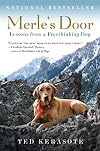
Interesting volume from a man who clearly loved his dog bigtime. There are some wonderful moments of shining love in this book. I thought maybe the author was a bit preachy about only eating wild meat he'd killed himself - it was as if somehow the rest of us are supposed to access this food source. Also I wasn't really pleased reading about his opinion about avoiding neutering surgery since dogs are beautiful in their natural state. Well, yes, perhaps so, but I'd certainly have trouble show more dealing with she-doggie sanitary supplies. Not to mention that your average person is so irresponsible with their pets that we have created a holocaust of pet euthanizations at our nation's animal shelters. It would be nice if we were all independently employed, eating off the land and could supervise free-ranging lifestyles for our dogs. Perhaps Wild Man Ted is a bit out of touch with the exigencies of suburban living. show less
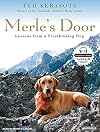
Ted Kerasote and his friends found a dog on a river boating trip, and Ted, who'd been looking for the right new dog for a while, fell in love.
Merle was perhaps ten months old, a Labrador mix, perhaps born on an Indian reservation. Shy of people at first, he grew to trust Ted in the course of the river trip. He was wary of sticks, and wouldn't fetch. When Ted brought him home to Wyoming, both their lives change.
This is both a fascinating and a frustrating book. Ted and Merle have a wonderful, show more rich relationship, and most of us with much-loved dogs feel pretty confident we can interpret our dogs' side of our interactions, just as Ted does. We've experienced the joy of getting to know a new dog in our lives, and growing into a relationship.
But Merle was half-wild and had been surviving on his own for a while when Ted found him. He's got both survival skills and a committed habit of roaming his territory that a pup raised in a family would be far less likely to have. Full grown, he's seventy pounds. And Ted brings him home to Kelly, Wyoming, a tiny village inside the boundaries of Yellowstone National Park, a village with little vehicular traffic and an established custom of free-roaming dogs.
Kerasote thinks that dogs who live inside full-time, walk on leashes, and are crate-trained only seem to be happy because they're suffering from Stockholm Syndrome. He goes on a long rant about how clicker training and positive reinforcement training reduce dogs to automata unable make their own decisions--and then, much later in the book, reveals that Karen Pryor, a major early proponent of clicker training, and a trainer of trainers in clicker training and positive reinforcement, is his favorite behaviorist.
He's got two examples from Merle's life that, in his mind, demonstrate the failure of positive reinforcement training and why punishment works better. One involves Merle chasing cattle, a behavior which he has to be cured of quickly, and Ted uses a choke collar and a long line to convince him it's a Really Bad Idea. (Why does Merle have to be cured of this quickly? Because he's a free-roaming dog, and ranchers and farmers shoot dogs who harass the livestock.)
The other instance is when Merle acquires the habit of making regular visits to a woman in the village who feeds him as much as he'll eat of extremely tasty foods, including meats prepared in extremely fatty ways. Attempts to talk to the woman about the harm to Merle's health that will result from the fact that the formerly lean and muscular dog is getting fat on this all-you-can-eat high-calorie diet are unproductive. So Ted finally resorts to using a shock collar to make visits to the woman's home seriously unpleasant.
What Ted misses in discussing both these incidents is that, far from showing that positive reinforcement doesn't work, these two problem behaviors were highly self-reinforcing. And while there are other things that could have been done about the woman feeding Merle excessively, the cattle-chasing had to end immediately, or Merle would have been killed.
Another amusing feature is that these appear to have been the only two occasions when he used anything that could be called punishment or correction on Merle, while he and Merle used positive reinforcement on each other for pretty much everything else. His admiration for Karen Pryor is more in accord with his real behavior than his contempt for all those other positive trainers.
That doesn't stop him from scolding about the misguided fools who look at misbehaving dogs and recommend exercise, mental stimulation, and crate training for them because they are bored and under-exercised. He says there's something perfectly natural going on; that dogs are supposed to roam freely, live like dogs, and make decisions!
He's right. There is something perfectly natural going on. And it's that dogs need exercise and mental stimulation, and if they don't get it, the excess energy and the mental boredom lead them to find something, anything, to do, and perfectly natural dog behavior, such as a love of chewing things, becomes destructive.
And we don't all have seventy-pound dogs with wilderness survival skills, and live in a tiny village in Yellowstone National Park. Putting in a dog door and letting them roam isn't a viable solution for everyone, or every dog.
But regular walks, visits to the dog park, involvement in dog activities, and provision of appropriate chew toys and food dispensing toys that let dogs use their brains to work out how to get their food provide the physical, mental, and social stimulation dogs need--the things Merle got by free roaming in a community where that was both safe and accepted. Correctly done, crate training makes the crate the dog's own space, a comfortable and secure space the dog can use when he needs a break from people and their antics. It also reduces a bit the inevitable stress when a dog has to be left at the vet's, if crating is already a known experience with some positive associations.
For all those criticisms, though, this is a fascinating and moving story of a man and a dog who were truly soul mates. It's a beautiful relationship and a wonderful story. You'll love Merle, and Ted's relationship with him. Interwoven with that story is the research on dogs that Ted read and absorbed, while working to deepen his understanding and appreciation of a remarkable dog.
Recommended.
I borrowed this book from the library. show less
Merle was perhaps ten months old, a Labrador mix, perhaps born on an Indian reservation. Shy of people at first, he grew to trust Ted in the course of the river trip. He was wary of sticks, and wouldn't fetch. When Ted brought him home to Wyoming, both their lives change.
This is both a fascinating and a frustrating book. Ted and Merle have a wonderful, show more rich relationship, and most of us with much-loved dogs feel pretty confident we can interpret our dogs' side of our interactions, just as Ted does. We've experienced the joy of getting to know a new dog in our lives, and growing into a relationship.
But Merle was half-wild and had been surviving on his own for a while when Ted found him. He's got both survival skills and a committed habit of roaming his territory that a pup raised in a family would be far less likely to have. Full grown, he's seventy pounds. And Ted brings him home to Kelly, Wyoming, a tiny village inside the boundaries of Yellowstone National Park, a village with little vehicular traffic and an established custom of free-roaming dogs.
Kerasote thinks that dogs who live inside full-time, walk on leashes, and are crate-trained only seem to be happy because they're suffering from Stockholm Syndrome. He goes on a long rant about how clicker training and positive reinforcement training reduce dogs to automata unable make their own decisions--and then, much later in the book, reveals that Karen Pryor, a major early proponent of clicker training, and a trainer of trainers in clicker training and positive reinforcement, is his favorite behaviorist.
He's got two examples from Merle's life that, in his mind, demonstrate the failure of positive reinforcement training and why punishment works better. One involves Merle chasing cattle, a behavior which he has to be cured of quickly, and Ted uses a choke collar and a long line to convince him it's a Really Bad Idea. (Why does Merle have to be cured of this quickly? Because he's a free-roaming dog, and ranchers and farmers shoot dogs who harass the livestock.)
The other instance is when Merle acquires the habit of making regular visits to a woman in the village who feeds him as much as he'll eat of extremely tasty foods, including meats prepared in extremely fatty ways. Attempts to talk to the woman about the harm to Merle's health that will result from the fact that the formerly lean and muscular dog is getting fat on this all-you-can-eat high-calorie diet are unproductive. So Ted finally resorts to using a shock collar to make visits to the woman's home seriously unpleasant.
What Ted misses in discussing both these incidents is that, far from showing that positive reinforcement doesn't work, these two problem behaviors were highly self-reinforcing. And while there are other things that could have been done about the woman feeding Merle excessively, the cattle-chasing had to end immediately, or Merle would have been killed.
Another amusing feature is that these appear to have been the only two occasions when he used anything that could be called punishment or correction on Merle, while he and Merle used positive reinforcement on each other for pretty much everything else. His admiration for Karen Pryor is more in accord with his real behavior than his contempt for all those other positive trainers.
That doesn't stop him from scolding about the misguided fools who look at misbehaving dogs and recommend exercise, mental stimulation, and crate training for them because they are bored and under-exercised. He says there's something perfectly natural going on; that dogs are supposed to roam freely, live like dogs, and make decisions!
He's right. There is something perfectly natural going on. And it's that dogs need exercise and mental stimulation, and if they don't get it, the excess energy and the mental boredom lead them to find something, anything, to do, and perfectly natural dog behavior, such as a love of chewing things, becomes destructive.
And we don't all have seventy-pound dogs with wilderness survival skills, and live in a tiny village in Yellowstone National Park. Putting in a dog door and letting them roam isn't a viable solution for everyone, or every dog.
But regular walks, visits to the dog park, involvement in dog activities, and provision of appropriate chew toys and food dispensing toys that let dogs use their brains to work out how to get their food provide the physical, mental, and social stimulation dogs need--the things Merle got by free roaming in a community where that was both safe and accepted. Correctly done, crate training makes the crate the dog's own space, a comfortable and secure space the dog can use when he needs a break from people and their antics. It also reduces a bit the inevitable stress when a dog has to be left at the vet's, if crating is already a known experience with some positive associations.
For all those criticisms, though, this is a fascinating and moving story of a man and a dog who were truly soul mates. It's a beautiful relationship and a wonderful story. You'll love Merle, and Ted's relationship with him. Interwoven with that story is the research on dogs that Ted read and absorbed, while working to deepen his understanding and appreciation of a remarkable dog.
Recommended.
I borrowed this book from the library. show less
Seriously one of the best books I've read in 2012. Ok, it's still January, but this one was fantastic from start to finish. I hit the jackpot when I picked this up at the library. Having been to the area of Wyoming where the author lives and writes about, it was captivating. The revealing way Kerasote writes about the connections with animals which are so personal and real, his thoughts on paper truly resonated with me and I could appreciate that. It was a very entertaining book in which I show more laughed dozens of times and also cried for the last two chapters. Truly heartbreaking and my husband thought I was having a breakdown.
Back to the beginning, I love how the author said that the dog picked him and that was that. I get that. I remember when I picked our rescue out of a line-up, I sensed this dog was going to be great. He looked pathetic at the shelter, but he has blossomed into the best dog for our family and our lives are so much richer with him, not to mention hairier and smellier. But, it's worth it. show less
Back to the beginning, I love how the author said that the dog picked him and that was that. I get that. I remember when I picked our rescue out of a line-up, I sensed this dog was going to be great. He looked pathetic at the shelter, but he has blossomed into the best dog for our family and our lives are so much richer with him, not to mention hairier and smellier. But, it's worth it. show less
Lists
Awards


You May Also Like


Associated Authors
Statistics
- Works
- 9
- Members
- 1,714
- Popularity
- #14,982
- Rating
- 4.2
- Reviews
- 65
- ISBNs
- 39
- Languages
- 3
- Favorited
- 2