
Joe Coomer
Author of Beachcombing for a Shipwrecked God
Works by Joe Coomer
Tagged
Common Knowledge
- Canonical name
- Coomer, Joe
- Birthdate
- 1959
- Gender
- male
- Occupations
- writer
author
novelist - Agent
- Elaine Markson (Elaine Markson Agency)
- Nationality
- USA
- Places of residence
- Fort Worth, Texas, USA
Stonington, Maine, USA - Associated Place (for map)
- USA
Members
Reviews
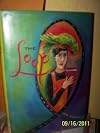
There are echoes of both ‘The Rosie Project’ and ‘A Man Called Ove’ in Joe Coomer’s clever and poignant ‘The Loop’. The main character, Lyman, has an orderly but closed-off life which is gradually forced open by events beyond his control. He drives a “courtesy patrol van” on the graveyard shift, endlessly circling Fort Worth on its bypass freeway loop, assisting stranded motorists, picking up debris, and all too often removing and burying animals who have wandered onto the show more highway with fatal results. He fills his non-working hours with an endless succession of classes at the local community college, but has neither plan nor desire to achieve a diploma.
Then one day, as he sits looking out his screen door with his midafternoon “breakfast” coffee, a parrot appears out of nowhere, perches itself on the door handle, and invites itself into his life.
And not just any parrot. This one has a vocabulary ranging from philosophical biblical quotes to scatological insults with stops along the way for such nuggets as “I’m an eagle” and “give some to the parrot”. Lyman quickly becomes obsessed with the bird, searching for its original owner in an attempt to understand the meaning behind some of its more obscure utterances.
This is because Lyman, up to this point, has lived a life in which absolutely nothing seemed to have any real meaning. Orphaned as an infant and reared in a succession of orphanages and foster homes, he observed that effects did not seem to follow causes. Good behavior and bad were randomly rewarded or punished by some faceless fate, and a life devoted to endlessly circling the same loop of asphalt seemed as meaningful or meaningless as any other occupation. Therefore, the notion that the parrot is somehow providing information that will reveal some deeper meaning and pattern to life is irresistible to him.
The search for the parrot’s previous owner (or owners, as it turns out) begins with a quirky female librarian bearing a 1910 telephone book, and ends in a way that is both satisfying and surprising. Along the way, Lyman begins to see that the patterns he’s been searching for don’t have to carry hidden meanings in order to be real, and that the most important way to live well may be to get off the loop and open his life to the new and unexpected.
Coomer has written an engaging tale, and if he sets up an immense coincidence to begin to bring things to closure, he can be forgiven. For one thing, the arc of the book has been moving in this direction all along, and for another, the reader is rooting for a happy ending for everyone involved (human and otherwise). show less
Then one day, as he sits looking out his screen door with his midafternoon “breakfast” coffee, a parrot appears out of nowhere, perches itself on the door handle, and invites itself into his life.
And not just any parrot. This one has a vocabulary ranging from philosophical biblical quotes to scatological insults with stops along the way for such nuggets as “I’m an eagle” and “give some to the parrot”. Lyman quickly becomes obsessed with the bird, searching for its original owner in an attempt to understand the meaning behind some of its more obscure utterances.
This is because Lyman, up to this point, has lived a life in which absolutely nothing seemed to have any real meaning. Orphaned as an infant and reared in a succession of orphanages and foster homes, he observed that effects did not seem to follow causes. Good behavior and bad were randomly rewarded or punished by some faceless fate, and a life devoted to endlessly circling the same loop of asphalt seemed as meaningful or meaningless as any other occupation. Therefore, the notion that the parrot is somehow providing information that will reveal some deeper meaning and pattern to life is irresistible to him.
The search for the parrot’s previous owner (or owners, as it turns out) begins with a quirky female librarian bearing a 1910 telephone book, and ends in a way that is both satisfying and surprising. Along the way, Lyman begins to see that the patterns he’s been searching for don’t have to carry hidden meanings in order to be real, and that the most important way to live well may be to get off the loop and open his life to the new and unexpected.
Coomer has written an engaging tale, and if he sets up an immense coincidence to begin to bring things to closure, he can be forgiven. For one thing, the arc of the book has been moving in this direction all along, and for another, the reader is rooting for a happy ending for everyone involved (human and otherwise). show less
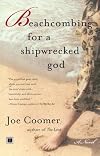
This is a lovely, quiet book about relationships between women--in this case, three women at different periods of their lives who come together to support each other while living on a houseboat. It's not sentimental or maudlin but rather a realistic look at how we deal with tragedy and the unexpected, whether that be a surprise pregnancy and abusive boyfriend, the death of a husband, or our own mental decline, by just soldiering on. There is a lot of archaeology in this book (and I think a show more recent visit to the Jamestown dig helped me understand what was going on in those parts), and also a lovely tribute to [Anne of Green Gables]. For me, it was surprising that this book was written by a man, but that is what can happen when women characters are depicted as just people--it helps us see how much we all have in common and how our friendships can sustain us sometimes even better than our romantic or family relationships. show less
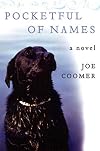
One of the most powerful, thought-provoking books I've read this year. Our book club chose this one for its setting and to a person agreed that the setting was a large contributor to the depth and richness of the story.
Hannah is an artist who has come to live on Ten Acre No Nine Island which she inherited from her uncle Arno. She hasn't been to the island in 8 years since she'd spent summers with her uncle. Now that he's dead, she wants nothing more than to be left alone so she can show more paint and sculpt. That's who she is--at least that's who she thinks she is. As the story opens, a scruffy old mutt who has obviously fallen into the water someplace offshore, manages to beach himself on her island. When she discovers him, she cannot figure out what to do with him, reluctantly names him "Driftwood" and allows him into her life.
As the months progress, others arrive on her island and each time, Hannah must decide whether to allow them to stay, how to relate to them, what they ultimately will mean to them. She continues to paint and to sculpt, but finds the constant stream of people in her life are gradually skewing her perception of solitude. Was she lonely?
The story of Hannah, her dog, her friends, the townspeople on the mainland, her half-sister, a runaway teen fleeing an abusive father, and her uncle are all intertwined in a beautiful tale of life and loss and caring and sharing. Coomer gives us a wide panoply of characters who represent the whole spectrum of life in Maine. There are warring lobstermen, hard working high school students, disabled veterans, demented elders, beached whales, tourists, and homeless relatives. How and whether Hannah allows each of these into her life, into her heart, is the story. It's a glorious story, beautifully written, with simple words, complex thoughts, and all the beauty life on the rugged shores of Maine can provide.
One of my ten best of the year. show less
Hannah is an artist who has come to live on Ten Acre No Nine Island which she inherited from her uncle Arno. She hasn't been to the island in 8 years since she'd spent summers with her uncle. Now that he's dead, she wants nothing more than to be left alone so she can show more paint and sculpt. That's who she is--at least that's who she thinks she is. As the story opens, a scruffy old mutt who has obviously fallen into the water someplace offshore, manages to beach himself on her island. When she discovers him, she cannot figure out what to do with him, reluctantly names him "Driftwood" and allows him into her life.
As the months progress, others arrive on her island and each time, Hannah must decide whether to allow them to stay, how to relate to them, what they ultimately will mean to them. She continues to paint and to sculpt, but finds the constant stream of people in her life are gradually skewing her perception of solitude. Was she lonely?
The story of Hannah, her dog, her friends, the townspeople on the mainland, her half-sister, a runaway teen fleeing an abusive father, and her uncle are all intertwined in a beautiful tale of life and loss and caring and sharing. Coomer gives us a wide panoply of characters who represent the whole spectrum of life in Maine. There are warring lobstermen, hard working high school students, disabled veterans, demented elders, beached whales, tourists, and homeless relatives. How and whether Hannah allows each of these into her life, into her heart, is the story. It's a glorious story, beautifully written, with simple words, complex thoughts, and all the beauty life on the rugged shores of Maine can provide.
One of my ten best of the year. show less
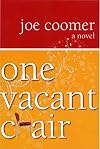
I discovered Joe Coomer's books years ago through another reading friend's recommendation. Then I chose one of his books for my summer book club last summer to help spread the word a bit farther. There's just something wonderful about the quirky characters he creates and the way in which he can tackle deep philosophical issues in the guise of a humorous, thinking novel that makes his work shine. One Vacant Chair is the latest I've read and thoroughly enjoyed.
This novel opens with the Hutton show more family gathering for the memorial service to bury their mother and grandmother. Edna, an unmarried school cafeteria worker and artist who paints portraits of chairs had taken care of her cantankerous, bedridden mother for twenty odd years. But Edna (and grandma) lived lives that would have surprised the rest of the family and after the reading of the will where grandma asked for her ashes to be scattered in Scotland, a place she'd never been, the details of their lives start to emerge. Sarah, Edna's niece, reeling from her husband's infidelity, offers to stay and help her aunt pull together all the lose ends involved in international travel for those who have never left home. She also has the chance to observe her aunt's artistic process and to get in touch her own artistic roots while in the presence of a wonderful artist, one who will be revered posthumously as small comments scattered throughout Sarah's telling of the story make clear. While living with Edna and then traveling with her to Scotland, Sarah learns the secrets, large and small, of her aunt's life and comes face to face with the delicate realities of living and dying.
On the surface, a quirky tale filled with unusual characters, Coomer has a knack for delving deeply into the things that drive our lives. Here the examination is not only of life and death as points on the same continuum but also of the place of family and love on our own personal time lines. With Sarah telling the story from the benefit of hindsight, the reader knows much of the territory that the narrative will cover but that doesn't make it dismissively predictable. Instead, it freights the conversations between Sarah and aunt Edna with more portents than perhaps would have been possible otherwise. And still there are major twists that are surprising in their deviation from the expected. As the two women travel through Scotland doling out ashes in the places they have chosen, they each struggle with the path their lives are on, trying to find the right thing for themselves in balance with those surrounding them. The book is never preachy and always accessible but it is full of the symbolic and the philosophical. It is beautifully presented and entertainingly drawn, well-written and appealing. You'll warm to the characters, ache with their indecision and weaknesses, and laugh with their eccentricities. You might even learn something about art and art process (I sure did). Readers looking for an unusual story will be richly rewarded with this one. It's a gem. show less
This novel opens with the Hutton show more family gathering for the memorial service to bury their mother and grandmother. Edna, an unmarried school cafeteria worker and artist who paints portraits of chairs had taken care of her cantankerous, bedridden mother for twenty odd years. But Edna (and grandma) lived lives that would have surprised the rest of the family and after the reading of the will where grandma asked for her ashes to be scattered in Scotland, a place she'd never been, the details of their lives start to emerge. Sarah, Edna's niece, reeling from her husband's infidelity, offers to stay and help her aunt pull together all the lose ends involved in international travel for those who have never left home. She also has the chance to observe her aunt's artistic process and to get in touch her own artistic roots while in the presence of a wonderful artist, one who will be revered posthumously as small comments scattered throughout Sarah's telling of the story make clear. While living with Edna and then traveling with her to Scotland, Sarah learns the secrets, large and small, of her aunt's life and comes face to face with the delicate realities of living and dying.
On the surface, a quirky tale filled with unusual characters, Coomer has a knack for delving deeply into the things that drive our lives. Here the examination is not only of life and death as points on the same continuum but also of the place of family and love on our own personal time lines. With Sarah telling the story from the benefit of hindsight, the reader knows much of the territory that the narrative will cover but that doesn't make it dismissively predictable. Instead, it freights the conversations between Sarah and aunt Edna with more portents than perhaps would have been possible otherwise. And still there are major twists that are surprising in their deviation from the expected. As the two women travel through Scotland doling out ashes in the places they have chosen, they each struggle with the path their lives are on, trying to find the right thing for themselves in balance with those surrounding them. The book is never preachy and always accessible but it is full of the symbolic and the philosophical. It is beautifully presented and entertainingly drawn, well-written and appealing. You'll warm to the characters, ache with their indecision and weaknesses, and laugh with their eccentricities. You might even learn something about art and art process (I sure did). Readers looking for an unusual story will be richly rewarded with this one. It's a gem. show less
Lists
Awards


You May Also Like


Associated Authors
Statistics
- Works
- 13
- Members
- 1,145
- Popularity
- #22,428
- Rating
- 3.9
- Reviews
- 35
- ISBNs
- 45
- Languages
- 1
- Favorited
- 5


