
A. J. Lake
Author of The Coming of Dragons
About the Author
Series
Works by A. J. Lake
Associated Works
Tagged
Common Knowledge
- Legal name
- Carey, Linda
- Birthdate
- 1959
- Gender
- female
- Occupations
- writer
- Relationships
- Carey, Mike (husband)
Carey, Louise (daughter) - Short biography
- Pseudonym of Working Partners.
- Nationality
- UK
- Places of residence
- North London, England, UK
- Associated Place (for map)
- England, UK
Members
Reviews
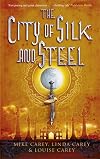
Do you want to read an epic, action-packed and emotionally rich fantasy novel that centres around amazing women? Do you want to read about lady assassins, oracles, diplomats, soldiers, con-artists, dancers, bakers and librarians kicking ass? Do you like stories about women protecting each other, teaching each other, forming communities, and sometimes having sex and falling in love with each other? And would you like to see a fantasy setting that’s not pseudo medieval Europe but pseudo show more pre-Islam Middle East, and a cast of hundreds without a single white person in the bunch? Then do I ever have a book for you! This is the story of almost four hundred concubines and illegitimate children who were ordered to be killed when their sultan was overthrown, who found a way to not only survive, but thrive, and then take their city back. It’s awesome, and not nearly as well-known as it deserves to be. show less
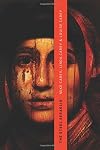
I would have to preface this review by stating The Steel Seraglio, by Carey, Carey and Carey, is an ambitious work, a literary etude or variation on the legendary collection of Islamic tales we’ve come to know as One Thousand and One Nights. Like its historical counterpart, it is a tale within many tales, complete with unreliable narrator, and with an oblique homage to some of the original characters (al-Rashid and Jafar among them).
The overarching story, that of a discarded seraglio of show more some 365 concubines, is one that has a very modern, very feminine resonance, and is written with such elegance it is as incisive and horribly fascinating as Margaret Atwood’s A Handmaid’s Tale.
To summarize, a fundamentalist zealot overthrows the sultan of the city of Bessa, slaughters the royal wives and children, and turns off the seraglio to a neighbouring grandee. As the seraglio crosses the desert, harbouring one male, royal survivor, the usurping zealot, Hakkim Mehdad discovers the treachery of the seraglio and sends out troops to annihilate them.
What ensues is a cunning escape, a temporary reprieve among desert thieves, and a triumphant recapture of Bessa. The seraglio of perfume and delicacy has become one of steel, and together the women create an economic and political power that becomes legend throughout the lands.
But as with every paradise, there is doom, in this case in the form of the disinherited royal prince, Jafar. This second tale is one of faceted tragedies.
The main story is beautifully realized, intelligent, witty, evocative of the parched heat of the desert and the olfactory indulgence of the spice markets. It lives and breathes.
However—and yes there is an however—some of the supplemental stories, woven throughout, are told with a very modern voice, almost flippant in delivery and so completely foreign to the elegance of the main body of work, that I found these passages intrusive. Indeed, they entirely arrested the flow of the work and the pacing of action. It is for this reason, and this reason alone, I couldn’t give The Steel Seraglio the five stars it would have otherwise merited.
Even so, that one criticism aside, The Steel Seraglio is one of the fine literary novels of 2012. show less
The overarching story, that of a discarded seraglio of show more some 365 concubines, is one that has a very modern, very feminine resonance, and is written with such elegance it is as incisive and horribly fascinating as Margaret Atwood’s A Handmaid’s Tale.
To summarize, a fundamentalist zealot overthrows the sultan of the city of Bessa, slaughters the royal wives and children, and turns off the seraglio to a neighbouring grandee. As the seraglio crosses the desert, harbouring one male, royal survivor, the usurping zealot, Hakkim Mehdad discovers the treachery of the seraglio and sends out troops to annihilate them.
What ensues is a cunning escape, a temporary reprieve among desert thieves, and a triumphant recapture of Bessa. The seraglio of perfume and delicacy has become one of steel, and together the women create an economic and political power that becomes legend throughout the lands.
But as with every paradise, there is doom, in this case in the form of the disinherited royal prince, Jafar. This second tale is one of faceted tragedies.
The main story is beautifully realized, intelligent, witty, evocative of the parched heat of the desert and the olfactory indulgence of the spice markets. It lives and breathes.
However—and yes there is an however—some of the supplemental stories, woven throughout, are told with a very modern voice, almost flippant in delivery and so completely foreign to the elegance of the main body of work, that I found these passages intrusive. Indeed, they entirely arrested the flow of the work and the pacing of action. It is for this reason, and this reason alone, I couldn’t give The Steel Seraglio the five stars it would have otherwise merited.
Even so, that one criticism aside, The Steel Seraglio is one of the fine literary novels of 2012. show less
**I am grateful to Nudge for providing me with a free review copy in exchange for an honest review.**
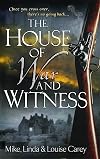
An Austrian infantry regiment is despatched to a small village on the border between Silesia (belonging to the Austro-Hungarian empire) and neighbouring Prussia, to show a military presence and to protect the villagers from any potential Prussian incursions. The posting is remote, the villagers are regarded on the whole as yokels and simpletons by the officers, and no one seriously expects show more that any fighting will take place for the duration of their stay at a mansion on the outskirts of Narutsin, the titular house of war and witness. Drozde, one of the female camp followers, is a puppeteer, and gifted with the ability to see ghosts – and there are a lot of them at Pokoj, but these ghosts are very different from any she has encountered before: they are more solid and, very strangely, they greet her by name as an old friend.
Sensing that the villagers have got something to hide, the colonel in charge of the detachment orders one of his lieutenants to gather information, starting with the household of the mayor, Burgomaster Weichorek. What he eventually uncovers, combined with a serious incident between the villagers and some of the soldiers, leads to a complete breakdown of relations between the two parties, and an explosive showdown.
Written by a husband and wife team, along with their daughter, the premise of the novel is based on true historical events, namely the outbreak of the First Silesian War in late autumn of 1740, but this is merely incidental to the plot of the story. It is the build-up that really matters and makes up the bulk of the novel (all of 500+ pages); even though it takes about 200 pages for events to be set in motion, it is definitely worth persevering, as the action to come builds on the characters previously established, and what characters they are! The team of writers have managed to create a very varied and colourful set of main protagonists: from the already mentioned Drozde to the inexperienced but honourable Lieutenant Klaes, to the self-important Colonel August and the cruel and humourless quartermaster Sergeant Molebacher, and many more besides; even the ghosts are characters in their own right. The excellent writing conjures up a real sense of the atmosphere of the times, with its European power struggles, with an insignificant regiment about to be thrust into the centre of events and history, as well as of place, with Pokoj’s dilapidated and crumbling ruins. The novel has many layers to it and works on so many levels, but is, in essence, a novel about the power of the word, of story telling, which Drozde does so expertly.
I was expecting this to be a straightforward haunted house story, but it’s anything but; in fact, it is much better, even though it does take an awfully long time to get going: one could call it a work of historical fiction that happens to have ghosts in it. If you like your fiction to follow an established, tried-and-tested formula, then prepare to be disappointed; if, on the other hand, you like to veer off the trodden path now and then when it comes to reading matters, you could do a whole lot worse than spending a few days in the company of Drozde, the ghosts at Pokoj and the soldiers of the nameless infantry regiment – and any book that features the word "pusillanimous" deserves to be read for that fact alone! show less
An Austrian infantry regiment is despatched to a small village on the border between Silesia (belonging to the Austro-Hungarian empire) and neighbouring Prussia, to show a military presence and to protect the villagers from any potential Prussian incursions. The posting is remote, the villagers are regarded on the whole as yokels and simpletons by the officers, and no one seriously expects show more that any fighting will take place for the duration of their stay at a mansion on the outskirts of Narutsin, the titular house of war and witness. Drozde, one of the female camp followers, is a puppeteer, and gifted with the ability to see ghosts – and there are a lot of them at Pokoj, but these ghosts are very different from any she has encountered before: they are more solid and, very strangely, they greet her by name as an old friend.
Sensing that the villagers have got something to hide, the colonel in charge of the detachment orders one of his lieutenants to gather information, starting with the household of the mayor, Burgomaster Weichorek. What he eventually uncovers, combined with a serious incident between the villagers and some of the soldiers, leads to a complete breakdown of relations between the two parties, and an explosive showdown.
Written by a husband and wife team, along with their daughter, the premise of the novel is based on true historical events, namely the outbreak of the First Silesian War in late autumn of 1740, but this is merely incidental to the plot of the story. It is the build-up that really matters and makes up the bulk of the novel (all of 500+ pages); even though it takes about 200 pages for events to be set in motion, it is definitely worth persevering, as the action to come builds on the characters previously established, and what characters they are! The team of writers have managed to create a very varied and colourful set of main protagonists: from the already mentioned Drozde to the inexperienced but honourable Lieutenant Klaes, to the self-important Colonel August and the cruel and humourless quartermaster Sergeant Molebacher, and many more besides; even the ghosts are characters in their own right. The excellent writing conjures up a real sense of the atmosphere of the times, with its European power struggles, with an insignificant regiment about to be thrust into the centre of events and history, as well as of place, with Pokoj’s dilapidated and crumbling ruins. The novel has many layers to it and works on so many levels, but is, in essence, a novel about the power of the word, of story telling, which Drozde does so expertly.
I was expecting this to be a straightforward haunted house story, but it’s anything but; in fact, it is much better, even though it does take an awfully long time to get going: one could call it a work of historical fiction that happens to have ghosts in it. If you like your fiction to follow an established, tried-and-tested formula, then prepare to be disappointed; if, on the other hand, you like to veer off the trodden path now and then when it comes to reading matters, you could do a whole lot worse than spending a few days in the company of Drozde, the ghosts at Pokoj and the soldiers of the nameless infantry regiment – and any book that features the word "pusillanimous" deserves to be read for that fact alone! show less
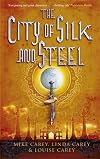
I was initially under the misapprehension that 'The City of Silk and Steel' was high fantasy. It's actually more like historical or mythic fiction with a few supernatural elements, which I found much more unusual and interesting. The plot centres upon a harem of 365 women, their children, and their maids who are sent out into the desert after their sultan is deposed and murdered by a religious fanatic. Their fight for survival and return to the city they were exiled from are recounted in a show more sequence of stories, which also emphasise the importance of storytelling itself. The supernatural elements are largely limited to a character that can see the future, although it is of little benefit to her as the branching possibilities are hard to follow. Outcomes are not decided by the use of magic but by strategy, collaboration, diplomacy, and choices between compassion and cruelty. I loved the emphasis on the importance of the harem woman forming a community, combining their skills and abilities to achieve great things. Although many of the stories revolve around a few main characters, the reader also sees snapshots of many others, giving a powerful sense of the community as a whole.
I found the plot highly involving, although the polyphonic story approach did make the pace somewhat inconsistent. Nonetheless, there are some spectacular action scenes and brutal battles, not to mention ingenious plans. I was especially invested in Rem the librarian and enjoyed her romance subplot with Zuleika the assassin . Gursoon the sensible and pragmatic leader was likewise a wonderful character. On the other hand, the male antagonists were sadly plausible in their motivations and cruel actions. The tone managed to be convincingly epic, which is no mean feat. I appreciated the combination of second-hand mythologising and first-hand experience of the city of women, achieved via a few strong voices backed by a chorus of others. The city and its surroundings are quite vivid, although perhaps not as much so as the characters. It was a brilliant idea to centre a novel upon a harem retaking their home, which I realised part-way through is also the plot of Mad Max: Fury Road. In effect, 'The City of Silk and Steel' sets the same basic events two thousand years earlier, with a much larger cast and more complex events. It has the same spirit as the film, though, which makes for a very enjoyable reading experience. show less
I found the plot highly involving, although the polyphonic story approach did make the pace somewhat inconsistent. Nonetheless, there are some spectacular action scenes and brutal battles, not to mention ingenious plans. I was especially invested in Rem the librarian and enjoyed her romance subplot
Lists
Awards


You May Also Like


Associated Authors
Statistics
- Works
- 6
- Also by
- 1
- Members
- 697
- Popularity
- #36,316
- Rating
- 3.6
- Reviews
- 25
- ISBNs
- 52
- Languages
- 7