
Darren Craske
Author of The Equivoque Principle
Series
Works by Darren Craske
Tagged
Common Knowledge
- Gender
- male
Members
Reviews
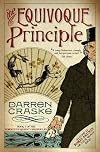
I don't usually review books that I haven't finished reading, but as a public service I'm posting my thoughts about The Equivoque Principle, by Darren Craske, here at LibraryThing. The premise is interesting - in 1853 London, a traveling circus comes to town just as a series of murders are taking place; naturally the circus's strong man is accused, and it's up to the conjurer and circus owner Cornelius Quaint and his Eskimo sidekick Butter to solve the crimes and secure the strong man's show more freedom. This is the first in what is described as a series of either 3 or 4 books (depending on whose reviews you read), and it sounds like it could be a fun entry in the historical mystery arena. But: third paragraph on page 1 includes the term "smog" (not coined until 1905), on the next page someone is "tasked" to do something (modern usage), later on the term "anorak" is used several times to describe the Eskimo's clothing (term not used in English until 1924), we get phrases like "the mother of all indigestions" (modern usage) and repetitive phrases ("massive iron door" followed 2 sentences later in the same paragraph with "massive metal door"), and, finally, the Eskimo being called an "Inuit" (not in use until the mid-20th Century). All this before page 30, which is when I stopped reading....The author in his "Acknowledgements" page at the beginning of the book includes this bit of bravado: "And lastly, but by no means leastly, the person without whom this book would never have happened, I would like to thank myself for having the determined doggedness to keep writing no matter what hurdles life threw in my path." I was initially amused, but also thought "this guy better have the chops to live up to that display of hubris." As the afore-listed sloppy writing, lack of any research into the period and extremely intrusive anachronisms show, it's clear this author does not have the chops. A pity, as it was an intriguing premise, but please don't waste your money or time on this piece of junk. show less

It’s not often I’ll write a review of a book, but it’s not often I get to read something so very, very different.
This is not a normal book, IT’S GREAT!
Right, that’s got the pull quote out of the way… which should make someone happy.
Now, what to say about the book per se… well… now comes the trickier part, because at least 90% of the joy of reading this is the constantly nagging question in the mind of _what the hell is going on here?_ It’s not often that one can really have show more the feeling of discovering things along with the characters; typically one has a rough notion of where things are going ahead of time.
Not with this. No no.
Initially it seems like a fresh take on the set-up presented in *Arthur Machen*’s 1917 novella _The Terror_, which also provided the starting structure of the Benji Spriteman Mysteries _The Terror and the Tortoiseshell_ and _The Designated Coconut_. That’s just the starting point, however.
Once we’re past that… Lordy does the thing get up to cruising altitude quickly, and it stays there right until the end. Imagine trying to explain _The Hitchhiker’s Guide to the Galaxy_ to someone who’s never even heard of it. How does one go from _there’s a guy who’s going to get his house knocked over for a road…_ all the way to _meeting a man who has two heads and three arms and who happens to be the Galactic President…_ without losing all credibility? You’ve barely got into the story at that point, as well.
Were any of the plot provided, too much would be given away. No, really: anything more than what you already have would ruin the surprise. There’s much in here to exclaim loudly at the page _*what?* Are you insane?_ In a good way, obviously.
The characters are wonderfully developed over the length of the tale, the settings are excellently detailed, and the dialogue is grand stuff with all sorts of witty back-and-forth.
If there is any shortcoming to the book, it’s that it might benefit from a tiny bit of careful, very precise, surgical-style editing. Hastening to emphasis the ‘tiny’ aspect of the criticism, as there’s so much to enjoy that someone simply looking for _a dashed good read_ wouldn’t see a single thing wrong it. I just happen to be a bit more picky, which doesn’t make me any better, it merely makes me “different.”
The first chapter is considerably longer than the rest of them, but does have the herculean task of providing the entire back story of the protagonist and his relatives. While there might be some way to break-up this block of material some way — possibly through the sort involving an initial arrival in Royal Street Station with a large tiger leaping at our hero, followed by a statement of the _…but let me back up and tell you how I got here…_ variety — but I’m at a loss to suggest anything precise.
There are other points through the book that the Editor in me had thoughts of _that last last exchange of dialogue ought to be trimmed back…_ as well as an occasional _might be better to shift that ahead of the action it follows right now…_ but those both were few enough in instance to collectively count on one hand, and they’re only mentioned in order for this to not be seen as an altogether glowing and celebratory review. Praise the good, indicate the bits to work harder on next time; that’s my approach.
Honestly, the best suggestion I can make here is the following:
_It’s great, it’s not like anything you’ve encountered before. It’s tough to really say much more, so just *read* it, okay?_ show less
This is not a normal book, IT’S GREAT!
Right, that’s got the pull quote out of the way… which should make someone happy.
Now, what to say about the book per se… well… now comes the trickier part, because at least 90% of the joy of reading this is the constantly nagging question in the mind of _what the hell is going on here?_ It’s not often that one can really have show more the feeling of discovering things along with the characters; typically one has a rough notion of where things are going ahead of time.
Not with this. No no.
Initially it seems like a fresh take on the set-up presented in *Arthur Machen*’s 1917 novella _The Terror_, which also provided the starting structure of the Benji Spriteman Mysteries _The Terror and the Tortoiseshell_ and _The Designated Coconut_. That’s just the starting point, however.
Once we’re past that… Lordy does the thing get up to cruising altitude quickly, and it stays there right until the end. Imagine trying to explain _The Hitchhiker’s Guide to the Galaxy_ to someone who’s never even heard of it. How does one go from _there’s a guy who’s going to get his house knocked over for a road…_ all the way to _meeting a man who has two heads and three arms and who happens to be the Galactic President…_ without losing all credibility? You’ve barely got into the story at that point, as well.
Were any of the plot provided, too much would be given away. No, really: anything more than what you already have would ruin the surprise. There’s much in here to exclaim loudly at the page _*what?* Are you insane?_ In a good way, obviously.
The characters are wonderfully developed over the length of the tale, the settings are excellently detailed, and the dialogue is grand stuff with all sorts of witty back-and-forth.
If there is any shortcoming to the book, it’s that it might benefit from a tiny bit of careful, very precise, surgical-style editing. Hastening to emphasis the ‘tiny’ aspect of the criticism, as there’s so much to enjoy that someone simply looking for _a dashed good read_ wouldn’t see a single thing wrong it. I just happen to be a bit more picky, which doesn’t make me any better, it merely makes me “different.”
The first chapter is considerably longer than the rest of them, but does have the herculean task of providing the entire back story of the protagonist and his relatives. While there might be some way to break-up this block of material some way — possibly through the sort involving an initial arrival in Royal Street Station with a large tiger leaping at our hero, followed by a statement of the _…but let me back up and tell you how I got here…_ variety — but I’m at a loss to suggest anything precise.
There are other points through the book that the Editor in me had thoughts of _that last last exchange of dialogue ought to be trimmed back…_ as well as an occasional _might be better to shift that ahead of the action it follows right now…_ but those both were few enough in instance to collectively count on one hand, and they’re only mentioned in order for this to not be seen as an altogether glowing and celebratory review. Praise the good, indicate the bits to work harder on next time; that’s my approach.
Honestly, the best suggestion I can make here is the following:
_It’s great, it’s not like anything you’ve encountered before. It’s tough to really say much more, so just *read* it, okay?_ show less
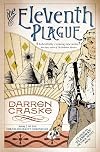
This is the second book in the Cornelius Quaint series, and the events follow straight on from where the first book ends (there is a brief recap of the events in The Equivoque Principle - the first book - for anybody who has not read it).
Cornelius has left most of his beloved circus family behind, to travel to Egypt accompanied only by Madame Destine, the circus fortune teller and faithful friend of Quaint. In Egypt, Quaint has to stop a plan masterminded by the Hades Consortium to poison show more the River Nile and cause death to countless Egyptians. Along the way, he encounters desert thieves, has to deal people who are determined to kill him by any means necessary, and deal with long buried secrets which resurface.
Just as in The Equivoque Principle, this is an enjoyable romp, full of surprising twists and turns - a situation could turn on it's head very rapidly! - and like Quaint himself, the reader is never entirely sure who can be trusted. Our hero is again full of witty quips and smart asides, and I found myself rooting for him all the way through. He and Madame Destine actually find themselves separated for a large portion of the story, and the opportunity is taken for both characters to be explored further. (This was particularly welcome to me in the case of Destine, as she was the one character I found hard to warm to in The Equivoque Principle; I liked her a lot more when reading this book).
Initially I did think that I would miss some of the characters from Quaint's circus troupe, who he takes his leave of in the first few chapters. I especially hoped that his valet Butter might go to Egypt with him, but he was tasked with running the circus in Quaint's absence. However, I actually realised about halfway through the book that I was not missing these characters at all, due to the new characters that were introduced in this book.
The plot is outlandish at times, but I think this must have been entirely intentional - as with the previous book, the book does not take itself too seriously and I don't think the reader should either. It is simply a rip-roaring and highly enjoyable adventure story, which will made me smile. A wonderful bit of escapism - go enjoy:) show less
Cornelius has left most of his beloved circus family behind, to travel to Egypt accompanied only by Madame Destine, the circus fortune teller and faithful friend of Quaint. In Egypt, Quaint has to stop a plan masterminded by the Hades Consortium to poison show more the River Nile and cause death to countless Egyptians. Along the way, he encounters desert thieves, has to deal people who are determined to kill him by any means necessary, and deal with long buried secrets which resurface.
Just as in The Equivoque Principle, this is an enjoyable romp, full of surprising twists and turns - a situation could turn on it's head very rapidly! - and like Quaint himself, the reader is never entirely sure who can be trusted. Our hero is again full of witty quips and smart asides, and I found myself rooting for him all the way through. He and Madame Destine actually find themselves separated for a large portion of the story, and the opportunity is taken for both characters to be explored further. (This was particularly welcome to me in the case of Destine, as she was the one character I found hard to warm to in The Equivoque Principle; I liked her a lot more when reading this book).
Initially I did think that I would miss some of the characters from Quaint's circus troupe, who he takes his leave of in the first few chapters. I especially hoped that his valet Butter might go to Egypt with him, but he was tasked with running the circus in Quaint's absence. However, I actually realised about halfway through the book that I was not missing these characters at all, due to the new characters that were introduced in this book.
The plot is outlandish at times, but I think this must have been entirely intentional - as with the previous book, the book does not take itself too seriously and I don't think the reader should either. It is simply a rip-roaring and highly enjoyable adventure story, which will made me smile. A wonderful bit of escapism - go enjoy:) show less
First a word of explanation - Equivocation is the magician's art making an outcome seem intended when in reality there are several outcomes - but all of which are prepared for. The punter doesn't know this of course, and so is fooled every time when a card is forced on him, or his mind 'read'. Having checked this out, it was clear that we would be in for a twisty turny ride.
It's 1853 and a serial killer is on the loose in London, and the murders happen to coincide with the arrival of a show more travelling circus run by conjuror Cornelius Quaint. Unfortunately Prometheus, the mute strongman picks the wrong pub to drink in and ends up in jail as the only suspect. Cornelius together with his valet Butter, and clairvoyant Madame Destine must find a way to free him. But from the moment they start investigating, it is clear that there are convoluted plots afoot involving events from Quaint's past and that the killings are no coincidence.
Quaint is a striking hero - a magician in his fifties, a gentleman who has seen the world, yet is seemingly content for now to run the circus. He speaks in a way that reminds me of the late, great James Mason; he is ever the showman and also fiercely protective of his circus troupe. Prometheus, the strongman is also well-drawn, but I found it harder to engage with Madame Destine; it would also have been nice to see how the Eskimo valet Butter ended up working for Quaint - maybe in book two ...
Now as this is a Victorian melodrama, we have a collection of bad-guys - ranging from the pantomime villain Bishop to the psychopathic murderer. Their actions keep the plot moving along at a rip-roaring speed, and all the twists and turns keep you guessing right the way through applying the techniques of the title.
This debut novel is the first of a trilogy involving Quaint and although it has some rough edges, it was huge fun to read. The cover proudly proclaims as good as Boris Akunin or your money back - I've only read the first Fandorin novel, but fans of that will certainly enjoy the Equivoque Principle. Roll on book two. show less
It's 1853 and a serial killer is on the loose in London, and the murders happen to coincide with the arrival of a show more travelling circus run by conjuror Cornelius Quaint. Unfortunately Prometheus, the mute strongman picks the wrong pub to drink in and ends up in jail as the only suspect. Cornelius together with his valet Butter, and clairvoyant Madame Destine must find a way to free him. But from the moment they start investigating, it is clear that there are convoluted plots afoot involving events from Quaint's past and that the killings are no coincidence.
Quaint is a striking hero - a magician in his fifties, a gentleman who has seen the world, yet is seemingly content for now to run the circus. He speaks in a way that reminds me of the late, great James Mason; he is ever the showman and also fiercely protective of his circus troupe. Prometheus, the strongman is also well-drawn, but I found it harder to engage with Madame Destine; it would also have been nice to see how the Eskimo valet Butter ended up working for Quaint - maybe in book two ...
Now as this is a Victorian melodrama, we have a collection of bad-guys - ranging from the pantomime villain Bishop to the psychopathic murderer. Their actions keep the plot moving along at a rip-roaring speed, and all the twists and turns keep you guessing right the way through applying the techniques of the title.
This debut novel is the first of a trilogy involving Quaint and although it has some rough edges, it was huge fun to read. The cover proudly proclaims as good as Boris Akunin or your money back - I've only read the first Fandorin novel, but fans of that will certainly enjoy the Equivoque Principle. Roll on book two. show less
You May Also Like


Statistics
- Works
- 11
- Members
- 161
- Popularity
- #131,050
- Rating
- 3.1
- Reviews
- 12
- ISBNs
- 17
