
Phillis Levin
Author of The Penguin Book of the Sonnet: 500 Years of a Classic Tradition in English
About the Author
Image credit: Sigrid Estrada
Works by Phillis Levin
The Penguin Book of the Sonnet: 500 Years of a Classic Tradition in English (2001) 175 copies, 3 reviews
Associated Works
Tagged
Common Knowledge
- Birthdate
- 1955
- Gender
- female
- Education
- Sarah Lawrence College
Johns Hopkins University - Occupations
- poet
English professor, University of Maryland, College Park - Organizations
- University of Maryland, College Park
New York University
Hofstra University
PEN - Awards and honors
- Amy Lowell Travelling Fellowship in Poetry (1999-2000)
Fulbright Fellowship
Guggenheim Fellowship
National Endowment for the Arts Fellowship - Nationality
- USA
- Birthplace
- Paterson, New Jersey, USA
- Places of residence
- New York, New York, USA
- Map Location
- USA
Members
Reviews
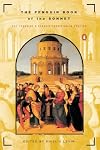
I admit with guilt that I find this book substantially disappointing.
Perhaps it is the inevitable curse of allowing a poet, rather than an academic, to take the lead on a major anthology. Levin's choices for sonnets are somewhat bewildering. She often makes adventurous picks for the recognised older poets, no doubt feeling that the more traditional picks are featured in so many anthologies already, but meaning that we're often getting the odds and ends, the quirky culs-de-sac, the table show more scraps. And an astonishing number of her mid-to-late 20th century poems seem to be a deliberate avant-garde view of how much the sonnet can be destabilised, if some of them even are arguably sonnets at all. (The introduction, for all its academic quibbling, does not convince one.) When I consider some of the great sonnets to be found in other collections, such as Bender and Squier's magnificent The Sonnet: An Anthology: A Comprehensive Selection Of British And American Sonnets From The Renaissance To The Present, it leaves me rather bereft. (It's telling that Levin leaves the aforementioned book out of her extensive section of reading recommendations; clearly there are two traditions and I am far down one end of the spectrum.)
Not that I want this anthology to be like all the others, to be clear. But it rather seems as if Levin wanted to create an idiosyncratic, almost ideological text, which to me is the antithesis of the purpose of a "Penguin Book of". I appreciate that she would see it differently. She would argue that the vibrancy, the contentiousness, the risk-taking of poetry - those things are often left out in major anthologies, which instead become tomes of the stuffy, cemented, great successes, like going to the Louvre and only looking at the most famous paintings you've already seen in American movies. Why shouldn't this be a once-in-a-generation anthology that stands up for the adventures of poetry, regardless of whether they all actually work? This isn't "Sonnets for Dummies", after all.
And I can't completely argue with that. Yet... at every turn, Levin makes the opposing choice from my preference. Should one include on-page critical apparatus? I say yes; Levin says no. Which is fine, but instead there are just gross amounts of white space. Let's chop down those trees and not even bother analysing these poems so that readers can get the most out of them! (Or, dare I suggest, even Levin couldn't interpret some of these failures in the way one can the great poems...)
Should each poet be introduced with a brief summary? I say yes, as newer readers often cannot gauge historical or contextual details otherwise; Levin says no, viewing poems as works that should stand alone, and thus only includes exceedingly brief bios in the back.
Should cultural references or obscure words be glossed for the reader? I say yes; Levin says no, providing in her endnotes only clarifications of, for example, a sonnet's alternative titles or its numerical place in a broader sequence. This latter choice is galling throughout. Historical poems rendered in Middle English without translations! Renaissance poems without any explanation of archaic words or any hint as to the conceit or context of the larger sequence from which they come! Choosing to give us so many oddities from the Romantic and Modern Eras yet not bothering to put them in context - there is a startlingly feminist sonnet from the turn-of-the-century with no accompanying explanation. And of course this decision is even more bewildering for the contemporary poems which abound in cultural or linguistic references outside of an individual reader's knowledge. Ultimately, Levin has decided to create an anthology unlike any other, but she has done it a gross disservice by not giving it any apparatus to allow this to survive in future generations.
There's no denying that a Penguin Book can be individual - when it's done right. Adam Kern's recent The Penguin Book of Haiku could only have been edited by him, and will clearly drive some traditionalists mad, and yet it's a work of genius. In this case, almost every choice seems aggressively ideological on the editor's part. It leaves me cold.
I mean, it's fine. There will surely be another anthology to come along one day. One can't doubt that Levin knows what she's talking about. The introduction and the appendix on sonnet forms are both the works of a consummate professional. It's just a shame she chose poems which - to my mind - drain the joy and life from the experience. show less
Perhaps it is the inevitable curse of allowing a poet, rather than an academic, to take the lead on a major anthology. Levin's choices for sonnets are somewhat bewildering. She often makes adventurous picks for the recognised older poets, no doubt feeling that the more traditional picks are featured in so many anthologies already, but meaning that we're often getting the odds and ends, the quirky culs-de-sac, the table show more scraps. And an astonishing number of her mid-to-late 20th century poems seem to be a deliberate avant-garde view of how much the sonnet can be destabilised, if some of them even are arguably sonnets at all. (The introduction, for all its academic quibbling, does not convince one.) When I consider some of the great sonnets to be found in other collections, such as Bender and Squier's magnificent The Sonnet: An Anthology: A Comprehensive Selection Of British And American Sonnets From The Renaissance To The Present, it leaves me rather bereft. (It's telling that Levin leaves the aforementioned book out of her extensive section of reading recommendations; clearly there are two traditions and I am far down one end of the spectrum.)
Not that I want this anthology to be like all the others, to be clear. But it rather seems as if Levin wanted to create an idiosyncratic, almost ideological text, which to me is the antithesis of the purpose of a "Penguin Book of". I appreciate that she would see it differently. She would argue that the vibrancy, the contentiousness, the risk-taking of poetry - those things are often left out in major anthologies, which instead become tomes of the stuffy, cemented, great successes, like going to the Louvre and only looking at the most famous paintings you've already seen in American movies. Why shouldn't this be a once-in-a-generation anthology that stands up for the adventures of poetry, regardless of whether they all actually work? This isn't "Sonnets for Dummies", after all.
And I can't completely argue with that. Yet... at every turn, Levin makes the opposing choice from my preference. Should one include on-page critical apparatus? I say yes; Levin says no. Which is fine, but instead there are just gross amounts of white space. Let's chop down those trees and not even bother analysing these poems so that readers can get the most out of them! (Or, dare I suggest, even Levin couldn't interpret some of these failures in the way one can the great poems...)
Should each poet be introduced with a brief summary? I say yes, as newer readers often cannot gauge historical or contextual details otherwise; Levin says no, viewing poems as works that should stand alone, and thus only includes exceedingly brief bios in the back.
Should cultural references or obscure words be glossed for the reader? I say yes; Levin says no, providing in her endnotes only clarifications of, for example, a sonnet's alternative titles or its numerical place in a broader sequence. This latter choice is galling throughout. Historical poems rendered in Middle English without translations! Renaissance poems without any explanation of archaic words or any hint as to the conceit or context of the larger sequence from which they come! Choosing to give us so many oddities from the Romantic and Modern Eras yet not bothering to put them in context - there is a startlingly feminist sonnet from the turn-of-the-century with no accompanying explanation. And of course this decision is even more bewildering for the contemporary poems which abound in cultural or linguistic references outside of an individual reader's knowledge. Ultimately, Levin has decided to create an anthology unlike any other, but she has done it a gross disservice by not giving it any apparatus to allow this to survive in future generations.
There's no denying that a Penguin Book can be individual - when it's done right. Adam Kern's recent The Penguin Book of Haiku could only have been edited by him, and will clearly drive some traditionalists mad, and yet it's a work of genius. In this case, almost every choice seems aggressively ideological on the editor's part. It leaves me cold.
I mean, it's fine. There will surely be another anthology to come along one day. One can't doubt that Levin knows what she's talking about. The introduction and the appendix on sonnet forms are both the works of a consummate professional. It's just a shame she chose poems which - to my mind - drain the joy and life from the experience. show less
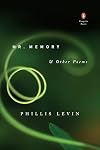
Quick review.
At the start, there was nothing I liked about this collection. I felt as though the poet was trying too hard to give me that "deep" and "dark" poetry and I was just not having it. Personally, I don't like that style, though others may.
The collection did prevail, as I carried on, with several moving, uplifting, and engaging pieces. The images clearer, the story to the point.
My favorite piece from this collection would be, Boy With a Book Bag which deals with bullying. Here are a show more few lines:
I don't remember the face of the girl
Who took me aside one day and said
That I killed Jesus, relaying the news
Matter-of-factly, without prologue
Or proof, the verdict clear.
....
If I could be accused of killing Christ
Couldn't I be the person the police
Were in hot pursuit of for robbing
A bank at gunpoint in Paterson?
You may ask how a six-year-old
Imagines such a thing, but why not:
What is holding up a bank
Next to murdering Jesus?
Another one of my top pieces being X-Radiograph holds this stanza:
The plunder has begun:it is bringing
Various people to their knees.
That is what a naked eye
Sees (a mother and child in flight
Were partially lost when another side
Of the panel was cut down).
As for the faded pair of socks
In the snow, the are
A faded pair of socks in the snow.
For me, this book was a half hit and half miss with the poetry. Some selections fell flat while others held my attention and a bit of my heart with them, from line to line. Do I recommend it? Yes. It is a quick read, not much of a waste of your time and if you are a person who is confused by poetry, there are many pieces, like my two favorites, that are easier to read and feel. Would I buy the book? No. This is a library copy and will remain that way. In the future, I may consider picking up another book by the author but, as it stands, I can allow her poetry to remain on the shelves. show less
At the start, there was nothing I liked about this collection. I felt as though the poet was trying too hard to give me that "deep" and "dark" poetry and I was just not having it. Personally, I don't like that style, though others may.
The collection did prevail, as I carried on, with several moving, uplifting, and engaging pieces. The images clearer, the story to the point.
My favorite piece from this collection would be, Boy With a Book Bag which deals with bullying. Here are a show more few lines:
I don't remember the face of the girl
Who took me aside one day and said
That I killed Jesus, relaying the news
Matter-of-factly, without prologue
Or proof, the verdict clear.
....
If I could be accused of killing Christ
Couldn't I be the person the police
Were in hot pursuit of for robbing
A bank at gunpoint in Paterson?
You may ask how a six-year-old
Imagines such a thing, but why not:
What is holding up a bank
Next to murdering Jesus?
Another one of my top pieces being X-Radiograph holds this stanza:
The plunder has begun:it is bringing
Various people to their knees.
That is what a naked eye
Sees (a mother and child in flight
Were partially lost when another side
Of the panel was cut down).
As for the faded pair of socks
In the snow, the are
A faded pair of socks in the snow.
For me, this book was a half hit and half miss with the poetry. Some selections fell flat while others held my attention and a bit of my heart with them, from line to line. Do I recommend it? Yes. It is a quick read, not much of a waste of your time and if you are a person who is confused by poetry, there are many pieces, like my two favorites, that are easier to read and feel. Would I buy the book? No. This is a library copy and will remain that way. In the future, I may consider picking up another book by the author but, as it stands, I can allow her poetry to remain on the shelves. show less
This book is an anthology that celebrates that most vigorous of literary forms, the Sonnet.
The earliest sonnets record the unceasing conflict between the law of reason and the law of love, the need to solve a problem that cannot be resolved by an act of will, yet finds its fulfillment, if not its solution, only in the poem. Thematically and structurally this tension plays itself out in the relationship between a fixed formal pattern and the endless flow of feeling. The poet experiences the show more illusion of control and the illusion of freedom and from the meeting of those illusions creates the reality off the poem.
The sonnet is one of the only poetic forms with predetermined lengths, specific though flexible set of possibilities for arranging patterns of meaning and sound but it is also a blueprint for building a structure that remains open to the unknown, ready to lodge an unexpected guest.
A sonnet is a fourteen line poem that composes a single stanza, called a quatorzain. When a sonnet is true to its nature, it encompasses contradiction and arrives at resolution or revelation.
The reader of this book can follow the sonnets evolution over time, experiencing firsthand how historical, political, and structural pressures engender innovation, subversion and renewal.
Many sonnets are included with dates. I enjoyed reading this book and recommend it. show less
The earliest sonnets record the unceasing conflict between the law of reason and the law of love, the need to solve a problem that cannot be resolved by an act of will, yet finds its fulfillment, if not its solution, only in the poem. Thematically and structurally this tension plays itself out in the relationship between a fixed formal pattern and the endless flow of feeling. The poet experiences the show more illusion of control and the illusion of freedom and from the meeting of those illusions creates the reality off the poem.
The sonnet is one of the only poetic forms with predetermined lengths, specific though flexible set of possibilities for arranging patterns of meaning and sound but it is also a blueprint for building a structure that remains open to the unknown, ready to lodge an unexpected guest.
A sonnet is a fourteen line poem that composes a single stanza, called a quatorzain. When a sonnet is true to its nature, it encompasses contradiction and arrives at resolution or revelation.
The reader of this book can follow the sonnets evolution over time, experiencing firsthand how historical, political, and structural pressures engender innovation, subversion and renewal.
Many sonnets are included with dates. I enjoyed reading this book and recommend it. show less

Poetry can be wonderful and enchanting, but this collection did not appeal to me. Poetry is relatively expensive to buy, but nonetheless I often simply buy some not entirely randomly, but not after long deliberation either, hoping to be unexpectedly charmed. Not this time.
Awards

You May Also Like


Associated Authors
Statistics
- Works
- 8
- Also by
- 6
- Members
- 252
- Popularity
- #90,784
- Rating
- 3.9
- Reviews
- 5
- ISBNs
- 12