
John Koethe
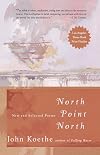
Author of North Point North: New and Selected Poems
About the Author
John Koethe is Distinguished Professor of Philosophy at the University of Wisconsin-Milwaukee and the first Poet Laureate of Milwaukee
Image credit: By John Koethe - John Koethe, CC BY 1.0, https://commons.wikimedia.org/w/index.php?curid=4508982
Works by John Koethe
Associated Works
The Making of a Poem: A Norton Anthology of Poetic Forms (2000) — Contributor — 1,474 copies, 9 reviews
Fire Exit 3 — Contributor — 1 copy
Tagged
Common Knowledge
- Canonical name
- Koethe, John
- Birthdate
- 1945
- Gender
- male
- Occupations
- poet
- Nationality
- USA
- Birthplace
- San Diego, California, USA
- Places of residence
- San Diego, California, USA (birthplace)
- Associated Place (for map)
- California, USA
Members
Reviews

Wistful, and well-mannered, and sad, and loving, these poems give me the sense that I am in the presence of a fellow human being, one with a big soul. There is humility here, in the best sense of the word. The poet knows his strengths and doesn't hide them (that would be false humility)-- but he also confronts, sometimes quite directly, not only his own mortal smallness, but also the likelihood of his poems dying out one day.
There is a lot of Ecclesiastes here.
It feels as if I know a lot show more about Koethe after reading this collection--although his is not at all what I would call autobiographical or confessional poetry, it is strongly of a specific time and place, and it describes the historic circumstances of Koethe's life, and it uses the benchmarks and collective memories of people of his age and times. His experience is more refined and more erudite than mine, but recognizable as a history shared. There is a clearness of vision about the past, free of nostalgia, yet full of love.
I feel this poet would be a good friend of mine, if I had the privilege of knowing him, and although I don't have any friends currently who own even one navy blazer. show less
There is a lot of Ecclesiastes here.
It feels as if I know a lot show more about Koethe after reading this collection--although his is not at all what I would call autobiographical or confessional poetry, it is strongly of a specific time and place, and it describes the historic circumstances of Koethe's life, and it uses the benchmarks and collective memories of people of his age and times. His experience is more refined and more erudite than mine, but recognizable as a history shared. There is a clearness of vision about the past, free of nostalgia, yet full of love.
I feel this poet would be a good friend of mine, if I had the privilege of knowing him, and although I don't have any friends currently who own even one navy blazer. show less
The annual Beall Poetry Festival at Baylor University has become an event I eagerly await as each spring rolls around. This year was no exception, despite the fact I had only the slightest familiarity with only one of the three poets, Carol Frost. However, the poet that impressed and inspired me the most was John Koethe.
His poems tell stories, in plain language, with gentle strokes of humor, pathos, and intelligence -- all with profound insights into human nature and the creative mind. I show more even found an epithet for my own thesis, which Prof. Koethe enthusiastically gave me permission to use.
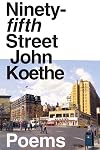
The epithet comes from the opening lines of the title poem of Ninety-Fifth Street. Koethe wrote,
“Words can bang around in your head
Forever, if you let them and you give them room.
I used to love poetry, and mostly I still do,
Though sometimes ‘I, too, dislike it.’ There must
be something real beyond the fiddle and perfunctory
Consolations and the quarrels -- as of course
There is, though what it is is difficult to say.” (72)
I was thrilled to recognize the interior quote as the words of Marianne Moore, the eccentric 20th century poet, editor, librarian, and teacher. Her apartment was moved from New York City -- following her death in 1972 -- and reassembled at the Rosenbach Museum and Library in Philadelphia. So, I have a close personal connection to her work.
Like Moore, Koethe’s poetry is simple, yet profound with wit and irony. He tells stories and -- in the telling -- reveals philosophy and the inner workings of the human psyche.
Furthermore, a measure of irony lay in my selection of this epithet. To paraphrase Koethe, “I used to hate poetry, but now I mostly love it, although some I still dislike.”
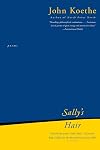
The title poem from Sally’s Hair is a good example of the story-telling talent of Koethe. He writes,
“I took the train back from Poughkeepsie to New York
And in the Port Authority, there at the Suburban Transit window,
She asked, ‘Is this the bus to Princeton?’ -- which it was.
‘Do you know Geoffrey Love?’ I said I did. She had the blondest hair,
Which fell across her shoulders, and a dress of almost phosphorescent blue.
She liked Ayn Rand. We went to the Village for a drink,
Where I contrived to miss the last bus to New Jersey, and at 3 a.m. we
Walked around and found a cheap motel I hadn’t enough money for
And fooled around on the dilapidated couch. An early morning bus
(She’d come to see her brother), dinner plans and missed connections
And a message on his door about the Jersey shore. Next day
A summer dormitory room, my roommates gone: ‘Are you,’ she asked,
‘A hedonist?’ I guessed so. Then she had to catch her plane.
Sally -- Sally Roche. She called that night from Florida,
And I never heard from her again…” (69-70)
Hearing the poet read this poem impressed me with the power of his words, and his voice reinforced the story-telling nature of his work. I can only begin to hope to write something as touching, sincere, and emotional in my own work
Lastly, a poignant piece from North Point North, “The Little Boy.”
“I want to stay here awhile, now that there came to me
This other version of what passes in my life for time.
The little boy is in his sandbox. Mom and Dad
Are puttering around in the backyard.” (116)
I have to stop here, because memories of my own childhood are welling up inside, and I have gone on long enough. If these three samples don’t tempt you, you have not discovered the depth, the breath, the beauty of well-crafted poetry. 15 stars -- 5 each!
--Jim, 4/3/10 show less
His poems tell stories, in plain language, with gentle strokes of humor, pathos, and intelligence -- all with profound insights into human nature and the creative mind. I show more even found an epithet for my own thesis, which Prof. Koethe enthusiastically gave me permission to use.
The epithet comes from the opening lines of the title poem of Ninety-Fifth Street. Koethe wrote,
“Words can bang around in your head
Forever, if you let them and you give them room.
I used to love poetry, and mostly I still do,
Though sometimes ‘I, too, dislike it.’ There must
be something real beyond the fiddle and perfunctory
Consolations and the quarrels -- as of course
There is, though what it is is difficult to say.” (72)
I was thrilled to recognize the interior quote as the words of Marianne Moore, the eccentric 20th century poet, editor, librarian, and teacher. Her apartment was moved from New York City -- following her death in 1972 -- and reassembled at the Rosenbach Museum and Library in Philadelphia. So, I have a close personal connection to her work.
Like Moore, Koethe’s poetry is simple, yet profound with wit and irony. He tells stories and -- in the telling -- reveals philosophy and the inner workings of the human psyche.
Furthermore, a measure of irony lay in my selection of this epithet. To paraphrase Koethe, “I used to hate poetry, but now I mostly love it, although some I still dislike.”
The title poem from Sally’s Hair is a good example of the story-telling talent of Koethe. He writes,
“I took the train back from Poughkeepsie to New York
And in the Port Authority, there at the Suburban Transit window,
She asked, ‘Is this the bus to Princeton?’ -- which it was.
‘Do you know Geoffrey Love?’ I said I did. She had the blondest hair,
Which fell across her shoulders, and a dress of almost phosphorescent blue.
She liked Ayn Rand. We went to the Village for a drink,
Where I contrived to miss the last bus to New Jersey, and at 3 a.m. we
Walked around and found a cheap motel I hadn’t enough money for
And fooled around on the dilapidated couch. An early morning bus
(She’d come to see her brother), dinner plans and missed connections
And a message on his door about the Jersey shore. Next day
A summer dormitory room, my roommates gone: ‘Are you,’ she asked,
‘A hedonist?’ I guessed so. Then she had to catch her plane.
Sally -- Sally Roche. She called that night from Florida,
And I never heard from her again…” (69-70)
Hearing the poet read this poem impressed me with the power of his words, and his voice reinforced the story-telling nature of his work. I can only begin to hope to write something as touching, sincere, and emotional in my own work
Lastly, a poignant piece from North Point North, “The Little Boy.”
“I want to stay here awhile, now that there came to me
This other version of what passes in my life for time.
The little boy is in his sandbox. Mom and Dad
Are puttering around in the backyard.” (116)
I have to stop here, because memories of my own childhood are welling up inside, and I have gone on long enough. If these three samples don’t tempt you, you have not discovered the depth, the breath, the beauty of well-crafted poetry. 15 stars -- 5 each!
--Jim, 4/3/10 show less
The annual Beall Poetry Festival at Baylor University has become an event I eagerly await as each spring rolls around. This year was no exception, despite the fact I had only the slightest familiarity with only one of the three poets, Carol Frost. However, the poet that impressed and inspired me the most was John Koethe.
His poems tell stories, in plain language, with gentle strokes of humor, pathos, and intelligence -- all with profound insights into human nature and the creative mind. I show more even found an epithet for my own thesis, which Prof. Koethe enthusiastically gave me permission to use.
The epithet comes from the opening lines of the title poem of Ninety-Fifth Street. Koethe wrote,
“Words can bang around in your head
Forever, if you let them and you give them room.
I used to love poetry, and mostly I still do,
Though sometimes ‘I, too, dislike it.’ There must
be something real beyond the fiddle and perfunctory
Consolations and the quarrels -- as of course
There is, though what it is is difficult to say.” (72)
I was thrilled to recognize the interior quote as the words of Marianne Moore, the eccentric 20th century poet, editor, librarian, and teacher. Her apartment was moved from New York City -- following her death in 1972 -- and reassembled at the Rosenbach Museum and Library in Philadelphia. So, I have a close personal connection to her work.
Like Moore, Koethe’s poetry is simple, yet profound with wit and irony. He tells stories and -- in the telling -- reveals philosophy and the inner workings of the human psyche.
Furthermore, a measure of irony lay in my selection of this epithet. To paraphrase Koethe, “I used to hate poetry, but now I mostly love it, although some I still dislike.”
The title poem from Sally’s Hair is a good example of the story-telling talent of Koethe. He writes,
“I took the train back from Poughkeepsie to New York
And in the Port Authority, there at the Suburban Transit window,
She asked, ‘Is this the bus to Princeton?’ -- which it was.
‘Do you know Geoffrey Love?’ I said I did. She had the blondest hair,
Which fell across her shoulders, and a dress of almost phosphorescent blue.
She liked Ayn Rand. We went to the Village for a drink,
Where I contrived to miss the last bus to New Jersey, and at 3 a.m. we
Walked around and found a cheap motel I hadn’t enough money for
And fooled around on the dilapidated couch. An early morning bus
(She’d come to see her brother), dinner plans and missed connections
And a message on his door about the Jersey shore. Next day
A summer dormitory room, my roommates gone: ‘Are you,’ she asked,
‘A hedonist?’ I guessed so. Then she had to catch her plane.
Sally -- Sally Roche. She called that night from Florida,
And I never heard from her again…” (69-70)
Hearing the poet read this poem impressed me with the power of his words, and his voice reinforced the story-telling nature of his work. I can only begin to hope to write something as touching, sincere, and emotional in my own work
Lastly, a poignant piece from North Point North, “The Little Boy.”
“I want to stay here awhile, now that there came to me
This other version of what passes in my life for time.
The little boy is in his sandbox. Mom and Dad
Are puttering around in the backyard.” (116)
I have to stop here, because memories of my own childhood are welling up inside, and I have gone on long enough. If these three samples don’t tempt you, you have not discovered the depth, the breath, the beauty of well-crafted poetry. 15 stars -- 5 each!
--Jim, 4/3/10 show less
His poems tell stories, in plain language, with gentle strokes of humor, pathos, and intelligence -- all with profound insights into human nature and the creative mind. I show more even found an epithet for my own thesis, which Prof. Koethe enthusiastically gave me permission to use.
The epithet comes from the opening lines of the title poem of Ninety-Fifth Street. Koethe wrote,
“Words can bang around in your head
Forever, if you let them and you give them room.
I used to love poetry, and mostly I still do,
Though sometimes ‘I, too, dislike it.’ There must
be something real beyond the fiddle and perfunctory
Consolations and the quarrels -- as of course
There is, though what it is is difficult to say.” (72)
I was thrilled to recognize the interior quote as the words of Marianne Moore, the eccentric 20th century poet, editor, librarian, and teacher. Her apartment was moved from New York City -- following her death in 1972 -- and reassembled at the Rosenbach Museum and Library in Philadelphia. So, I have a close personal connection to her work.
Like Moore, Koethe’s poetry is simple, yet profound with wit and irony. He tells stories and -- in the telling -- reveals philosophy and the inner workings of the human psyche.
Furthermore, a measure of irony lay in my selection of this epithet. To paraphrase Koethe, “I used to hate poetry, but now I mostly love it, although some I still dislike.”
The title poem from Sally’s Hair is a good example of the story-telling talent of Koethe. He writes,
“I took the train back from Poughkeepsie to New York
And in the Port Authority, there at the Suburban Transit window,
She asked, ‘Is this the bus to Princeton?’ -- which it was.
‘Do you know Geoffrey Love?’ I said I did. She had the blondest hair,
Which fell across her shoulders, and a dress of almost phosphorescent blue.
She liked Ayn Rand. We went to the Village for a drink,
Where I contrived to miss the last bus to New Jersey, and at 3 a.m. we
Walked around and found a cheap motel I hadn’t enough money for
And fooled around on the dilapidated couch. An early morning bus
(She’d come to see her brother), dinner plans and missed connections
And a message on his door about the Jersey shore. Next day
A summer dormitory room, my roommates gone: ‘Are you,’ she asked,
‘A hedonist?’ I guessed so. Then she had to catch her plane.
Sally -- Sally Roche. She called that night from Florida,
And I never heard from her again…” (69-70)
Hearing the poet read this poem impressed me with the power of his words, and his voice reinforced the story-telling nature of his work. I can only begin to hope to write something as touching, sincere, and emotional in my own work
Lastly, a poignant piece from North Point North, “The Little Boy.”
“I want to stay here awhile, now that there came to me
This other version of what passes in my life for time.
The little boy is in his sandbox. Mom and Dad
Are puttering around in the backyard.” (116)
I have to stop here, because memories of my own childhood are welling up inside, and I have gone on long enough. If these three samples don’t tempt you, you have not discovered the depth, the breath, the beauty of well-crafted poetry. 15 stars -- 5 each!
--Jim, 4/3/10 show less
The annual Beall Poetry Festival at Baylor University has become an event I eagerly await as each spring rolls around. This year was no exception, despite the fact I had only the slightest familiarity with only one of the three poets, Carol Frost. However, the poet that impressed and inspired me the most was John Koethe.
His poems tell stories, in plain language, with gentle strokes of humor, pathos, and intelligence -- all with profound insights into human nature and the creative mind. I show more even found an epithet for my own thesis, which Prof. Koethe enthusiastically gave me permission to use.
The epithet comes from the opening lines of the title poem of Ninety-Fifth Street. Koethe wrote,
“Words can bang around in your head
Forever, if you let them and you give them room.
I used to love poetry, and mostly I still do,
Though sometimes ‘I, too, dislike it.’ There must
be something real beyond the fiddle and perfunctory
Consolations and the quarrels -- as of course
There is, though what it is is difficult to say.” (72)
I was thrilled to recognize the interior quote as the words of Marianne Moore, the eccentric 20th century poet, editor, librarian, and teacher. Her apartment was moved from New York City -- following her death in 1972 -- and reassembled at the Rosenbach Museum and Library in Philadelphia. So, I have a close personal connection to her work.
Like Moore, Koethe’s poetry is simple, yet profound with wit and irony. He tells stories and -- in the telling -- reveals philosophy and the inner workings of the human psyche.
Furthermore, a measure of irony lay in my selection of this epithet. To paraphrase Koethe, “I used to hate poetry, but now I mostly love it, although some I still dislike.”
The title poem from Sally’s Hair is a good example of the story-telling talent of Koethe. He writes,
“I took the train back from Poughkeepsie to New York
And in the Port Authority, there at the Suburban Transit window,
She asked, ‘Is this the bus to Princeton?’ -- which it was.
‘Do you know Geoffrey Love?’ I said I did. She had the blondest hair,
Which fell across her shoulders, and a dress of almost phosphorescent blue.
She liked Ayn Rand. We went to the Village for a drink,
Where I contrived to miss the last bus to New Jersey, and at 3 a.m. we
Walked around and found a cheap motel I hadn’t enough money for
And fooled around on the dilapidated couch. An early morning bus
(She’d come to see her brother), dinner plans and missed connections
And a message on his door about the Jersey shore. Next day
A summer dormitory room, my roommates gone: ‘Are you,’ she asked,
‘A hedonist?’ I guessed so. Then she had to catch her plane.
Sally -- Sally Roche. She called that night from Florida,
And I never heard from her again…” (69-70)
Hearing the poet read this poem impressed me with the power of his words, and his voice reinforced the story-telling nature of his work. I can only begin to hope to write something as touching, sincere, and emotional in my own work
Lastly, a poignant piece from North Point North, “The Little Boy.”
“I want to stay here awhile, now that there came to me
This other version of what passes in my life for time.
The little boy is in his sandbox. Mom and Dad
Are puttering around in the backyard.” (116)
I have to stop here, because memories of my own childhood are welling up inside, and I have gone on long enough. If these three samples don’t tempt you, you have not discovered the depth, the breath, the beauty of well-crafted poetry. 15 stars -- 5 each!
--Jim, 4/3/10 show less
His poems tell stories, in plain language, with gentle strokes of humor, pathos, and intelligence -- all with profound insights into human nature and the creative mind. I show more even found an epithet for my own thesis, which Prof. Koethe enthusiastically gave me permission to use.
The epithet comes from the opening lines of the title poem of Ninety-Fifth Street. Koethe wrote,
“Words can bang around in your head
Forever, if you let them and you give them room.
I used to love poetry, and mostly I still do,
Though sometimes ‘I, too, dislike it.’ There must
be something real beyond the fiddle and perfunctory
Consolations and the quarrels -- as of course
There is, though what it is is difficult to say.” (72)
I was thrilled to recognize the interior quote as the words of Marianne Moore, the eccentric 20th century poet, editor, librarian, and teacher. Her apartment was moved from New York City -- following her death in 1972 -- and reassembled at the Rosenbach Museum and Library in Philadelphia. So, I have a close personal connection to her work.
Like Moore, Koethe’s poetry is simple, yet profound with wit and irony. He tells stories and -- in the telling -- reveals philosophy and the inner workings of the human psyche.
Furthermore, a measure of irony lay in my selection of this epithet. To paraphrase Koethe, “I used to hate poetry, but now I mostly love it, although some I still dislike.”
The title poem from Sally’s Hair is a good example of the story-telling talent of Koethe. He writes,
“I took the train back from Poughkeepsie to New York
And in the Port Authority, there at the Suburban Transit window,
She asked, ‘Is this the bus to Princeton?’ -- which it was.
‘Do you know Geoffrey Love?’ I said I did. She had the blondest hair,
Which fell across her shoulders, and a dress of almost phosphorescent blue.
She liked Ayn Rand. We went to the Village for a drink,
Where I contrived to miss the last bus to New Jersey, and at 3 a.m. we
Walked around and found a cheap motel I hadn’t enough money for
And fooled around on the dilapidated couch. An early morning bus
(She’d come to see her brother), dinner plans and missed connections
And a message on his door about the Jersey shore. Next day
A summer dormitory room, my roommates gone: ‘Are you,’ she asked,
‘A hedonist?’ I guessed so. Then she had to catch her plane.
Sally -- Sally Roche. She called that night from Florida,
And I never heard from her again…” (69-70)
Hearing the poet read this poem impressed me with the power of his words, and his voice reinforced the story-telling nature of his work. I can only begin to hope to write something as touching, sincere, and emotional in my own work
Lastly, a poignant piece from North Point North, “The Little Boy.”
“I want to stay here awhile, now that there came to me
This other version of what passes in my life for time.
The little boy is in his sandbox. Mom and Dad
Are puttering around in the backyard.” (116)
I have to stop here, because memories of my own childhood are welling up inside, and I have gone on long enough. If these three samples don’t tempt you, you have not discovered the depth, the breath, the beauty of well-crafted poetry. 15 stars -- 5 each!
--Jim, 4/3/10 show less
Awards


You May Also Like


Associated Authors
Statistics
- Works
- 15
- Also by
- 15
- Members
- 296
- Popularity
- #79,167
- Rating
- 3.7
- Reviews
- 4
- ISBNs
- 40
- Favorited
- 2