
Peter Farb (1929–1980)
Author of Man's rise to civilization as shown by the Indians of North America from primeval times to the coming of the industrial state
About the Author
Works by Peter Farb
Man's rise to civilization as shown by the Indians of North America from primeval times to the coming of the industrial state (1968) 412 copies, 5 reviews
Associated Works
Tagged
Common Knowledge
- Birthdate
- 1929-07-25
- Date of death
- 1980-04-08
- Gender
- male
- Education
- Vanderbilt University
Columbia University - Occupations
- editor
anthropologist
linguist
curator - Organizations
- American Association for the Advancement of Science (fellow)
- Nationality
- USA
- Birthplace
- New York, New York, USA
- Place of death
- Boston, Massachusetts, USA
- Associated Place (for map)
- USA
Members
Reviews

Ostensible a popular work of anthropology covering the arc of cultural development among North America's aboriginal peoples, I found this a deeper, more enlightening, and even more ambition work. Generally, the historical analysis of the varied peoples from Inuit to Aztec suggests the diverse and varied peoples of N.A. survived through a combination of moieties and exogamy in band/tribal scenarios that fostered strength through cooperation and diversity.
Some interesting things were show more compelling indictments of the scholarship of Patterns of Culture, further eroding my believe in the simplistic Apollonian-Dionysian model.
I found the analysis of Cortes vs. the Aztecs also interesting - the hated and cruel Aztec empire tottering under intrigue, fear, and loathsome human sacrifice collapsed under the weight of smallpox and a lack of central authority.
Generally the history of the decline of this most genetically homogenous of races (undercutting many racial purity arguments) into phases such as nativism and religious fanaticism to too-late violence resulting in accomodation and evaporation can be painful and important lessons from the human experience. show less
Some interesting things were show more compelling indictments of the scholarship of Patterns of Culture, further eroding my believe in the simplistic Apollonian-Dionysian model.
I found the analysis of Cortes vs. the Aztecs also interesting - the hated and cruel Aztec empire tottering under intrigue, fear, and loathsome human sacrifice collapsed under the weight of smallpox and a lack of central authority.
Generally the history of the decline of this most genetically homogenous of races (undercutting many racial purity arguments) into phases such as nativism and religious fanaticism to too-late violence resulting in accomodation and evaporation can be painful and important lessons from the human experience. show less
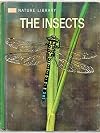
My favorite childhood book! I'd forgotten it until I spotted the familiar green cover poking from the library stacks. This book fueled my fascination by dragonflies, bombarder beetles, ants, moths..... At the time, before the internet and rapidly produced Nat Geo Kids books, this was the coolest exposure I could find to awesome photos and excellent explanations about insects. Though more nuanced information and higher quality photos are possible now, I've yet to find a book so thorough as show more this 1962 production.
From a linguistic perspective, it was fun to see how a book designed for young people formerly incorporated far more complex language. Even the rhetoric used to describe the animals in a fun, catchy way presumed a higher comprehension level than contemporary nature books do.
Because this book is probably a 1:3; pictures:words ratio, and as I mentioned, the words are pretty high level, far exceeding what typical school-aged children are expected to comprehend these days, I found it really useful for giving kids the opportunity to choose a section they'd like to learn about, then I helped them to read the photo descriptions, while I read aloud the longer, more detailed sections.
This is a GREAT book to have lying around to bate some kids into reading a more advanced level, but also to provide really great photos of the natural world! The kids seemed really surprised when I told them that a large part of exploring reading is just looking, but I really believe that having books like this encourages exploration that, eventually and later, will lead to more advanced reading. This is a bookshelf MUST. show less
From a linguistic perspective, it was fun to see how a book designed for young people formerly incorporated far more complex language. Even the rhetoric used to describe the animals in a fun, catchy way presumed a higher comprehension level than contemporary nature books do.
Because this book is probably a 1:3; pictures:words ratio, and as I mentioned, the words are pretty high level, far exceeding what typical school-aged children are expected to comprehend these days, I found it really useful for giving kids the opportunity to choose a section they'd like to learn about, then I helped them to read the photo descriptions, while I read aloud the longer, more detailed sections.
This is a GREAT book to have lying around to bate some kids into reading a more advanced level, but also to provide really great photos of the natural world! The kids seemed really surprised when I told them that a large part of exploring reading is just looking, but I really believe that having books like this encourages exploration that, eventually and later, will lead to more advanced reading. This is a bookshelf MUST. show less
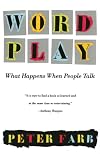
Although it was published in 1973 and has become outdated in many ways, Peter Farb's “Word Play” remains an important book on the subject of "what happens when people talk," his subtitle.
Farb covers numerous aspects of spoken language — why learning languages is easy for children but difficult for adults, criminal slang, playing the dozens (word play common in black communities where the object is to insult one another's mother in amusing ways), lying, jargon, translation from one show more language to another, baby talk, artificial languages and on and on.
Playing with language is common in most cultures, he tells us. Just as American blacks play the dozens, in many cultures the ability to quickly come up with clever lines, sometimes in rhyme, can be a test of belonging or even of manhood. Hierarchy can sometimes be determined with speech rather than fists. He uses Marx Brothers movies as a prime example of first-rate word play in the United States.
Farb concludes that all human languages are alike in many respects. Yet they can sometimes be very different. In English, for example, we think of the future as being ahead of us, the past behind us. In the Quechua language of Peru, however, it is the past that lies ahead. A Quechua speaker "logically states that past events can be seen in the mind since they already happened, and therefore they must be in front of his eyes. But since he cannot 'see' into the future, these events must therefore be out of sight or 'behind' him."
It is differences like this can make translation so difficult. One place where his book seems dated is when he writes that using a computer to translate one language into another is impossible. Today many people have apps on their phones that can perform at least basic translation of major languages. show less
Farb covers numerous aspects of spoken language — why learning languages is easy for children but difficult for adults, criminal slang, playing the dozens (word play common in black communities where the object is to insult one another's mother in amusing ways), lying, jargon, translation from one show more language to another, baby talk, artificial languages and on and on.
Playing with language is common in most cultures, he tells us. Just as American blacks play the dozens, in many cultures the ability to quickly come up with clever lines, sometimes in rhyme, can be a test of belonging or even of manhood. Hierarchy can sometimes be determined with speech rather than fists. He uses Marx Brothers movies as a prime example of first-rate word play in the United States.
Farb concludes that all human languages are alike in many respects. Yet they can sometimes be very different. In English, for example, we think of the future as being ahead of us, the past behind us. In the Quechua language of Peru, however, it is the past that lies ahead. A Quechua speaker "logically states that past events can be seen in the mind since they already happened, and therefore they must be in front of his eyes. But since he cannot 'see' into the future, these events must therefore be out of sight or 'behind' him."
It is differences like this can make translation so difficult. One place where his book seems dated is when he writes that using a computer to translate one language into another is impossible. Today many people have apps on their phones that can perform at least basic translation of major languages. show less

Tthis is a fascinating look at what language DOES, what its parameters are in social terms. I thought this book was really interesting when I read it in the 1970s, and I have changed my opinion not one whit. Interesting.
But not sparkling! Dry writing is, one supposes, inevitable in books on such po-faced topics as why language works the way it does. I don't really understand why the academic world has such animus towards wit in writing! It's possible to be informative and amusing, just look show more at Brian Greene's "The Elegant Universe."
Still and all, it's a recommended read for anyone who feels language is more than just sounds to fill up silence. You'll come away from reading the book with an entirely altered approach to each conversation you have. show less
But not sparkling! Dry writing is, one supposes, inevitable in books on such po-faced topics as why language works the way it does. I don't really understand why the academic world has such animus towards wit in writing! It's possible to be informative and amusing, just look show more at Brian Greene's "The Elegant Universe."
Still and all, it's a recommended read for anyone who feels language is more than just sounds to fill up silence. You'll come away from reading the book with an entirely altered approach to each conversation you have. show less
Lists
Awards

You May Also Like


Associated Authors
Statistics
- Works
- 24
- Also by
- 2
- Members
- 2,136
- Popularity
- #12,044
- Rating
- 3.4
- Reviews
- 21
- ISBNs
- 62
- Languages
- 3