
Jaquira Díaz
Author of Ordinary Girls: A Memoir
About the Author
Image credit: Author Jaquira Díaz at the 2019 Texas Book Festival in Austin, Texas, United States. By Larry D. Moore, CC BY-SA 4.0, https://commons.wikimedia.org/w/index.php?curid=84606775
Works by Jaquira Díaz
Associated Works
Tagged
Common Knowledge
- Canonical name
- Díaz, Jaquira
- Gender
- female
- Occupations
- visiting assistant professor (Creative Writing)
editor
essayist
journalist
memoirist
short story writer - Organizations
- The Kenyon Review
University of Wisconsin-Madison - Awards and honors
- Lambda Literary Award (Córdova Prize for Lesbian/Queer Nonfiction, 2023)
- Agent
- Michelle Brower Aevitas Creative Management
- Nationality
- USA
- Places of residence
- USA
- Map Location
- USA
Members
Reviews

This is a memoir by journalist Jaquira Diáz about her childhood in Puerto Rico, through her school years in Miami and into her adulthood as she negotiates her way as the daughter of estranged parents, bouncing back and forth between her absent father and her mentally ill and drug addicted mother. Despite her bleak situation, this is very much not a misery memoir. Diáz is not interested in garnering sympathy and she leans hard into how members of her family supported her when they could and show more especially on the friendships she formed as a girl growing up in a tough Miami neighborhood where gunshots were heard regularly and where she is haunted by the body of a young boy who remains nameless for far too long.
Diáz is first and foremost a journalist. Her focus is on understanding other people. She weaves into her own story, that of Lazaro Cardona and his mother Ana. He is found dead under a hedge in Diáz's neighborhood when she is a child. It took time for his identity to be found, and his mother and her girlfriend are convicted of his murder. This murder is also a story Diáz revisits as a journalist, attending his mother's appeals.
What I found most interesting is how Diáz manages to move from being a school drop-out who was regularly arrested at a shockingly young age, to building a stable life for herself, and how she chooses to love her family, even her mother. show less
Diáz is first and foremost a journalist. Her focus is on understanding other people. She weaves into her own story, that of Lazaro Cardona and his mother Ana. He is found dead under a hedge in Diáz's neighborhood when she is a child. It took time for his identity to be found, and his mother and her girlfriend are convicted of his murder. This murder is also a story Diáz revisits as a journalist, attending his mother's appeals.
What I found most interesting is how Diáz manages to move from being a school drop-out who was regularly arrested at a shockingly young age, to building a stable life for herself, and how she chooses to love her family, even her mother. show less
 This review was written for LibraryThing Early Reviewers.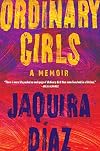
Digital audiobook narrated by Almarie Guerra
In this memoir, Díaz relates her childhood and teen years with brutal honesty. She grows up in a dysfunctional family, first in Puerto Rico and later in Miami. Her mother battles both mental illness and drug addiction. Her father is frequently absent. She gets support and love from her friends, but lacks direction. She relishes her Puerto Rican cultural heritage, but her bisexuality does not fit the cultural model. A few teachers see the spark of show more her intelligence and nurture it, but she has a long, hard road to traverse (mostly alone) before she achieves some success.
I found her writing gripping and enthralling, despite the many cringe-worthy scenarios. Diaz does not flinch when reporting her own misdeeds, or a sexual assault, or her time in juvenile detention. There were times when I wanted to turn away, because the scenes were so painful, but her writing kept me going. My heart went out to the young girl and struggling teenager. I applauded the woman she became and the ways she found to reconcile with her parents.
Almarie Guerra does a superb job of narrating the audiobook. I had to double check that it was not narrated by the author, herself, because Guerra’s delivery sounds so very personal. show less
In this memoir, Díaz relates her childhood and teen years with brutal honesty. She grows up in a dysfunctional family, first in Puerto Rico and later in Miami. Her mother battles both mental illness and drug addiction. Her father is frequently absent. She gets support and love from her friends, but lacks direction. She relishes her Puerto Rican cultural heritage, but her bisexuality does not fit the cultural model. A few teachers see the spark of show more her intelligence and nurture it, but she has a long, hard road to traverse (mostly alone) before she achieves some success.
I found her writing gripping and enthralling, despite the many cringe-worthy scenarios. Diaz does not flinch when reporting her own misdeeds, or a sexual assault, or her time in juvenile detention. There were times when I wanted to turn away, because the scenes were so painful, but her writing kept me going. My heart went out to the young girl and struggling teenager. I applauded the woman she became and the ways she found to reconcile with her parents.
Almarie Guerra does a superb job of narrating the audiobook. I had to double check that it was not narrated by the author, herself, because Guerra’s delivery sounds so very personal. show less
“Ordinary Girls” by Jaquira Diaz was an education for me; a window into a foreign world within my own country. Ms. Diaz takes you inside the Puerto Rican community in Miami and sometimes brutally shows you what her life was like. While I knew in my head that there were girls growing up dealing with so much upheaval, abuse, deprivation, societal harshness and ignorance I did not know it in my heart. Now I feel that I do because of this memoir by Jaquira Diaz. Now these young girls have show more names and faces.
Thank goodness Ms. Diaz writes with humor and joy even though she suffers from unbelievable sadness and suppressed anger. Thank goodness she returns to her beginnings to find her “Ordinary Girls”, her friends from her childhood who time and again lift each other up and over the tremendous hurdles before them. Thank goodness I stuck with the story even as it made me so sad because, in the end, she celebrate her girls, her writing and her life. Jaquira Diaz, please keep writing because so many people in our country need to really see you and hear you, especially all of those “Ordinary Girls” who don’t often get to read about themselves. Looking forward to the next one! (I received an advance reader copy of the book via LibraryThing - thank you!) show less
Thank goodness Ms. Diaz writes with humor and joy even though she suffers from unbelievable sadness and suppressed anger. Thank goodness she returns to her beginnings to find her “Ordinary Girls”, her friends from her childhood who time and again lift each other up and over the tremendous hurdles before them. Thank goodness I stuck with the story even as it made me so sad because, in the end, she celebrate her girls, her writing and her life. Jaquira Diaz, please keep writing because so many people in our country need to really see you and hear you, especially all of those “Ordinary Girls” who don’t often get to read about themselves. Looking forward to the next one! (I received an advance reader copy of the book via LibraryThing - thank you!) show less
This review was written for LibraryThing Early Reviewers.Ordinary Girls: A Memoir (2019) by Jaquira Díaz is a story for the seemingly powerless. I haven’t read nonfiction in a while, and this book brought me to become interested in the genre with how immersive the story is. Díaz recounts her life experiences, but her use of imagery and description transport you to right there next to her as the event plays out. This read was inspiring, with a message of taking the circumstances fate had brought you and striving for a better life. Reading this show more memoir was certainly entertaining, but emotional taxing as Díaz covers darker parts like sexual harassment when she was younger.
I would recommend for those who felt like they were handed the wrong cards since birth, "for the black and brown girls...For the wild girls and the party girls, the loudmouths and troublemakers. For the girls who are angry and lost. For the girls who never saw themselves in books. For the girls who love other girls, sometimes in secret," (Díaz 304) as Díaz represents and reaches out to all of these with comfort.
My one area of criticism would be related to the fact that there are many characters presented in Díaz's story; many of whom are mentioned only a couple of times. It is quite difficult to keep track of all these figures over the course of the memoir. show less
I would recommend for those who felt like they were handed the wrong cards since birth, "for the black and brown girls...For the wild girls and the party girls, the loudmouths and troublemakers. For the girls who are angry and lost. For the girls who never saw themselves in books. For the girls who love other girls, sometimes in secret," (Díaz 304) as Díaz represents and reaches out to all of these with comfort.
My one area of criticism would be related to the fact that there are many characters presented in Díaz's story; many of whom are mentioned only a couple of times. It is quite difficult to keep track of all these figures over the course of the memoir. show less
Lists
Sapph-Lit (1)
Awards


You May Also Like


Associated Authors
Statistics
- Works
- 3
- Also by
- 3
- Members
- 335
- Popularity
- #71,018
- Rating
- 3.6
- Reviews
- 31
- ISBNs
- 13
- Languages
- 1

