

Hester Lynch Piozzi (1740–1821)
Author of The Life of Samuel Johnson LL.D., with marginal comments and markings . . . by Hester Lynch Thrale Piozzi
About the Author
Works by Hester Lynch Piozzi
The Life of Samuel Johnson LL.D., with marginal comments and markings . . . by Hester Lynch Thrale Piozzi (1791) — Annotator — 4,315 copies, 45 reviews
Anecdotes of the late Samuel Johnson, LL.D. : during the last twenty years of his life (1980) 55 copies, 1 review
Observations and reflections made in the course of a journey through France, Italy, and Germany (2001) 24 copies
The Piozzi letters : correspondence of Hester Lynch Piozzi, 1784-1821 (formerly Mrs. Thrale) (1992) 8 copies
Observations and Reflections Made in the Course of a Journey through France, Italy, and Germany, Vol. I (TREDITION CLASSICS) (2012) 2 copies
Thraliana: The Diary of Mrs. Hester Lynch Thrale (Later Mrs. Piozzi) 1776-1809, Vol. 2: 1784-1809 (1951) 2 copies
Thraliana: The Diary of Mrs. Hester Lynch Thrale (Later Mrs. Piozzi) 1776-1809, Vol. 1: 1776-1784 (1951) 2 copies
The Piozzi Letters: Correspondence of Hester Lynch Piozzi, 1784-1821 (formerly Mrs. Thrale): Vol. 6 1817-1821 (2002) 2 copies
The Piozzi Letters: Correspondence of Hester Lynch Piozzi, 1784-1821 (formerly Mrs. Thrale): Vol. 1 1784-1791 (1989) 1 copy
British Synonymy: Or, an Attempt at Regulating the Choice of Words in Familiar Conversation; Volume 1 (2018) 1 copy
The Piozzi Letters: Correspondence of Hester Lynch Piozzi, 1784-1821 (formerly Mrs. Thrale): Vol. 5 1811-1816 (1999) 1 copy
The Piozzi Letters: Correspondence of Hester Lynch Piozzi, 1784-1821 (formerly Mrs. Thrale): Vol. 4 1805-1810 (1996) 1 copy
Anecdotes of the learned pig : with notes, critical and explanatory, and illustrations from Bozzy, Piozzi, &c. &c (2016) 1 copy
Mrs. Piozzi and Isaac Watts 1 copy
Associated Works
Tagged
Common Knowledge
- Legal name
- Salisbury, Hester Lynch (birth name)
Thrale, Hester Lynch
Piozzi, Hester Lynch - Other names
- Thrale, Hester
- Birthdate
- 1740-01-27
- Date of death
- 1821-05-02
- Gender
- female
- Occupations
- diarist
author
patron of the arts - Relationships
- Thrale, Henry (first spouse)
Johnson, Samuel (friend) - Short biography
- Hester Lynch Piozzi, best known as Mrs. Thrale, was born in Bodvel, Caernarvonshire, Wales. She was educated in London and became skilled in numerous languages, including Latin, French, Italian, and Spanish.
In 1763, she married Henry Thrale, a brewer, with whom she had 12 children. She became a well-known London society hostess and a friend of Samuel Johnson, Fanny Burney, Oliver Goldsmith, David Garrick, Sarah Siddons, Edmund Burke, and Sir Joshua Reynolds, among others. Her close friendship with Dr. Johnson included long periods in which he lived with the Thrale family in their home.
After her first husband's death, she married Gabriel Mario Piozzi, an Italian singer and composer In 1786 she published Anecdotes of the late Samuel Johnson, LL.D., during the last Twenty Years of his Life. The following year, she published a two-volume edition of Letters to and from the Late Samuel Johnson. Her books, diaries, and letters serve as an important source of information about Johnson and 18th-century life. - Nationality
- UK
- Birthplace
- Bodvel, Carnarvonshire, Wales, UK
- Places of residence
- Bodvel, Carnarvonshire, Wales, UK
Clifton, Bristol, England, UK
London, England, UK - Place of death
- Clifton, Bristol, England, UK
- Associated Place (for map)
- England, UK
Members
Reviews
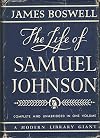
At the end of his Life of Johnson, James Boswell admits to many of his subject's faults: Johnson's irascibility, his prejudices, his narrow-mindedness in religion and politics. Johnson was a conservative with a capital C, and he is outright dismissive of many of the important philosophical ideas of his time (there is little consideration of Locke, Hume or Smith, much less Kant).
Instead, Johnson is known has the foremost literary figure of 18th Century London. He was not a man of ideas; show more rather, he was a man of language, and his greatest achievement was to codify that language in his Dictionary. Again, this project was an essentially conservative endeavor, an attempt to protect and elevate the language so that the uneducated masses could be kept in their linguistic place.
The Romantics that followed represented a rebellion against this staid, elitist, infighting group of literati that includes Addison, Steele, Pope and Johnson. Instead of engaging in a game of wits against their intellectual rivals, the Romantics sought to expand the possibilities of language by infusing it with a more natural, vernacular, personal and passionate approach. The writers of the Age of Johnson were essentially backwards looking, translating and retranslating the Greeks and Romans, writing criticism on Shakespeare. The Romantics were visionary and progressive. johnson would have probably scoffed at the likes of a Keats or a Blake as being too radical and impolite in their poetic visions.
Boswell's life of Johnson is confusing in that, while it is a warts and all depiction of the good doctor, the reader is a left with a sense that Boswell looks at his subject through the rose-colored lenses of a literary acolyte. What are we meant to think of this complicated man? show less
Instead, Johnson is known has the foremost literary figure of 18th Century London. He was not a man of ideas; show more rather, he was a man of language, and his greatest achievement was to codify that language in his Dictionary. Again, this project was an essentially conservative endeavor, an attempt to protect and elevate the language so that the uneducated masses could be kept in their linguistic place.
The Romantics that followed represented a rebellion against this staid, elitist, infighting group of literati that includes Addison, Steele, Pope and Johnson. Instead of engaging in a game of wits against their intellectual rivals, the Romantics sought to expand the possibilities of language by infusing it with a more natural, vernacular, personal and passionate approach. The writers of the Age of Johnson were essentially backwards looking, translating and retranslating the Greeks and Romans, writing criticism on Shakespeare. The Romantics were visionary and progressive. johnson would have probably scoffed at the likes of a Keats or a Blake as being too radical and impolite in their poetic visions.
Boswell's life of Johnson is confusing in that, while it is a warts and all depiction of the good doctor, the reader is a left with a sense that Boswell looks at his subject through the rose-colored lenses of a literary acolyte. What are we meant to think of this complicated man? show less

The best way to read Boswell's Life of Johnson is this way: via a somewhat cheesy, "classic library" volume of a Great Classics type of series. The book looks like one of those books you would find in the movie set of a lawyer's office, trying to look distinguished and old, although it feels plasticy.
We learn from other sources (outside of Boswell) that Boswell himself was something of an annoying 18th century star f__ker, but thank God he was - because reading this book is like being a part show more of a hundred dinner and parlour conversations with the wits and men of power in 18th century England. Funny bastards some of them were, too.
Skill in the art of conversation was the most highly prized talent, and Johnson was considered king of them all. This is a world steeped in The Classics, post Renaissance but pre Industrial/Scientific Revolution - that sweet spot where men were expected to venture to come up with a theory and interpretation about anything: how to talk, the way to cook a meal, where to travel, you name it. And Johnson always had an interesting and strong Theory of Anything.
Somehow it seems like nobody worked, they were just able to go to each other's houses, eat too much, drink hard, and talk smack about each other full time. Good times.
Today, Johnson would be considered a blowhard; narrow minded, reactionary, pompous, and egotistical. But that's why he's actually interesting.
This was a cool era because you would address your best friend as "Sir".
Ironically, Boswell's writing holds up better than Johnson's himself, but who cares about that history of literature crap.
If each book had a smell, this book would smell like really good roast beef, with some hard licks thrown in.
Sir, I am,
Your most humble reviewer,
&tc &tc show less
We learn from other sources (outside of Boswell) that Boswell himself was something of an annoying 18th century star f__ker, but thank God he was - because reading this book is like being a part show more of a hundred dinner and parlour conversations with the wits and men of power in 18th century England. Funny bastards some of them were, too.
Skill in the art of conversation was the most highly prized talent, and Johnson was considered king of them all. This is a world steeped in The Classics, post Renaissance but pre Industrial/Scientific Revolution - that sweet spot where men were expected to venture to come up with a theory and interpretation about anything: how to talk, the way to cook a meal, where to travel, you name it. And Johnson always had an interesting and strong Theory of Anything.
Somehow it seems like nobody worked, they were just able to go to each other's houses, eat too much, drink hard, and talk smack about each other full time. Good times.
Today, Johnson would be considered a blowhard; narrow minded, reactionary, pompous, and egotistical. But that's why he's actually interesting.
This was a cool era because you would address your best friend as "Sir".
Ironically, Boswell's writing holds up better than Johnson's himself, but who cares about that history of literature crap.
If each book had a smell, this book would smell like really good roast beef, with some hard licks thrown in.
Sir, I am,
Your most humble reviewer,
&tc &tc show less

I probably couldn't have stomached an unabridged version of this classic, so it was good to read this abridged version. It is a classic, and I see and know why, but it really should be "Boswell's Conversations with Johnson and some Anecdotes I Picked Up From Others." Sometimes he makes good points, sometimes he is funny. But mostly he is curmudgeonly. As a society we've progressed well past people seeing Johnson's greatness and Boswell's usefulness. It was good to read some bons mot I've show more seen before in context, discover where some things come from, and find some new ones. For instance, in the 1964 film Zulu the surgeon tells Hook: "Brandy is for heroes." It's here in Boswell's Johnson. Who knew? But, I wouldn't call this mind-altering or even an essential text anymore. A good one, but well past the ken of usefulness and entertainingness. Glad I read it, but I'd only recommend it to super-nerds with nothing to do and a love of the eighteenth century. This edition is an old, post-War illustrated edition (from 1946), with some pretty color plates and line drawings, though the latter seemed to peter out early on in the book. It looks like some printing restrictions were still in place, like chapters starting on the same page the previous one ended, etc. (I learned that from reading a new edition of Stewart's Names on the Land).
[I bought this edition, too, for like a dollar at a book sale for the friends of the Dick Smith Library at Tarleton State University in Stephenville, Texas, in about 2002 or so, when i was a senior getting my B.A. in history. So, there is a bit of sentimental attachment to the old hunk of book.] show less
[I bought this edition, too, for like a dollar at a book sale for the friends of the Dick Smith Library at Tarleton State University in Stephenville, Texas, in about 2002 or so, when i was a senior getting my B.A. in history. So, there is a bit of sentimental attachment to the old hunk of book.] show less

James Boswell and Samuel Johnson were unlikely friends: Boswell was a young Scottish nobleman with a penchant for drinking and whoring, while Johnson was poorer, much more devout (in theory, at least), and a good 30 years older. Yet throughout the course of this monumental work, Boswell describes his reverence for Johnson's intelligence, morality, and literary talents -- a reverence so extreme that Boswell took notes on almost every conversation he ever had with the older man. As a result, show more this biography is stuffed full of Boswell's personal anecdotes, letters both to and from Johnson, and first-person accounts of other contemporaries who knew him. Near the end of the book, Boswell states: "The character of Samuel Johnson has, I trust, been so developed in the course of this work, that they who have honoured it with a perusal, may be considered as well acquainted with him." And indeed, anyone who reads this book will come away with an extremely vivid picture of a remarkable man.
This book is so huge and deals with so many things that I don't quite know what to say about it. At first I was very intimidated, both by its length and by Boswell's flowery 18th-century prose. But even though it's not a quick read, this book contains a wealth of fascinating details about Johnson and the age in which he lived. I was struck by how literary the 18th century was, in the sense that seemingly anyone with a claim to intelligence was churning out books and pamphlets. In that way, Johnson's time is very similar to our own, where everybody can (and does) publish blogs, tweets, and other forms of instantaneous literature. I was also fascinated by Johnson's unique character; though intelligent, he was often pompous, narrow-minded, and abrasive. I frequently found myself underlining various Johnsonian sayings that were wise, or funny, or both -- but I would have hated to be forced to converse with him! Overall, I would recommend this book to anyone interested in the time period or who enjoys very thorough biographies! show less
This book is so huge and deals with so many things that I don't quite know what to say about it. At first I was very intimidated, both by its length and by Boswell's flowery 18th-century prose. But even though it's not a quick read, this book contains a wealth of fascinating details about Johnson and the age in which he lived. I was struck by how literary the 18th century was, in the sense that seemingly anyone with a claim to intelligence was churning out books and pamphlets. In that way, Johnson's time is very similar to our own, where everybody can (and does) publish blogs, tweets, and other forms of instantaneous literature. I was also fascinated by Johnson's unique character; though intelligent, he was often pompous, narrow-minded, and abrasive. I frequently found myself underlining various Johnsonian sayings that were wise, or funny, or both -- but I would have hated to be forced to converse with him! Overall, I would recommend this book to anyone interested in the time period or who enjoys very thorough biographies! show less
Lists
Awards


You May Also Like


Associated Authors
Statistics
- Works
- 31
- Also by
- 4
- Members
- 4,503
- Popularity
- #5,565
- Rating
- 4.2
- Reviews
- 47
- ISBNs
- 154
- Languages
- 8