
Walter Jackson Bate (1918–1999)
Author of Samuel Johnson
About the Author
Image credit: New York World-Telegram and the Sun Newspaper Photograph Collection (Library of Congress).
Works by Walter Jackson Bate
Associated Works
Selected Essays from the "Rambler", "Adventurer" and "Idler" (Yale Edition of the Works of Samuel Johnson) (1968) — Editor — 113 copies, 1 review
Tagged
Common Knowledge
- Legal name
- Bate, Walter Jackson
- Other names
- Bates, W. J.
Bates, W. Jackson - Birthdate
- 1918-05-23
- Date of death
- 1999-07-26
- Gender
- male
- Education
- Harvard University (BA|MA|Ph.D)
- Occupations
- literary critic
biographer
professor - Organizations
- Harvard University
- Awards and honors
- Fellow, American Academy of Arts and Sciences (1957)
Pulitzer Prize for Biography or Autobiography (1964, 1978)
American Philosophical Society (1966)
National Book Award in Biography (1978)
National Book Critics Circle Award (1978) - Nationality
- USA
- Birthplace
- Mankato, Minnesota, USA
- Places of residence
- Cambridge, Massachusetts, USA
- Place of death
- Boston, Massachusetts, USA
- Associated Place (for map)
- Massachusetts, USA
Members
Reviews

Bate, Walter Jackson. Samuel Johnson. 1977. Counterpoint, 1998.
Samuel Johnson (1709-1785) is the preeminent example of what is now a vanishing breed: a man of letters. He singlehandedly wrote the first English Dictionary worthy of the name, an edition of Shakespeare that was the standard text for two centuries, one of the earliest philosophical novels, one of the best philosophical poems of his century, and a body of journalistic writing, sermons, and biography that no one has ever equaled. show more He was fluent in several languages, most notably, Latin, and late in life taught himself Dutch just to keep his mind off his troubles. He was also the subject of the classic biography written by James Boswell. Much of his journalistic writing and all the sermons were written anonymously or ghostwritten for someone else. While working for a magazine, he was given notes on parliamentary speeches and then wrote what purported to be transcripts of the speeches. He did such a good job that no one from either party ever complained to the magazine. Johnson had written better speeches for them than they had actually made. He lived into his seventies but suffered all his life from depression, convulsions and twitches, poor eyesight and hearing. He was forced to drop out of Oxford in his second year because he could not pay the tuition and remained poor until late in life. Boswell always called him Dr. Johnson, but all his degrees were honorary. His political and philosophical views are difficult to classify. Deeply religious, he seldom went to church. A Tory, he opposed colonialism and slavery. In fact, he made a former slave, whom he employed and helped educate, his main heir. He is certainly a man whose life is worth knowing. The biography by Walter Jackson Bate is still the most detailed and well-researched life of Johnson, despite a couple of major biographies written to celebrate the 300th anniversary of his birth in 2009. It may be a bit more Freudian than is now popular, but most of its judgments seem sound. Bate’s discussion of “The Vanity of Human Wishes” is especially insightful. Five stars. show less
Samuel Johnson (1709-1785) is the preeminent example of what is now a vanishing breed: a man of letters. He singlehandedly wrote the first English Dictionary worthy of the name, an edition of Shakespeare that was the standard text for two centuries, one of the earliest philosophical novels, one of the best philosophical poems of his century, and a body of journalistic writing, sermons, and biography that no one has ever equaled. show more He was fluent in several languages, most notably, Latin, and late in life taught himself Dutch just to keep his mind off his troubles. He was also the subject of the classic biography written by James Boswell. Much of his journalistic writing and all the sermons were written anonymously or ghostwritten for someone else. While working for a magazine, he was given notes on parliamentary speeches and then wrote what purported to be transcripts of the speeches. He did such a good job that no one from either party ever complained to the magazine. Johnson had written better speeches for them than they had actually made. He lived into his seventies but suffered all his life from depression, convulsions and twitches, poor eyesight and hearing. He was forced to drop out of Oxford in his second year because he could not pay the tuition and remained poor until late in life. Boswell always called him Dr. Johnson, but all his degrees were honorary. His political and philosophical views are difficult to classify. Deeply religious, he seldom went to church. A Tory, he opposed colonialism and slavery. In fact, he made a former slave, whom he employed and helped educate, his main heir. He is certainly a man whose life is worth knowing. The biography by Walter Jackson Bate is still the most detailed and well-researched life of Johnson, despite a couple of major biographies written to celebrate the 300th anniversary of his birth in 2009. It may be a bit more Freudian than is now popular, but most of its judgments seem sound. Bate’s discussion of “The Vanity of Human Wishes” is especially insightful. Five stars. show less
"Samuel Johnson" by Walter Jackson Bate is a well-researched biography of this unique and wonderful genius. Cursed by poor health and poverty, Johnson rose not through bald ambition but purely by his will to learn and to be a positive force for enlightenment. Brutally honest with himself and shedding all illusion about his fellow man, he fought through periods of melancholy and near madness to enlist a personal faith that, along with help from generous and appreciative friends, sustained him show more adequately to become perhaps the most distinguished man of letters in English history.
Among his remarkable achievements is compilation of a comprehensive Dictionary of the English Language which he completed in a few years, while committees of dozens of scholars of other countries were taking decades to assemble dictionaries in their tongues. Helpful were his mastery of Greek and Latin and the classics and his near-perfect memory for what he had very widely read. With its apt citations it is considered a work of literature.
Other valuable works include the poem "The Vanity of Human Wishes", his highly original criticism of Shakespeare, biographies, biographical sketches called "Lives of the Poets", essays, and many speeches and lectures written for others for free and not for attribution to Johnson. For example, without formal training in the law, Johnson wrote legal lectures for delivery by the successor to the great Blackstone.
Another example. For a newspaper he wrote a number of Parliamentary speeches. It was illegal to report the actual speeches, so Johnson sent someone to listen to them and make notes on their context. From the notes and his fine knowledge of the world, Johnson invented speeches and printed them as disquisitions from a fictional land, so that his perceiving public could sense the issues involved. Johnson's speeches were often so far superior to the actual ones that the politicians began claiming them, and they came to be collected and reprinted as genuine.
Johnson is said to be after Shakespeare the most quoted man in the English language; much of it from conversation recorded by associates. He did his own thinking about everything, great or small. He could have been a withering satirist to match Swift but was by will or by nature generous, and from his own struggles and erudition was sympathetic to trials and obstacles threatening everyone and was likely wary of his power to inflict harm.
If you are wanting an easy read about Johnson and have not already done so, then try Boswell's "Life of Johnson". The drawback is that nearly all of that book is about the last third or fourth of Johnson's life; that is, when Boswell knew him. Still, that book is a solid classic.
This biography covers Johnson's entire life, and Bate fills in the years missing from Boswell and corrects errors. There are two quibbles. Bate writes in a style that is amiable, wise and non-academic, but a little too careful to read effortlessly. And he does a bit more of psychologizing than usual, though it is done well, and primarily for Johnson's formative years. That this won the 1978 Pulitzer Prize for biography should not deter anyone.
But it is Johnson himself who carries the day to make this an easy five-star recommendation. show less
Among his remarkable achievements is compilation of a comprehensive Dictionary of the English Language which he completed in a few years, while committees of dozens of scholars of other countries were taking decades to assemble dictionaries in their tongues. Helpful were his mastery of Greek and Latin and the classics and his near-perfect memory for what he had very widely read. With its apt citations it is considered a work of literature.
Other valuable works include the poem "The Vanity of Human Wishes", his highly original criticism of Shakespeare, biographies, biographical sketches called "Lives of the Poets", essays, and many speeches and lectures written for others for free and not for attribution to Johnson. For example, without formal training in the law, Johnson wrote legal lectures for delivery by the successor to the great Blackstone.
Another example. For a newspaper he wrote a number of Parliamentary speeches. It was illegal to report the actual speeches, so Johnson sent someone to listen to them and make notes on their context. From the notes and his fine knowledge of the world, Johnson invented speeches and printed them as disquisitions from a fictional land, so that his perceiving public could sense the issues involved. Johnson's speeches were often so far superior to the actual ones that the politicians began claiming them, and they came to be collected and reprinted as genuine.
Johnson is said to be after Shakespeare the most quoted man in the English language; much of it from conversation recorded by associates. He did his own thinking about everything, great or small. He could have been a withering satirist to match Swift but was by will or by nature generous, and from his own struggles and erudition was sympathetic to trials and obstacles threatening everyone and was likely wary of his power to inflict harm.
If you are wanting an easy read about Johnson and have not already done so, then try Boswell's "Life of Johnson". The drawback is that nearly all of that book is about the last third or fourth of Johnson's life; that is, when Boswell knew him. Still, that book is a solid classic.
This biography covers Johnson's entire life, and Bate fills in the years missing from Boswell and corrects errors. There are two quibbles. Bate writes in a style that is amiable, wise and non-academic, but a little too careful to read effortlessly. And he does a bit more of psychologizing than usual, though it is done well, and primarily for Johnson's formative years. That this won the 1978 Pulitzer Prize for biography should not deter anyone.
But it is Johnson himself who carries the day to make this an easy five-star recommendation. show less
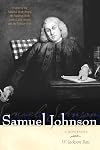
While it is primarily, a psychological portrait of the man and how he struggled with severe depression and major breakdowns and Tourette's Syndrome and much more throughout his life, it also shows how very much one individual can achieve in life despite seemingly insurmountable obstacles.
With the book's subject matter being what it is, it is probably not suitable for a 'beach read' but it did get a Natl Bk Award, the Pulitzer Prize, etc.
With the book's subject matter being what it is, it is probably not suitable for a 'beach read' but it did get a Natl Bk Award, the Pulitzer Prize, etc.
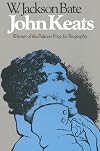
1784 John Keats, by Walter Jackson Bate (read 25 June 1983) (Pulitzer Biography prize for 1964) On Jan 13, 1964, I read: 765 John Keats: The Making of the Poet, by Aileen Ward (read 13 Jan 1964) (National Book Award arts and letters prize for 1964) and on 5 Oct 1968 I read: John Keats, by Robert Gittings (read 5 Oct 1968). I much appreciated both of these fine works, so I decided to read this biography by Bate. But most of this book was very tough going. It was full of very heavy literary show more analysis--frankly over my head, usually.. The study of some of the long poems simply did not interest me. But the account of Keats' last year, culminating in his death on Feb 23, 1821, was very well done, and absorbing. Keats was a most amazing person: how did he become, haphazardly educated as he was, such a toweringly intellectual poet? One of the greatest English poets, he never made any money--though his publishers made money available to him. Incidentally, though Keats knew Shelley, they had little to do with each other, and seldom saw each other in Italy. Keats is a much more appealing person than Shelley--and a better poet. show less
Lists
Awards


You May Also Like


Associated Authors
Statistics
- Works
- 14
- Also by
- 5
- Members
- 1,162
- Popularity
- #22,116
- Rating
- 4.2
- Reviews
- 10
- ISBNs
- 41
- Favorited
- 4