
Nathaniel Rich
Author of Losing Earth: A Recent History
About the Author
Image credit: via author's website
Works by Nathaniel Rich
Cloudthief: A Novel 4 copies
Kefter the Blind 1 copy
Associated Works
I'm With the Bears: Short Stories from a Damaged Planet (2011) — Contributor — 107 copies, 4 reviews
Significant Objects: 100 Extraordinary Stories about Ordinary Things (2012) — Contributor — 64 copies, 1 review
Tagged
Common Knowledge
- Birthdate
- 1980-03-05
- Gender
- male
- Education
- Yale University
- Organizations
- The Paris Review
- Relationships
- Rich, Frank (father)
Rich, Simon (brother) - Nationality
- USA
- Associated Place (for map)
- USA
Members
Reviews

In New Orleans, in 1918, an axe murderer is on the loose, terrifying the people living there. At the same time, a cornet player is trying to find work playing Jazz, but making ends meet by helping a guy he knows rob people. It's more lucrative and easier than getting a job digging the new canal between Lake Pontchartrain and the Mississippi River, but with the town and the police on edge, he's ready to call it quits and take the job his pregnant wife wants him to take. Then there's Beatrice, show more who has run the family crime syndicate since her husband's sudden death. She's grooming her son to take on more responsibility, but it's an uphill battle. And there's Bill, a war veteran and police officer whose PTSD is causing him to see people who aren't there. He's never dealt with the guilt of surviving a specific incident and things with his wife are strained. But if he can catch the axman, he'll win back her love and find peace.
There is a lot going on in this novel, which reflects a city in the middle of upheaval and change. Each of the three narrative threads are interesting and could certainly fill an entire book of their own. And that's this novel's weakness; there is simply too much going on. Things tie together at the end, but the novel is split into three separate stories, none of which get enough space to really breathe. This book is full of history of New Orleans (the axe murders did happen, the canal was dug, Jazz was played) and one senses that Nathaniel Rich was so full of the history of this place and time that it overwhelmed his narrative structure. I did enjoy my time with Isadore, Bill and even Beatrice, I just wanted more of them. show less
There is a lot going on in this novel, which reflects a city in the middle of upheaval and change. Each of the three narrative threads are interesting and could certainly fill an entire book of their own. And that's this novel's weakness; there is simply too much going on. Things tie together at the end, but the novel is split into three separate stories, none of which get enough space to really breathe. This book is full of history of New Orleans (the axe murders did happen, the canal was dug, Jazz was played) and one senses that Nathaniel Rich was so full of the history of this place and time that it overwhelmed his narrative structure. I did enjoy my time with Isadore, Bill and even Beatrice, I just wanted more of them. show less
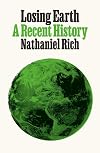
Summary: An account of the lost opportunity of the 1980's to address climate change and the birth of the polarized dialogue that exists to this day.
Did you know that much of the scientific understanding of the greenhouse effect and global warming traces back to the nineteenth century? That in the 1950's and throughout the Sixties and Seventies, scientists were already warning of global warming and contending that warming connected with higher carbon dioxide levels was already evident? Did show more you know there was a time when climate change and the science behind it was not a political issue and that political leaders in both parties, and many others in most the the countries of the world, substantially agreed that this was a looming problem that needed to be addressed? That world leaders came very close to an agreement to limit and reduce carbon dioxide emissions in 1989? That was thirty years ago. In 1990 human beings emitted more than 20 billion metric tons of carbon dioxide into the atmosphere. Instead of cutting that amount, by 2018, the amount was projected at 37.1 billion metric tons and growing.
Nathaniel Rich narrates the story of a lost moment through two figures: Rafe Pomerance, an environmental lobbyist and Gordon MacDonald, a climate scientist. A third figure who plays a prominent role is James Hansen, a NASA climate scientist who compiled massive amounts of data, and gave compelling testimony wherever called upon. Pomerance, came across this finding in a government study on the continued use of fossil fuels: "continued use of fossil fuels might, within two or three decades, bring about 'significant and damaging' changes to the global atmosphere." That was in the Spring of 1979 and changed the course of his life. It led to his interview with Gordon MacDonald, a geophysicist, who was glad that someone beside him finally noticed.
Rich's book traces their efforts to mobilize awareness and action, culminating in the formation of the IPCC (Intergovernmental Panel on Climate Change) and a climate summit in the Netherlands in 1989. Initially, action on climate change was widely supported, at least in public statements. Meanwhile, a transformation began to take place in the fossil fuel industry from studying the issue themselves and reckoning on the consequences of continued fuel use, to a movement of resistance and a challenge to the science, and exercise of increasing leverage. In the climate talks, the resistance of one US figure led to a meaningless agreement to which the US never subscribed, and an increasingly politicized discourse around climate issues. Perhaps the most stunning revelation of this book was that it was not always so.
Rich's afterword is both hopeful and sobering. He both notes the technological advances that might be turned to action limiting global temperature rises to somewhere between 1.5 and 2 degrees Celsius. Yet he also wrestles with the propensity of human beings to not act to address possible dangers down the road and instead prefer their present comfort. He not only condemns in the strongest terms those who twist and deny what they know. He challenges all of us:
"We do not like to think about loss, or death; Americans in particular, do not like to think about death. No matter how obsessively one follows the politics of climate change, it is difficult to contemplate soberly an existential threat to the species. Our queasiness even infects the language we use to describe it: the banalities of "global warming" and "climate change" perform the linguistic equivalent of rolling on sanitary gloves to palpate a hemorrhaging wound."
To see how close the world came to a climate agreement on carbon emissions in the 1980's, to learn of a time when this was not a political football, suggests that it may be possible in the future. To avert the worst possibilities, it is imperative. One concludes Rich's book wondering, will we seize or miss the opportunity that we have? show less
Did you know that much of the scientific understanding of the greenhouse effect and global warming traces back to the nineteenth century? That in the 1950's and throughout the Sixties and Seventies, scientists were already warning of global warming and contending that warming connected with higher carbon dioxide levels was already evident? Did show more you know there was a time when climate change and the science behind it was not a political issue and that political leaders in both parties, and many others in most the the countries of the world, substantially agreed that this was a looming problem that needed to be addressed? That world leaders came very close to an agreement to limit and reduce carbon dioxide emissions in 1989? That was thirty years ago. In 1990 human beings emitted more than 20 billion metric tons of carbon dioxide into the atmosphere. Instead of cutting that amount, by 2018, the amount was projected at 37.1 billion metric tons and growing.
Nathaniel Rich narrates the story of a lost moment through two figures: Rafe Pomerance, an environmental lobbyist and Gordon MacDonald, a climate scientist. A third figure who plays a prominent role is James Hansen, a NASA climate scientist who compiled massive amounts of data, and gave compelling testimony wherever called upon. Pomerance, came across this finding in a government study on the continued use of fossil fuels: "continued use of fossil fuels might, within two or three decades, bring about 'significant and damaging' changes to the global atmosphere." That was in the Spring of 1979 and changed the course of his life. It led to his interview with Gordon MacDonald, a geophysicist, who was glad that someone beside him finally noticed.
Rich's book traces their efforts to mobilize awareness and action, culminating in the formation of the IPCC (Intergovernmental Panel on Climate Change) and a climate summit in the Netherlands in 1989. Initially, action on climate change was widely supported, at least in public statements. Meanwhile, a transformation began to take place in the fossil fuel industry from studying the issue themselves and reckoning on the consequences of continued fuel use, to a movement of resistance and a challenge to the science, and exercise of increasing leverage. In the climate talks, the resistance of one US figure led to a meaningless agreement to which the US never subscribed, and an increasingly politicized discourse around climate issues. Perhaps the most stunning revelation of this book was that it was not always so.
Rich's afterword is both hopeful and sobering. He both notes the technological advances that might be turned to action limiting global temperature rises to somewhere between 1.5 and 2 degrees Celsius. Yet he also wrestles with the propensity of human beings to not act to address possible dangers down the road and instead prefer their present comfort. He not only condemns in the strongest terms those who twist and deny what they know. He challenges all of us:
"We do not like to think about loss, or death; Americans in particular, do not like to think about death. No matter how obsessively one follows the politics of climate change, it is difficult to contemplate soberly an existential threat to the species. Our queasiness even infects the language we use to describe it: the banalities of "global warming" and "climate change" perform the linguistic equivalent of rolling on sanitary gloves to palpate a hemorrhaging wound."
To see how close the world came to a climate agreement on carbon emissions in the 1980's, to learn of a time when this was not a political football, suggests that it may be possible in the future. To avert the worst possibilities, it is imperative. One concludes Rich's book wondering, will we seize or miss the opportunity that we have? show less

This is a pretty great book for the culture of weather-paranoia that grips so many people today. The main character is absolutely terrified of every potential disaster remotely imaginable, and he has a pretty vivid imagination so he is magnificently paranoid. Unlike the jabbering slack-jawed morons that populate your television screen (often confused with meteorologists) Mitchell Zukor actually has an ounce of intelligence, he is a mathematician and constantly calculates the odds of any show more given disaster actually happening, which lends credence to the story and sets it apart some of the more manic environmental novels out there today.
This is why I liked reading Odds Against Tomorrow so much. With so many disaster and apocalypse novels being written right now, an author has to do something really unique to stand out from the crowd. Fortunately, Nathaniel Rich has done just that! There is a lot of depth here, and I think the book would be an amazing choice for a book club because it opens up numerous avenues of discussion and could be interpreted in so many different ways. Even if you are reading it alone though, it's beautifully written and the plot moves along nicely. It's really a very well-rounded novel.
What minor complaints I can come up with are hardly worth mentioning when you take the whole book in perspective. Yeah, fine, so she turned the TV off, then turned back and started watching it as if she never turned if off in the first place. Big deal! It's a wonderful novel, so go read it. show less
This is why I liked reading Odds Against Tomorrow so much. With so many disaster and apocalypse novels being written right now, an author has to do something really unique to stand out from the crowd. Fortunately, Nathaniel Rich has done just that! There is a lot of depth here, and I think the book would be an amazing choice for a book club because it opens up numerous avenues of discussion and could be interpreted in so many different ways. Even if you are reading it alone though, it's beautifully written and the plot moves along nicely. It's really a very well-rounded novel.
What minor complaints I can come up with are hardly worth mentioning when you take the whole book in perspective. Yeah, fine, so she turned the TV off, then turned back and started watching it as if she never turned if off in the first place. Big deal! It's a wonderful novel, so go read it. show less
This book documents opportunities that existed from 1979 to 1989 to address climate change, and the manner in which the US went from bipartisan agreement that something must be done to our current state of polarization. Many people may not be aware that climate change and the science associated with it were not always political issues, and that many leaders of both parties (along with the global community) agreed that this was an impending crisis that needed to be addressed. World leaders show more came very close to a global agreement back in 1989 at a conference in the Netherlands to reduce carbon dioxide and other greenhouse gas emissions.
“More carbon has been released into the atmosphere since [the Noordwijk conference ended in 1989] than in the entire history of civilization preceding it.”
The author traces the efforts to raise awareness and take actions, resulting in the formation of the Intergovernmental Panel on Climate Change. He cites the early acceptance by the oil industries in their programs focused on alternative sources of energy and studying the issue from within. The author provides the history of what occurred to lose the previous momentum. The primary reasons relate to economics, politics, and human nature, with a common bond of short-term thinking.
The Afterword provides some hope and notes that the fundamentals of the science behind climate change have not changed. I think it is enlightening to see how close the global community came to an agreement on this issue in the 1980s, which provides at least a glimmer of optimism that it may be possible in the future. show less
“More carbon has been released into the atmosphere since [the Noordwijk conference ended in 1989] than in the entire history of civilization preceding it.”
The author traces the efforts to raise awareness and take actions, resulting in the formation of the Intergovernmental Panel on Climate Change. He cites the early acceptance by the oil industries in their programs focused on alternative sources of energy and studying the issue from within. The author provides the history of what occurred to lose the previous momentum. The primary reasons relate to economics, politics, and human nature, with a common bond of short-term thinking.
The Afterword provides some hope and notes that the fundamentals of the science behind climate change have not changed. I think it is enlightening to see how close the global community came to an agreement on this issue in the 1980s, which provides at least a glimmer of optimism that it may be possible in the future. show less
Lists
Science: Earth (1)
Climate Change (1)
Library TBR (1)
SFFKit 2018 (1)
Disaster Books (1)
io9 Book Club (1)
Awards


You May Also Like


Associated Authors
Statistics
- Works
- 11
- Also by
- 8
- Members
- 1,070
- Popularity
- #24,040
- Rating
- 3.5
- Reviews
- 35
- ISBNs
- 54
- Languages
- 6