
Alain Silver
Author of Film Noir Reader
About the Author
Image credit: Alain Silver, on sept. 2023
Series
Works by Alain Silver
The Vampire Film: From Nosferatu to Bram Stoker's Dracula - Third Edition (1976) — Author — 86 copies
From the Moment They Met It Was Murder: Double Indemnity and the Rise of Film Noir (2024) 32 copies, 2 reviews
Il noir 1 copy
Associated Works
Femme Fatales #42 (Vol. 6 No. 10/11) — Contributor — 1 copy
Tagged
Common Knowledge
- Canonical name
- Silver, Alain
- Legal name
- Silver, Alain Joel
- Birthdate
- 1947-12-07
- Gender
- male
- Education
- University of California, Los Angeles
- Nationality
- USA
- Birthplace
- Los Angeles, California, USA
- Associated Place (for map)
- California, USA
Members
Reviews
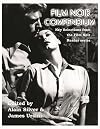
Rating: 4.5* of five
The Publisher Says: In this essential study of film noir, editors Alain Silver and James Ursini select the most significant and influential articles on the movement from their highly respected Film Noir Reader series and assemble them into a single, convenient, heavily illustrated volume. Still included, of course, are many rare early articles and such seminal essays as:
Borde and Chaumeton's "Towards a Definition of Film Noir" from Panorama du Film Noir Americain
Paul show more Schrader's "Notes on Film Noir"
"Paint It Black: the Family Tree of the Film Noir" by Raymond Durgnat
...with newer studies such as:
"Lounge Time" by Vivian Sobchack
"Manufacturing Heroines in Classic Noir Films" by Sheri Chinen Biesen
"Voices from the Deep: Film Noir as Psychodrama" J. P. Telotte
This collection of over 30 articles probes this most influential American film movement from varying angles: formalist, feminist, structuralist, sociological, and stylistic; narrative-thematic historical, and even from the point of view of a pure aficionado. There is something in this volume for every student or devotee of film noir. Plus like the readers that have proven an invaluable tool for academics planning a syllabus, it can serve as the most complete core text for any of the myriad of film noir courses taught throughout the world.
I RECEIVED A DRC FROM THE PUBLISHER VIA EDELWEISS+. THANK YOU.
My Review: Let me show you a few pictures from the book:
...among many others pepper the text, bringing the much-needed visual element to these learnèd essays about visual storytelling. This is a book of educated devotees delving deep into their passion, not a coffee-table book.
But it's Turkey Day. No better time to be reminded that crime is always, in the end, punished. Put the carving knife down, Mom; empty the poisoned wine now, Dad; beating your older sibling to death with the candlestick is best left to the Clue board, kids. (Of all ages.) Togetherness is, I know, overrated, so get those urges met by reading about them. Family togetherness...work parties...club meetings can all get a little too too much when packed into a short span. Blow off some emotional steam in the pursuit of understanding why killing does not solve the problem just creates more.
Oh, and SOMEone out there has/is a film buff, a noirista, a lover of moodily lit, elegantly appointed period pieces like these, on their gifting list. show less
The Publisher Says: In this essential study of film noir, editors Alain Silver and James Ursini select the most significant and influential articles on the movement from their highly respected Film Noir Reader series and assemble them into a single, convenient, heavily illustrated volume. Still included, of course, are many rare early articles and such seminal essays as:
...with newer studies such as:
This collection of over 30 articles probes this most influential American film movement from varying angles: formalist, feminist, structuralist, sociological, and stylistic; narrative-thematic historical, and even from the point of view of a pure aficionado. There is something in this volume for every student or devotee of film noir. Plus like the readers that have proven an invaluable tool for academics planning a syllabus, it can serve as the most complete core text for any of the myriad of film noir courses taught throughout the world.
I RECEIVED A DRC FROM THE PUBLISHER VIA EDELWEISS+. THANK YOU.
My Review: Let me show you a few pictures from the book:
...among many others pepper the text, bringing the much-needed visual element to these learnèd essays about visual storytelling. This is a book of educated devotees delving deep into their passion, not a coffee-table book.
But it's Turkey Day. No better time to be reminded that crime is always, in the end, punished. Put the carving knife down, Mom; empty the poisoned wine now, Dad; beating your older sibling to death with the candlestick is best left to the Clue board, kids. (Of all ages.) Togetherness is, I know, overrated, so get those urges met by reading about them. Family togetherness...work parties...club meetings can all get a little too too much when packed into a short span. Blow off some emotional steam in the pursuit of understanding why killing does not solve the problem just creates more.
Oh, and SOMEone out there has/is a film buff, a noirista, a lover of moodily lit, elegantly appointed period pieces like these, on their gifting list. show less
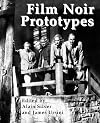
One has to hand it to the writing/editing team of Alain Silver and James Ursini. Ever since contributing to, and co-editing the seminal 1981 tome Film Noir: An Encyclopedic Reference to the American Style, these two, especially the ultra-prolific and multi-formated Silver, have created and participated in many films and film related projects, yet, somehow, they eternally keep coming back to their first love and prime passion: film noir.
One would think that after some four decades and very show more many volumes, that the two just wouldn't have any more to say on the subject of film noir. Perhaps one of the things about that sub-genre which makes it so fascinating is that there is ALWAYS more to say concerning it. The big difference between the editor's other books and this one is that while the others examine (in minute and often quite academic detail) the films which are definite examples of the movement from whatever point in it's more of less official history (knowing that there is no completely clear cut official history),this one concentrates on the films, trends, directors,actors, and artistic movements which went into creating what the editors once termed "the American style" but which, in fact, comes from all over and,as it turns out, much father back than one may think.
Those less versed in the history of the movement often think that it is just the child of German expressionism, first as a traditional art form (think of Edvard Munsch's renowned, and quite modern feeling, painting The Scream), then in film form, which came to Holywood via immigrants escaping from a pretty noir situation themselves. Yes, that is a main element (and the editors play on it by adorning the cover of this surprisingly lavish book with a still of actor Gustave Diessl, made up as a version of Jack the Ripper, walking through an expressionistic and very Germanic London in the 1928 German silent masterpiece Pandora's Box, which does indeed rate an article of its own in the book). However, art forms from Victorian England played a part. So, greatly, did the famed Hollywood gangster films of the early 1930s. So did the early British films of Alfred Hitchcock. So did early films of Hollywood great John Ford. Surprisingly to some, so did early 1930s horror films such as 1932's The Mummy and 1934's The Black Cat. Even more suprprising, German emigre actor Peter Lorre is deemed as being, in and of himself, film noir before the movement (and there is an excellent essay centering on Lorre's too little known, well crafted 1941 B film with director Robert Florey, The Face Behind the Mask, instead of the more usual suspect, 1940's Stranger on the Third Floor, as being a great noir precurssor thanks primarily to Lorre's intense and usual pressence).
All in all, there are almost a dozen informative essays in this book. Thanks to the high quality of the printing (even though its a trade paperback) the various stills and frame enlargements and vintage ads all look fantastic (and all, appropriately, in black and white). Though all of the essays would make sense to the layman, this is really more of a work for the hard core cultists. As such, it is wonderful. show less
One would think that after some four decades and very show more many volumes, that the two just wouldn't have any more to say on the subject of film noir. Perhaps one of the things about that sub-genre which makes it so fascinating is that there is ALWAYS more to say concerning it. The big difference between the editor's other books and this one is that while the others examine (in minute and often quite academic detail) the films which are definite examples of the movement from whatever point in it's more of less official history (knowing that there is no completely clear cut official history),this one concentrates on the films, trends, directors,actors, and artistic movements which went into creating what the editors once termed "the American style" but which, in fact, comes from all over and,as it turns out, much father back than one may think.
Those less versed in the history of the movement often think that it is just the child of German expressionism, first as a traditional art form (think of Edvard Munsch's renowned, and quite modern feeling, painting The Scream), then in film form, which came to Holywood via immigrants escaping from a pretty noir situation themselves. Yes, that is a main element (and the editors play on it by adorning the cover of this surprisingly lavish book with a still of actor Gustave Diessl, made up as a version of Jack the Ripper, walking through an expressionistic and very Germanic London in the 1928 German silent masterpiece Pandora's Box, which does indeed rate an article of its own in the book). However, art forms from Victorian England played a part. So, greatly, did the famed Hollywood gangster films of the early 1930s. So did the early British films of Alfred Hitchcock. So did early films of Hollywood great John Ford. Surprisingly to some, so did early 1930s horror films such as 1932's The Mummy and 1934's The Black Cat. Even more suprprising, German emigre actor Peter Lorre is deemed as being, in and of himself, film noir before the movement (and there is an excellent essay centering on Lorre's too little known, well crafted 1941 B film with director Robert Florey, The Face Behind the Mask, instead of the more usual suspect, 1940's Stranger on the Third Floor, as being a great noir precurssor thanks primarily to Lorre's intense and usual pressence).
All in all, there are almost a dozen informative essays in this book. Thanks to the high quality of the printing (even though its a trade paperback) the various stills and frame enlargements and vintage ads all look fantastic (and all, appropriately, in black and white). Though all of the essays would make sense to the layman, this is really more of a work for the hard core cultists. As such, it is wonderful. show less
From the Moment They Met It Was Murder: Double Indemnity and the Rise of Film Noir (Turner Classic Movies) by Alain Silver
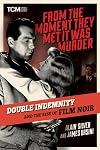
This is a book for readers with a serious interest in film noir and in Double Indemnity in particular. It’s a history and commentary, not so much on the content and merits of the film as on its birth, maturation, and legacy in the history of film noir.
The first several chapters almost mimic the assembly of the Magnificent Seven (or the Seven Samurai, if you want to be more filmophile about it) as novelist James M. Cain, Director Billy Wilder, Producer Joseph Sistrom, and screenwriter show more Raymond Chandler find their ways to the project. Cain of course had already written the novel, but he was unavailable for the movie adaptation due to contractual obligations elsewhere. Wilder meanwhile had made his way from pre-Nazi Europe to America, served his apprenticeships both in Germany and Hollywood, and became the ultimate father of the movie. He wanted his own trusty screenwriter, Charles Brackett, to write the script but Brackett was not a fan of the project, and he especially wasn’t a fan of Raymond Chandler who stepped in for him.
Much of the story is actual nuts and bolts — who got paid what, how they agreed and with what enthusiasm they embraced the project, and so on. It’s of course interesting to hear the stories of how the lead actors, Barbara Stanwyck, Fred MacMurray, and Edward G. Robinson, joined the project. Robinson was actually the most established star, but he was burdened by HUAC investigation and a history of association with and sympathy for left-leaning politics. MacMurray still strikes us as an odd choice, especially given what we know of his later career, but his performance is iconic. Stanwyck was an accomplished actress, with strong performances of similar flavors to her role in Double Indemnity, and of course, from this point on, she acquired a defining presence in the noir movement.
The Hays Code was alive and authoritative in the days in which Double Indemnity was developed and released (release date July 6, 1944). And the Code’s chief enforcer Joseph Breen’s personal presence hovered over the movie. In fact, previous aspirations by other producers, directors, and writers to adapt Cain’s novel foundered as non-starters, given the novel’s content (the criminality of its “protagonists” and the depravity of their actions) as juxtaposed against the Code.
In the end, Breen gave a somewhat surprisingly lenient approval. One scene that was not included in the finished product — the execution of Walter Neff (MacMurray) in the gas chamber — played a peculiar role in the movie’s development and in Breen’s approval. The book’s authors raise alternative interpretations, that maybe Wilder planned the scene to accentuate the moral that crime doesn’t pay, that maybe he planned it as something so brutal that he could offer it as a sacrifice to Breen’s censoring knife, or that he simply decided that the scene was unnecessary and actually provided an anticlimax to the final scene where Neff delivers his confession to Barton Keyes (Edward G. Robinson). The scene was unusually expensive to shoot, was shot, but was left behind (and even now is still missing from archives).
One thing I wanted more of from the book is the meta view, pulling back from the movie itself to the social history of film noir and how Double Indemnity influences that history both in itself and in the movement that it spurred. Although there were numerous movies now categorized as film noir before Double Indemnity, this was the spark that lit up the movement for the next ten years. And it is still, for many, the best and most paradigmatic instance of film noir.
That said, I strongly recommend the short but informative appendix on “Proto-Noir” that delves a bit into the history of film techniques and other factors that lead up to Double Indemnity’s production. And, of course there are many studies of the social and film-centric history of film noir, including the classic by Raymond Borde, A Panorama of American Film Noir. I also appreciated Silver’s and Ursini’s specific accounts of the reception of Double Indemnity at the time of its release. They make a good case that, although it won few awards and certainly was not a high-grossing movie, it was revolutionary in content, style, and moral stance.
While I’m at it, I’ll recommend some other sources. There isn’t a single book to satisfy all my own curiosity about Double Indemnity, much less film noir as a whole. For the backstory, the real-life murder case that inspired Cain’s novel, read Judd Gray’s memoir, Doomed Ship. Gray is the real-life Walter Neff, the murderer in the story who was executed for the crime (less than an hour after completing Doomed Ship). For a fictionalized version that sticks closer to the facts than Cain’s novel, read Ron Hansen’s book, A Wild Surge of Guilty Passion. And, in addition to the Raymond Borde book, check out Eddie Muller’s survey and history of film noir, Dark City. And of course, there’s James M. Cain’s original novel. show less
The first several chapters almost mimic the assembly of the Magnificent Seven (or the Seven Samurai, if you want to be more filmophile about it) as novelist James M. Cain, Director Billy Wilder, Producer Joseph Sistrom, and screenwriter show more Raymond Chandler find their ways to the project. Cain of course had already written the novel, but he was unavailable for the movie adaptation due to contractual obligations elsewhere. Wilder meanwhile had made his way from pre-Nazi Europe to America, served his apprenticeships both in Germany and Hollywood, and became the ultimate father of the movie. He wanted his own trusty screenwriter, Charles Brackett, to write the script but Brackett was not a fan of the project, and he especially wasn’t a fan of Raymond Chandler who stepped in for him.
Much of the story is actual nuts and bolts — who got paid what, how they agreed and with what enthusiasm they embraced the project, and so on. It’s of course interesting to hear the stories of how the lead actors, Barbara Stanwyck, Fred MacMurray, and Edward G. Robinson, joined the project. Robinson was actually the most established star, but he was burdened by HUAC investigation and a history of association with and sympathy for left-leaning politics. MacMurray still strikes us as an odd choice, especially given what we know of his later career, but his performance is iconic. Stanwyck was an accomplished actress, with strong performances of similar flavors to her role in Double Indemnity, and of course, from this point on, she acquired a defining presence in the noir movement.
The Hays Code was alive and authoritative in the days in which Double Indemnity was developed and released (release date July 6, 1944). And the Code’s chief enforcer Joseph Breen’s personal presence hovered over the movie. In fact, previous aspirations by other producers, directors, and writers to adapt Cain’s novel foundered as non-starters, given the novel’s content (the criminality of its “protagonists” and the depravity of their actions) as juxtaposed against the Code.
In the end, Breen gave a somewhat surprisingly lenient approval. One scene that was not included in the finished product — the execution of Walter Neff (MacMurray) in the gas chamber — played a peculiar role in the movie’s development and in Breen’s approval. The book’s authors raise alternative interpretations, that maybe Wilder planned the scene to accentuate the moral that crime doesn’t pay, that maybe he planned it as something so brutal that he could offer it as a sacrifice to Breen’s censoring knife, or that he simply decided that the scene was unnecessary and actually provided an anticlimax to the final scene where Neff delivers his confession to Barton Keyes (Edward G. Robinson). The scene was unusually expensive to shoot, was shot, but was left behind (and even now is still missing from archives).
One thing I wanted more of from the book is the meta view, pulling back from the movie itself to the social history of film noir and how Double Indemnity influences that history both in itself and in the movement that it spurred. Although there were numerous movies now categorized as film noir before Double Indemnity, this was the spark that lit up the movement for the next ten years. And it is still, for many, the best and most paradigmatic instance of film noir.
That said, I strongly recommend the short but informative appendix on “Proto-Noir” that delves a bit into the history of film techniques and other factors that lead up to Double Indemnity’s production. And, of course there are many studies of the social and film-centric history of film noir, including the classic by Raymond Borde, A Panorama of American Film Noir. I also appreciated Silver’s and Ursini’s specific accounts of the reception of Double Indemnity at the time of its release. They make a good case that, although it won few awards and certainly was not a high-grossing movie, it was revolutionary in content, style, and moral stance.
While I’m at it, I’ll recommend some other sources. There isn’t a single book to satisfy all my own curiosity about Double Indemnity, much less film noir as a whole. For the backstory, the real-life murder case that inspired Cain’s novel, read Judd Gray’s memoir, Doomed Ship. Gray is the real-life Walter Neff, the murderer in the story who was executed for the crime (less than an hour after completing Doomed Ship). For a fictionalized version that sticks closer to the facts than Cain’s novel, read Ron Hansen’s book, A Wild Surge of Guilty Passion. And, in addition to the Raymond Borde book, check out Eddie Muller’s survey and history of film noir, Dark City. And of course, there’s James M. Cain’s original novel. show less
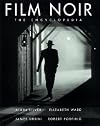
Encyclopaedic, but not readable; perhaps best dipped into while viewing the films it discusses.
You May Also Like


Associated Authors
Statistics
- Works
- 35
- Also by
- 2
- Members
- 1,801
- Popularity
- #14,289
- Rating
- 3.9
- Reviews
- 18
- ISBNs
- 89
- Languages
- 6
