
Eddie Muller
Author of Tab Hunter Confidential: The Making of a Movie Star
About the Author
Image credit: By Joe Mabel - photo by Joe Mabel, CC BY-SA 3.0, https://commons.wikimedia.org/w/index.php?curid=866091
Series
Works by Eddie Muller
The art of noir : the posters and graphics from the classic era of film noir (2002) 115 copies, 1 review
Dark City: The Lost World of Film Noir (Revised and Expanded Edition) (Turner Classic Movies) (2021) 106 copies, 3 reviews
Dark City Dames: The Women Who Defined Film Noir (Revised and Expanded Edition) (Turner Classic Movies) (2025) 40 copies, 3 reviews
NOIR CITY Magazine #37 4 copies
Noir City Annual No. 16 3 copies
Noir City Annual No. 15 3 copies
NOIR CITY Magazine 40 2 copies
Noir City, No. 33, 2021 2 copies
Noir City Sentinel. Annual #1 The Best of the Film Noir Foundation Newsletter 2006-2008 (2009) 2 copies
NOIR CITY Magazine 42 2 copies
NOIR CITY Magazine 41 2 copies
NOIR CITY Magazine 45 1 copy
NOIR CITY Magazine 39 1 copy
NOIR CITY Magazine 43 1 copy
Noir City Sentinel. Annual #1 The Best of the Film Noir Foundation Newsletter 2006-2008 (2009) 1 copy
NOIR CITY Magazine #38 1 copy
NOIR CITY Magazine #1 1 copy
Associated Works
Jewish Noir: Contemporary Tales of Crime and Other Dark Deeds (2015) — Contributor — 50 copies, 1 review
Tagged
Common Knowledge
- Birthdate
- 1958-10-15
- Gender
- male
- Education
- San Francisco Art Institute
- Occupations
- film critic
television host
novelist
journalist - Organizations
- Film Noir Foundation
- Short biography
- Eddie Muller is a film critic and writer, specializing in film noir. James Ellroy has called him "The Czar of Noir."
Muller is the founder and president of the Film Noir Foundation. He serves as the host and introducer of Turner Classic Movies's weekly Noir Alley movie series, and is co-programmer of the San Francisco Noir City Film Festival. He also provides wry commentary tracks for Fox's film noir series of DVDs.
His period crime novel The Distance (2002) was named the Best First Novel of the Year by the Private Eye Writers of America. - Nationality
- USA
- Places of residence
- San Francisco, California, USA
- Associated Place (for map)
- California, USA
Members
Reviews
Dark City: The Lost World of Film Noir (Revised and Expanded Edition) (Turner Classic Movies) by Eddie Muller
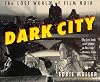
Eddie Muller is more a character than an author. I don’t mean that in a bad way at all. He writes this book the same way he introduces and wraps up movies on TCM’s Noir Alley, as a character within the world of noir. If you’ve seen Noir Alley, you know the character, and you’ll be on familiar ground here.
The book is a guided tour of noir, represented as “Dark City.” Each chapter is a neighborhood of Dark City or a slice of its residents. Each is titled in genre-speak: Shamus show more Flats, Vixenville, Losers’ Lane, . . . It could be hokey, but to me anyway it was more atmospheric and a little campy.
The same can be said of Muller’s vocabulary and writing style — he walks the line between campy genre-speak and overdone. That’s his character, so he’s pretty skilled with it.
It’s also a beautiful book. Stills, posters, and other paraphernalia are well placed throughout the tour. Some are drawn from Muller’s own collection. The print versions capture the distinctive lighting, shadows, silvery tones, and overall unsettling style of noir.
If you’re like me, you’ll be making a list of movies to watch or re-watch. I’ve seen most of the better known movies, but not some of the more obscure ones, and Muller, I suspect especially in his role in film restoration and archivist, has an encyclopedic knowledge of the era. As he goes at a relatively fast pace from movie to movie, he gives context, both from the development of the genre and from the enveloping dramas of the Hollywood that birthed them.
I’ve got an extensive list. Many of the movies on my list are ones that I have seen, but missed nuances and such that Muller does not miss. And often he just reminds me of a movie I saw long ago and am overdue to revisit.
Beyond the tour, Muller does want to make a point about noir and where it comes from. He pulls the curtain at the end to reveal that “Dark City” is really Hollywood itself. The last stop on the tour is Hollywood, setting for Sunset Boulevard and In a Lonely Place.
Muller’s point is that noir itself was a product of the Hollywood studio system of its time — the economics, the factory-like production system, the studio-owned actors and directors. Add in the broader environment — the experiences of the Depression and Prohibition, followed by the horror and the forced glory of World War II, and the rise of a goal of middle class life achievable by many and not all — and you get noir .
There’s certainly something right in Muller’s claim, and other studies (e.g., the classic A Panorama of American Film Noir by Borde and Chaumeton) make similar claims about the historical background of noir. But Muller’s suggestion, and it really is more suggestion than argument, that noir is also born of the Hollywood studio system is provocative and fresh, to me at least. Something to think about.
If there’s one thing missing from Muller’s tour, it’s a tour stop with the audience itself. How do we experience noir? Why are we drawn to it? What does it “mean”? For that I would recommend Geoffrey O’Brien’s The Phantom Empire, also cited by Muller.
Muller actually drops out of character in the Afterward. It’s a little startling to read his words as a “normal” person recounting his own story, how he came to film noir and to the leading role he has in it now. It’s jarring to realize that he isn’t always “inside” the noir world. show less
The book is a guided tour of noir, represented as “Dark City.” Each chapter is a neighborhood of Dark City or a slice of its residents. Each is titled in genre-speak: Shamus show more Flats, Vixenville, Losers’ Lane, . . . It could be hokey, but to me anyway it was more atmospheric and a little campy.
The same can be said of Muller’s vocabulary and writing style — he walks the line between campy genre-speak and overdone. That’s his character, so he’s pretty skilled with it.
It’s also a beautiful book. Stills, posters, and other paraphernalia are well placed throughout the tour. Some are drawn from Muller’s own collection. The print versions capture the distinctive lighting, shadows, silvery tones, and overall unsettling style of noir.
If you’re like me, you’ll be making a list of movies to watch or re-watch. I’ve seen most of the better known movies, but not some of the more obscure ones, and Muller, I suspect especially in his role in film restoration and archivist, has an encyclopedic knowledge of the era. As he goes at a relatively fast pace from movie to movie, he gives context, both from the development of the genre and from the enveloping dramas of the Hollywood that birthed them.
I’ve got an extensive list. Many of the movies on my list are ones that I have seen, but missed nuances and such that Muller does not miss. And often he just reminds me of a movie I saw long ago and am overdue to revisit.
Beyond the tour, Muller does want to make a point about noir and where it comes from. He pulls the curtain at the end to reveal that “Dark City” is really Hollywood itself. The last stop on the tour is Hollywood, setting for Sunset Boulevard and In a Lonely Place.
Muller’s point is that noir itself was a product of the Hollywood studio system of its time — the economics, the factory-like production system, the studio-owned actors and directors. Add in the broader environment — the experiences of the Depression and Prohibition, followed by the horror and the forced glory of World War II, and the rise of a goal of middle class life achievable by many and not all — and you get noir .
There’s certainly something right in Muller’s claim, and other studies (e.g., the classic A Panorama of American Film Noir by Borde and Chaumeton) make similar claims about the historical background of noir. But Muller’s suggestion, and it really is more suggestion than argument, that noir is also born of the Hollywood studio system is provocative and fresh, to me at least. Something to think about.
If there’s one thing missing from Muller’s tour, it’s a tour stop with the audience itself. How do we experience noir? Why are we drawn to it? What does it “mean”? For that I would recommend Geoffrey O’Brien’s The Phantom Empire, also cited by Muller.
Muller actually drops out of character in the Afterward. It’s a little startling to read his words as a “normal” person recounting his own story, how he came to film noir and to the leading role he has in it now. It’s jarring to realize that he isn’t always “inside” the noir world. show less
Kid Noir: Kitty Feral and the Case of the Marshmallow Monkey (Turner Classic Movies) by Eddie Muller
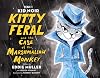
First sentence: It's not easy being the only cat detective in this town. Ever since I bungled my biggest case, trouble hounds me.
Premise/plot: Kitty Feral is missing--literally and figuratively--her friend and companion Mitch the Mutt with whom she solves cases. But she's solo on this one. She will be trying to track down what happened to Cora's marshmallow monkey. Can she follow the clues and solve the case?
My thoughts: I LOVED the atmosphere of this one. The narrative is fun, fun, show more super-fun. The illustrations are AWESOME. I think adults will probably pick up on things young readers don't. But that isn't all bad, in my opinion. It just means the narrative is layered. I do think it holds up to multiple readings. I caught things the second time around that I didn't the first time. It is very noir. Chances are most young readers will have little to no familiarity with this genre. show less
Premise/plot: Kitty Feral is missing--literally and figuratively--her friend and companion Mitch the Mutt with whom she solves cases. But she's solo on this one. She will be trying to track down what happened to Cora's marshmallow monkey. Can she follow the clues and solve the case?
My thoughts: I LOVED the atmosphere of this one. The narrative is fun, fun, show more super-fun. The illustrations are AWESOME. I think adults will probably pick up on things young readers don't. But that isn't all bad, in my opinion. It just means the narrative is layered. I do think it holds up to multiple readings. I caught things the second time around that I didn't the first time. It is very noir. Chances are most young readers will have little to no familiarity with this genre. show less

First of all, I loved Muller's take on our recent politics. A rather cynical take on the sleazy character, Harry Lime, and how he has become a an anti-hero. There is some pre-noir conjecture, the fate of the women in "Act of Violence' and an excellent article covering the 90 years since the first appearance of 'The Postman Always Rings Twice'. A detailed analysis of Cronenberg's neo-noirs and a surprisingly interesting feature on 'Brat Pack Noir'. in the article on 'Sudden Fear', book vs. show more film, the film wins and I win to, because, although I am definitely not a Joan Crawford fan, I love Gloria Grahame. show less
Dark City: The Lost World of Film Noir (Revised and Expanded Edition) (Turner Classic Movies) by Eddie Muller
It’s like reading an anniversary issue of a great pulp magazine—double the usual pages and packed with contributors of every kind, each bringing their own unique style to columns or interviews.
Noir is one of my favorite genres, so that alone was reason enough for me to pick up a book about it. I actually had another one lined up, but since this was published first, I figured I’d give it a shot.
I was expecting a straightforward recounting of facts, maybe a basic retelling of Noir film show more history. But to my surprise, the writing matched the subject—dark, moody, and utterly captivating. Even if I’d gone in with high expectations, I couldn’t have imagined it would be this good. Eddie Muller did a fantastic job.
Here’s a taste of the writing from the introduction to the chapter "Vixenville":
Don't bother looking for A Church in this part of town. The air's too hot And heavy for hymns. Not that you can't find houses of worship. Check out the windows, flickering in the night like offertory candles. Within the rooms are supplicatory men, on their knees, praying for a different kind of salvation. They bring to the altar gifts of fragrances and lace, hoping they'll be judged worthy. Most will end up crucified, for believing that holiness comes wrapped in seamed silk, redemption stretched sheer around a shapely calf. show less
Noir is one of my favorite genres, so that alone was reason enough for me to pick up a book about it. I actually had another one lined up, but since this was published first, I figured I’d give it a shot.
I was expecting a straightforward recounting of facts, maybe a basic retelling of Noir film show more history. But to my surprise, the writing matched the subject—dark, moody, and utterly captivating. Even if I’d gone in with high expectations, I couldn’t have imagined it would be this good. Eddie Muller did a fantastic job.
Here’s a taste of the writing from the introduction to the chapter "Vixenville":
Don't bother looking for A Church in this part of town. The air's too hot And heavy for hymns. Not that you can't find houses of worship. Check out the windows, flickering in the night like offertory candles. Within the rooms are supplicatory men, on their knees, praying for a different kind of salvation. They bring to the altar gifts of fragrances and lace, hoping they'll be judged worthy. Most will end up crucified, for believing that holiness comes wrapped in seamed silk, redemption stretched sheer around a shapely calf. show less
Awards


You May Also Like


Associated Authors
Statistics
- Works
- 51
- Also by
- 5
- Members
- 1,375
- Popularity
- #18,703
- Rating
- 4.0
- Reviews
- 45
- ISBNs
- 53
- Languages
- 2
- Favorited
- 3

