
Laura Spinney
Author of Pale Rider: The Spanish Flu of 1918 and How It Changed the World
About the Author
Works by Laura Spinney
Associated Works
The Guardian science course : Part IV : Humans — Contributor — 1 copy
Tagged
Common Knowledge
- Birthdate
- 1971-08
- Gender
- female
- Education
- Durham University (BSc|Natural Sciences)
- Occupations
- writer
science journalist - Organizations
- New Scientist (contributor)
- Agent
- Will Francis (Janklow & Nesbit)
- Nationality
- UK
- Birthplace
- Yorkshire, England, UK
- Places of residence
- Paris, France
London, England, UK - Associated Place (for map)
- England, UK
Members
Discussions
An Author Interview with Laura Spinney in Talk about LibraryThing (May 2025)
Reviews
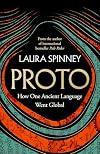
https://fromtheheartofeurope.eu/proto-how-one-ancient-language-went-global-by-la...
I’ve always been fascinated by linguistics, especially the evolution of languages over the millennia, and a friend very rightly recommended this book to me for Christmas. It looks at the history of the Indo-European languages, cross-referencing the evidence from the languages themselves with the latest archaeological findings and, crucially, DNA evidence about the people who lived and died in various places show more and times.
I just love the concept of Proto-Indo-European, from which six of the top seven languages in the world are descended (not Chinese, obviously, but Spanish, English, Hindi, Portuguese, Bengali and Russian), spoken 5,000 years ago, and some of whose words are eerily similar to ours and some startlingly different.
Spinney goes with the standard theory which has been around for decades, that the speakers of PIE were the Yamnaya culture, a subset of the Kurgan culture, north of the Black Sea, and named after their burial practice of funeral pits (яма, yama) with tumuli on top (курган, kurgan). The latest DNA research strongly supports this, though she gives time to other explanations as well (notably the Anatolian and ‘Out Of India’ theories), and gives personal glimpses of Gimbutas and Renfrew in their debates, also citing David Anthony whose book I enjoyed a few years back.
The movements of population and language were initially driven by climate change as Eurasia recovered from the Ice Age, and then by technology as the horse was domesticated, the wheel was developed and agriculture began to be adopted. (NB that in the story of Cain and Abel, Cain is the bad guy and the farmer, Abel is the good guy and the herder.)
She follows up with individual chapters, each prefaced by a helpful map, on the extinct Anatolian and Tocharian languages, on the western Celtic/Germanic/Italic branch, on the eastern Indo-Iranian languages, on the northern Baltic and Slavic groups, and on the isolated Albanian, Armenian and Greek, the last of which has the longest continuous literary tradition. I love little snippets like the extinct Venetic language, known from a few hundred inscriptions, most of which are dedications to Reitia, the goddess of writing.
There’s interesting stuff in the DNA too. Apparently when the Beaker People arrived in Britain in 2450 BC, the result was that they took over 90% of the British gene pool and 100% of British Y-chromosomes, and the same when they reached Ireland 200 years later. Did they speak Celtic? It’s a little too early from the linguistic change point of view, but otherwise it’s not clear how Celtic language came to Ireland. I actually bought J.P. Mallory’s book to find out more.
This is a great book, filled with history, science and literature. Spinney has gone light on the technicalities of linguistics, so as not to deter the faint-hearted, though I would have been happy with more detailed reconstructions; still, these are easy enough to find. Lots to learn. show less
I’ve always been fascinated by linguistics, especially the evolution of languages over the millennia, and a friend very rightly recommended this book to me for Christmas. It looks at the history of the Indo-European languages, cross-referencing the evidence from the languages themselves with the latest archaeological findings and, crucially, DNA evidence about the people who lived and died in various places show more and times.
I just love the concept of Proto-Indo-European, from which six of the top seven languages in the world are descended (not Chinese, obviously, but Spanish, English, Hindi, Portuguese, Bengali and Russian), spoken 5,000 years ago, and some of whose words are eerily similar to ours and some startlingly different.
Spinney goes with the standard theory which has been around for decades, that the speakers of PIE were the Yamnaya culture, a subset of the Kurgan culture, north of the Black Sea, and named after their burial practice of funeral pits (яма, yama) with tumuli on top (курган, kurgan). The latest DNA research strongly supports this, though she gives time to other explanations as well (notably the Anatolian and ‘Out Of India’ theories), and gives personal glimpses of Gimbutas and Renfrew in their debates, also citing David Anthony whose book I enjoyed a few years back.
The movements of population and language were initially driven by climate change as Eurasia recovered from the Ice Age, and then by technology as the horse was domesticated, the wheel was developed and agriculture began to be adopted. (NB that in the story of Cain and Abel, Cain is the bad guy and the farmer, Abel is the good guy and the herder.)
She follows up with individual chapters, each prefaced by a helpful map, on the extinct Anatolian and Tocharian languages, on the western Celtic/Germanic/Italic branch, on the eastern Indo-Iranian languages, on the northern Baltic and Slavic groups, and on the isolated Albanian, Armenian and Greek, the last of which has the longest continuous literary tradition. I love little snippets like the extinct Venetic language, known from a few hundred inscriptions, most of which are dedications to Reitia, the goddess of writing.
There’s interesting stuff in the DNA too. Apparently when the Beaker People arrived in Britain in 2450 BC, the result was that they took over 90% of the British gene pool and 100% of British Y-chromosomes, and the same when they reached Ireland 200 years later. Did they speak Celtic? It’s a little too early from the linguistic change point of view, but otherwise it’s not clear how Celtic language came to Ireland. I actually bought J.P. Mallory’s book to find out more.
This is a great book, filled with history, science and literature. Spinney has gone light on the technicalities of linguistics, so as not to deter the faint-hearted, though I would have been happy with more detailed reconstructions; still, these are easy enough to find. Lots to learn. show less
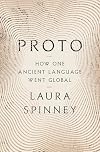
Essential for anyone who read “The Horse, the Wheel, and Language” >10 years ago and is ready to be delighted, amused, and amazed at the contributions of genetics to PIE studies since then. If a wheel needs at least three spokes to hold its shape – which I kinda think it does – then what we’ve learnt from the analysis of ancient bones and teeth has been the complement that linguistics and archaeology were crying out for. Culture, ethnicity, and language overlap in show more always-fascinating but never straightforward ways, and the ability to look into ancient genomes feels thrilling and forbidden, somehow.
Spinney has written a damn fine popular linguistics book here. Even my aversion to potsherds, kurgans, and things in general that are scraped painstakingly up out of the earth and cleaned with toothbrushes couldn’t dampen my enthusiasm for her breakneck survey of current thinking on how the hell half the world came to speak languages descended from a handful of steppe-dwelling herders 8,000 years ago. show less
Spinney has written a damn fine popular linguistics book here. Even my aversion to potsherds, kurgans, and things in general that are scraped painstakingly up out of the earth and cleaned with toothbrushes couldn’t dampen my enthusiasm for her breakneck survey of current thinking on how the hell half the world came to speak languages descended from a handful of steppe-dwelling herders 8,000 years ago. show less

Published in 2017, I ordered this book at the end of 2019, before anyone had heard of the new pandemic or Covid-19. It arrived on my doorstep just days after the first cases became known at the beginning of 2020 but has been passed around and just arrived back with me last month. One good thing about reading it after the worst of our present pandemic has passed is that I can see the issues and similarities and understand them better. This is an excellent history book, well-written and show more well-researched.
"We find ourselves at an interesting point on the remembering / forgetting arc with respect to the twentieth century. The two world wars are still raw, we refer back to them obsessively and are firmly convinced that we will never forget them - though past experience suggests that they will gradually lose their lustre in our minds, or be obscured by other wars. Meanwhile the Spanish flu intrudes more and more into our historical consciousness, but it can't shake the prefix 'forgotten'.
Why does memory for a pandemic take time to develop? Perhaps one reason is that it's not so easy to count the dead. They don't wear uniforms, display exit wounds or fall down in a circumscribed arena. They die in large numbers in a short space of time, over a vast expanse of space, and many of them disappear into mass graves, not only before their disease has been diagnosed, but often before their lives have even been recorded. For most of the twentieth century, people thought the Spanish flu had killed around 20 million people, when the real number was two, three, possibly even five times that." show less
"We find ourselves at an interesting point on the remembering / forgetting arc with respect to the twentieth century. The two world wars are still raw, we refer back to them obsessively and are firmly convinced that we will never forget them - though past experience suggests that they will gradually lose their lustre in our minds, or be obscured by other wars. Meanwhile the Spanish flu intrudes more and more into our historical consciousness, but it can't shake the prefix 'forgotten'.
Why does memory for a pandemic take time to develop? Perhaps one reason is that it's not so easy to count the dead. They don't wear uniforms, display exit wounds or fall down in a circumscribed arena. They die in large numbers in a short space of time, over a vast expanse of space, and many of them disappear into mass graves, not only before their disease has been diagnosed, but often before their lives have even been recorded. For most of the twentieth century, people thought the Spanish flu had killed around 20 million people, when the real number was two, three, possibly even five times that." show less

I loved the world-wide view and the multiple frames of analysis the author took. There were huge historical impacts of the Spanish flu, but also impacts on art, culture, memory....
The author wove facts and figures with human interest "dives" into individual stories, which I also liked.
The parallels to today's COVID 19 reactions can't be missed: arguments that authorities are exaggerating the danger, that mandatory vaccines are a violation of human rights, about the use of lockdowns, show more quarantines, masking. And the author's assertion that "the demands of national security, a thriving economy and public health are rarely aligned."
This book shows why history matters. And leaves me somewhat frustrated that the world was not better prepared to deal with the current pandemic. I hope someone does a similar analysis of COVID 19 when sufficient time has passed. show less
The author wove facts and figures with human interest "dives" into individual stories, which I also liked.
The parallels to today's COVID 19 reactions can't be missed: arguments that authorities are exaggerating the danger, that mandatory vaccines are a violation of human rights, about the use of lockdowns, show more quarantines, masking. And the author's assertion that "the demands of national security, a thriving economy and public health are rarely aligned."
This book shows why history matters. And leaves me somewhat frustrated that the world was not better prepared to deal with the current pandemic. I hope someone does a similar analysis of COVID 19 when sufficient time has passed. show less
Lists
Awards


You May Also Like


Associated Authors
Statistics
- Works
- 8
- Also by
- 7
- Members
- 1,251
- Popularity
- #20,508
- Rating
- 4.0
- Reviews
- 54
- ISBNs
- 48
- Languages
- 6
- Favorited
- 2
