
Jeremy Brown (3)
Author of Influenza: The Hundred Year Hunt to Cure the Deadliest Disease in History
For other authors named Jeremy Brown, see the disambiguation page.
About the Author
Jeremy Brown, MD, trained at University College London Medical School and completed his residency in emergency medicine in Boston. His opinion pieces have been published in the New York Times and the Washington Post, and he has written for Discover magazine.
Works by Jeremy Brown
Influenza: The Hundred Year Hunt to Cure the Deadliest Disease in History (2018) 193 copies, 8 reviews
Tagged
Common Knowledge
- Gender
- male
Members
Reviews
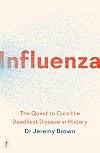
Like nearly everyone else on the planet, I’m searching for answers, tips and well…anything with regard to the COVID-19 (coronavirus) pandemic. Influenza is not the same thing, but it is probably the closest we’ve got when it comes to pandemics. Given the timing of my reading, this wasn’t always the most comfortable of reads but it was very informative. The book dispelled myths regarding the 1918 Spanish flu pandemic and suggested reasons as to its spread and complications.
Influenza show more is somewhat of a medical memoir of a disease. It starts with a sobering prologue of a healthy young woman who became critically ill, then traces the roots of treatments of influenza in the history of medicine. (While whisky sounds like a palatable treatment, blood letting can be left back in history). It then goes into detail of the 1918 pandemic, which was a really good account of what we know and what we still don’t know. (Plus, some ethical dilemmas about digging up bodies in the name of science and studying the virus in the lab). Dr Brown gives an honest review of the available data, clearly demonstrating where there is fact and where we are still speculating on why things happened as they did. It also discusses the measures taken to try to contain the virus, such as social distancing, shutting down big events like parades and self-isolation/quarantine. With hindsight, scientists have been able to work out what measures worked and what didn’t. (Don’t ask Philadelphia about the big parade they had and the subsequent explosion of residents with the flu).
The book also goes into detail about how data can be used to try to track the flu, predict where and when it will peak and what combinations of the virus should be in the annual influenza vaccine. It’s not an exact science, in fact, far from it. Predictions are still sketchy at best but there is a lot of work going on. There is also a section on the vaccine, and neuraminidase inhibitors (the most famous of which is oseltamivir, or Tamiflu®). This is very interesting, taking into account stockpiles, big business and the presence/absence of data. Dr Brown again presents this in a balanced fashion. His style of writing is very accessible and easy for the lay person to read, while keeping enough of the science in the writing to attract those in the health professions. The book also has an extensive notes section and bibliography for further reading.
I found this book oddly reassuring in these uncertain times. There are good reasons as to why the 1918 pandemic may not be as deadly if it happened today and we have learned things along the way with subsequent pandemics. The WHO has got your back, as do thousands of scientists working in the background.
http://samstillreading.wordpress.com show less
Influenza show more is somewhat of a medical memoir of a disease. It starts with a sobering prologue of a healthy young woman who became critically ill, then traces the roots of treatments of influenza in the history of medicine. (While whisky sounds like a palatable treatment, blood letting can be left back in history). It then goes into detail of the 1918 pandemic, which was a really good account of what we know and what we still don’t know. (Plus, some ethical dilemmas about digging up bodies in the name of science and studying the virus in the lab). Dr Brown gives an honest review of the available data, clearly demonstrating where there is fact and where we are still speculating on why things happened as they did. It also discusses the measures taken to try to contain the virus, such as social distancing, shutting down big events like parades and self-isolation/quarantine. With hindsight, scientists have been able to work out what measures worked and what didn’t. (Don’t ask Philadelphia about the big parade they had and the subsequent explosion of residents with the flu).
The book also goes into detail about how data can be used to try to track the flu, predict where and when it will peak and what combinations of the virus should be in the annual influenza vaccine. It’s not an exact science, in fact, far from it. Predictions are still sketchy at best but there is a lot of work going on. There is also a section on the vaccine, and neuraminidase inhibitors (the most famous of which is oseltamivir, or Tamiflu®). This is very interesting, taking into account stockpiles, big business and the presence/absence of data. Dr Brown again presents this in a balanced fashion. His style of writing is very accessible and easy for the lay person to read, while keeping enough of the science in the writing to attract those in the health professions. The book also has an extensive notes section and bibliography for further reading.
I found this book oddly reassuring in these uncertain times. There are good reasons as to why the 1918 pandemic may not be as deadly if it happened today and we have learned things along the way with subsequent pandemics. The WHO has got your back, as do thousands of scientists working in the background.
http://samstillreading.wordpress.com show less
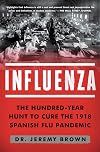
Influenza: The Hundred Year Hunt to Cure the Deadliest Disease in History by Jeremy Brown is a very highly recommended, fascinating exploration of the history of the flu virus and the search for a cure.
The 1918 Flu pandemic left an estimated 50 to 100 million people dead worldwide. Ever since then the search has been on to find a cure before the outbreak another world wide influenza pandemic. Brown discusses where the 1918 flu may have started (we don't know for certain) and the various show more cures that have been tried over the years. Now we know influenza is a virus and that virus mutates into other strains of the flu, making a cure even more challenging. In a conversational style, Dr. Jeremy Brown, currently Director of Emergency Care Research at the National Institutes of Health, shares information from leading epidemiologists, policy makers, and the researcher who first sequenced the genetic building blocks of the original 1918 virus.
He doesn't shy away from the many questions and misinformation swirling around vaccinations, anti-viral drugs, and government preparation for the next epidemic. He also tackles the media's role in exaggeration and swaying public opinion through emotion, anxiety, and misinformation, as well as the more recent role of social media outbreak spreading misinformation, exaggeration, and fear faster than the actual flu virus was spreading. He also discusses the pharmaceutical companies influence and their lobbying efforts, which are largely based on fear.
Deaths from the flu do occur every year and there are groups of the population that are more susceptible, but this does not include everyone. Dr. Brown points out several different public panics over influenza outbreaks (which I clearly remember), and how the actual outbreak was not as huge as the fear spread through the media. Additionally, information people hear on the news, whether it is correct or fact-based or not, makes people and policy makers start quoting and spreading the misinformation.
This is an eminently well-written and engrossing examination of the history and current information about the influenza virus. The conversational writing style and the logical organization of the book make the information easily understood and assimilated, even for those readers who typically shun medical/historical nonfiction. As is my wont for informational nonfiction selections, I always appreciated the inclusion of notes, a complete bibliography, and an index.
Disclosure: My review copy was courtesy of Simon & Schuster.
http://www.shetreadssoftly.com/2018/12/influenza.html show less
The 1918 Flu pandemic left an estimated 50 to 100 million people dead worldwide. Ever since then the search has been on to find a cure before the outbreak another world wide influenza pandemic. Brown discusses where the 1918 flu may have started (we don't know for certain) and the various show more cures that have been tried over the years. Now we know influenza is a virus and that virus mutates into other strains of the flu, making a cure even more challenging. In a conversational style, Dr. Jeremy Brown, currently Director of Emergency Care Research at the National Institutes of Health, shares information from leading epidemiologists, policy makers, and the researcher who first sequenced the genetic building blocks of the original 1918 virus.
He doesn't shy away from the many questions and misinformation swirling around vaccinations, anti-viral drugs, and government preparation for the next epidemic. He also tackles the media's role in exaggeration and swaying public opinion through emotion, anxiety, and misinformation, as well as the more recent role of social media outbreak spreading misinformation, exaggeration, and fear faster than the actual flu virus was spreading. He also discusses the pharmaceutical companies influence and their lobbying efforts, which are largely based on fear.
Deaths from the flu do occur every year and there are groups of the population that are more susceptible, but this does not include everyone. Dr. Brown points out several different public panics over influenza outbreaks (which I clearly remember), and how the actual outbreak was not as huge as the fear spread through the media. Additionally, information people hear on the news, whether it is correct or fact-based or not, makes people and policy makers start quoting and spreading the misinformation.
This is an eminently well-written and engrossing examination of the history and current information about the influenza virus. The conversational writing style and the logical organization of the book make the information easily understood and assimilated, even for those readers who typically shun medical/historical nonfiction. As is my wont for informational nonfiction selections, I always appreciated the inclusion of notes, a complete bibliography, and an index.
Disclosure: My review copy was courtesy of Simon & Schuster.
http://www.shetreadssoftly.com/2018/12/influenza.html show less
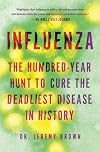
Disclaimer: I received this book as part of GoodReads' First Reads program
This book, written by a British doctor now working in the US, is a comprehensive study of the influenza virus from its probable beginnings in antiquity to the current day (as of about two years ago,when it was written). Very well written and readable, it also describes how the flu virus, and viruses in general, work in our bodies, how it jumps from birds to mammals to humans, why it changes every year and the various show more methods that medical science has come up with to try to treat the disease. It was amazing to learn how little was known in 1918, during the great pandemic. At that time, viruses hadn't been discovered yet and treatments included bleeding. Anyone remember Theodoric of York on SNL? While the current Covid-19 pandemic is not included in the book (and wouldn't be, really, since it's not the flu), much of what he discusses is applicable to the situation we find ourselves in today. Several years ago I read John Barry's "The Great Influenza: The Story of the Deadliest Pandemic in History" which was a fascinating description of that pandemic. This book makes a superb companion to that, though it stands just as well on its own. I highly recommend reading it. After all, we all have plenty of time on our hands right now. show less
This book, written by a British doctor now working in the US, is a comprehensive study of the influenza virus from its probable beginnings in antiquity to the current day (as of about two years ago,when it was written). Very well written and readable, it also describes how the flu virus, and viruses in general, work in our bodies, how it jumps from birds to mammals to humans, why it changes every year and the various show more methods that medical science has come up with to try to treat the disease. It was amazing to learn how little was known in 1918, during the great pandemic. At that time, viruses hadn't been discovered yet and treatments included bleeding. Anyone remember Theodoric of York on SNL? While the current Covid-19 pandemic is not included in the book (and wouldn't be, really, since it's not the flu), much of what he discusses is applicable to the situation we find ourselves in today. Several years ago I read John Barry's "The Great Influenza: The Story of the Deadliest Pandemic in History" which was a fascinating description of that pandemic. This book makes a superb companion to that, though it stands just as well on its own. I highly recommend reading it. After all, we all have plenty of time on our hands right now. show less
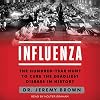
"Flu is certainly not the “emperor of all maladies” as cancer was described by the oncologist Siddhartha Mukherjee, but it is the malady of all empires."
This short but informative novel about influenza encompasses everything from its history and its impact to the role pharmaceutical companies and the government have played in the pursuit to find an effective vaccine or cure. I found this fascinating. Dr. Brown writes so that layman can understand but also doesn’t shy away from using show more medical vernacular when necessary.
I particularly found the portion on tamiflu interesting as I worked in a doctor’s office years ago and during flu season every patient would beg for this (and research shows that it has very little affect on the flu). Also, the impact the flu has on an economy (both positive and negative) surprised me as I never thought about that before, but it made sense.
I highly recommend this for science buffs, history lovers, and anyone interested in learning about something we've all experienced.
I received an advanced copy through Netgalley in return for an honest review. show less
This short but informative novel about influenza encompasses everything from its history and its impact to the role pharmaceutical companies and the government have played in the pursuit to find an effective vaccine or cure. I found this fascinating. Dr. Brown writes so that layman can understand but also doesn’t shy away from using show more medical vernacular when necessary.
I particularly found the portion on tamiflu interesting as I worked in a doctor’s office years ago and during flu season every patient would beg for this (and research shows that it has very little affect on the flu). Also, the impact the flu has on an economy (both positive and negative) surprised me as I never thought about that before, but it made sense.
I highly recommend this for science buffs, history lovers, and anyone interested in learning about something we've all experienced.
I received an advanced copy through Netgalley in return for an honest review. show less
You May Also Like


Associated Authors
Statistics
- Works
- 4
- Members
- 211
- Popularity
- #105,255
- Rating
- 3.9
- Reviews
- 8
- ISBNs
- 106
- Languages
- 2