
Linda Winstead Jones
Author of Summer at Willow Lake
About the Author
Series
Works by Linda Winstead Jones
The Heart of Winter (Toughest Girl in Town/ Mystery Lover/ Resolution) (2011) — Author: 'Resolution' [ss] — 43 copies, 1 review
Family Secrets: Books 5-8 (Her Beautiful Assassin / A Verdict of Love / The Billionaire Drifter / Fever) (2007) 2 copies
Children of the Sun Trilogy Books 1-3: Prince of Magic, Prince of Fire & Prince of Swords (2015) 1 copy
Hotter Than Hell 1 copy
Nawiedzony 1 copy
Prince Of Magic 1 copy
Sundown 1 copy
Associated Works
Tagged
Common Knowledge
- Other names
- Fallon, Linda
Jones, Linda
Winstead, Linda
Devlin, Linda - Birthdate
- 20th Century
- Gender
- female
- Occupations
- romance novelist
- Nationality
- USA
- Places of residence
- Alabama, USA
- Associated Place (for map)
- Alabama, USA
Members
Reviews
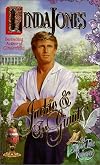
Jackie & the Giant by Linda Jones was loaned to me by a friend, along with a handful of other cheesy romances, when I stopped by her place and was befuddled by the back cover of another book. She did warn me that Cinderfella is the best of these fairy tale inspired historical romances, but that one was with another friend, so I made do with some others. There's lots of room for improvement.
Like most historical romances written by modern writers, the historical context in this story is the show more thinnest of veneers (little beyond costumes and set pieces) over very modern characters and plots to please modern sensibilities. Clearly, I need to stop trying to read these books, because what I want is something that truly evokes the era so that I am completely immersed in a different time and place.
Jackie & The Giant is set in the American South sometime in the late 1800s or possibly early 1900s. She's a grifter and thief who preys on the wealthy, and she's heard about a fabulous Faberge egg owned by the widower Rory Donovan while staying with a nice family in town. She's caught in her burglary, and he blackmails her into becoming the governess for his six-year-old son Who Needs a Mother. Not only that he's the stereotypical red-headed stepchild. Need I say more?
So we have all of the requirements of a "historical" romance for modern tastes: forced intimacy of strangers, bonding over a forlorn and rambunctious child who only needs love, a man who's been hurt and must be saved by a good woman because he's afraid to love again, the downtrodden, lower-class woman with the heart of gold, and plenty of opportunities for sex, misunderstanding, soul-searching, and final declaration. In costume! Exotic settings! Kindly, mother-figure family servant giving the romantic hero the push he needs!
So if you ignore the entire historical context, it is an amusing enough story. And Linda Jones does an excellent job translating the motifs of the fairy tale into this romance. Jackie, standing at 4'11" and feigning English aristrocracy, is Jack (duh!); Rory Donovan at 6'4" is the Giant (with the requisite line about smelling the English); someone gets tricked into exchanging something valuable for three "magic" beans (who's the credulous tyke in the story?); and said beans become essential plot device for reconciling the lovers.
The major problems that make this an abject failure in terms of historical authenticity? Well, it's set in the South not too long after the Civil War, so we're talking Reconstruction era. The man lives in some sort of grand old house with large estate where he breeds show horses. A total of three domestic servants, an undisclosed but small number of stable-hands, and a passing mention of sharecroppers make up the populace of the estate. The race of these secondary characters is never indicated, but, please, they must all be black, particularly the mother-figure cook. And really, an estate of this size requires dozens if not scores of servants, possibly in the house alone. To completely ignore the race and economic privation of most of the people in the area, I suppose, is just part of the romantic fantasy, but is just that much harder to swallow as an egregious bit of white-washing of a very inglorious period of American history. So context is completely lacking.
Second, Jackie supposedly was brought up by a pimp who was saving her virginity for sale when she hit puberty, but she pluckily made her escape just in time. She then took up with a prostitute who taught her the ropes of being a grifter, and she never looked back. Really? I would think the pimp would have made a lot more money selling a child, since that kind of appetite has always been far less sanctioned and more lucrative business venture than the rather pedestrian trafficking in adult female bodies that is still considered quite ho-hum and unimportant to seriously police. And how the hell did she learn the accent and mannerisms of the privileged from other street people? Really? I get that this was all necessary for her to be an acceptable, saintlike (defending her virtue!) romantic heroine, but so very implausible.
Third, She jumps mysteriously overnight from being a houseguest of a nice town family to governess of a rural widower, and there's not an immediate scandal? People just immediately accept all of that without wondering what the hell, how did they meet and come to terms? And as a governess she's still invited to social functions? No, society doesn't work like that. People are often petty, small-minded, prone to gossip and looking for trouble.
Fourth, he investigates her past, but It Does Not Matter. Really? Once again, I get that it's part of the romantic hero high-minded schtick, but it does not match reality much. Particularly southern gentry, where there's been this obsession with honor and virtue and family name, I find it very dubious that this guy from an important local family can just completely disregard her low beginnings. I'm not saying that this is something exclusive to the South, in fact, I'd consider it more of a general upper class thing. I didn't much buy it in Pretty Woman either. Sure, they're happy in the moment, but you can bet that within a few months Mr. rich and powerful Richard Gere is throwing it in Julia Roberts' face. And some people will make sure her past is never forgotten.
So if you don't care about historical context, any degree of realism, or any sort of reading value but just want an amusing story with a happy ending, this is the book for you. If you want a story you'll remember a week after finishing it, look elsewhere. show less
Like most historical romances written by modern writers, the historical context in this story is the show more thinnest of veneers (little beyond costumes and set pieces) over very modern characters and plots to please modern sensibilities. Clearly, I need to stop trying to read these books, because what I want is something that truly evokes the era so that I am completely immersed in a different time and place.
Jackie & The Giant is set in the American South sometime in the late 1800s or possibly early 1900s. She's a grifter and thief who preys on the wealthy, and she's heard about a fabulous Faberge egg owned by the widower Rory Donovan while staying with a nice family in town. She's caught in her burglary, and he blackmails her into becoming the governess for his six-year-old son Who Needs a Mother. Not only that he's the stereotypical red-headed stepchild. Need I say more?
So we have all of the requirements of a "historical" romance for modern tastes: forced intimacy of strangers, bonding over a forlorn and rambunctious child who only needs love, a man who's been hurt and must be saved by a good woman because he's afraid to love again, the downtrodden, lower-class woman with the heart of gold, and plenty of opportunities for sex, misunderstanding, soul-searching, and final declaration. In costume! Exotic settings! Kindly, mother-figure family servant giving the romantic hero the push he needs!
So if you ignore the entire historical context, it is an amusing enough story. And Linda Jones does an excellent job translating the motifs of the fairy tale into this romance. Jackie, standing at 4'11" and feigning English aristrocracy, is Jack (duh!); Rory Donovan at 6'4" is the Giant (with the requisite line about smelling the English); someone gets tricked into exchanging something valuable for three "magic" beans (who's the credulous tyke in the story?); and said beans become essential plot device for reconciling the lovers.
The major problems that make this an abject failure in terms of historical authenticity? Well, it's set in the South not too long after the Civil War, so we're talking Reconstruction era. The man lives in some sort of grand old house with large estate where he breeds show horses. A total of three domestic servants, an undisclosed but small number of stable-hands, and a passing mention of sharecroppers make up the populace of the estate. The race of these secondary characters is never indicated, but, please, they must all be black, particularly the mother-figure cook. And really, an estate of this size requires dozens if not scores of servants, possibly in the house alone. To completely ignore the race and economic privation of most of the people in the area, I suppose, is just part of the romantic fantasy, but is just that much harder to swallow as an egregious bit of white-washing of a very inglorious period of American history. So context is completely lacking.
Second, Jackie supposedly was brought up by a pimp who was saving her virginity for sale when she hit puberty, but she pluckily made her escape just in time. She then took up with a prostitute who taught her the ropes of being a grifter, and she never looked back. Really? I would think the pimp would have made a lot more money selling a child, since that kind of appetite has always been far less sanctioned and more lucrative business venture than the rather pedestrian trafficking in adult female bodies that is still considered quite ho-hum and unimportant to seriously police. And how the hell did she learn the accent and mannerisms of the privileged from other street people? Really? I get that this was all necessary for her to be an acceptable, saintlike (defending her virtue!) romantic heroine, but so very implausible.
Third, She jumps mysteriously overnight from being a houseguest of a nice town family to governess of a rural widower, and there's not an immediate scandal? People just immediately accept all of that without wondering what the hell, how did they meet and come to terms? And as a governess she's still invited to social functions? No, society doesn't work like that. People are often petty, small-minded, prone to gossip and looking for trouble.
Fourth, he investigates her past, but It Does Not Matter. Really? Once again, I get that it's part of the romantic hero high-minded schtick, but it does not match reality much. Particularly southern gentry, where there's been this obsession with honor and virtue and family name, I find it very dubious that this guy from an important local family can just completely disregard her low beginnings. I'm not saying that this is something exclusive to the South, in fact, I'd consider it more of a general upper class thing. I didn't much buy it in Pretty Woman either. Sure, they're happy in the moment, but you can bet that within a few months Mr. rich and powerful Richard Gere is throwing it in Julia Roberts' face. And some people will make sure her past is never forgotten.
So if you don't care about historical context, any degree of realism, or any sort of reading value but just want an amusing story with a happy ending, this is the book for you. If you want a story you'll remember a week after finishing it, look elsewhere. show less
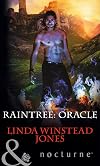
This book was a nice surprise for me, it was an engaging paranormal adventure and I enjoyed it very much. It was a bit slow in the middle and Echo was not the most inspiring heroine ever, but I really liked the hero and I was quite surprised in the end. Four stars.
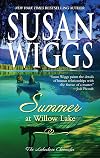
Enjoyed the descriptions of being at a summer camp for wealthy kids mostly. Never did truly understand why Connor ever wanted to date Lolly during his final year at camp - understood the friendship but not the love. Truly admired Connor for his ability to pull himself up as an adult while dealing with family issues (drunk father, non-caring mother). Also wonder how future books will deal with his half brother, Julian which was an entertaining character. Liked the comparisons of father's show more behavior to daughter's for dealing with someone of a lower class. Mother exhibited the typical snob attitudes. show less
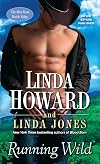
bought for the ultimate and wild challenges from the thrift store; Carlin is living off the grid, after a psycho cop she dates becomes obsessed with her, killing her friend who he mistakes for her. She lands outside of Battle Ridge Wyoming, as a housekeeper/cook for a very sexy rancher, Zeke. Zeke and Carly try to fight their attraction, since Carly knows she's not staying...only earning enough money to get to the next town. But being with Zeke makes her want to stop running, and a slip up show more by one of the acquaintances brings the deadly ex, Brad, to the towns' doorstep. show less
Lists
Awards


You May Also Like


Associated Authors
Statistics
- Works
- 106
- Also by
- 5
- Members
- 5,115
- Popularity
- #4,881
- Rating
- 3.7
- Reviews
- 148
- ISBNs
- 301
- Languages
- 8
- Favorited
- 8
