
About the Author
Daniel R. Solin is the internationally bestselling author of The Smartest Retirement Book You'll Ever Read and The Smartest 401(k) Book You'll Ever Read. An Investment Advisor Representative and well-known advocate for investors, he is a financial columnist for AOL and the Huffington Post. Visit show more his website at www.smartestinvestmentbook.com. show less
Works by Daniel R. Solin
The Smartest Investment Book You'll Ever Read: The Simple, Stress-Free Way to Reach Your Investment Goals (2006) 191 copies, 2 reviews
The Smartest 401k Book You'll Ever Read: Maximize Your Retirement Savings...the Smart Way! (2008) 79 copies, 1 review
The Smartest Money Book You'll Ever Read: Everything You Need to Know About Growing, Spending, and Enjoying Your Money (2011) 43 copies
Does Your Broker Owe You Money?: If You've Lost Money in the Market and It's Your Broker's Fault--You Can Get it Back (2002) 5 copies
Tagged
Common Knowledge
- Gender
- male
- Occupations
- investment advisor
- Organizations
- Index Funds Advisors
Members
Reviews

Does The Smartest Retirement Book You'll Ever Read live up to its name? No, but it's still a worthwhile book with a few caveats.
The book itself has almost sixty chapters, but each one usually runs two to three pages. Much of the advice given comes across as flippant, with minimal "hard facts" to support his positions. ("I could elaborate on the dangers of equity-indexed annuities. All you really need to know is this: Avoid them." Then the chapter ends.) Frustratingly, he does offer good tips show more (invest in index funds -- even target date funds are OK -- and learn to control costs), but all of them tend to be stated in absolute terms. There are very few times when he says that if you fall into one category, you might do option A but if you fall into another, choose B.
I read this in anticipation of holiday conversations with my parents, who are now both retired. Thinking of them as I read this book, I felt the advice given in the book may be too late as they've already started Social Security payments (Solin states waiting as long as possible usually turns out better). There are investing ideas which would be far too late for my parents now. But a few chapters on life and medical insurance (and the ever-looming idea of reverse home mortgages) may still be useful.
If this was the only retirement book you ever read, you'd probably still do better than the average retiree. It's a great -- and fast -- read for anyone who knows retirement is important but isn't quite sure where to start. But if you're someone who prefers logical arguments backed up with factual data, you'll find this far too light a treatment.
--------------------------------------------------
LT Haiku:
Explaining money
Savings techniques needs more than
Pithy articles. show less
The book itself has almost sixty chapters, but each one usually runs two to three pages. Much of the advice given comes across as flippant, with minimal "hard facts" to support his positions. ("I could elaborate on the dangers of equity-indexed annuities. All you really need to know is this: Avoid them." Then the chapter ends.) Frustratingly, he does offer good tips show more (invest in index funds -- even target date funds are OK -- and learn to control costs), but all of them tend to be stated in absolute terms. There are very few times when he says that if you fall into one category, you might do option A but if you fall into another, choose B.
I read this in anticipation of holiday conversations with my parents, who are now both retired. Thinking of them as I read this book, I felt the advice given in the book may be too late as they've already started Social Security payments (Solin states waiting as long as possible usually turns out better). There are investing ideas which would be far too late for my parents now. But a few chapters on life and medical insurance (and the ever-looming idea of reverse home mortgages) may still be useful.
If this was the only retirement book you ever read, you'd probably still do better than the average retiree. It's a great -- and fast -- read for anyone who knows retirement is important but isn't quite sure where to start. But if you're someone who prefers logical arguments backed up with factual data, you'll find this far too light a treatment.
--------------------------------------------------
LT Haiku:
Explaining money
Savings techniques needs more than
Pithy articles. show less
The Smartest 401k Book You'll Ever Read: Maximize Your Retirement Savings...the Smart Way! by Daniel R. Solin
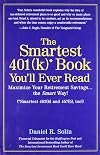
Good simple descriptions of how 401(k) works, what the various investment options are, fees, etc. The message continuously hammered into throughout the book – buy low cost index funds.
The Smartest Investment Book You'll Ever Read: The Simple, Stress-Free Way to Reach Your Investment Goals by Daniel R. Solin

If you're not familiar with "The Smartest [...] Book You'll Ever Read" series, they're short books -- with incredibly short chapters -- that make a lot of basic assumptions about how to deal with major financial life issues. They generally have a lot of good information in them, but readers should know that one plan doesn't always fit everyone.
In this investment book, index funds are the answer. Index funds make a lot of sense for a lot of people, but they're boring -- doesn't everyone want show more to beat the market and make loads of money? Very methodically (and repetitively), author Daniel Solin argues that you'd have better luck winning the lottery than in picking stock winners over a long period of time. Instead, he states you should have a mix of stock and bond indexes, and even makes a few exact suggestions for those who want to invest with Vanguard, Fidelity, or T Rowe Price.
While most of the advice is valid (I'm an index fund guy, too), sometimes the writing comes off as a little condescending. For example, he introduces "standard deviation": "I look at standard deviation in investing the way I look at the results of my blood tests. I don't really need to understand how the lab arrived at the numbers, but I do need to know what is within normal range." (Although standard deviation is then discussed in another chapter, it is never defined well.) That's fine for absolute beginners, but it really doesn't give them a solid foundation from which to ask harder questions. Another area the book is generally silent on is taxable versus pre-tax -- traditional IRAs and 401(k)s -- investment strategies. (The book generally assumes one is investing in a 401(k).)
If you're an absolute beginner -- or someone in financial disarray with at least a decade before retirement -- this book offers some valuable tips. But even if you have minimal investing experience, you probably won't find much you don't already know.
---------------------------------------
LT Haiku:
No need to learn charts
or financial wizardry:
Buy some index funds! show less
In this investment book, index funds are the answer. Index funds make a lot of sense for a lot of people, but they're boring -- doesn't everyone want show more to beat the market and make loads of money? Very methodically (and repetitively), author Daniel Solin argues that you'd have better luck winning the lottery than in picking stock winners over a long period of time. Instead, he states you should have a mix of stock and bond indexes, and even makes a few exact suggestions for those who want to invest with Vanguard, Fidelity, or T Rowe Price.
While most of the advice is valid (I'm an index fund guy, too), sometimes the writing comes off as a little condescending. For example, he introduces "standard deviation": "I look at standard deviation in investing the way I look at the results of my blood tests. I don't really need to understand how the lab arrived at the numbers, but I do need to know what is within normal range." (Although standard deviation is then discussed in another chapter, it is never defined well.) That's fine for absolute beginners, but it really doesn't give them a solid foundation from which to ask harder questions. Another area the book is generally silent on is taxable versus pre-tax -- traditional IRAs and 401(k)s -- investment strategies. (The book generally assumes one is investing in a 401(k).)
If you're an absolute beginner -- or someone in financial disarray with at least a decade before retirement -- this book offers some valuable tips. But even if you have minimal investing experience, you probably won't find much you don't already know.
---------------------------------------
LT Haiku:
No need to learn charts
or financial wizardry:
Buy some index funds! show less
The Smartest Investment Book You'll Ever Read: The Proven Way to Beat the "Pros" and Take Control of Your Financial Future by Daniel R. Solin
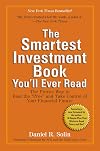
I picked this up because I was looking for a book that would break down exactly how brokers like Etrade or Schwab or any brokerage house makes money. This book clearly explained that and more. Very understandable and a good education for the reader on the finance industry. I recommend this book for anyone wondering about the best way to invest retirement money whether it be $5,000 or $500,000.
Awards


You May Also Like


Statistics
- Works
- 10
- Members
- 445
- Popularity
- #55,081
- Rating
- 3.5
- Reviews
- 5
- ISBNs
- 45
- Languages
- 1