
Edward Sanders
Author of The Family
About the Author
Works by Edward Sanders
Fug You: An Informal History of the Peace Eye Bookstore, the Fuck You Press, the Fugs, and Counterculture in the Lower East Side (2011) 75 copies, 3 reviews
The Cutting Prow 2 copies
Egyptian Hieroglyphs 2 copies
Catalogue 5 1 copy
The Fugs 1 copy
America, a History in Verse - The 20th Century, Volumes 1 - 5 (America, A History In Verse, 1 - 5) (2009) 1 copy
Catalogue 4 1 copy
Fuck God in the Ass 1 copy
Festival of Life {article} 1 copy
Associated Works
From Totems to Hip-Hop: A Multicultural Anthology of Poetry Across the Americas 1900-2002 (2002) — Contributor — 182 copies
Sweeney Todd, the Demon Barber of Fleet Street: The 2007 Motion Picture Soundtrack (2007) — Preformer — 18 copies
The Serpent and the Fire: Poetries of the Americas from Origins to Present (2024) — Contributor — 17 copies
Unmuzzled Ox 13 — Contributor — 7 copies
Intrepid No. 5, 1st Anniversary Issue — Contributor — 1 copy
Tagged
Common Knowledge
There is no Common Knowledge data for this author yet. You can help.
Members
Reviews

Ed Sanders’s mock-heroic (and heroic) odyssey follows poet, filmmaker, and activist Sam Thomas, editor of Dope, Fucking, and Social Change, and a variegated cast of castoffs, dropouts, peaceniks, freakniks, and mendicant filthniks, from Kansas through the beatnik and hippie countercultures of New York City’s Lower East Side and Greenwich Village. From the Freedom Rides and confrontations with the Alabama Klan to the “hate-dappled” Summer of Love, Tales of Beatnik Glory is the epic of show more America in the sixties, in a language of droll invention and stoned mythopoesis, from a man who once dared to exorcise the Pentagon. show less
Fug You: An Informal History of the Peace Eye Bookstore, the Fuck You Press, the Fugs, and Counterculture in the Lower East Side by Ed Sanders
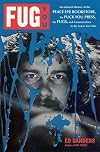
I just finished reading this amazing retrospective of the 60s by counter-culture icon Ed Sanders, of The Fugs and Peace Eye Bookstore. It's a lovely, signed hardcover edition my wife got me two birthdays ago. I thoroughly enjoyed this arc of history from The Beats to The Family, and now I need to read The Family. I really appreciated learning about Sander's scholarly side: Egyptian hieroglyphics and ancient Greek drama and how this informed his art and antics. In these days of Photoshop it show more was also fascinating to learn of the obsession, effort, and detail required in his early publication days when the model of print machine he had was as much a hallmark of the era as the music. In New York at least, it was interesting to learn of this intersection of proto-hippie world changers and ardent Catholic activists. The fact that The Fugs shared the stage with The Grateful Dead and The Velvet Underground shows how Sanders, apparently inventor of the term "punk" helped to usher in one era and see the birth of another.
One thing that that leads me to an imagined possibility that is too good to fact-check: Is the lyrics "Transylvanian Transvestite Time Trap" in any way an inspiration to "The Rocky Horror Picture Show"?
Also, when will the manuscript of the memoir “The Perfect Agent: An Autobiography of the Sixties” by Allen Katzman be published? show less
One thing that that leads me to an imagined possibility that is too good to fact-check: Is the lyrics "Transylvanian Transvestite Time Trap" in any way an inspiration to "The Rocky Horror Picture Show"?
Also, when will the manuscript of the memoir “The Perfect Agent: An Autobiography of the Sixties” by Allen Katzman be published? show less

For me, this was an incredibly disappointing read. I love works set in or drawn around New Orleans, and Patricia Smith's Blood Dazzler (centered on Katrina, specifically) is one of my favorite works of contemporary poetry, so I had high hopes for this collection. And yet, most of the poems fell flat for me.
Although some of the poems here are worth admiring for their play with language and history, most of them come across as something more like prose which has been chopped up for effect, or show more for humor. And, I admit, the tone of many of them just struck me wrong, to where it felt to me like an outsider writing of what he thinks New Orleans to be and come from, so that at many points I almost felt like the voices of the poems were somewhat superficial, or snarky and condescending. Midway through the book, I felt like some of the more contemporary ones were stronger, but then, at the end, I have to admit that the last sequence in the collection left an incredibly bad taste in my mouth for the collection as a whole, and while I could see what the author was perhaps trying to do... I just didn't like it, either in intention or execution.
So, all told, the truth is that I can't recommend this book, and I doubt I'll revisit it. I've enjoyed Sanders work quite a bit in other collections, but here... well, it wasn't for me. show less
Although some of the poems here are worth admiring for their play with language and history, most of them come across as something more like prose which has been chopped up for effect, or show more for humor. And, I admit, the tone of many of them just struck me wrong, to where it felt to me like an outsider writing of what he thinks New Orleans to be and come from, so that at many points I almost felt like the voices of the poems were somewhat superficial, or snarky and condescending. Midway through the book, I felt like some of the more contemporary ones were stronger, but then, at the end, I have to admit that the last sequence in the collection left an incredibly bad taste in my mouth for the collection as a whole, and while I could see what the author was perhaps trying to do... I just didn't like it, either in intention or execution.
So, all told, the truth is that I can't recommend this book, and I doubt I'll revisit it. I've enjoyed Sanders work quite a bit in other collections, but here... well, it wasn't for me. show less
Fug You: An Informal History of the Peace Eye Bookstore, the Fuck You Press, the Fugs, and Counterculture in the Lower East Side by Ed Sanders
A social history of the Counterculture well worth reading. Sanders is unpretentious and a surprisingly vivid writer. I especially enjoyed the first half of the book. Tighter editing might have improved the book.
Lists
Awards

You May Also Like


Associated Authors
Statistics
- Works
- 42
- Also by
- 13
- Members
- 1,134
- Popularity
- #22,630
- Rating
- 3.9
- Reviews
- 13
- ISBNs
- 63
- Languages
- 4
- Favorited
- 1