

Algernon Charles Swinburne (1837–1909)
Author of Poems and Ballads and Atalanta in Calydon
About the Author
Poet Algernon Charles Swinburne was born April 5, 1837 in Grosvenor Place, London, but spent most of his boyhood on the Isle of Wight, where both his parents and grandparents had homes. He was educated at Eton and Oxford University but was expelled from Oxford before he graduated. Although some of show more his work had already appeared in periodicals, Atalanta in Calydon was the first poem to come out under his name and was received enthusiastically. "Laus Veneris" and Poems and Ballads, with their sexually charged passages, were attacked all the more violently as a result. Swinburne's meeting in 1867 with his long-time hero Mazzini, led to the more political Songs before Sunrise. In 1879, with Swinburne nearly dead from alcoholism and dissolution, his legal advisor Theodore Watts-Dunton took him in, and was successful in getting him to adopt a healthier style of life. Swinburne lived the rest of his days at Watts-Dunton's house outside London. He saw less and less of his old friends, but his growing deafness accounts for some of his decreased sociability. He died of influenza in 1909. (Bowker Author Biography) show less
Image credit: Courtesy of the NYPL Digital Gallery (image use requires permission from the New York Public Library)
Works by Algernon Charles Swinburne
Complete Poetical Works of Algernon Charles Swinburne (Delphi Classics) (Delphi Poets Series Book 32) (2013) 14 copies
The Swinburne letters 6 copies
Algernon Charles Swinburne: Selected Writings (21st-Century Oxford Authors) (2017) — Author — 6 copies
The Poetical Works of A. C. Swinburne. Complete edition. Including also the most celebrated of his dramas, etc. (2011) 5 copies
New writings by Swinburne; or, Miscellanea nova et curiosa Being a medley of poems, critical essays, hoaxes and burlesqu (1964) 5 copies
Swinburne's Poems — Author — 4 copies
Sonnets, and Sonnets on English Dramatic Poets (1590-1650) Taken from The Collected Poetical Works of Algernon Charles Swinburne, Vol V. (2010) 4 copies
Swinburne Replies: Notes on Poems and Reviews, Under the Microscope, and Dedicatory Epistle. (1966) 4 copies
Songs of the Springtides and Birthday Ode Taken from The Collected Poetical Works of Algernon Charles Swinburne?Vol. III (2006) 4 copies
The Yale Edition of The Swinburne Letters: Volume 2, 1869-1875 (The Yale Edition of The Swinburne Letter) (1959) 4 copies
Complete Works Of Algernon Charles Swinburne, The. Prose Works, Vol. Iv. The Bonchurch Edition, Volume Xiv / 14. (1926) 3 copies
Laus Veneris and other Lyrics 3 copies
THE COMPLETE WORKS OF ALGERNON CHARLES SWINBURNE. BONCHURCH EDITION. VOLUME XV; PROSE WORKS VOL. V (1926) 3 copies
dThe complete works of Algernon Charles Swinburne, Bonchurch edition, Volume 13, Prose Works Volume III (1926) 3 copies
A song of Italy 3 copies
The complete works of Algernon Charles Swinburne, Bonchurch edition, Poetical Works, Volume V 2 copies
Shelley 2 copies
Antología poética: Presentación, traducción y notas de Adolfo Sarabia. Edición bilingüe (poesía Hiperión) (Spanish Edition) (2017) 2 copies
The Bonchurch Edition of the Complete Works of Algernon Charles Swinburne Volume Twenty Bibliography 2 copies
The Works of Algernon Charles Swinburne; Poems — Author — 2 copies
Collected Poetical Works Vol. 1 — Author — 2 copies
Complete Works Ultimate Collection 2 copies
Love's Cross-Currents 2 copies
POEMAS (Swinburne) — Author — 2 copies
Selected Lyrical Poems 2 copies
Tragedies 2 copies
The complete works of Algernon Charles Swinburne, Bonchurch edition, Volume 10, Tragedies Volume IV 2 copies
aThe complete works of Algernon Charles Swinburne, Bonchurch edition, Volume 12, Prose Works, Vol II 2 copies
Two unpublished manuscripts: De monumentis epilaphiisque mortuorum and Limits of experience 2 copies
Poems and Ballads - First and Third Series — Author — 1 copy
Dead love 1 copy
Atalanta in Calydon 1 copy
Atalanta w Kalydonie 1 copy
Songs of the springtime 1 copy
Lyrical poems 1 copy
The complete works of Algernon Charles Swinburne, Bonchurch edition, Volume 7, Tragedies, Volume I — Author — 1 copy
Poetry 1 copy
Lesbia Brandon de Algernon Charles Swinburne ,Diane de Margerie (Préface),Lola Tranec-Dubled (Traduction) ( 3 mars 1987 ) (1705) — Author — 1 copy
Posthumous poems 1 copy
Poems and ballads (2 vols.) 1 copy
Swinburne's Poems 1 copy
Swinburne 1 copy
Poems of Swinburne and Rossetti — Author — 1 copy
Hymn to Proserpine — Author — 1 copy
A. C. Swinburen and Dante Gabriel Rossetti (A Library of Poetical Literature in Thirty-Two Volumes) — Author — 1 copy
The Complete Works of Algernon Charles Swinburne, Bonchurch Edition, Prose Works, Vols. II, IV, V & VI (1926) — Author — 1 copy
The complete works of Algernon Charles Swinburne, Bonchurch edition, Volume 9, Tragedies, Volume III 1 copy
The complete works of Algernon Charles Swinburne, Bonchurch edition, Volume 8, Tragedies, Volume II 1 copy
The Augustan Books of Modern Poetry: Algernon Charles Swinburne — Author — 1 copy
Lieder vor Sonnenaufgang 1 copy
Swinburne's Dramas 1 copy
Dikter i urval 1 copy
Bothwell: a tragedy 1 copy
[The palace of Pan] 1 copy
The brothers 1 copy
The Queen Mother 1 copy
Notes on Poems and Reviews 1 copy
Songs Before Sunrise: Siena 1 copy
Swinburne ms. Facsimiles 1 copy
Queen Yseult 1 copy
Cleopatra 1 copy
Letters 1 copy
The Sisters 1 copy
The Letters of Algernon Charles Swinburne. Edited by Edmund Gosse and Thomas James Wise. Volume 1 1 copy
Siena 1 copy
Associated Works
William Shakespeare: The Complete Works (1623) — Contributor, some editions — 35,586 copies, 177 reviews
The Arabian Nights: Tales from a Thousand and One Nights [Modern Library] (2001) — Contributor, some editions — 1,929 copies, 24 reviews
The Making of a Poem: A Norton Anthology of Poetic Forms (2000) — Contributor — 1,471 copies, 9 reviews
The Best Poems of the English Language: From Chaucer Through Robert Frost (2004) — Contributor — 1,249 copies, 3 reviews
The Norton Anthology of English Literature, 4th Edition, Volume 2 (1979) — Contributor — 270 copies, 1 review
Ben Jonson and the Cavalier Poets [Norton Critical Edition] (1975) — Contributor — 237 copies, 2 reviews
Poems Bewitched and Haunted (Everyman's Library Pocket Poets Series) (2005) — Contributor — 230 copies
The Sophisticated Cat: A Gathering of Stories, Poems, and Miscellaneous Writings About Cats (1992) — Contributor — 112 copies, 1 review
The Second Dedalus Book of Decadence (The Black Forrest) (v. 2) (1992) — Contributor — 60 copies, 3 reviews
The Dedalus Book of English Decadence: Vile Emperors and Elegant Degenerates (2004) — Contributor — 60 copies
Out of the Best Books: An Anthology of Literature, Vol. 1: The Individual and Human Values (1964) — Contributor — 40 copies
Pre-Raphaelite Circle: NPG Insights, The Pre-Raphaelite Circle (National Portrait Gallery Insights) (2005) — Featured Artist — 33 copies
Die englische Literatur 08 in Text und Darstellung. 19. Jahrhundert 2 (1982) — Contributor — 5 copies
Tagged
Common Knowledge
- Birthdate
- 1837-04-05
- Date of death
- 1909-04-10
- Gender
- male
- Education
- Eton College, Eton, Berkshire, England, UK
University of Oxford (Balliol College) - Occupations
- poet
critic
novelist - Relationships
- Watts-Dunton, Theodore (guardian)
- Nationality
- UK
- Birthplace
- London, England, UK
- Places of residence
- London, England (birth | death)
- Place of death
- London, England, UK
- Burial location
- Bonchurch, Isle of Wight, England, UK
- Map Location
- England, UK
Members
Reviews
As the lost white feverish limbs
Of the Lesbian Sappho, adrift
In foam where the sea-weed swims,
Swam loose for the seas to lift...
This is typical: it has Sappho, it has death, it has the sea. He was as much fixated on Sappho because she threw herself into the sea, as because in her he has a spokeswoman for himself and his explorations. Sappho's perfect for him, it's not just that he's a perv.
Swinburne writes endlessly about the sea. I tried his novels and remember a few pages on a drowning show more man, than which, I thought at the time, I never expect to find a more lifelike experience written down. But the sea's everywhere, and I bet he set himself the task to be like the sea: similar, yes, to itself, yesterday, but infinitely different, and who's bored by the sea? I don't know better sea descriptions.
Poems & Ballads was his first splash and highly notorious. He's more attached to French Decadents than the English Pre-Raphaelites – he was Baudelaire's champion in England. In brief he explores cruelty; first the cruel instincts in love, then outward to the cruelty of the world. His pagans attack Christianity as too optimistic a religion, and in that untrue – as well as being life-negative and anti-sensual.
'Faustine' is about a decadent Roman, a female Faust, a queen given over to evil and evil lusts, but magnificent. One of his gaudy poems, that can be quite funny:
You seem a thing that hinges hold,
A love-machine
With clockwork joints of supple gold –
No more, Faustine.
Is that steampunk?
More gaudy is 'Dolores', a tribute to “Our Lady of Pain”...
What tortures undreamt of, unheard of,
Unwritten, unknown?
Not any more. And published in Victorian England.
But onto more serious poetry. 'Hymn to Proserpine' has a note 'After the proclamation in Rome of the Christian faith'. It's a pagan's lament for things past and lost, and uses the sea again, with ocean-rhythms:
Will ye bridle the deep sea with reins, will ye chasten the high sea with rods?
Will ye take her to chain her with chains, who is older than all ye Gods?
All ye as a wind shall go by, as a fire ye shall pass and be past;
Ye are Gods, and behold, ye shall die, and the waves be upon you at last.
I've spent most time with 'Anactoria', which is Sappho in first person to her absconded lover. She too moves from cruelty towards Anactoria, in her abandonment, to a metaphysical statement. I think 'Anactoria' is a great poem. And once you get past the lesbian sadism, it culminates in Sappho's triumph as a poet. That may be an old claim – I shall not die. I'm a poet – but where is the claim made better?
Sappho is not the weary sort, weary of life and sensation like Faustine; she's healthy, she has far too much self for that. Yes, she swings between moods, and has her exhausted death-moods:
I would the sea had hidden us, the fire
(Wilt thou fear that, and fear not my desire?)
Severed the bones that bleach, the flesh that cleaves,
And let our sifted ashes drop like leaves.
But she's a presence, a personality, as the other women in this book aren't. She has a voice. Though at her lover's feet in one sentence, in the next she is above her, above her love. In her throes she can say, Last year when I loved Atthis, and this year/ When I love thee. You can see why Anactoria ran away. She has Aphrodite under thumb: Mine is she, very mine. Aphrodite offers her redress:
...and she bowed,
With all her subtle face laughing aloud,
Bowed down upon me, saying, 'Who doth thee wrong,
Sappho?'
She's nothing if not possessive:
That I could drink thy veins as wine, and eat
Thy breasts like honey! that from face to feet
Thy body were abolished and consumed
And in my flesh thy very flesh entombed!
Her own cruelty morphs into that of God (singular):
For who shall change with prayers or thanksgivings,
The mystery of the cruelty of things?
And she goes on with a vision of the universe's cruelty. With a God behind it:
Is not his incense bitterness, his meat
Murder? his hidden face and iron feet
Hath not man known, and felt them on their way
Threaten and trample all things and every day?
On behalf of the suffering she declares,
Him would I reach, him smite, him desecrate;
Pierce the cold lips of God with human breath
And mix his immortality with death.
The last third shifts to her victory over Anactoria, and over death, and over God in fact.
Yea, thou shalt be forgotten like spilt wine,
Except these kisses of my lips on thine
Brand them with immortality; but me –
Men shall not see bright fire nor hear the sea...
and so on and so on, without they think of Sappho, or know her, for I Sappho shall be one with all these things. This is her conquest of God:
But, having made me, me he shall not slay...
Of me the high God hath not all his will. show less
Of the Lesbian Sappho, adrift
In foam where the sea-weed swims,
Swam loose for the seas to lift...
This is typical: it has Sappho, it has death, it has the sea. He was as much fixated on Sappho because she threw herself into the sea, as because in her he has a spokeswoman for himself and his explorations. Sappho's perfect for him, it's not just that he's a perv.
Swinburne writes endlessly about the sea. I tried his novels and remember a few pages on a drowning show more man, than which, I thought at the time, I never expect to find a more lifelike experience written down. But the sea's everywhere, and I bet he set himself the task to be like the sea: similar, yes, to itself, yesterday, but infinitely different, and who's bored by the sea? I don't know better sea descriptions.
Poems & Ballads was his first splash and highly notorious. He's more attached to French Decadents than the English Pre-Raphaelites – he was Baudelaire's champion in England. In brief he explores cruelty; first the cruel instincts in love, then outward to the cruelty of the world. His pagans attack Christianity as too optimistic a religion, and in that untrue – as well as being life-negative and anti-sensual.
'Faustine' is about a decadent Roman, a female Faust, a queen given over to evil and evil lusts, but magnificent. One of his gaudy poems, that can be quite funny:
You seem a thing that hinges hold,
A love-machine
With clockwork joints of supple gold –
No more, Faustine.
Is that steampunk?
More gaudy is 'Dolores', a tribute to “Our Lady of Pain”...
What tortures undreamt of, unheard of,
Unwritten, unknown?
Not any more. And published in Victorian England.
But onto more serious poetry. 'Hymn to Proserpine' has a note 'After the proclamation in Rome of the Christian faith'. It's a pagan's lament for things past and lost, and uses the sea again, with ocean-rhythms:
Will ye bridle the deep sea with reins, will ye chasten the high sea with rods?
Will ye take her to chain her with chains, who is older than all ye Gods?
All ye as a wind shall go by, as a fire ye shall pass and be past;
Ye are Gods, and behold, ye shall die, and the waves be upon you at last.
I've spent most time with 'Anactoria', which is Sappho in first person to her absconded lover. She too moves from cruelty towards Anactoria, in her abandonment, to a metaphysical statement. I think 'Anactoria' is a great poem. And once you get past the lesbian sadism, it culminates in Sappho's triumph as a poet. That may be an old claim – I shall not die. I'm a poet – but where is the claim made better?
Sappho is not the weary sort, weary of life and sensation like Faustine; she's healthy, she has far too much self for that. Yes, she swings between moods, and has her exhausted death-moods:
I would the sea had hidden us, the fire
(Wilt thou fear that, and fear not my desire?)
Severed the bones that bleach, the flesh that cleaves,
And let our sifted ashes drop like leaves.
But she's a presence, a personality, as the other women in this book aren't. She has a voice. Though at her lover's feet in one sentence, in the next she is above her, above her love. In her throes she can say, Last year when I loved Atthis, and this year/ When I love thee. You can see why Anactoria ran away. She has Aphrodite under thumb: Mine is she, very mine. Aphrodite offers her redress:
...and she bowed,
With all her subtle face laughing aloud,
Bowed down upon me, saying, 'Who doth thee wrong,
Sappho?'
She's nothing if not possessive:
That I could drink thy veins as wine, and eat
Thy breasts like honey! that from face to feet
Thy body were abolished and consumed
And in my flesh thy very flesh entombed!
Her own cruelty morphs into that of God (singular):
For who shall change with prayers or thanksgivings,
The mystery of the cruelty of things?
And she goes on with a vision of the universe's cruelty. With a God behind it:
Is not his incense bitterness, his meat
Murder? his hidden face and iron feet
Hath not man known, and felt them on their way
Threaten and trample all things and every day?
On behalf of the suffering she declares,
Him would I reach, him smite, him desecrate;
Pierce the cold lips of God with human breath
And mix his immortality with death.
The last third shifts to her victory over Anactoria, and over death, and over God in fact.
Yea, thou shalt be forgotten like spilt wine,
Except these kisses of my lips on thine
Brand them with immortality; but me –
Men shall not see bright fire nor hear the sea...
and so on and so on, without they think of Sappho, or know her, for I Sappho shall be one with all these things. This is her conquest of God:
But, having made me, me he shall not slay...
Of me the high God hath not all his will. show less

Swinburne does Shelley and Blake. The world needs more ranting poetry.
"The wrongdoing is not ours, but ours the wrong,
Who hear too loud on earth and see too long
The grief that dies not with the groan that dies,
Till the strong bitterness of pity cries
Within us, that our anger should be strong."
"The wrongdoing is not ours, but ours the wrong,
Who hear too loud on earth and see too long
The grief that dies not with the groan that dies,
Till the strong bitterness of pity cries
Within us, that our anger should be strong."
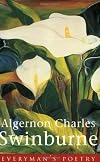
The last of the Romantics, Swinburne's poems took the public by storm, with their intoxicating rhythms and shocking lack of restraint.

The collected works of a significant, if often (I think) underrated, Victorian poet. Definitely worth reading by lovers of poetry and good English.
Lists
You May Also Like


Associated Authors
Statistics
- Works
- 221
- Also by
- 48
- Members
- 1,728
- Popularity
- #14,879
- Rating
- 4.3
- Reviews
- 6
- ISBNs
- 192
- Languages
- 5
- Favorited
- 19

