
Larry Segriff
Author of Tom Clancy's Net Force: The Archimedes Effect
About the Author
Image credit: Morning walk along the beach
Series
Works by Larry Segriff
Tom Clancy's Net Force: Cybernation 2 copies
Great Cat Mysteries: No Hard Feelings, Nine Lives to Live & the Maggody Files: Hillbilly Cat (1997) — Contributor — 2 copies
Heart Of The Moment 1 copy
A Point of Honor 1 copy
Associated Works
Children of the Night: Stories of Ghosts, Vampires, Werewolves, and Lost Children (The Children of the Night) (1999) — Contributor — 14 copies
Tagged
Common Knowledge
- Birthdate
- 1960-07-14
- Gender
- male
- Education
- University of Iowa
- Occupations
- author
editor - Organizations
- Science Fiction and Fantasy Writers of America
Mystery Writers of America
Horror Writers Association - Awards and honors
- Hal Clement Award for Best Young Adult Science Fiction Novel (1998)
- Nationality
- USA
- Birthplace
- Cedar Rapids, Iowa, USA
- Places of residence
- Green Bay, Wisconsin, USA
- Associated Place (for map)
- USA
Members
Reviews
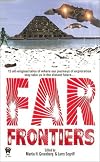
Built around a liberal definition of frontiers, this anthology of original stories not only has stories about space exploration and life on harsh colony worlds but also stories about death and dreams and transformation. None of the stories break new ground, but most keep you entertained as they roam around old plots.
Two stories hold little interest. "The Cutting Edge" by Janet Pack handles the details of its technology plausibly and realistically, but, at this point in time, a story about show more using nanotechnology just to remove a brain tumor seems stale. "Home World" by Marc Bilgrey features the old story of a frontier couple threatened with the encroachment of the civilization they originally fled.
The vast bulk of the stories are entertaining examples of old ideas well done. It was nice to see geology, a little used science in science fiction, providing the clues to an alien artifact in Kathleen M. Massie-Ferch's "Traces". While conducting her researches, the heroine also has to avoid persecution by the theocratic government she lives under. It has already imprisoned her ex-husband for insisting man is not the universe's sole intelligence. Robert J. Sawyer's "Star Light, Star Bright" is one of those stories where the inhabitants of an artificial world, here a Dyson sphere, realize that man did not evolve there. Its charm derives from the clues they use to deduce this. The "Chauna" of Alan Dean Foster's similiarly titled story are mythic creatures inhabiting deep space, and a legendary inventor and mogul, enfeebled and dying, leads a resentful crew on a quest to find them. Terry D. England's "Out of the Cradle" was a fun, sometimes humorous story, about a connoisseur of death, or, more accurately, the pain involved in his elaborate, repeated suicides. His siblings wish he would put such adolescent activities behind and upload his mind to the TerraSphere, a virtual environment inhabited by most of humanity's intellects. He has other ideas, though. The frontier of dream research is the subject of Kristine Kathryn Rusch's "Dreamlike States". Its protagonist embarks on a disasterous project to synchronize his dream with those of his twin brother. Lawrence Watt-Evans' "The Last Bastion" reminded me a bit of Vernor Vinge's work, specifically A FIRE UPON THE DEEP. A coalition of human groups has to negotiate with the Link, a human-computer interface originally created by humanity and now at war with them. But both sides now need a peace because research by the Link has spawned new enemies for both. "Forgotten" by Peter Schweighofer doesn't try to rationalize its ending, but its main attraction is the study of those abandoned in nursing homes, here a futuristic one in orbit around a gas giant. Julie E Czerneda's "Down on the Farm" offers the unusual proposition of an agricultural boot camp through which all of a colony world's immigrants must go. They're annoyed by its stress on primitive, labor intensive methods, but, at story's end, hidden reasons for the camp are revealed.
Two adventure stories offer little novelty but still keep the pages turning: Andre Norton's "Set in Stone" and Robin Wayne Bailey's "Angel on the Outward Side". The Norton tale features a slave and his masters confronting, on an exploratory mission, an alien and hostile intelligence. Bailey's tale gives us a Shakespeare-quoting, android pacificst and his decidedly non-pacificistic partner, one of those mercenaries with a dead family and a whole lot of enemies who want his head. Here he meets an old love who hires him to find her lost sister. Nothing special in the plot pieces, but the team of North and Yoru were entertaining enough that I'd like to see them in other adventures.
The gem of the collection is Jane Lindskold's "Ruins of the Past". Full of plot surprises, good characterization, and humor at just the right moments, it tells of a woman desperately fleeing creditors who want to force her into lifetime indentured servitude. Hoping for quick cash, she climbs a mountain holding alien ruins at its summits, ruins which few return from. There an android waits to kill her. But the android has other needs, and a third presence lurks nearby.
With the exception of this Lindskold piece, this is collection of comfortably worn old plots well told. You won't be sorry you read it. But most of the stories won't stick in your mind either. show less
Two stories hold little interest. "The Cutting Edge" by Janet Pack handles the details of its technology plausibly and realistically, but, at this point in time, a story about show more using nanotechnology just to remove a brain tumor seems stale. "Home World" by Marc Bilgrey features the old story of a frontier couple threatened with the encroachment of the civilization they originally fled.
The vast bulk of the stories are entertaining examples of old ideas well done. It was nice to see geology, a little used science in science fiction, providing the clues to an alien artifact in Kathleen M. Massie-Ferch's "Traces". While conducting her researches, the heroine also has to avoid persecution by the theocratic government she lives under. It has already imprisoned her ex-husband for insisting man is not the universe's sole intelligence. Robert J. Sawyer's "Star Light, Star Bright" is one of those stories where the inhabitants of an artificial world, here a Dyson sphere, realize that man did not evolve there. Its charm derives from the clues they use to deduce this. The "Chauna" of Alan Dean Foster's similiarly titled story are mythic creatures inhabiting deep space, and a legendary inventor and mogul, enfeebled and dying, leads a resentful crew on a quest to find them. Terry D. England's "Out of the Cradle" was a fun, sometimes humorous story, about a connoisseur of death, or, more accurately, the pain involved in his elaborate, repeated suicides. His siblings wish he would put such adolescent activities behind and upload his mind to the TerraSphere, a virtual environment inhabited by most of humanity's intellects. He has other ideas, though. The frontier of dream research is the subject of Kristine Kathryn Rusch's "Dreamlike States". Its protagonist embarks on a disasterous project to synchronize his dream with those of his twin brother. Lawrence Watt-Evans' "The Last Bastion" reminded me a bit of Vernor Vinge's work, specifically A FIRE UPON THE DEEP. A coalition of human groups has to negotiate with the Link, a human-computer interface originally created by humanity and now at war with them. But both sides now need a peace because research by the Link has spawned new enemies for both. "Forgotten" by Peter Schweighofer doesn't try to rationalize its ending, but its main attraction is the study of those abandoned in nursing homes, here a futuristic one in orbit around a gas giant. Julie E Czerneda's "Down on the Farm" offers the unusual proposition of an agricultural boot camp through which all of a colony world's immigrants must go. They're annoyed by its stress on primitive, labor intensive methods, but, at story's end, hidden reasons for the camp are revealed.
Two adventure stories offer little novelty but still keep the pages turning: Andre Norton's "Set in Stone" and Robin Wayne Bailey's "Angel on the Outward Side". The Norton tale features a slave and his masters confronting, on an exploratory mission, an alien and hostile intelligence. Bailey's tale gives us a Shakespeare-quoting, android pacificst and his decidedly non-pacificistic partner, one of those mercenaries with a dead family and a whole lot of enemies who want his head. Here he meets an old love who hires him to find her lost sister. Nothing special in the plot pieces, but the team of North and Yoru were entertaining enough that I'd like to see them in other adventures.
The gem of the collection is Jane Lindskold's "Ruins of the Past". Full of plot surprises, good characterization, and humor at just the right moments, it tells of a woman desperately fleeing creditors who want to force her into lifetime indentured servitude. Hoping for quick cash, she climbs a mountain holding alien ruins at its summits, ruins which few return from. There an android waits to kill her. But the android has other needs, and a third presence lurks nearby.
With the exception of this Lindskold piece, this is collection of comfortably worn old plots well told. You won't be sorry you read it. But most of the stories won't stick in your mind either. show less

Short stories of varying interest, but all of moderately good quality. Different viewpoints, although carry a primary burden or sub-text of "warriors who hate war". Most are thinly disguised futures -- given the time jumps posited, the methods and weapons would be to us as we are to the Greeks and Romans, but the milieus are recognizable (name-droppingly so). On the other hand, our military schools still teach about the classics (I think), so maybe it's not so anachronistic as it seems.
My show more favorite was the last story, "Toy Soldiers" because it wasn't really about war at all.
Longyear's "Bifrost Crossing" is perhaps the most bizarre, with its time- and place-shifts and intersection with Norse mythology. "Faith on Ice" had an interesting punch ending, but was too milfic-jargon heavy for my taste. Rusch indulges in an improbably moral conversion of a terrorist. The rest were okay, but not memorable (I know this because I read it once before, and only remembered "Bifrost" after starting it again.). show less
My show more favorite was the last story, "Toy Soldiers" because it wasn't really about war at all.
Longyear's "Bifrost Crossing" is perhaps the most bizarre, with its time- and place-shifts and intersection with Norse mythology. "Faith on Ice" had an interesting punch ending, but was too milfic-jargon heavy for my taste. Rusch indulges in an improbably moral conversion of a terrorist. The rest were okay, but not memorable (I know this because I read it once before, and only remembered "Bifrost" after starting it again.). show less
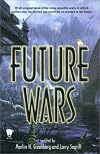
This is a collection of short stories from authors who I can only describe as solid mid-listers. I've never heard of them, but according to their bios most of them have sold at least a dozen novels. So the words are put together in a way that meets the standards of the genre, but the stories themselves are wildly variable: A few serious meditations on warfare with AI, orbital weapons, and other wizbang tech; A few meditations on the psychological horrors of war; And a few stinkers; But show more mostly this book is utterly forgettable. Well, a decent diversion for an afternoon, and another notch in the bookrace.
All I wanted was a halfway decent Starship Troopers pastiche. show less
All I wanted was a halfway decent Starship Troopers pastiche. show less
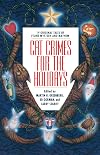
A fun mix of mystery stories involving cats and holidays. It's nice that they're not all Christmas stories, and there's even one for Arbor Day. My favorite is the first one, in which a veterinarian tells his granddaughter how he solved a crime due to the involvement and temperaments of the people's pets.
Lists
Awards


You May Also Like


Associated Authors
Statistics
- Works
- 26
- Also by
- 15
- Members
- 1,911
- Popularity
- #13,465
- Rating
- 3.4
- Reviews
- 15
- ISBNs
- 47
- Languages
- 1
