
Clementine Ford
Author of Fight Like a Girl
About the Author
Clementine Ford is an Australian freelance writer, broadcaster and public speaker based in Melbourne. Fight Like a Girl is her first book and was published in September 2016.
Works by Clementine Ford
Associated Works
Just Between Us: Australian Writers Tell the Truth About Female Friendship (2013) — Contributor — 11 copies, 2 reviews
Tagged
Common Knowledge
- Gender
- female
- Education
- University of Adelaide, South Australia
- Occupations
- columnist
social commentator
non-fiction author - Nationality
- Australia
- Places of residence
- Melbourne, Victoria, Australia
Adelaide, South Australia, Australia - Associated Place (for map)
- Australia
Members
Reviews
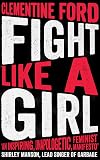
Clementine Ford has an amazing storytelling ability; her use of language drops you right into the setting, feelings, and thoughts. If you need a feminist pep talk, be sure to check out "Fight Like A Girl," because Ford outlines arguments for every social media argument out there. Especially helpful were Ford's rebuttals to men who say "I am for women's rights," and but do little to help with women's equality. She calls them out for their lip service - and often how they talk out of both show more sides of their mouths. Yes, the world is built on a patriarchal structure, and if one thinks this is no longer true, check out Ford's arguments in this book. Recommended. show less

I sat down to read the introduction to Boys Will Be Boys, and when I next came up for air I was 150 pages in. Ford's excoriation of how Western, English-speaking culture often encourages or looks the other way when men equate violence and aggression with manhood itself, is a riveting read. Much of the content is challenging because Ford does not flinch away from what it looks like when these trainwrecks pay out, particularly from the consequences for women or men who don't ascribe to this show more narrow definition of masculinity. Her withering, spot-on humor helps make these passages bearable.
The entire volume is good, but the first two and final three chapters are the volume's crown jewels. Consider this passage, from a section on male comedians' insistence on the "humor" of rape jokes:
Rape is in the room.
It's there with the survivors, but it's also in the room with the people present who've perpetrated it. Because make no mistake, they're there too. They're watching and listening and slapping their knees in spontaneous hilarity, and they're observing all the people around them who are doing exactly the same thing. You think rapists don't go and see comedians? Of course they do. And every time a rapist listens to a roomful of people laugh about something they've done they receive the reassuring message that they're not really so bad. That other people think like them. That other people have done the things they've done. That this is what all men are really like and, besides, if it were that big a deal, why would everyone find it so funny.
I could go on about all the other passages, on other topics, where Ford's verbal knives to the kidneys are as pointed and lethal as this, but that would just belabor the point. This is a challenging and thought provoking book, and well worth a read. show less
The entire volume is good, but the first two and final three chapters are the volume's crown jewels. Consider this passage, from a section on male comedians' insistence on the "humor" of rape jokes:
Rape is in the room.
It's there with the survivors, but it's also in the room with the people present who've perpetrated it. Because make no mistake, they're there too. They're watching and listening and slapping their knees in spontaneous hilarity, and they're observing all the people around them who are doing exactly the same thing. You think rapists don't go and see comedians? Of course they do. And every time a rapist listens to a roomful of people laugh about something they've done they receive the reassuring message that they're not really so bad. That other people think like them. That other people have done the things they've done. That this is what all men are really like and, besides, if it were that big a deal, why would everyone find it so funny.
I could go on about all the other passages, on other topics, where Ford's verbal knives to the kidneys are as pointed and lethal as this, but that would just belabor the point. This is a challenging and thought provoking book, and well worth a read. show less
 This review was written for LibraryThing Early Reviewers.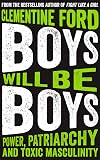
Disclaimer: I won an ARC via a giveaway on Librarything.
There are thousands of reasons why you should read this book. I would like to start with just one.
The sentence about Oscar Isaac’s equipment. It is around page 185.
And if that doesn’t do it for you, the line about porn making men’s equipment not work is good too. That’s around 134.
But seriously, Ford’s excellent use of humor aside, you should read this book.
Ford’s book about culture and how it not only harms women but show more also men. In part, this is a mediation on the problems that her son will face growing up, but also the dangers that women face. She dismantles the arguments that men’s rights movements people use and shows how circular and deceptive they are.
The progresses from pre-birth to adulthood. For instance, the book opens with a discussion of gender reveal parties, and ends with a letter to her son describing, in part, what she hopes he grows into.
One of the most damning or interesting chapters is her look at film. You will never look at movies, in particular Disney movies, the same way. While at times in this section, I wondered a few things – for instance, while Rey and Finn are great, the Force Awakens really doesn’t fully pass the Bechdel test does it? Or why not mention comic book movies where the female superheroes rarely seem to talk to each other?
And there are other limitations in the book, which Ford addresses in her introduction, so she is at least aware. The book relies heavily on Australian events (not really surprising considering) but also mentions a few cases in the US and Ireland.
The most anger inducing and upsetting section is about sex education and how that is used to police women and young girls. In part, she is building on the works of writers such as Jessica Valenti, but she also shows how much has not changed and, in fact, how some things have gotten worse.
We live in a world where if a female politician says something people don’t like, she deserves death threats. IT’s her fault. She should keep her mouth shut. We live in a society where a judge tells a rape victim that she should have thought of her rapist’s future before she pressed charges. A world where Lance Armstrong, who maligned a woman who tried to blow the whistle on his cheating, gets redeemed. While all these things happened in America, they are hardly unique to America. Ford’s book shows us how far we must go to do right by both boys and girls. show less
There are thousands of reasons why you should read this book. I would like to start with just one.
The sentence about Oscar Isaac’s equipment. It is around page 185.
And if that doesn’t do it for you, the line about porn making men’s equipment not work is good too. That’s around 134.
But seriously, Ford’s excellent use of humor aside, you should read this book.
Ford’s book about culture and how it not only harms women but show more also men. In part, this is a mediation on the problems that her son will face growing up, but also the dangers that women face. She dismantles the arguments that men’s rights movements people use and shows how circular and deceptive they are.
The progresses from pre-birth to adulthood. For instance, the book opens with a discussion of gender reveal parties, and ends with a letter to her son describing, in part, what she hopes he grows into.
One of the most damning or interesting chapters is her look at film. You will never look at movies, in particular Disney movies, the same way. While at times in this section, I wondered a few things – for instance, while Rey and Finn are great, the Force Awakens really doesn’t fully pass the Bechdel test does it? Or why not mention comic book movies where the female superheroes rarely seem to talk to each other?
And there are other limitations in the book, which Ford addresses in her introduction, so she is at least aware. The book relies heavily on Australian events (not really surprising considering) but also mentions a few cases in the US and Ireland.
The most anger inducing and upsetting section is about sex education and how that is used to police women and young girls. In part, she is building on the works of writers such as Jessica Valenti, but she also shows how much has not changed and, in fact, how some things have gotten worse.
We live in a world where if a female politician says something people don’t like, she deserves death threats. IT’s her fault. She should keep her mouth shut. We live in a society where a judge tells a rape victim that she should have thought of her rapist’s future before she pressed charges. A world where Lance Armstrong, who maligned a woman who tried to blow the whistle on his cheating, gets redeemed. While all these things happened in America, they are hardly unique to America. Ford’s book shows us how far we must go to do right by both boys and girls. show less
This review was written for LibraryThing Early Reviewers.(Disclaimer: I received an ARC of this book via the LibraryThing Early Reviewers Program and am reviewing it voluntarily.)
The purpose of this book is made clear in the introduction.
"Boys Will Be Boys takes aim at toxic male spaces and behaviors that are used to codify male power and dominance, but that also secure protection from the consequences of them. I've looked at how gender inequality is first learned in the home and then filtered down through pop culture, and how this provides the show more perfect launching pad into even more damaging practices later on--the embrace of online abuse, rape culture, men's rights baloney and even the freezing out of women from governance and leadership."
This book is definitely not Feminism 101. It's a fairly dense text, for all that the author makes it as readable as possible and writes with plenty of sharp snarky humor. (She includes her definitions of transgender, cisgender, cissexist/cisnormative, heteronormativity, cis-het and disabled person up front.) If you haven't read any serious work on feminist theory before, I'd recommend you start with bell hooks' classic Feminism Is for Everybody: Passionate Politics before tackling this book. There is plenty to chew on here, and only my intense dislike of marking up my books kept this from being scribbled on in the margins and highlighted.
The only (minor) drawback is the fact that the author is Australian, and a great deal of this book discusses Australian politics and culture. (Although she does touch on the United States, including Harvey Weinstein and our so-called President.) One thing she tries to make clear is that men should be as invested in dismantling the patriarchy and its insistence on male dominance as anyone else, because it ultimately imprisons them just as much as women, locking them in rigid, emotionless, stoic and ultimately damaging gendered boxes. It would be so much better if men were allowed to be kind and soft and nurturing, if they could like pink and get butterfly tattoos and wear dresses if they wished, and not be regarded as lesser or "sissy" (God, I hate that slur) because of it.
There's some pretty harrowing stuff in here, especially in the chapter on rape, which is to be expected. But this book is a valuable addition to feminist scholarship, and gives the reader a great deal to think about. show less
The purpose of this book is made clear in the introduction.
"Boys Will Be Boys takes aim at toxic male spaces and behaviors that are used to codify male power and dominance, but that also secure protection from the consequences of them. I've looked at how gender inequality is first learned in the home and then filtered down through pop culture, and how this provides the show more perfect launching pad into even more damaging practices later on--the embrace of online abuse, rape culture, men's rights baloney and even the freezing out of women from governance and leadership."
This book is definitely not Feminism 101. It's a fairly dense text, for all that the author makes it as readable as possible and writes with plenty of sharp snarky humor. (She includes her definitions of transgender, cisgender, cissexist/cisnormative, heteronormativity, cis-het and disabled person up front.) If you haven't read any serious work on feminist theory before, I'd recommend you start with bell hooks' classic Feminism Is for Everybody: Passionate Politics before tackling this book. There is plenty to chew on here, and only my intense dislike of marking up my books kept this from being scribbled on in the margins and highlighted.
The only (minor) drawback is the fact that the author is Australian, and a great deal of this book discusses Australian politics and culture. (Although she does touch on the United States, including Harvey Weinstein and our so-called President.) One thing she tries to make clear is that men should be as invested in dismantling the patriarchy and its insistence on male dominance as anyone else, because it ultimately imprisons them just as much as women, locking them in rigid, emotionless, stoic and ultimately damaging gendered boxes. It would be so much better if men were allowed to be kind and soft and nurturing, if they could like pink and get butterfly tattoos and wear dresses if they wished, and not be regarded as lesser or "sissy" (God, I hate that slur) because of it.
There's some pretty harrowing stuff in here, especially in the chapter on rape, which is to be expected. But this book is a valuable addition to feminist scholarship, and gives the reader a great deal to think about. show less
This review was written for LibraryThing Early Reviewers.Lists
Awards


You May Also Like


Associated Authors
Statistics
- Works
- 5
- Also by
- 2
- Members
- 578
- Popularity
- #43,350
- Rating
- 3.9
- Reviews
- 32
- ISBNs
- 37
